
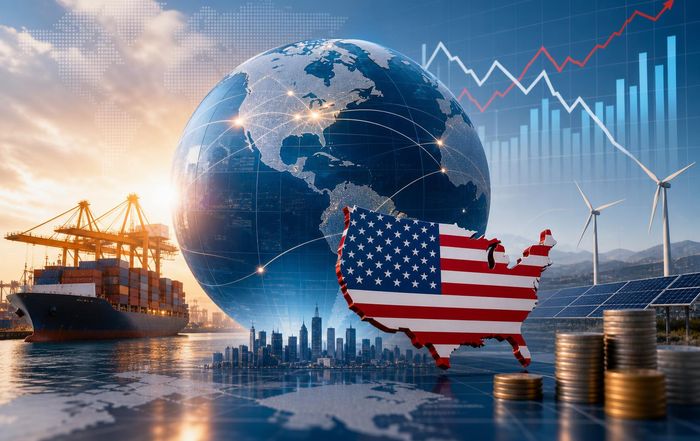
Global Economic Trends That Could Affect U.S. Businesses
Introduction: A World in Transition and What It Means for U.S. Firms
Across boardrooms, shop floors, and startup incubators, decision-makers in the United States are confronting a global economy that is more interconnected, digitally mediated, and geopolitically fragmented than at any time in recent memory. Trade flows, capital markets, supply chains, and consumer sentiment are all being reshaped by a combination of structural shifts and fast-moving shocks. For many daily returning readers of USA update, understanding these global economic trends is no longer a specialist exercise for economists; it is a core requirement for executives, investors, policymakers, and workers who must plan amid uncertainty while still identifying opportunities for growth and innovation.
International institutions such as the International Monetary Fund (IMF) and World Bank continue to monitor and project global growth, but their forecasts increasingly highlight divergent regional trajectories, persistent inflationary pressures in some economies, and the reconfiguration of trade and investment patterns. At the same time, the rise of digital platforms, artificial intelligence, and green technologies is altering competitive dynamics in ways that cut across borders. For U.S. businesses, the implications reach into every priority area that USA update covers every single day, from the domestic economy and business strategy to jobs and employment, technology adoption, and energy.
This article examines the most consequential global economic trends, drawing on analysis from leading institutions and research organizations, and explores how they may influence U.S. companies of all sizes, across sectors, and in multiple regions. The focus is on verifiable developments and on practical implications that matter for planning, investment, workforce decisions, and long-term resilience.
Slower but Still Positive Global Growth: A More Complex Landscape
Global economic growth has moderated from the rapid rebound that followed the worst phase of the COVID-19 pandemic, moving into a slower but still positive trajectory. According to the IMF's World Economic Outlook and updates from bodies such as the OECD, world output is expected to expand at a modest pace over the next few years, with advanced economies generally growing more slowly than emerging and developing markets. However, this aggregate picture conceals substantial variation: while some economies in Asia, the Middle East, and parts of Africa are registering relatively strong growth, several advanced economies in Europe and North America are experiencing weaker momentum, partly due to tighter monetary policy and aging demographics.
For U.S. businesses, slower global growth does not simply mean fewer opportunities; it means more uneven opportunities. Regions with robust demographic profiles, rising middle classes, and ongoing infrastructure investment-such as India and parts of Southeast Asia-are increasingly central to long-term corporate strategies. Companies that export goods and services or that operate global supply chains must therefore monitor country-level data and policy developments more closely than in the past, rather than relying on broad global averages. Resources such as the World Bank's Global Economic Prospects and the OECD Economic Outlook provide valuable macroeconomic context, but sector-specific insights from organizations like McKinsey & Company or S&P Global are increasingly important for understanding where demand is likely to grow and where it may stagnate.
Within the United States, this global backdrop influences everything from corporate earnings to hiring plans. Firms that are heavily exposed to slow-growing markets may experience pressure on revenue and margins, while those positioned in faster-growing regions can benefit from expanding demand for consumer goods, digital services, healthcare, and infrastructure-related products. This divergence underscores the importance for readers and subscribing members of USA update of integrating international economic developments into their assessment of domestic business conditions and financial planning.
Global Trend Impact Planner for U.S. Businesses
Adjust the sliders to see how global conditions could affect a typical U.S. firm.
- Run country-level revenue scenarios for key export markets and adjust sales targets accordingly.
- Stress-test major projects against higher borrowing costs and stricter lending conditions.
- Map critical suppliers and identify at least one alternative source in another region.
Persistent Inflation, Interest Rate Realities, and Capital Costs
One of the most significant global economic stories in recent years has been the sharp rise in inflation across many countries, followed by determined efforts by central banks to bring price growth back under control. The U.S. Federal Reserve, the European Central Bank, the Bank of England, and other major monetary authorities have raised policy rates to levels not seen in over a decade, and while headline inflation has generally eased from its peaks, underlying price pressures in some sectors remain a concern. The Bank for International Settlements and the IMF have both emphasized that the global economy has entered a period in which interest rates may remain higher than the ultra-low levels that prevailed in the years immediately following the global financial crisis.
For U.S. businesses, this new interest rate environment has direct and indirect effects. Companies that rely heavily on borrowing face higher debt servicing costs, which can constrain investment, reduce profitability, or force a re-evaluation of expansion plans. Startups and high-growth technology firms that previously benefited from abundant, low-cost venture capital now encounter more selective funding conditions, with investors emphasizing clearer paths to profitability. Corporate finance teams must reassess capital structure decisions, hedging strategies, and the timing of major projects, while small and medium-sized enterprises may find that working capital and credit lines are more expensive and subject to tighter terms.
Higher global interest rates also influence exchange rates and capital flows, with implications for U.S. exporters and importers. When U.S. rates are relatively high, the dollar often strengthens, which can make American exports less price-competitive while reducing the cost of imported inputs. Firms operating in globally traded sectors-such as manufacturing, energy, and technology hardware-must therefore account for currency swings when forecasting revenue and managing costs. Tools such as the Federal Reserve's FRED database and analysis from organizations like Brookings Institution and Peterson Institute for International Economics help businesses track these dynamics and understand how monetary policy decisions at home and abroad can shape their operating environment.
Geopolitical Fragmentation and the Rewiring of Trade
Another defining trend is the growing intersection of geopolitics and economics, often described as "geoeconomic fragmentation." Trade tensions between major powers, new industrial policies, and heightened concerns over national security and technological leadership are all influencing where companies source, produce, and sell. The ongoing trade and technology frictions between the United States and China, export controls on advanced semiconductors, and restrictions on certain outbound investments are emblematic of this broader shift. Reports from the World Trade Organization (WTO) and analyses by think tanks such as the Carnegie Endowment for International Peace and Council on Foreign Relations have documented how trade growth has slowed relative to previous decades and how supply chains in critical sectors are being reconfigured.
U.S. businesses must navigate this environment carefully. Many companies have adopted "China plus one" or "China plus many" strategies, diversifying production to countries such as Vietnam, India, Mexico, and other locations in Southeast Asia and Latin America. This trend, sometimes referred to as nearshoring or friendshoring when production is moved closer to key markets or to allied countries, reflects both risk management considerations and the desire to maintain access to global customers while reducing exposure to potential disruptions. For executives and investors following USA update, the implications are substantial: capital expenditure decisions, site selection, and supplier relationships increasingly require geopolitical risk assessments alongside traditional cost and quality metrics.
At the same time, new trade agreements and economic partnerships are opening opportunities in other parts of the world. Regional frameworks such as the Comprehensive and Progressive Agreement for Trans-Pacific Partnership (CPTPP) and the Regional Comprehensive Economic Partnership (RCEP) in Asia, as well as ongoing negotiations in Africa under the African Continental Free Trade Area (AfCFTA), are reshaping market access and competitive dynamics. U.S. firms that understand these agreements, even when the United States is not a direct signatory, can position themselves to serve growing regional value chains through local subsidiaries, partnerships, or export strategies. Readers can follow these developments through resources like WTO's trade reports and the World Bank's trade and competitiveness data, while also monitoring international coverage on USA update for region-specific developments.
Supply Chain Resilience and the "Just-in-Case" Era
The disruptions experienced during the pandemic, compounded by extreme weather events, port congestion, and geopolitical tensions, have pushed supply chain resilience to the top of corporate agendas. Global manufacturing and logistics networks that were optimized for cost and efficiency under "just-in-time" models are being rethought to incorporate redundancy, flexibility, and regional diversification. Surveys by organizations such as Deloitte, PwC, and KPMG indicate that many multinational companies are investing in digital supply chain technologies, multi-sourcing strategies, and closer collaboration with strategic suppliers to enhance visibility and responsiveness.
For U.S. businesses, especially those in manufacturing, retail, healthcare, and technology hardware, the shift toward "just-in-case" resilience can mean higher upfront costs but potentially lower long-term risk. Building buffer inventories, securing alternative suppliers, and investing in real-time tracking systems may require significant capital, yet the cost of prolonged disruptions can be even greater in terms of lost sales, reputational damage, and contractual penalties. Digital platforms and tools provided by companies such as SAP, Oracle, and specialized logistics technology firms enable more granular monitoring of supply chain nodes, while data from sources like IHS Markit (now part of S&P Global) and UNCTAD help firms track global trade flows and port activity.
At the policy level, governments, including the United States, have launched initiatives to strengthen supply chains in critical sectors such as semiconductors, pharmaceuticals, and clean energy components. Legislation like the CHIPS and Science Act and measures to encourage domestic manufacturing of key medical supplies reflect a broader trend toward strategic industrial policy. U.S. businesses can benefit from these initiatives through incentives, grants, and public-private partnerships, but they must also adapt to evolving regulatory requirements and reporting obligations. For people following recent regulatory developments and economic news on USA update, this interplay between public policy and private sector strategy is likely to remain a defining feature of the business environment.
The Acceleration of Digital Transformation and AI
Digital transformation is not a new trend, but its pace and scope have expanded dramatically, driven by advances in cloud computing, data analytics, artificial intelligence, and automation. The rapid adoption of generative AI, in particular, has captured global attention, with leading technology companies such as Microsoft, Alphabet (Google), Amazon, Meta, and specialized AI firms investing heavily in infrastructure, research, and commercial applications. Reports from MIT Technology Review, Stanford's AI Index, and consultancies like Accenture and Boston Consulting Group highlight how AI is moving from experimental pilots to core business processes in areas ranging from customer service and marketing to supply chain optimization and software development.
For U.S. businesses, the global AI race presents both opportunities and challenges. Companies that successfully integrate AI and automation can enhance productivity, improve decision-making, and create new products and services, potentially gaining a competitive edge in both domestic and international markets. At the same time, the deployment of AI raises issues around data privacy, intellectual property, workforce impacts, and regulatory compliance. Policymakers in the European Union, the United States, and other jurisdictions are developing or implementing AI frameworks and digital regulations, such as the EU's AI Act, which have extraterritorial effects on global companies that serve European customers or process their data.
This regulatory patchwork means that U.S. firms must adopt a proactive approach to governance, ethics, and compliance when rolling out AI solutions. Legal and compliance teams need to stay informed through resources such as OECD AI policy observatory, NIST's AI risk management framework, and guidance from the U.S. Federal Trade Commission and other agencies. For the daily edited premium website USA update, the intersection of technology innovation, business strategy, and regulation is becoming a central axis around which competitive advantage and risk management revolve.
Labor Markets, Skills, and the Future of Work
Global labor markets are undergoing profound shifts, shaped by demographic trends, technological change, and evolving worker expectations. In many advanced economies, including the United States, aging populations and lower birth rates are contributing to tighter labor markets in certain sectors, while at the same time automation and digitalization are transforming job roles and skill requirements. Organizations such as the International Labour Organization (ILO), World Economic Forum, and McKinsey Global Institute have documented how demand is rising for workers with skills in digital technologies, data analysis, and complex problem-solving, while routine tasks are increasingly automated.
U.S. businesses face a dual challenge: filling current vacancies in critical roles and preparing their workforce for future demands. Industries such as healthcare, advanced manufacturing, logistics, and information technology report persistent skill shortages, prompting companies to invest more in training, reskilling, and partnerships with educational institutions. Initiatives in apprenticeships, community college programs, and online learning platforms, supported by organizations like Coursera, edX, and Udacity, are helping workers adapt, but the pace of change remains a concern for both employers and policymakers.
Global remote work trends also influence U.S. employment dynamics. The widespread adoption of hybrid and fully remote work models allows companies to tap into international talent pools, while also exposing them to increased competition for skilled workers from firms based in other countries. As a result, compensation, benefits, and workplace culture have become central elements of employer branding and retention strategies. For the community, here exploring jobs and employment trends on USA update, the key takeaway is that workforce strategy is now inseparable from global economic strategy, as talent flows and skill requirements cross borders as readily as capital and data.
Energy Transitions, Climate Policy, and Green Investment
The global shift toward cleaner energy systems and climate-resilient infrastructure is one of the most consequential long-term trends affecting U.S. businesses. International agreements under the United Nations Framework Convention on Climate Change (UNFCCC) and national policies aimed at reducing greenhouse gas emissions are driving investment in renewable energy, electric vehicles, energy efficiency, and low-carbon technologies such as green hydrogen and carbon capture. Reports from the International Energy Agency (IEA) and IRENA (International Renewable Energy Agency) show that global renewable capacity has grown rapidly, with solar and wind power becoming increasingly cost-competitive compared with fossil fuels in many regions.
For U.S. companies, this transition presents a complex mix of risks and opportunities. Energy-intensive industries must manage exposure to carbon pricing, regulatory standards, and shifting investor expectations, while firms in sectors such as clean technology, advanced materials, and sustainable finance can benefit from growing demand and supportive policy frameworks. Domestic legislation, including major climate and infrastructure bills, has introduced incentives for renewable deployment, electric vehicle manufacturing, and grid modernization, encouraging both domestic and foreign investment in U.S.-based projects. Businesses can consult resources from the U.S. Department of Energy, the Environmental Protection Agency, and international bodies like the IEA to understand evolving standards and funding opportunities.
At the same time, climate-related physical risks, such as extreme weather events, droughts, and sea-level rise, pose material challenges to supply chains, facilities, and communities. Insurers, rating agencies, and financial regulators, including the Financial Stability Board's Task Force on Climate-related Financial Disclosures (TCFD), are increasingly emphasizing the need for climate risk assessment and disclosure. U.S. firms that proactively integrate climate resilience into their operations, real estate decisions, and product design can protect long-term value and align with the expectations of investors, customers, and regulators. For both new or old readers of USA update, following energy and environmental developments is essential to understanding how the global push for sustainability will reshape competitive landscapes across industries.
Regulatory Divergence and the Compliance Challenge
As global economic and technological changes accelerate, regulatory frameworks are evolving in ways that can create both complexity and fragmentation for multinational companies. Data protection regimes, digital competition rules, financial regulations, and environmental standards vary significantly across jurisdictions, and in some cases, regulatory philosophies diverge sharply. The European Union's General Data Protection Regulation (GDPR), the Digital Markets Act, and the Digital Services Act have set stringent standards for data handling and platform accountability, while the United States, the United Kingdom, and other countries are pursuing different, though sometimes converging, approaches.
For U.S. businesses operating internationally, this regulatory divergence means that compliance can no longer be treated as a purely local or reactive function. Legal, risk, and operations teams must understand how rules in one jurisdiction can affect global practices, especially when extraterritorial provisions apply. Financial sector regulations coordinated by bodies such as the Basel Committee on Banking Supervision and the Financial Stability Board also influence U.S. banks, asset managers, and insurers, affecting capital requirements, disclosure obligations, and risk management standards. Companies can stay informed through resources like Bloomberg Law, Thomson Reuters Regulatory Intelligence, and official publications from regulators, but they must also build internal capabilities for continuous monitoring and agile compliance.
In addition, there is growing attention to issues such as digital taxation, cross-border data flows, and competition policy in the context of large technology platforms. Ongoing negotiations at the OECD on international tax reform, which aim to address challenges posed by the digitalization of the economy, could eventually alter where and how multinational companies pay corporate taxes. For readers online or RSS and ATOM feed fans following regulation and policy on usa-update, the key lesson is that regulatory developments abroad are increasingly relevant to U.S. business models, even when firms do not have a physical presence in those jurisdictions.
Consumer Behavior, E-Commerce, and Global Middle Classes
Consumer behavior worldwide continues to evolve under the influence of digital platforms, demographic changes, and shifting cultural preferences. The growth of e-commerce, enabled by companies such as Amazon, Alibaba, Shopify, and a host of regional platforms, has transformed retail and services, enabling cross-border sales and new forms of digital engagement. Research from organizations like eMarketer, Statista, and UNCTAD's e-commerce reports indicates that online retail penetration has increased in many markets, though growth rates vary by region and product category.
For U.S. businesses, especially those in consumer goods, entertainment, and digital services, the expansion of global middle classes in Asia, parts of Africa, and Latin America represents a significant long-term opportunity. Rising incomes in countries such as India, Indonesia, Vietnam, and Nigeria are fueling demand for everything from smartphones and streaming content to travel and education. To capture these markets, companies must adapt offerings to local tastes, price points, and regulatory environments, often partnering with local distributors or digital platforms. The success of U.S. entertainment exports, including streaming content from Netflix, Disney, and other media companies, illustrates how cultural products can gain global traction when tailored to regional preferences and distributed via accessible platforms.
At the same time, consumer expectations around sustainability, ethics, and social responsibility are rising. Surveys by organizations such as NielsenIQ, EY, and the World Economic Forum show that many consumers, particularly younger cohorts, are paying more attention to environmental footprints, labor practices, and corporate values when making purchasing decisions. This trend is evident not only in Europe and North America but also in parts of Asia and other regions. For readers or subscribing members exploring consumer trends and lifestyle shifts on USA update, the implication is clear: global consumer markets are not just getting larger; they are becoming more discerning, and U.S. businesses that align products and branding with these evolving expectations can strengthen loyalty and differentiate themselves in competitive markets.
Tourism, Business Travel, and Cross-Border Mobility
International travel and tourism, severely disrupted during the pandemic, have been recovering, though with some changes in patterns and preferences. Data from the UN World Tourism Organization (UNWTO) and the World Travel & Tourism Council (WTTC) indicate that many destinations have seen visitor numbers rebound, supported by pent-up demand and the resumption of business travel, conferences, and large-scale events. However, the mix of leisure and business travel has shifted, with remote work and virtual meetings reducing some categories of corporate travel while new forms of "work from anywhere" and blended business-leisure trips emerge.
For U.S. businesses in sectors such as hospitality, airlines, travel technology, and event management, global travel trends are closely tied to revenue prospects and investment decisions. Companies that serve international tourists must monitor visa policies, health regulations, and geopolitical developments that can influence travel flows. Destinations in North America, Europe, and Asia are competing to attract high-spending visitors and major conferences, often with support from national and local tourism boards. For American firms that rely on international conferences and trade shows to build relationships and showcase products, understanding how travel patterns are evolving is critical for marketing and sales strategies.
Readers who increasing follow events and travel and global tourism developments via USA update can benefit from tracking data and forecasts from the UNWTO, as well as industry analyses from organizations like IATA for aviation and major hotel groups. In addition, immigration policies and visa regimes affect talent mobility, influencing where companies locate regional hubs and how they structure international assignments, which in turn impacts both corporate culture and the ability to serve global clients effectively.
Financial Markets, Capital Flows, and Investment Opportunities
Global financial markets remain a central channel through which economic trends, policy decisions, and investor sentiment affect U.S. businesses. Equity, bond, and currency markets react quickly to macroeconomic data, central bank communications, and geopolitical events, influencing corporate valuations, borrowing costs, and merger and acquisition activity. Institutions such as the U.S. Securities and Exchange Commission (SEC), the Commodity Futures Trading Commission (CFTC), and international bodies like the International Organization of Securities Commissions (IOSCO) work to maintain market integrity and transparency, but volatility remains a persistent feature of modern finance.
For U.S. firms, access to global capital can be a significant advantage, allowing them to raise funds in different markets and currencies, diversify investor bases, and pursue cross-border acquisitions. At the same time, exposure to global financial cycles can introduce risks, especially for companies with high leverage or significant foreign currency liabilities. Asset managers and corporate treasurers must balance return objectives with risk management, using tools such as hedging, scenario analysis, and stress testing. Analytical resources from IMF's Global Financial Stability Report, Bank for International Settlements, and major financial news outlets like Financial Times and The Wall Street Journal can help businesses and investors understand emerging risks and opportunities.
Sustainable finance is another important development, with growing interest in environmental, social, and governance (ESG) investing, green bonds, and impact funds. Although there is ongoing debate and regulatory scrutiny around definitions and standards, global demand for financial products that integrate sustainability considerations has increased, creating new channels for companies with credible climate and social strategies to access capital. For well educated readers monitoring finance and investment trends on usa-update, the evolution of ESG regulations and market practices is likely to be a key theme in the coming years, influencing both corporate disclosures and investor relations.
Regional Perspectives: Where Opportunities and Risks Are Concentrated
While global trends provide an overarching framework, U.S. businesses must also consider regional dynamics in the markets that matter most to them. In North America, economic integration with Canada and Mexico under updated trade agreements supports complex manufacturing and agricultural value chains, with sectors such as automotive, aerospace, and electronics benefiting from cross-border production. For firms focused on the United States and its immediate neighbors, monitoring policy changes, infrastructure investments, and labor market conditions across the continent is essential for strategic planning.
In Europe, slower growth, energy challenges, and evolving regulatory frameworks present a mixed picture. The European Union remains a major market for U.S. exporters and investors, but businesses must navigate stringent data, competition, and environmental rules, as well as potential fragmentation risks associated with political shifts. In Asia, the rise of large emerging economies, the continuing importance of China despite tensions, and regional trade agreements create a complex but opportunity-rich environment for U.S. firms in technology, consumer goods, finance, and manufacturing. Africa and Latin America, while diverse and sometimes volatile, offer growing urban populations, natural resources, and digital adoption that can support long-term investment strategies.
For interactively engaged readers of USA update, the key is to link these regional insights to international coverage and to domestic decisions around business expansion, employment, and capital allocation. By combining macro-level understanding with sector-specific intelligence, U.S. companies can identify which regions align best with their capabilities, risk appetite, and long-term goals.
Building Resilience and Seizing Opportunity: Strategic Implications for U.S. Businesses
Taken together, the global economic trends outlined above point to an environment that is more complex, more digital, more regulated, and more sustainability-focused than in previous decades. For U.S. businesses, the challenge is not merely to react to these developments but to integrate them into coherent strategies that balance resilience with ambition. This involves several interrelated priorities that align closely with the interests of USA update readers.
First, companies must strengthen their capacity for economic and geopolitical analysis, ensuring that leadership teams have access to reliable data and scenario planning tools. This can mean building in-house research capabilities, partnering with external experts, or leveraging insights from international institutions and think tanks. Second, firms should view digital transformation and AI adoption not as optional enhancements but as core components of competitiveness, while also investing in governance, cybersecurity, and workforce training to manage associated risks.
Third, supply chain resilience and energy transition strategies must be woven into broader business planning, acknowledging that cost, risk, sustainability, and regulatory compliance are increasingly interdependent. Fourth, talent strategy should be treated as a global issue, with attention to skills, mobility, diversity, and remote work models that enable organizations to attract and retain the people needed to thrive in a changing economy. Finally, companies should engage constructively with regulators, communities, and investors to build trust, anticipate policy shifts, and contribute to solutions on shared challenges such as climate change, digital ethics, and inclusive growth.
For active readers of usa-update, these themes underscore the importance of staying informed across multiple domains-economy, news, business and finance, jobs and technology, regulation, consumer behavior, and energy-and of connecting global developments to local realities. While the global economy in 2026 presents undeniable uncertainties, it also offers unprecedented opportunities for U.S. businesses that are prepared to adapt, innovate, and lead. By cultivating resilience, embracing responsible innovation, and maintaining a long-term perspective, American firms can not only navigate the challenges ahead but also help shape a more prosperous and sustainable global economic future.
