
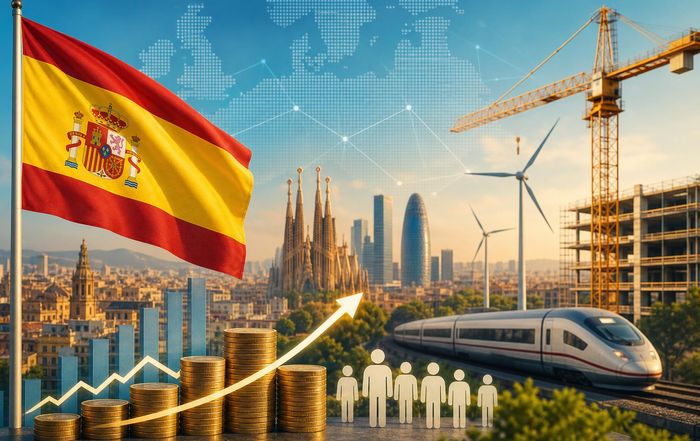
Spain's Economic Trends Driving Investment and Employment
Spain's economic narrative over the past decade has evolved from post-crisis recovery to a more complex story of structural reform, digital transformation, and shifting global investment patterns. For professional workers seeking to understand where capital, jobs, and innovation are flowing, Spain offers an instructive case study in how a developed economy can leverage tourism, manufacturing, clean energy, and technology to attract international investors and support employment, even amid geopolitical uncertainty and changing monetary conditions.
From Recovery to Resilience: The Macroeconomic Landscape
Spain's economy, the fourth largest in the euro area, has been shaped by the legacy of the global financial crisis, the eurozone sovereign debt turmoil, and the pandemic shock. According to the European Commission and Banco de España, Spain has repeatedly outpaced the euro area average in growth during many recent years, supported by robust service exports, tourism, and a gradual improvement in domestic demand. While growth has moderated from the post-pandemic rebound, projections by institutions such as the International Monetary Fund and the OECD still point to Spain as one of the relatively stronger performers among large European economies.
Real GDP expansion has been underpinned by several structural forces. Tourism, which historically accounted for around 12 percent of GDP and a similar share of employment, has rebounded strongly, with international arrivals approaching or surpassing pre-pandemic levels according to data from the World Tourism Organization. Manufacturing, particularly in sectors such as automotive, chemicals, agri-food, and pharmaceuticals, has benefited from integration into European value chains and access to the single market. At the same time, Spain has become a regional hub for renewable energy, especially wind and solar, with the International Renewable Energy Agency ranking the country among Europe's leaders in installed capacity.
In parallel, Spain's labor market has undergone significant changes. Unemployment, once among the highest in the European Union, has fallen substantially from its crisis-era peaks, even though it remains elevated compared with the United States and some northern European economies. Reforms aimed at reducing the prevalence of temporary contracts, improving vocational training, and promoting active labor market policies are gradually reshaping the employment landscape. Readers interested in broader macroeconomic comparisons can explore related stories on the economy section, where Spain's trajectory often appears alongside developments in North America and other advanced markets.
The Part of the European Union and Next Generation Funds
A central pillar of Spain's current economic strategy is its participation in the European Union's NextGenerationEU recovery instrument, which channels grants and loans to member states to support green and digital transitions. Spain is one of the largest beneficiaries of these funds, and its national recovery and resilience plan has been designed to mobilize public and private investment across infrastructure, clean energy, digitalization, and social inclusion.
According to the European Commission's public documentation, Spain's plan allocates substantial resources to projects such as electric vehicle charging networks, energy-efficient building renovation, renewable power generation, and digital skills development. For international investors, including those based in the United States, this injection of EU-backed capital lowers project risk and can create co-investment opportunities in areas ranging from grid modernization to cloud infrastructure. Those tracking policy and regulatory frameworks can follow ongoing developments in the regulation coverage, which frequently highlights how European rules and incentives shape investment flows.
The presence of EU funding also influences Spain's fiscal outlook. While public debt remains relatively high, the combination of low borrowing costs in recent years, gradual deficit reduction, and the growth-enhancing nature of many investments has led several institutions, including the European Central Bank and the IMF, to view Spain's fiscal trajectory as manageable, provided structural reforms continue. The interaction of EU-level oversight and national policymaking offers a degree of predictability that many investors value, particularly when comparing Spain with emerging markets that may lack similar institutional anchors.
Labor Market Evolution: From Precarity to Stability
Spain's labor market has long been characterized by a dual structure, with a core of permanent employees and a large share of workers on temporary contracts, especially in sectors such as hospitality, construction, and agriculture. This duality contributed to high volatility in employment during downturns, as temporary workers were often the first to lose their jobs. Recognizing this challenge, Spanish authorities have implemented reforms aimed at encouraging more stable employment relationships.
Recent labor legislation, developed in consultation with employer organizations and trade unions, has sought to limit the use of very short-term contracts, strengthen collective bargaining, and promote indefinite contracts as the default option. Early analyses by institutions like Banco de España and labor research centers suggest an increase in permanent contracts and some reduction in extreme forms of temporary work, though debates continue over the long-term impact on hiring flexibility and productivity. Independent observers, including those at OECD and Eurofound, note that Spain's approach is being watched as a potential model for balancing worker protection with competitiveness.
Unemployment, while still above the EU average, has trended downward, and youth unemployment, historically a major concern, has also declined from its peak, although it remains a policy priority. To address skills mismatches, Spain has expanded vocational education and training programs, supported apprenticeships, and promoted digital skills initiatives. These efforts align with broader European strategies for upskilling and reskilling, as described by the European Centre for the Development of Vocational Training (Cedefop), and they are increasingly relevant for international companies seeking qualified talent for shared service centers, technology hubs, and manufacturing facilities.
For readers following employment and labor trends across borders, the dedicated employment section provides context on how Spain's reforms compare with those in the United States, Canada, and other advanced economies, highlighting both best practices and ongoing challenges.
Foreign Direct Investment and Business Climate
Spain's position as a gateway to Europe, Latin America, and North Africa continues to attract foreign direct investment (FDI) from multinational corporations, private equity firms, and institutional investors. According to data compiled by UNCTAD and Spain's own investment promotion agency ICEX, inflows have remained robust, with particular strength in sectors such as renewable energy, real estate, logistics, automotive, life sciences, and information technology.
The country's infrastructure, including high-speed rail, modern airports, and deep-water ports, is often cited by investors as a competitive advantage. Reports from the World Bank and World Economic Forum have highlighted Spain's improvements in logistics performance, digital connectivity, and business environment indicators, although they also point to areas where administrative complexity and regulatory fragmentation between regions can pose challenges. Nonetheless, the overall perception among many corporate decision-makers is that Spain offers a stable legal framework, membership in the euro area, and access to a large consumer market, making it an attractive location for regional headquarters, R&D centers, and shared services.
Tax policy has also played a role in shaping investment decisions. Spain offers various incentives for R&D, film production, and certain strategic sectors, while maintaining corporate tax rates broadly in line with other large EU economies. The ongoing implementation of the OECD/G20 global minimum tax agreement, supported by the OECD and the European Union, is expected to influence how multinationals structure their operations, but Spain's combination of market size, skilled workforce, and sector-specific strengths is likely to remain a draw.
For readers of USA update interested in corporate strategy and cross-border investment, the site's business coverage frequently explores how U.S. and international firms assess European locations, including Spain, when making long-term capital allocation decisions.
Spain Opportunity Mix: Interactive Investment & Jobs Slider
Adjust the sliders to explore a hypothetical allocation of €10 billion across four key pillars of Spain's economy and see the estimated jobs and impact score.
Supports hospitality, culture, and experience economy in major and regional destinations.
Funds wind, solar, grid upgrades, and green hydrogen aligned with EU climate goals.
Backs digital infrastructure, AI, and startup ecosystems in Madrid, Barcelona, and beyond.
Targets automotive, agri-food, and advanced manufacturing upgrades across regions.
Technology, Innovation, and the Digital Economy
Spain's technology and innovation ecosystem has matured significantly, with cities such as Madrid, Barcelona, Valencia, and Malaga emerging as dynamic hubs for startups, scale-ups, and digital services. According to analyses from organizations like Startup Genome and Dealroom, Spain has produced a growing number of high-value technology companies in sectors including fintech, mobility, e-commerce, enterprise software, and video gaming. International investors, including U.S. venture capital firms and global tech corporations, have participated in funding rounds and strategic partnerships, contributing to the country's innovation capacity.
Government initiatives, supported by EU funds, have focused on expanding broadband and 5G networks, digitizing public services, and encouraging the adoption of cloud computing and artificial intelligence in small and medium-sized enterprises. The European Commission's Digital Economy and Society Index (DESI) has documented Spain's progress in connectivity and digital public services, placing it among the better performers in the EU, though there is still room for improvement in advanced digital skills and SME digitalization.
Cybersecurity, data protection, and compliance with the EU's General Data Protection Regulation (GDPR) have become integral to Spain's digital landscape, influencing how companies design products and manage customer data. Collaboration between public authorities, academia, and industry has led to the creation of specialized research centers and innovation clusters, some of which are recognized by the European Institute of Innovation and Technology (EIT) and other international networks.
Readers seeking deeper insight into how these digital shifts interact with broader economic trends can explore USA update's technology section, where Spain's experience with AI, cloud computing, and e-government is frequently compared with developments in North America and Asia.
Renewable Energy, Green Transition, and Industrial Policy
Spain's commitment to renewable energy has positioned it as a leader in Europe's green transition. With substantial wind and solar resources, the country has attracted significant investment from domestic utilities and international energy companies. Data from the International Energy Agency (IEA) and the International Renewable Energy Agency (IRENA) indicate that Spain ranks among the top European countries in installed wind and solar capacity, and policy frameworks aim to further increase the share of renewables in electricity generation.
The national energy and climate plan, aligned with EU climate objectives and the European Green Deal, sets ambitious targets for emissions reduction, renewable penetration, and energy efficiency. These goals are supported by auctions for renewable capacity, incentives for self-consumption, and measures to modernize the grid and expand interconnections with neighboring countries. At the same time, Spain is exploring opportunities in green hydrogen, battery manufacturing, and electric mobility, seeking to position itself as a key player in Europe's emerging clean-tech value chains.
For industrial investors, this green trajectory creates opportunities in manufacturing components for wind turbines and solar panels, developing storage technologies, and building infrastructure for electric vehicles. The automotive sector, historically one of Spain's industrial pillars, is undergoing a transformation as global manufacturers and suppliers shift toward electrification and connected vehicles. Public support, including EU-backed funding for battery plants and EV platforms, is intended to secure Spain's role as a major production base within Europe.
Energy policy developments in Spain often resonate with global discussions on security of supply, price volatility, and the balance between market mechanisms and regulation. Readers tracking these themes can consult USA update's energy coverage, where Spain's approach to renewables and market reform is considered alongside U.S. and international experiences. Additional context on European energy markets is regularly provided by organizations such as ENTSO-E and the Agency for the Cooperation of Energy Regulators (ACER).
Tourism, Services, and the Experience Economy
Tourism remains one of Spain's most visible economic assets, drawing visitors from across Europe, North America, and around the world to destinations such as Barcelona, Madrid, the Balearic Islands, the Canary Islands, Andalusia, and the northern "Green Spain" regions. According to the UN World Tourism Organization and Spain's national statistics office INE, international arrivals have recovered strongly from pandemic-related lows, and tourism revenues are again a major contributor to the balance of payments.
The sector is evolving beyond traditional sun-and-beach offerings to emphasize cultural tourism, gastronomy, sports events, and sustainable travel experiences. Major cities are investing in museum infrastructure, conference centers, and cultural festivals, while rural areas are promoting eco-tourism and heritage routes. This diversification aims to reduce seasonality, distribute economic benefits more widely, and mitigate the environmental and social pressures associated with mass tourism.
Digital platforms, online booking systems, and data analytics have transformed how visitors plan and experience trips, creating new business models and employment opportunities in hospitality tech, travel services, and experience design. At the same time, policymakers and local communities are grappling with questions of regulation, housing affordability, and the impact of short-term rentals, issues that mirror debates in cities across the United States and Europe. Regulatory responses vary by region and municipality, reflecting Spain's decentralized governance structure.
For those interested in how tourism intersects with broader lifestyle and mobility trends, USA update provides complementary coverage through its travel and lifestyle sections, often highlighting Spain as both a leisure destination and a case study in managing visitor flows in a sustainable manner.
Financial Sector Stability and Access to Capital
Spain's banking sector underwent a profound restructuring in the aftermath of the eurozone crisis, supported by European mechanisms and national reforms. Consolidation, recapitalization, and strengthened supervision have improved balance sheets and reduced non-performing loans, as documented by the European Banking Authority and the European Central Bank. Today, Spanish banks are generally considered better capitalized and more resilient, although profitability challenges persist in a low- or moderate-interest-rate environment.
The financial ecosystem extends beyond traditional banking to encompass capital markets, insurance, and a growing fintech segment. Madrid serves as a key financial center, with the Bolsa de Madrid and other exchanges forming part of the Bolsas y Mercados Españoles (BME) group, now integrated into SIX Group. Regulatory frameworks overseen by authorities such as the Comisión Nacional del Mercado de Valores (CNMV) aim to ensure market integrity, investor protection, and alignment with EU directives like MiFID II and the Prospectus Regulation.
Fintech companies in Spain are active in payments, digital banking, lending, and wealth management, often collaborating with established financial institutions. The regulatory environment, including sandbox initiatives and open banking rules derived from the EU's PSD2 directive, encourages innovation while maintaining oversight. International investors and entrepreneurs view Spain as both a test market and a gateway to Latin America, leveraging linguistic and cultural ties.
For readers of USA update who follow global capital flows, the site's finance section offers analysis of how Spain's financial sector reforms and digitalization efforts compare with trends in the United States, the United Kingdom, and other major financial hubs. Additional insights into European financial stability can be found in reports from the European Systemic Risk Board and the Bank for International Settlements.
Regional Dynamics and International Connectivity
Spain's internal regional diversity has important implications for investment and employment. Autonomous communities such as Catalonia, Madrid, the Basque Country, Valencia, and Andalusia each have distinct economic profiles, industrial specializations, and policy priorities. For example, Catalonia and Madrid are major centers for services, technology, and headquarters functions, while the Basque Country is renowned for advanced manufacturing and industrial innovation, supported by regional institutions and clusters.
This diversity can be a strength, allowing Spain to offer investors a range of location options tailored to specific sectoral needs, but it can also introduce complexity in terms of regulatory frameworks, taxation, and administrative procedures. Efforts to streamline business registration, permitting, and inter-regional coordination are ongoing, supported by national and EU initiatives aimed at deepening the single market and reducing barriers to cross-border and intra-national commerce.
Internationally, Spain's geographic position at the crossroads of Europe, the Mediterranean, and the Atlantic underpins its role in logistics and trade. Ports such as Algeciras, Valencia, and Barcelona are key nodes in global shipping routes, while air connections to Latin America, North America, and Africa support business travel and cargo flows. Spain's participation in EU trade agreements, negotiated by the European Commission with partners including Canada, Japan, and several Latin American countries, provides exporters and investors with preferential access to multiple markets.
Readers seeking broader context on cross-border trade and diplomatic developments can consult USA update's international coverage, which often situates Spain's role within larger transatlantic and global economic relationships.
Startups, Entrepreneurship, and the Future of Work
Spain's entrepreneurial ecosystem has gained momentum, supported by co-working spaces, accelerators, incubators, and a growing community of angel investors and venture funds. Public initiatives at the national and regional levels promote entrepreneurship through grants, tax incentives, and support services, while universities and research centers contribute talent and innovation.
Sectors such as fintech, mobility, e-health, agri-tech, and creative industries have produced notable startups that attract international attention. Organizations such as ENISA (Empresa Nacional de Innovación) and private accelerators collaborate to provide early-stage financing and mentoring. Reports from Startup Genome, OECD, and other research bodies highlight Spain's potential to further scale its startup ecosystem, provided that access to later-stage capital, talent attraction, and regulatory clarity continue to improve.
The future of work in Spain is shaped by trends familiar to readers in the United States and elsewhere: remote and hybrid work arrangements, the rise of digital nomads, and the integration of automation and artificial intelligence into business processes. Spain has introduced policies to attract remote workers and digital professionals, including visa regimes tailored to highly skilled non-EU nationals, which may appeal to U.S. and international talent seeking a European base with a high quality of life.
For those tracking labor market innovation and entrepreneurial trends, USA update's jobs section offers comparative perspectives on how different countries, including Spain, are adapting to technological change and new employment models.
Consumer Trends, Inflation, and Household Well-Being
Consumer behavior in Spain reflects a combination of European and Mediterranean influences, with strong emphasis on social interaction, food culture, and leisure activities. The pandemic and subsequent inflationary pressures altered spending patterns, prompting households to adjust budgets, prioritize essential goods and services, and seek value in both physical and online retail channels. Data from Eurostat and Spain's INE show that inflation peaked in the wake of global energy and supply chain disruptions but has since moderated, although price levels and purchasing power remain important concerns for many families.
Retailers and consumer brands have responded by expanding e-commerce offerings, investing in omnichannel strategies, and incorporating sustainability into product design and supply chains. Certifications, eco-labels, and transparency about sourcing are increasingly important to Spanish consumers, mirroring trends observed in other advanced economies. At the same time, financial literacy and inclusion initiatives aim to help households manage credit, savings, and investment decisions in an environment of evolving financial products and digital tools.
Regulators, including the Bank of Spain and consumer protection agencies, monitor developments in areas such as digital payments, buy-now-pay-later services, and online marketing to ensure that innovation does not compromise consumer rights. The balance between fostering competition and protecting vulnerable consumers is a recurring theme in policy debates and is closely watched by international observers.
Readers interested in how these dynamics affect everyday life and purchasing decisions can find related analysis in USA update's consumer coverage, which examines Spain's experience alongside that of the United States and other key markets.
Opportunities and Risks for Global Investors
For global investors, including institutional asset managers, private equity funds, corporate strategists, and individual investors, Spain presents a mix of opportunities and risks that must be assessed in the context of broader European and global trends. On the opportunity side, Spain offers competitive advantages in renewable energy, tourism, logistics, manufacturing, and digital services, underpinned by EU membership, a relatively large domestic market, and improving labor market conditions. The availability of EU recovery funds and alignment with European industrial and climate policies further enhance the investment case in sectors such as clean energy, infrastructure, and technology.
Risks include exposure to broader euro area macroeconomic conditions, potential volatility in energy prices, demographic challenges related to aging, and ongoing debates over fiscal policy and structural reform. Political dynamics, both at the national and regional levels, can affect regulatory stability and investor sentiment, although Spain's institutional framework and EU integration provide important anchors. External shocks-such as geopolitical tensions, global supply chain disruptions, or financial market turbulence-can also influence Spain's economic trajectory, as they do for all open economies.
To navigate these complexities, investors often rely on diversified strategies, local partnerships, and careful monitoring of policy developments. Independent analysis from organizations such as the IMF, OECD, World Bank, and leading research institutes provides valuable context, while specialized news and analysis platforms, including a newly curated news section, help track real-time developments in Spain and across the global economy.
Spain in a Changing Global Economy
As the world economy adjusts to shifting supply chains, digital disruption, and the imperatives of climate action, Spain's experience illustrates how a medium-to-large advanced economy can reposition itself through a combination of structural reform, targeted investment, and international integration. The country's progress in reducing unemployment, expanding renewable energy, nurturing a growing technology ecosystem, and leveraging EU support mechanisms demonstrates resilience and adaptability, even as challenges remain.
For smart followers here, Spain's story is relevant not only as a European case study but also as a reference point for policymakers, business leaders, and investors in the United States and other countries facing similar questions about how to foster inclusive growth, attract investment, and prepare the workforce for a rapidly changing world. By following developments in Spain's economy, business environment, financial sector, and labor market, observers gain insight into broader patterns that will shape global investment and employment in the years to come.
Those seeking to connect these themes with developments in North America and beyond can continue exploring USA update's broader coverage across economy, business, finance, employment, technology, and international topics, where Spain's evolving role in the global economy will remain a point of reference and inspiration.
