
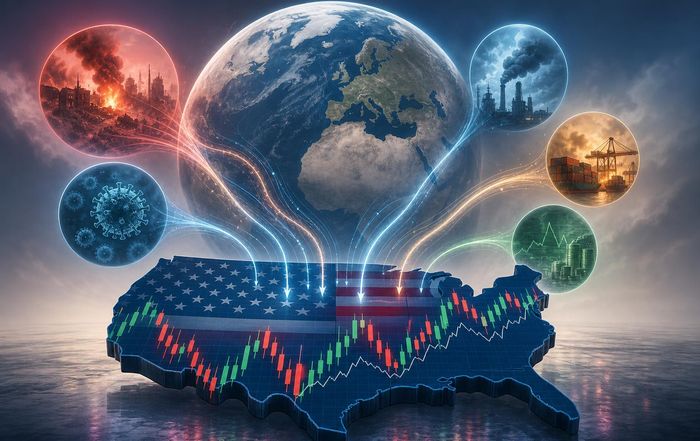
How Global Events Can Influence U.S. Market Sentiment
Introduction: A World in Flux and a Market on Edge
Investors, executives in the United States are operating in an environment defined by rapid geopolitical shifts, technological disruption, and evolving regulatory frameworks. Market sentiment, once driven predominantly by domestic indicators such as employment data, interest rates, and corporate earnings, is now profoundly shaped by developments that occur far beyond U.S. borders. From elections in Europe and trade negotiations in Asia to energy transitions in the Middle East and regulatory reforms in Africa, global events increasingly exert a direct and measurable influence on how U.S. markets price risk, allocate capital, and assess long-term opportunity.
For the analytical, impartial news seeking community of USA update, which of course closely follows developments in the U.S. economy, business climate, financial markets, and international affairs, understanding these linkages is no longer optional; it is central to strategic decision-making. Market sentiment is not just an abstract psychological construct; it is a really powerful driver of asset valuations, corporate investment decisions, consumer confidence, and employment trends. As cross-border flows of capital, data, and goods deepen, global events can trigger swift reactions in U.S. equities, bonds, currencies, and commodities, often before domestic fundamentals have time to adjust.
This original article examines how global events shape U.S. market sentiment, exploring the mechanisms through which information travels, the role of institutional and retail investors, and the interplay between macroeconomic trends and sector-specific dynamics. It also highlights how readers can leverage the resources of USA update, including its completely unique content focus on economy, business, finance, and international coverage, to anticipate and respond to these shifts with greater confidence and clarity.
Understanding Market Sentiment in a Global Context
Market sentiment refers to the aggregate attitude of investors toward financial assets and economic prospects, often reflected in price movements, trading volumes, and volatility. While sentiment can be influenced by hard data such as GDP growth, inflation, and corporate earnings, it is equally shaped by expectations, narratives, and perceptions of risk. In 2026, these narratives are increasingly global in nature, driven by real-time information flows and the interconnectedness of modern markets.
Institutions such as the Federal Reserve, the European Central Bank, and the Bank of Japan set monetary policies that ripple across asset classes worldwide. When the Federal Reserve signals a shift in interest rate policy, global investors reassess the relative attractiveness of U.S. assets versus alternatives, and in turn, foreign developments often influence how the Federal Reserve itself interprets global financial conditions. Those seeking to understand how monetary policy interacts with sentiment can consult resources from the Federal Reserve and the Bank for International Settlements, which offers analysis on global financial stability and cross-border capital flows on its official site.
In this environment, sentiment is not confined within national borders. A political crisis in a key emerging market, a sudden regulatory change in a major European economy, or a disruptive technological advancement in Asia can all affect how U.S. investors perceive risk and opportunity. This is why the cross-sectional coverage of usa-update.com, from news and regulation to energy and consumer trends, has become increasingly important for readers who seek a holistic view of the forces shaping sentiment.
Geopolitical Risk and Investor Psychology
Geopolitical developments are among the most visible and immediate drivers of shifts in U.S. market sentiment. Elections, territorial disputes, trade negotiations, sanctions regimes, and security incidents can all alter expectations about growth, supply chains, and regulatory landscapes. In 2026, the global geopolitical map is characterized by strategic competition among major powers, regional conflicts, and ongoing debates over the future of international institutions.
When tensions escalate between major economies such as the United States and China, investors closely monitor potential changes in tariffs, export controls, and technology transfer restrictions. These developments can influence valuations in sectors ranging from semiconductors and cloud computing to automotive and consumer electronics. Analysts and executives often turn to resources like the Council on Foreign Relations, which provides in-depth backgrounders on global hotspots and international policy dynamics on its website, to contextualize how such tensions may evolve.
Similarly, elections in Europe or leadership transitions in key emerging markets can shift expectations regarding fiscal policy, regulatory reform, and trade agreements. For example, changes in the policy stance of Germany, France, or the United Kingdom can impact the broader European Union regulatory environment, which in turn affects U.S. multinational corporations with extensive operations or supply chains in the region. Organizations such as the International Monetary Fund regularly assess the macroeconomic implications of political developments across regions, and investors often review its analysis on the IMF website to gauge potential spillovers to U.S. markets.
For readers of usa-update.com, following global political developments is no longer an academic exercise; it is a core component of risk management. By integrating international news with domestic economy and business coverage, the platform helps market participants anticipate how shifts in geopolitical risk might translate into volatility, sector rotations, or changes in capital flows.
Global Macroeconomic Trends and U.S. Asset Pricing
Beyond discrete political events, broad macroeconomic trends across regions play a central role in shaping U.S. market sentiment. Growth trajectories in Europe, Asia, and emerging markets influence global demand for U.S. exports, the direction of capital flows, and expectations for corporate earnings in internationally exposed sectors. In 2026, attention is focused on how major economies manage the aftermath of earlier inflationary episodes, navigate demographic shifts, and respond to the accelerating digital and green transitions.
When growth in major trading partners slows, U.S. companies with significant overseas revenues often face downward revisions in earnings expectations, which can dampen sentiment in equity markets. Conversely, robust expansions in regions such as Southeast Asia or parts of Africa can support positive sentiment toward U.S. firms positioned to capture rising demand for infrastructure, technology, and consumer goods. The World Bank provides extensive data and analysis on global growth trends and development indicators, accessible through its official portal, which many analysts use to benchmark regional performance.
Inflation and monetary policy divergence also play a critical role. If central banks in Europe or Asia adopt significantly more accommodative or restrictive stances than the Federal Reserve, currency dynamics and bond yields can shift in ways that influence U.S. investor sentiment. For example, a weaker euro or yen relative to the dollar can affect the competitiveness of U.S. exports and the translation of foreign earnings back into dollars, while also influencing foreign demand for U.S. Treasuries. The OECD regularly publishes cross-country comparisons of inflation, productivity, and labor market trends, and its data and analysis on the OECD website can help investors interpret how global macro conditions may shape U.S. asset pricing.
By following macroeconomic developments across continents and integrating those insights with domestic indicators covered on usa-update.com, particularly in sections such as finance and employment, market participants can develop a more nuanced understanding of how global growth patterns and policy choices are likely to influence U.S. sentiment in the months and years ahead.
Trade, Supply Chains, and the Rewiring of Globalization
The structure of global trade and supply chains has undergone profound changes in recent years, with implications that continue to reverberate through U.S. markets in 2026. The shift from just-in-time to more resilient and diversified supply models, the rise of nearshoring and friend-shoring strategies, and the growing emphasis on economic security have all influenced corporate investment decisions and investor sentiment.
When major supply routes are disrupted by geopolitical tensions, natural disasters, or regulatory changes, U.S. markets often react swiftly, particularly in sectors heavily dependent on global inputs such as automotive, electronics, pharmaceuticals, and consumer goods. For instance, disruptions in semiconductor production in East Asia or energy supply constraints in Europe can trigger concerns about production bottlenecks, cost pressures, and delays in product launches for U.S. firms. The World Trade Organization provides valuable insights into global trade flows, tariff developments, and supply chain dynamics, which can be explored on its site to better understand these shifts.
At the same time, the reconfiguration of supply chains can create new opportunities that influence sentiment positively. Investments in domestic manufacturing capacity, strategic stockpiling, and regional trade agreements can support long-term resilience and attract capital into sectors aligned with these trends. For example, policy measures in the United States aimed at strengthening domestic production of critical technologies and materials often intersect with international negotiations and alliances, influencing how global investors view the competitiveness of U.S. industries.
Readers and subscribing members of usa-update.com who follow technology, energy, and jobs coverage can observe how supply chain reconfiguration is not only reshaping corporate strategies but also altering employment patterns and regional economic development. As firms adjust their global footprints, new clusters of innovation, logistics, and advanced manufacturing are emerging across North America, Europe, and Asia, each with implications for U.S. labor markets and consumer prices that feed back into broader market sentiment.
How Global Events Shape U.S. Market Sentiment
Explore the main channels that turn international headlines into U.S. market reactions, risk pricing, sector rotations, and business strategy shifts.
Global Shock
Investor Repricing
Sector Impact
Strategic Response
Geopolitical Risk
Trade tensions, elections, sanctions, and conflicts can quickly change perceived risk, triggering volatility and sector rotations across U.S. equities, bonds, currencies, and commodities.
Energy Markets, Climate Policy, and Transition Risk
Energy markets remain one of the most important channels through which global events influence U.S. market sentiment. Price movements in oil, natural gas, and increasingly in critical minerals and renewable energy components, can affect inflation expectations, corporate margins, consumer spending, and the valuation of energy-intensive sectors. In 2026, the interplay between traditional fossil fuel markets and the accelerating transition toward low-carbon energy sources is at the center of investor attention.
Geopolitical events in major energy-producing regions, including the Middle East, Russia, and parts of Africa and Latin America, can trigger volatility in global oil and gas prices, which in turn influence inflation expectations and monetary policy debates in the United States. Organizations such as the U.S. Energy Information Administration offer comprehensive data and forecasts on global and domestic energy markets on its website, helping market participants understand the supply-demand balance and potential scenarios. Similarly, the International Energy Agency provides analysis on global energy security and transition pathways, available on its site, which investors use to assess long-term structural trends.
Climate policy developments also play a critical role. International agreements, national commitments to net-zero emissions, and evolving regulatory frameworks for carbon pricing and disclosure standards can all affect the cost of capital for carbon-intensive industries and the growth prospects for renewable energy, electric vehicles, and energy efficiency technologies. Announcements at major climate summits, as well as policy shifts in key jurisdictions such as the European Union, China, and the United States, can influence sentiment across energy, industrial, and financial sectors. The United Nations Framework Convention on Climate Change provides detailed information on international climate negotiations and national commitments on its portal, which is closely followed by investors seeking to understand transition risk.
For the audience of usa-update.com, the intersection of global energy developments with domestic regulation, consumer behavior, and lifestyle trends is particularly relevant. As energy prices and climate policies evolve, they influence household budgets, corporate strategies, and public investment priorities, all of which feed back into U.S. market sentiment and long-term asset allocation decisions.
Technological Innovation and Cross-Border Competition
Technological innovation is another powerful driver of market sentiment, and in 2026 it is increasingly shaped by global competition, collaboration, and regulatory divergence. Advances in artificial intelligence, quantum computing, biotechnology, clean energy technologies, and advanced manufacturing are occurring across multiple regions, with leading research hubs in the United States, Europe, and Asia influencing each other through collaboration and rivalry.
When a breakthrough in AI or biotechnology is announced by a leading firm or research institution in Asia or Europe, U.S. markets often react by reassessing the competitive positioning of domestic companies, the potential for new business models, and the risk of technological obsolescence. Conversely, regulatory decisions in the European Union on data privacy, AI governance, or digital competition can have extraterritorial effects, shaping the operating environment for U.S. technology firms and influencing investor sentiment. Those seeking to understand the regulatory dimension often consult the European Commission's digital policy resources on its website, which outline the evolving framework for digital markets and AI governance.
At the same time, cross-border collaboration in research and development, as well as global standards-setting efforts, create opportunities for joint innovation and market expansion. Organizations such as the World Intellectual Property Organization provide insights into global patent trends and intellectual property frameworks on its site, which can help investors gauge where innovation is most concentrated and how it may translate into commercial value. For readers following technology and business coverage on usa-update.com, these global innovation dynamics are crucial for understanding sector rotation, valuation shifts, and the emergence of new market leaders.
The sentiment impact of technological innovation is not limited to equity markets; it also affects labor markets, productivity expectations, and debates about regulation and social impact. As automation, AI, and digital platforms reshape employment patterns in the United States and abroad, investors and policymakers pay close attention to how these trends influence consumer confidence, wage growth, and the resilience of social safety nets, all of which indirectly shape U.S. market sentiment.
International Regulation, Standards, and Policy Convergence
Regulatory developments and international standards have become increasingly important in shaping market sentiment, particularly in sectors such as finance, technology, healthcare, and energy. In 2026, the global regulatory landscape is characterized by a mix of convergence and divergence, as different jurisdictions experiment with new frameworks for data protection, financial stability, sustainability reporting, and corporate governance.
Financial regulation is a prime example. Decisions by regulators in Europe or Asia on capital requirements, derivatives markets, or digital assets can influence global liquidity conditions and investor risk appetite. The Financial Stability Board, hosted by the Bank for International Settlements, coordinates international efforts to promote financial stability and publishes reports and recommendations on its webpage that are closely followed by market participants. When new guidelines or stress test results are released, they can affect sentiment toward banks, insurers, and other financial institutions, including those listed in U.S. markets.
Sustainability and corporate disclosure standards are another area where global developments influence U.S. sentiment. The emergence of international frameworks for climate-related financial disclosures and environmental, social, and governance (ESG) reporting, as promoted by bodies such as the International Sustainability Standards Board, shapes investor expectations and comparability across markets. As regulators in Europe, the United Kingdom, and other jurisdictions implement mandatory reporting standards, U.S. firms with global operations may face pressure to align with these requirements, affecting compliance costs and strategic positioning. Investors looking to learn more about sustainable business practices often turn to resources from the United Nations Environment Programme, which provides guidance on sustainable finance and corporate responsibility.
For the readership of usa-update.com, the intersection of international regulatory developments with domestic regulation, finance, and business policy is a critical area of focus. As policy convergence or divergence across regions becomes clearer, it influences how capital is allocated across sectors and geographies, shaping U.S. market sentiment toward industries that are either favored or disadvantaged by emerging rules.
Labor Markets, Migration, and Global Talent Flows
Labor markets and global talent flows also play a significant role in shaping U.S. market sentiment, particularly in sectors that rely on high-skilled workers, such as technology, healthcare, engineering, and finance. In 2026, demographic trends, migration policies, and the global competition for talent are at the forefront of strategic discussions among corporate leaders and policymakers.
When countries in Europe, Asia, or North America adjust their immigration policies, work visa regimes, or education systems, it can influence the availability of skilled labor and the attractiveness of certain regions for investment. For instance, more restrictive immigration policies in one major economy may shift talent flows toward others, altering the relative competitiveness of innovation hubs. Organizations such as the International Labour Organization provide comprehensive analysis of global employment trends, migration patterns, and labor standards on its site, which can help investors and executives understand how these forces may affect productivity and wage dynamics.
The growing prevalence of remote and hybrid work models also has a cross-border dimension. As companies in the United States and abroad increasingly tap into global talent pools, questions arise about regulatory compliance, taxation, and labor protections across jurisdictions. These developments can influence sentiment toward sectors and firms that are either well-positioned to leverage global talent or more exposed to regulatory and operational complexity.
For readers of usa-update.com who track employment, jobs, and lifestyle trends, the global dimension of labor markets offers important context. Changes in talent availability, wage pressures, and workforce mobility can shape corporate earnings, consumer spending, and social stability, all of which feed into U.S. market sentiment and long-term growth expectations.
Consumer Confidence, Travel, and Cross-Border Demand
Consumer confidence is a key determinant of economic activity and market sentiment, and in 2026 it is increasingly influenced by global factors such as international travel trends, cross-border e-commerce, and global cultural flows. Events that affect travel patterns, such as health crises, geopolitical tensions, or regulatory changes, can have immediate consequences for airlines, hospitality, entertainment, and retail sectors in the United States.
When international tourism flows shift due to visa policies, safety perceptions, or currency movements, U.S. businesses that depend on foreign visitors feel the impact, and investors adjust their expectations accordingly. Institutions such as the World Tourism Organization provide data and analysis on global travel trends on its official page, which can help market participants anticipate changes in demand for travel-related services. Similarly, global consumer confidence surveys conducted by organizations like The Conference Board and other research bodies, accessible through The Conference Board's website, offer insights into how households across regions perceive their financial prospects and willingness to spend.
The rise of cross-border e-commerce platforms and digital entertainment services has also created new channels through which global events influence U.S. companies and market sentiment. Changes in digital regulations, payment systems, or data localization requirements in markets such as the European Union, China, or India can affect the growth prospects of U.S. firms in streaming, gaming, and online retail. Readers of usa-update.com who follow entertainment, consumer, and travel coverage can observe how these global consumer trends intersect with domestic business strategies and investor expectations.
As global events shape consumer behavior and travel patterns, U.S. market sentiment responds not only to hard data on spending and bookings but also to shifting narratives about confidence, safety, and lifestyle preferences, which can change rapidly in response to international developments.
Media, Information Flows, and the Speed of Sentiment Shifts
The speed and intensity with which global events influence U.S. market sentiment have been amplified by the transformation of media and information flows. In 2026, real-time news, social media, algorithmic trading, and data analytics combine to create an environment in which narratives can spread rapidly across borders and asset classes.
Professional investors and corporate leaders rely on trusted news organizations, research institutions, and specialized platforms to interpret global events and assess their implications. Outlets such as Reuters, Bloomberg, and the Financial Times provide continuous coverage and analysis of international developments on their respective websites, and their reporting is often integrated into the decision-making processes of institutional investors. At the same time, social media platforms can amplify certain narratives or rumors, sometimes leading to overshooting in market reactions before more measured analysis prevails.
For usa-update.com, which serves an audience interested in the intersection of news, economy, and business, the challenge and opportunity lie in curating and contextualizing global information in a way that is relevant to U.S. market participants. By providing timely updates, expert commentary, and cross-sectional insights across topics such as international relations, energy policy, and regulation, the platform helps readers distinguish between noise and signal, enabling more informed responses to global events.
The increasing role of algorithmic and high-frequency trading also means that sentiment can shift in milliseconds based on news headlines or data releases. While this can sometimes lead to short-term volatility disconnected from fundamentals, over time, market sentiment tends to realign with underlying economic and corporate realities. Understanding how information flows and trading technologies interact is therefore essential for interpreting the immediate and longer-term impact of global events on U.S. markets.
Strategic Implications for U.S. Investors and Businesses
For U.S. investors, executives, and policymakers, the growing influence of global events on market sentiment carries several strategic implications. Diversification across geographies and asset classes, while not a guarantee against volatility, remains a key tool for managing risk in an interconnected world. At the same time, a deeper understanding of regional dynamics in Europe, Asia, Africa, and the Americas can help identify both vulnerabilities and opportunities as global conditions evolve.
Scenario analysis has become an essential component of strategic planning. By considering how different geopolitical, macroeconomic, technological, and regulatory scenarios might unfold, market participants can better anticipate potential sentiment shifts and prepare contingency plans. Resources from organizations such as the World Economic Forum, which publishes global risk reports and scenario analyses on its site, can provide useful frameworks for this type of forward-looking assessment.
For businesses, building resilience into supply chains, investing in regulatory intelligence, and developing robust stakeholder communication strategies are increasingly important. When global events occur, companies that can quickly assess their exposure, communicate clearly with investors and employees, and demonstrate proactive risk management are often better positioned to maintain confidence and support valuations. This is especially true in sectors such as energy, technology, finance, and consumer goods, where global linkages are most pronounced.
Readers of usa-update.com can use the platform's coverage across economy, finance, business, international, and energy to inform their own scenario planning and strategic decisions. By integrating insights from multiple domains, they can develop a more holistic view of how global events might affect U.S. market sentiment and their own portfolios or enterprises.
Reaching A Conclusion - Navigating Interdependence with Insight and Discipline
The influence of global events on U.S. market sentiment is both undeniable and complex. Geopolitical tensions, macroeconomic shifts, energy transitions, technological breakthroughs, regulatory reforms, labor market dynamics, and consumer behavior all interact in ways that can either amplify or mitigate market reactions. The speed at which information travels and the sophistication of modern financial markets mean that sentiment can change rapidly, sometimes ahead of or even in contradiction to underlying fundamentals.
For the business-focused entrepreneurial community of USA update, the path forward lies in combining disciplined analysis with a broad, international perspective. By monitoring developments across key regions-from North America and Europe to Asia, Africa, and Latin America-and by leveraging high-quality resources such as those provided by the IMF, World Bank, OECD, IEA, UNEP, and other reputable institutions, market participants can better understand the channels through which global events shape U.S. sentiment.
At the same time, the platform's own integrated and completely original coverage of news, economy, business, finance, technology, energy, and international developments positions usa-update as a valuable ally for readers seeking to navigate this interdependent landscape with clarity and confidence.
Ultimately, while no investor or executive can control global events, they can control how they interpret information, structure their portfolios and operations, and respond to shifting sentiment. By grounding decisions in experience, expertise, authoritativeness, and trustworthiness, and by maintaining a disciplined focus on both domestic fundamentals and international dynamics, U.S. market participants can better withstand volatility, seize emerging opportunities, and contribute to a more resilient and prosperous economic future.
