
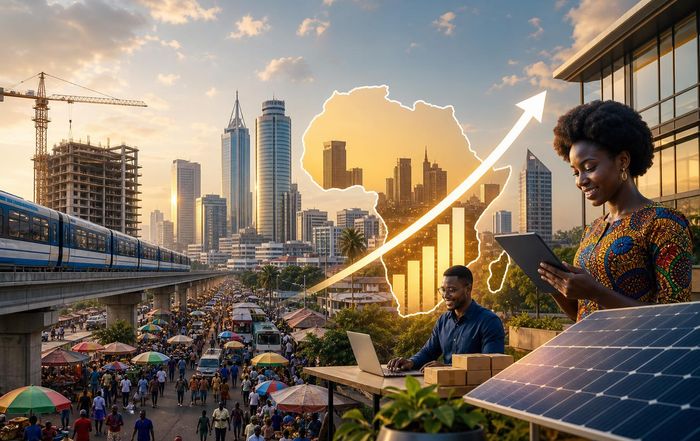
How African Urban Growth Is Creating New Business Markets
African cities are expanding at a pace and scale that is reshaping the continent's economic landscape and opening new business markets that are increasingly relevant to investors, entrepreneurs and policymakers in the United States and globally. For super loyal and educated readers of USA update, which often follows daily or recent developments in the economy, business, finance, jobs and technology, Africa's urban transition is no longer a distant demographic trend; it is a powerful structural shift that is beginning to influence global supply chains, consumer markets and innovation ecosystems in ways that demand close attention.
The Scale and Speed of Africa's Urban Transition
Across the continent, cities are growing faster than almost anywhere else in the world. According to the United Nations Department of Economic and Social Affairs (UN DESA), Africa's urban population is projected to roughly double between 2020 and 2050, adding hundreds of millions of new city dwellers and pushing urbanization from around 44 percent toward a majority-urban society. Reports from the World Bank indicate that some of the world's fastest-growing cities are African, including metropolises such as Lagos, Kinshasa, Dar es Salaam and Nairobi, as well as dozens of mid-sized cities that are expanding from a few hundred thousand residents to several million within a generation.
This rapid urbanization is driven by a combination of natural population growth and rural-to-urban migration, as people move in search of jobs, education, healthcare and connectivity to regional and global markets. Urban centers are increasingly where economic opportunity is concentrated, and they are becoming the focal points for new business models, technological experimentation and infrastructure investment. For readers following macroeconomic trends on USA update's new economy coverage at usa-update.com/economy.html, this demographic transformation is central to understanding where future global demand and labor supply will emerge.
While the pace of change is uneven across the continent, and some cities struggle with inadequate infrastructure, informal settlements and governance challenges, the overall trajectory is clear: African urban growth is creating large, dense, and youthful markets that are attractive to both domestic and international businesses. Organizations such as UN-Habitat and the African Development Bank have emphasized that if managed well, this urbanization can be a powerful driver of productivity, job creation and innovation, rather than a source of strain on public services.
Emerging Consumer Markets and the Growth of a New Middle Class
One of the most visible effects of urbanization is the rise of new consumer markets. Urban residents typically have higher incomes, more diverse employment opportunities and greater access to goods and services than their rural counterparts. Research by McKinsey & Company and other consultancies has highlighted the emergence of an African consumer class whose spending power is increasingly shaping sectors such as food and beverages, retail, telecommunications, financial services and entertainment.
In major cities like Lagos, Johannesburg, Nairobi, Accra and Abidjan, shopping malls, modern retail chains and e-commerce platforms are proliferating. Urban consumers are demanding higher-quality products, better service, and more convenient purchasing channels. This is creating opportunities not only for large multinational companies but also for local and regional firms that understand cultural preferences, price sensitivities and the importance of informal distribution networks.
Food consumption patterns are changing as urban households shift from subsistence agriculture to purchased food, often with a growing appetite for processed and packaged products. Studies from organizations such as the Food and Agriculture Organization (FAO) show that this "dietary transition" is driving demand for cold chains, logistics, food processing and quality control services, particularly in fast-growing metropolitan areas. Companies that can provide reliable supply, safe products and efficient distribution are finding room to scale.
Digital connectivity is amplifying these shifts. The spread of affordable smartphones and mobile broadband, tracked by institutions like the GSMA and International Telecommunication Union (ITU), has enabled online shopping, digital entertainment and mobile banking to reach millions of urban Africans. E-commerce platforms such as Jumia and regionally focused startups are experimenting with localized logistics solutions, cash-on-delivery options and mobile payments to serve customers who may be new to formal retail but are highly engaged with digital tools. For those following consumer trends via the unique consumer section at usa-update.com/consumer.html, African cities now represent some of the most dynamic frontiers for retail and digital services worldwide.
Urban Africa Market Opportunity Explorer
Interact with the sliders to see how different growth paths shape potential urban consumer markets.
Digital Infrastructure, Fintech and the New Financial Ecosystem
Urban growth is tightly linked to the spread of digital financial services across the continent. The story of African fintech is already well known in technology and finance circles, with M-Pesa in Kenya often cited as an early pioneer of mobile money. However, the current landscape is far broader and more diverse, spanning mobile wallets, digital lending, cross-border payments, merchant services, insurtech and embedded finance. Large cities provide the density of customers, merchants and institutions needed for these platforms to achieve scale.
Reports from The World Bank, CGAP (Consultative Group to Assist the Poor) and The Brookings Institution have documented how mobile money has expanded financial inclusion in countries such as Kenya, Ghana, Tanzania and Senegal, enabling millions of people to store value, send remittances and pay bills without traditional bank accounts. Urban residents, with their frequent transactions and access to multiple service providers, often become early adopters of new digital tools, which then spread outward into peri-urban and rural areas.
Fintech startups are leveraging data analytics, artificial intelligence and alternative credit scoring to extend small loans to urban micro-entrepreneurs, traders and gig workers who lack collateral or formal credit histories. Platforms in Nigeria, South Africa and Egypt, for example, are experimenting with merchant cash advances, buy-now-pay-later services and invoice financing for small businesses. Regulatory sandboxes, overseen by central banks and financial regulators in several countries, are allowing innovators to test products while maintaining consumer protection and financial stability, a balance that is closely watched by analysts interested in regulatory developments and can be followed through USA update's regulation hub at usa-update.com/regulation.html.
International investors have taken notice. Venture capital flows into African fintech have grown substantially over the past decade, although they remain modest compared to other regions. Data from sources such as Partech Africa, Briter Bridges and The African Private Equity and Venture Capital Association (AVCA) show that fintech continues to attract a significant share of startup funding on the continent, with a heavy concentration of activity in urban centers. This investment is not only about payments; it is increasingly about building platforms that can serve as digital infrastructure for commerce, government services and everyday life in rapidly expanding cities.
Urban Infrastructure: Transport, Energy and Housing as Business Frontiers
The physical infrastructure of African cities is under intense pressure from rapid population growth, yet this very pressure is generating new markets for construction, engineering, technology and services. Urban transport is a prime example. Congestion in megacities such as Lagos, Cairo and Nairobi has become a major economic and social issue, but it has also spurred investment in mass transit systems, ride-hailing platforms and mobility innovations.
Traditional informal transport systems, such as minibuses and motorcycle taxis, remain central to urban mobility, and efforts to formalize or integrate them into broader transport planning are creating opportunities for digital platforms and data analytics. Companies and initiatives are using GPS tracking, fare collection technologies and route optimization tools to improve reliability and safety. Ride-hailing services like Uber and Bolt, along with local competitors, have established strong presences in numerous African cities, adapting their models to local regulatory environments and consumer preferences. Analysts tracking these developments can find broader context on mobility and technology trends via USA update's technology coverage at usa-update.com/technology.html.
Energy infrastructure is another critical frontier. Many African cities face electricity shortages, unreliable grids and growing demand from households and businesses. Organizations such as the International Energy Agency (IEA) and Sustainable Energy for All have documented the potential for decentralized solutions, including rooftop solar, mini-grids and energy-efficient appliances, particularly in peri-urban neighborhoods. Urban commercial and industrial customers are increasingly investing in captive power solutions to ensure reliability, often combining solar, battery storage and diesel backup. This is creating markets for energy service companies, equipment suppliers and financiers who can structure long-term power purchase agreements.
Housing and real estate development are similarly central to the urbanization story. The housing deficit in many African cities is substantial, and informal settlements are expanding as formal housing supply struggles to keep pace with demand. However, this challenge has prompted innovation in construction materials, modular housing, mortgage products and land titling systems. Institutions like UN-Habitat and the Centre for Affordable Housing Finance in Africa analyze models for affordable housing that can be scaled in growing cities. Real estate investment trusts, public-private partnerships and blended finance mechanisms are being tested to mobilize capital for urban development, including mixed-use projects that combine residential, commercial and public spaces.
For investors, developers who follow infrastructure and energy markets through USA update's energy section at usa-update.com/energy.html, African cities represent both a major need and a significant opportunity. The key question is whether infrastructure investment can be aligned with sustainable, inclusive urban planning rather than reactive, fragmented expansion.
Innovation Ecosystems, Startups and the Rise of Tech Hubs
Africa's urban growth is closely intertwined with the rise of vibrant innovation ecosystems in cities across the continent. Technology hubs in Lagos, Nairobi, Cape Town, Johannesburg, Cairo, Accra and Kigali, among others, are attracting entrepreneurs, investors and global partners who see African cities as laboratories for digital solutions to local and global problems. Organizations such as GSMA, Startup Genome and VC4A have documented the proliferation of tech hubs, incubators and co-working spaces that provide mentorship, training and access to capital.
These ecosystems are not limited to fintech. Startups are emerging in sectors including healthtech, edtech, agritech, logistics, climate tech and creative industries. In urban health, for instance, telemedicine platforms and digital pharmacies are addressing gaps in access and affordability, while also experimenting with new insurance and payment models. In education, online learning platforms and coding academies are targeting urban youth and professionals seeking digital skills, often in partnership with global technology companies and local universities.
Logistics and last-mile delivery are particularly dynamic areas of innovation, as startups develop solutions for navigating congested streets, inconsistent addressing systems and fragmented supply chains. Motorbike-based delivery services, warehouse optimization technologies and digital freight platforms are all being deployed in major cities, often in collaboration with e-commerce players and retailers. Reports from The World Economic Forum, International Finance Corporation (IFC) and OECD Development Centre have highlighted how these urban innovation ecosystems can contribute to job creation and productivity growth if supported by appropriate policies and infrastructure.
For smart readers of USA update's business and technology sections at usa-update.com/business.html and usa-update.com/technology.html, the rise of African tech hubs matters not only as a regional story but also as a source of global partnerships. U.S. and European companies are increasingly engaging with African startups through accelerator programs, corporate venture funds and joint ventures, recognizing that solutions developed for African cities-such as low-cost digital identity, off-grid energy management or AI-powered language tools-may have applications in other emerging markets and even in advanced economies.
Jobs, Employment and the Urban Labor Market
Urbanization is transforming the nature of work and employment across Africa. Cities concentrate both formal sector jobs and a vast range of informal economic activities, from street vending and domestic work to small-scale manufacturing and creative services. The International Labour Organization (ILO) and African Development Bank have noted that the majority of urban workers in many African countries remain in informal employment, often without social protection or secure contracts, even as formal sectors such as finance, telecommunications, manufacturing and public administration expand.
The challenge and opportunity for policymakers and businesses lie in harnessing urban growth to create more productive, better-quality jobs. Investments in infrastructure, manufacturing zones, business parks and service industries can generate formal employment, while improvements in regulation, access to finance and business development services can help informal enterprises grow and become more resilient. Digital platforms are also playing a significant role in shaping urban labor markets, from ride-hailing and delivery services to online freelancing and digital marketplaces for artisans and small businesses.
Concerns about job precarity in the gig economy are emerging in African cities just as they have in North America and Europe, and debates about worker protections, minimum standards and platform accountability are becoming more prominent. At the same time, digital platforms can provide entry points into the labor market for young people and migrants who might otherwise struggle to find opportunities. Observers following these trends through USA update's new employment and jobs coverage at usa-update.com/employment.html and usa-update.com/jobs.html will recognize parallels with debates in the United States, even as the local context in African cities remains distinct.
Skills development is central to the employment story. Urban youth populations are large and growing, and education systems are under pressure to equip students with skills relevant to modern economies, including digital literacy, critical thinking and entrepreneurship. Partnerships between governments, private companies, universities and international organizations are attempting to address these gaps through vocational training, coding bootcamps and apprenticeship programs. Initiatives supported by organizations such as UNESCO, The Mastercard Foundation and The World Bank aim to align training with the needs of urban labor markets, particularly in sectors like construction, ICT, hospitality and creative industries.
Governance, Regulation and the Business Environment
As African cities grow, governance and regulation become decisive factors in determining whether urbanization translates into sustainable business markets or exacerbates inequality and congestion. City governments, often operating with limited fiscal resources and institutional capacity, face complex challenges in land management, service delivery, zoning, taxation and public safety. National governments and regional bodies such as the African Union and Regional Economic Communities also shape the regulatory environment through policies on trade, investment, competition and digital markets.
The World Bank's Doing Business reports, although discontinued as a formal publication after 2021 due to methodological concerns, previously highlighted significant variation in the ease of doing business across African countries, with some cities making notable reforms in areas such as business registration, construction permits and access to electricity. Newer assessments from organizations like The World Bank, OECD and Mo Ibrahim Foundation continue to analyze governance quality and business conditions, emphasizing the importance of transparency, rule of law and anti-corruption measures.
Regulation of digital markets is an increasingly important topic. Data protection laws, cybersecurity frameworks, digital taxation and competition policies are evolving across the continent, with countries such as Kenya, Nigeria, South Africa and Ghana adopting or updating legislation to govern online platforms, cross-border data flows and consumer rights. These regulatory developments have implications for foreign investors, local startups and multinational technology companies, and they are closely tracked by analysts and businesses who rely on sources such as The African Union's Digital Transformation Strategy, ITU publications and regional think tanks.
For growing readers of USA update's regulation and international inderpendentsections at usa-update.com/regulation.html and usa-update.com/international.html, understanding the evolving regulatory environment in African cities is essential for assessing risk, compliance requirements and long-term partnership opportunities. While regulatory uncertainty can be a concern, there is also a clear trend toward more structured, coordinated approaches to digital and financial regulation, often drawing on international standards and collaborative initiatives.
Regional Integration, Trade and the Role of the AfCFTA
Urban growth in Africa is not occurring in isolation; it is increasingly linked to regional economic integration and cross-border trade. The African Continental Free Trade Area (AfCFTA), which began trading under its framework in 2021, aims to create a single market for goods and services across most of the continent, with the potential to boost intra-African trade, industrialization and investment. Major cities are expected to serve as hubs in this integrated market, connecting production centers, logistics corridors and consumer bases.
Reports from the United Nations Economic Commission for Africa (UNECA), AfCFTA Secretariat and World Trade Organization (WTO) suggest that reducing tariffs and non-tariff barriers, harmonizing standards and improving trade facilitation could significantly increase trade flows among African countries. Urban manufacturing zones, logistics hubs and service clusters stand to benefit as supply chains become more regionalized and less dependent on extra-continental trade alone. Cities such as Lagos, Abidjan, Johannesburg, Nairobi and Addis Ababa are already central nodes in regional trade networks, and their importance is likely to grow as infrastructure and regulatory frameworks improve.
For global businesses, including those in the United States, this integration creates opportunities to design regional strategies that treat African cities not as isolated markets but as interconnected components of a continental system. Companies that establish operations, partnerships or distribution networks in key urban centers may be better positioned to serve multiple countries as trade barriers decline. Analysts can follow these developments through specialized resources such as UNECA's AfCFTA policy reports and trade-focused think tanks, alongside broader international coverage from platforms like Reuters and Financial Times, which frequently report on African trade and investment trends.
Fans of USA update's international and business sections at usa-update.com/international.html and usa-update.com/business.html will recognize that Africa's urban markets are becoming integral to discussions about resilient supply chains, diversified sourcing and new consumer bases, particularly as companies seek to reduce overreliance on any single region.
Culture, Entertainment and the Creative Economy
Beyond infrastructure and finance, African cities are also emerging as global centers of culture, entertainment and creative industries. The growth of music, film, fashion, gaming and digital content production in cities such as Lagos, Johannesburg, Nairobi, Dakar and Accra is creating new business models and international collaborations. The success of Nigeria's Nollywood film industry, Afrobeat and Amapiano music, and fashion designers from across the continent demonstrates how urban creative scenes can generate both cultural influence and economic value.
Organizations such as UNESCO and UNCTAD have highlighted the potential of the creative economy to contribute to inclusive growth, particularly for young people and women. Streaming platforms, social media and digital distribution channels have enabled African artists and creators to reach global audiences, monetizing their work through advertising, subscriptions, live events and brand partnerships. Urban venues, studios, co-working spaces and festivals play a crucial role in nurturing these ecosystems, providing spaces for collaboration, performance and experimentation.
For followers of USA update's entertainment and lifestyle recently updated sections at usa-update.com/entertainment.html and usa-update.com/lifestyle.html, the rise of African creative industries is not only a cultural story but also a business one. International record labels, film studios, fashion houses and gaming companies are increasingly partnering with African creators, acquiring catalogs, co-producing content and investing in talent development. These collaborations are reshaping global popular culture and offering new revenue streams for urban economies across the continent.
Sustainability, Climate Resilience and Green Business Opportunities
Urban growth in Africa is occurring in a context of climate change, resource constraints and environmental degradation, which together create both risks and opportunities for businesses. Many African cities are vulnerable to flooding, heat waves, water shortages and coastal erosion, as documented by the Intergovernmental Panel on Climate Change (IPCC) and regional climate research centers. At the same time, there is growing recognition that sustainable urban planning, green infrastructure and low-carbon technologies can open new markets and improve quality of life.
Green building standards, energy-efficient appliances, sustainable transport solutions and circular economy initiatives are gaining traction in cities such as Cape Town, Kigali and Nairobi, often supported by international development finance institutions like the IFC, European Investment Bank (EIB) and African Development Bank. Renewable energy projects, including solar and wind farms near urban centers, are being developed to meet rising electricity demand while reducing dependence on fossil fuels. Public and private investments in urban green spaces, flood management and waste recycling are beginning to reshape the environmental footprint of some cities.
Companies that specialize in climate-resilient infrastructure, environmental consulting, clean energy technologies and sustainable materials are finding opportunities to partner with city governments and local firms. International initiatives such as C40 Cities, Global Covenant of Mayors for Climate & Energy and ICLEI - Local Governments for Sustainability are working with African municipalities to design and implement climate action plans, which often include components that create new business opportunities in energy, transport, construction and urban services.
For people who follow energy and sustainability topics via USA update's energy and economy top sections at usa-update.com/energy.html and usa-update.com/economy.html, the intersection of urbanization and climate policy in Africa is an area to watch closely, as it will influence future markets for green technologies, carbon finance and climate adaptation services.
Tourism, Travel and Urban Experiences
African cities are also evolving as destinations for tourism, business travel and international events. Traditional safari and beach tourism remain important, but increasingly, visitors are drawn to urban experiences that include cultural festivals, culinary scenes, historical sites, nightlife and conferences. Cities such as Cape Town, Marrakech, Nairobi, Kigali and Accra are positioning themselves as hubs for meetings, incentives, conferences and exhibitions (MICE), leveraging improved airports, hotels and conference facilities.
Organizations like the World Tourism Organization (UNWTO) and World Travel & Tourism Council (WTTC) have documented the growing contribution of travel and tourism to African economies, while also noting the sector's vulnerability to global shocks such as pandemics and economic downturns. Urban tourism can be a driver of job creation in hospitality, transport, retail and entertainment, particularly for youth and women, if managed sustainably and inclusively.
For active community readers of USA update's travel and events sections at usa-update.com/travel.html and usa-update.com/events.html, African cities are increasingly relevant not only as destinations but also as hosts of international summits, tech conferences, cultural festivals and sporting events. These gatherings create platforms for networking, deal-making and cultural exchange that can further catalyze business opportunities linked to urban growth.
Implications for U.S. and Global Businesses
As African urbanization accelerates, companies and investors in the United States, Europe and Asia are reassessing their engagement strategies with the continent. Rather than viewing Africa primarily through the lens of extractive industries or aid, there is a growing recognition of the continent as a complex set of emerging markets, each shaped by its own urban dynamics, regulatory environments and consumer behaviors. For readers of USA update, this shift has several implications.
First, understanding Africa's urban markets requires granular insight into specific cities and regions, rather than broad generalizations about the continent as a whole. Lagos is not Nairobi, and Cairo is not Johannesburg; each city has distinct sectoral strengths, infrastructure profiles, governance structures and cultural contexts. Businesses that invest in local partnerships, market research and long-term relationship-building are more likely to navigate these differences successfully.
Second, successful engagement often involves co-creation and collaboration with local entrepreneurs, civil society organizations and public institutions. Whether in fintech, renewable energy, logistics or creative industries, many of the most promising innovations are emerging from African-led initiatives that draw on deep local knowledge. International companies that approach these markets with humility, flexibility and a willingness to share value are better positioned to build trust and resilience.
Third, risk and opportunity are intertwined. Political instability, currency volatility, regulatory uncertainty and infrastructure gaps can create challenges for investors, but they can also be mitigated through diversification, partnerships and careful due diligence. Institutions such as The World Bank's Multilateral Investment Guarantee Agency (MIGA), U.S. International Development Finance Corporation (DFC) and various export credit agencies offer tools to manage some of these risks, including political risk insurance and blended finance structures.
Finally, African urban growth is part of a broader reconfiguration of the global economy that will influence trade patterns, innovation networks and demographic trends over the coming decades. For policymakers, business leaders and analysts in the United States who rely on platforms like this, following developments in African cities is increasingly essential to understanding where future competition, collaboration and opportunity will arise.
Looking Ahead: Urban Africa and the Next Chapter of Global Growth
As the world moves through the middle of this decade, African urbanization stands out as one of the defining demographic and economic transformations of the era. The continent's cities are sites of intense challenge-congestion, inequality, infrastructure deficits and climate vulnerability-but they are also engines of creativity, entrepreneurship and resilience. New business markets are emerging at the intersection of digital technology, consumer demand, infrastructure investment and cultural production, reshaping how Africa connects to the global economy.
The trajectory of these markets is not predetermined. Policy choices, governance reforms, investment decisions and community initiatives will shape whether urban growth leads to inclusive prosperity or deepened divides. Yet the evidence from organizations such as the World Bank, African Development Bank, UN-Habitat, OECD and numerous research institutions suggests that with the right mix of planning, innovation and partnership, African cities can become powerful drivers of sustainable growth.
For happy readers of USA update who love developments in the economy, business, finance, jobs, technology, regulation, consumer markets, energy, events, international affairs, travel, entertainment and lifestyle, the message is clear: African urban growth is not a peripheral story. It is central to the next chapter of global development and presents a wide array of opportunities for those who are prepared to engage thoughtfully, build long-term relationships and contribute to solutions that align commercial success with social and environmental progress.
In this evolving landscape, staying informed through trusted platforms, engaging with diverse perspectives and recognizing the agency and expertise of African cities and citizens will be essential. The new business markets emerging from Africa's urban transformation are not only reshaping the continent; they are helping to define the future contours of the global economy that USA update and its rather clever readers will continue to track in the years ahead.
