
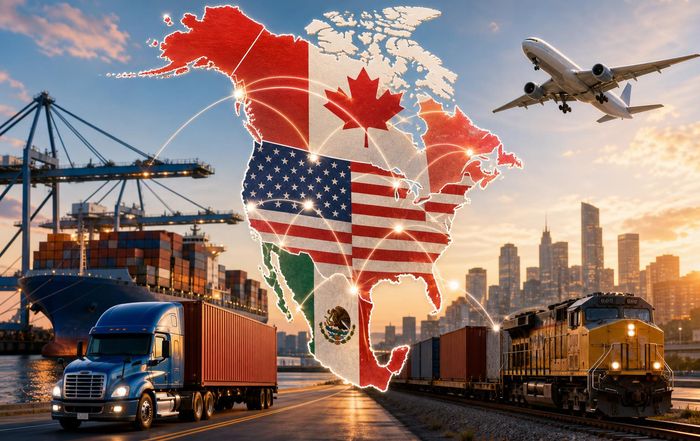
How North American Trade Supports Regional Supply Chains!
Quick Introduction: A Region Rewiring Global Commerce
North America has entered a defining period in the architecture of global trade. As multinational companies reassess long, fragile supply chains and governments respond to geopolitical tensions, energy transitions, and technological competition, the United States, Canada, and Mexico are re-emerging not just as major trading partners, but as an integrated production platform with strategic weight. For readers of USA update, this is not an abstract macroeconomic story; it shapes jobs, investment, innovation, consumer prices, and the resilience of everyday life, from the availability of cars and pharmaceuticals to the stability of energy markets and the competitiveness of American workers.
The modern North American trade system, anchored in the United States-Mexico-Canada Agreement (USMCA), is increasingly viewed by policymakers, business leaders, and economists as a powerful tool for building regional supply chains that are more secure, more sustainable, and more technologically advanced. In an era marked by pandemic disruptions, semiconductor shortages, and shifting trade alliances, the North American production ecosystem is becoming a central pillar of how companies rethink risk and opportunity.
For online readers here or email and RSS / ATOM subscribing members focused on the economy, finance, employment, technology, and regulation, understanding how North American trade supports regional supply chains is essential for grasping where growth, jobs, and innovation are likely to concentrate in the years ahead.
From NAFTA to USMCA: The Foundation of a Regional Production Platform
The transformation of North American trade over the last three decades began with the North American Free Trade Agreement (NAFTA) in 1994, which substantially reduced tariffs and opened the way for cross-border manufacturing integration. According to historical data from the Office of the United States Trade Representative and analyses by organizations such as the Peterson Institute for International Economics, NAFTA fostered extensive production-sharing, especially in automotive, electronics, and agriculture, where components and goods crossed borders multiple times before final assembly.
By the late 2010s, however, political and economic pressures led to a renegotiation of NAFTA, culminating in the USMCA, which entered into force in 2020. The agreement preserved the tariff-free foundation of the earlier pact while adding new rules on digital trade, intellectual property, labor, environmental standards, and rules of origin, particularly in the automotive sector. The USMCA text published by governments and summarized by sources such as USTR.gov and Canada's Department of Finance details how tighter regional content requirements, especially for vehicles and auto parts, are designed to deepen regional production rather than simply facilitate trade in finished goods.
For the United States and its neighbors, this framework has turned North America into a dense web of interdependent supply chains. Components made in Ontario may be combined with parts from Michigan and software from California, then assembled in plants in Guanajuato or Nuevo León, before being shipped back across the border for sale throughout the continent. This cross-border production model is not theoretical; it is visible in trade statistics compiled by UN Comtrade and in supply chain mapping by institutions such as the Wilson Center and the Brookings Institution, which show that a large share of U.S. imports from Mexico and Canada are intermediate goods that support domestic production, not simply final consumer products.
For active readers following USA update's economy coverage through daily updated resources like USA Update's economy section, this shift from pure trade to integrated production is central to understanding why North American supply chains matter more than ever.
North American Supply Chain Readiness Slider
Explore how shifts toward regional trade affect resilience across key sectors.
North American supply chains are actively rebalanced toward the region, with growing nearshoring in autos, electronics, and energy.
Nearshoring, Friendshoring, and the New Geography of Production
The concept of nearshoring-locating production closer to final markets-has moved from boardroom buzzword to operational reality. Companies that previously relied heavily on long-distance supply chains in East Asia are now increasingly evaluating North America as a strategic alternative or complement. Research from consultancies such as McKinsey & Company and Boston Consulting Group, as well as analysis by the International Monetary Fund and World Bank, indicates that a combination of rising transport costs, geopolitical risks, and the experience of pandemic-era disruptions has accelerated this trend.
In parallel, governments in the United States and allied economies have embraced the notion of "friendshoring," a term popularized by officials such as former U.S. Treasury Secretary Janet Yellen, which refers to building supply chains among politically aligned countries. North America, with its relatively stable institutions and long-standing trade ties, fits naturally into this framework. The USMCA provides legal predictability, while shared security and regulatory cooperation further reduce the risk profile for investors.
Mexico, in particular, has emerged as a nearshoring hub for U.S.-oriented manufacturing. According to data published by Banco de México and trade statistics from the U.S. Census Bureau, Mexico has in recent years rivaled or surpassed China as one of the largest sources of U.S. goods imports, driven in part by increased investment in sectors such as automotive, electronics, appliances, and machinery. Industrial parks in northern Mexican states have reported high occupancy rates, a trend covered by outlets like Reuters and The Wall Street Journal, reflecting strong demand from firms seeking to locate production closer to U.S. consumers.
At the same time, Canada's role as a high-tech and resource-rich partner has strengthened. Canadian provinces host advanced manufacturing, aerospace, and clean technology industries that feed into U.S. and Mexican value chains, while also providing critical minerals and energy resources. The Government of Canada's trade statistics portal and analyses from Natural Resources Canada illustrate how Canadian exports of critical minerals, energy, and advanced components are increasingly woven into North American industrial strategies.
For businesses and investors following USA Update's business coverage and finance insights, these nearshoring and friendshoring dynamics are reshaping capital flows, corporate strategies, and sectoral opportunities across the region.
The Automotive and EV Ecosystem: North America's Flagship Supply Chain
No sector better illustrates the logic and potential of regional supply chains than automotive manufacturing. The North American auto industry is deeply integrated, with parts and subassemblies often crossing borders multiple times before final assembly. Under USMCA, vehicles must meet higher regional content thresholds and labor value content rules to qualify for tariff-free treatment, which has encouraged automakers and suppliers to source more inputs within North America.
The transition to electric vehicles (EVs) has intensified this integration. The United States has enacted major industrial policy measures, including the Inflation Reduction Act (IRA) and the CHIPS and Science Act, which aim to stimulate domestic and allied production of batteries, critical minerals, and semiconductors. Public information from The White House and agencies such as the U.S. Department of Energy and U.S. Department of Commerce highlights how these policies explicitly reference North American content requirements and cooperation with Canada and Mexico.
Canada, for its part, has positioned itself as a key supplier of battery materials and EV manufacturing. Provincial and federal authorities have announced multiple large-scale investments in battery plants and EV assembly with global automakers and cell manufacturers, as documented by Innovation, Science and Economic Development Canada and major news outlets. Canada's reserves of lithium, nickel, cobalt, and other critical minerals, outlined in reports from Geological Survey of Canada, form a crucial part of the regional EV supply chain strategy.
Mexico has attracted billions of dollars in new and expanded auto and EV-related facilities, from traditional assembly plants to new battery and component factories. Public announcements by companies such as Tesla, BMW, General Motors, Ford, and Stellantis, reported by sources including Bloomberg and Financial Times, underscore Mexico's growing role as an EV manufacturing base serving the North American market. Mexican authorities have also advanced policies around lithium and energy to support this transformation, though there is ongoing debate among analysts about implementation challenges and regulatory clarity.
For the United States, this tri-national EV ecosystem is directly linked to jobs, technology, and consumer choice. Domestic assembly plants increasingly rely on components and materials from Canada and Mexico, while U.S. battery and semiconductor investments draw on regional partners for raw materials, engineering expertise, and market access. Readers of USA update who follow exciting technology trends and energy developments can see this convergence in the way EVs, clean energy, and advanced manufacturing are being discussed as a single, integrated North American opportunity.
Semiconductors, Advanced Manufacturing, and Digital Integration
Beyond autos, semiconductors and advanced electronics have become a focal point of North American industrial strategy. The global chip shortage underscored the vulnerability of overconcentrated production in a small number of regions. In response, the United States launched the CHIPS and Science Act, a sweeping initiative to encourage domestic semiconductor manufacturing, research, and workforce development. Public documentation from CHIPS.gov and the National Institute of Standards and Technology (NIST) emphasizes collaboration with trusted partners, including Canada and Mexico, in building resilient supply chains.
Canada has sought to leverage its strengths in research, AI, and niche semiconductor capabilities, with government and private sector initiatives focused on chip design, photonics, and advanced computing. Reports from Semiconductor Industry Association and Canadian innovation agencies highlight ongoing efforts to attract investment and integrate Canadian firms into North American chip ecosystems.
Mexico's role in semiconductors is more nascent but evolving. There is growing interest from policymakers and industry associations in positioning Mexico as a hub for chip packaging, testing, and electronics assembly, building on its established manufacturing base. Articles in outlets such as Nikkei Asia and The Economist have examined how Mexico might capture a share of the global realignment in electronics supply chains, though experts caution that this will require substantial investment in infrastructure, skills, and regulatory predictability.
Digital trade provisions in USMCA further support this technological integration. The agreement includes rules on data flows, source code protection, and non-discriminatory treatment of digital products, which provide a framework for cross-border cloud services, fintech, e-commerce, and AI-driven supply chain management. Detailed explanations of these provisions are available from World Trade Organization analyses and academic commentary hosted by institutions like Brookings and Council on Foreign Relations.
As USA update continues to independently cover the intersection of technology, business, and regulation, the emergence of a North American semiconductor and digital infrastructure ecosystem will remain a central theme, with implications for everything from jobs and training to cybersecurity and data governance.
Labor, Skills, and Employment: Human Capital at the Core of Integration
Regional supply chains are not only about goods and capital; they are fundamentally about people. The deepening integration of North American production has significant implications for labor markets, employment opportunities, and workforce development across the United States, Canada, and Mexico.
In the United States, manufacturing employment has stabilized and, in some sectors, expanded as reshoring and nearshoring trends gain traction. Data from the U.S. Bureau of Labor Statistics shows that while manufacturing employment remains below its late-20th-century peak, recent years have seen notable gains in advanced manufacturing, transportation equipment, and related fields. The push to rebuild domestic and regional production capacity has led to renewed emphasis on apprenticeships, technical education, and community college partnerships, themes that USA update regularly explores in its jobs and employment coverage.
Canada faces similar challenges and opportunities, with a strong need for skilled workers in automotive, aerospace, energy, and technology sectors. Canadian federal and provincial programs, documented by sources such as Employment and Social Development Canada, aim to align immigration policies, training initiatives, and innovation strategies to ensure that the labor force can support high-value manufacturing and services that feed into North American supply chains.
Mexico, with its younger demographic profile, has become a crucial labor partner in regional production. Mexican industrial centers host millions of manufacturing jobs, many linked directly to U.S. and Canadian companies. Under USMCA, labor provisions were strengthened to address wage levels, unionization rights, and working conditions, particularly in Mexico's auto and manufacturing sectors. Independent assessments by organizations such as the International Labour Organization (ILO) and Human Rights Watch acknowledge progress in some areas, including union democracy and enforcement mechanisms, while also noting ongoing challenges in implementation and oversight.
For North American supply chains to remain competitive, coordinated efforts in education, training, and labor standards will be essential. Readers visiting here interested in how trade connects to real employment prospects will find that regional integration is increasingly linked to policies supporting STEM education, vocational training, and cross-border collaboration among universities and technical institutes, topics often highlighted in USA update's news coverage.
Regulatory Cooperation and Trade Facilitation: The Invisible Infrastructure
While factories and ports are the visible symbols of trade, the regulatory and administrative frameworks that govern cross-border flows are equally important in supporting regional supply chains. USMCA includes chapters on customs administration, trade facilitation, regulatory coherence, and technical barriers to trade, all of which aim to reduce friction, increase transparency, and harmonize standards where appropriate.
Regulatory cooperation between U.S., Canadian, and Mexican agencies covers areas such as automotive safety standards, food and agricultural regulations, pharmaceuticals, and digital services. Bodies like the Regulatory Cooperation Council between the United States and Canada, and various bilateral and trilateral working groups, seek to align rules in ways that preserve health, safety, and environmental protections while avoiding unnecessary duplication. Detailed descriptions of these efforts can be found on official government sites, including Canada-U.S. Regulatory Cooperation Council and corresponding U.S. counterparts.
Border infrastructure and customs modernization also play a central role. Investments in ports of entry, digital customs systems, and trusted trader programs help reduce delays and costs for companies that rely on just-in-time delivery. Agencies such as U.S. Customs and Border Protection (CBP), the Canada Border Services Agency (CBSA), and Mexico's customs authorities have been upgrading systems to allow for more efficient processing of high-volume, high-value trade flows. Trade analysts at institutions like CSIS and Wilson Center's Mexico Institute have emphasized that continued progress in trade facilitation is essential if North American supply chains are to compete with other major trading blocs.
For USA update loyal readers focused on regulation and consumer impacts, regulation coverage and consumer news provide context on how these often technical regulatory decisions translate into lower costs, safer products, and more reliable availability of goods.
Energy, Sustainability, and Climate: Powering the Regional Supply Chain
Energy is both a driver and a beneficiary of North American trade integration. The continent's energy systems are interconnected through pipelines, electricity grids, and cross-border trade in oil, natural gas, and increasingly renewable power. The U.S. Energy Information Administration (EIA), Natural Resources Canada, and Mexico's Secretaría de Energía provide data showing extensive cross-border flows of energy commodities and electricity, which underpin industrial operations and support supply chain resilience.
The energy transition is reshaping this landscape. The United States, Canada, and Mexico have all committed, to varying degrees, to reducing greenhouse gas emissions and expanding clean energy. U.S. policies under the Inflation Reduction Act have created significant incentives for renewable energy, energy storage, and grid modernization, with spillover effects for Canadian and Mexican suppliers and partners. Canada's climate strategies, including carbon pricing and support for clean technology, position it as a key player in low-carbon supply chains. Mexico's energy policy has been more contested, with debates over the balance between state-owned enterprises and private investment, particularly in renewables; analyses by organizations such as International Energy Agency and Center for Strategic and International Studies highlight both the potential and the policy uncertainty in Mexico's energy sector.
Sustainable supply chain management is increasingly a requirement from investors, regulators, and consumers. Companies operating in North America are under pressure to reduce emissions, improve energy efficiency, and ensure responsible sourcing of materials. Guidance from organizations like the World Resources Institute (WRI) and CDP, as well as regulatory developments in the United States and Europe, are pushing firms to map and decarbonize their supply chains, including those that span the U.S., Canada, and Mexico.
For successful readers of USA update interested in the intersection of energy, climate, and the economy, energy coverage and international insights offer perspectives on how North America's energy integration supports both industrial competitiveness and the long-term shift toward cleaner production.
Resilience and Risk Management: Lessons from Recent Disruptions
The past several years have tested global supply chains in unprecedented ways. The COVID-19 pandemic, shipping bottlenecks, geopolitical tensions, and natural disasters have exposed vulnerabilities in extended, concentrated supply networks. North America has not been immune to these shocks, but its integrated regional trade system has provided a platform for adaptive responses.
Automakers and manufacturers, for example, have adjusted sourcing strategies, increased buffer inventories for critical components, and diversified suppliers across the United States, Canada, and Mexico. Reports from industry associations such as the Alliance for Automotive Innovation and analyses by Deloitte and PwC describe how companies are using regionalization as a hedge against global volatility. While not all disruptions can be avoided, shorter supply lines and shared regulatory frameworks can reduce exposure to distant shocks and enable faster recovery.
At the same time, North America faces its own risks, including extreme weather events, cyber threats, and infrastructure constraints. For instance, droughts affecting river transport, wildfires impacting power grids, or cyberattacks on critical infrastructure can have ripple effects across regional supply chains. Organizations like the U.S. Department of Homeland Security, Public Safety Canada, and Mexico's civil protection agencies have increased coordination on risk assessment and resilience planning, often in partnership with private sector stakeholders.
For USA update, which covers in an unbiased way news and events that affect the economy and society, these resilience efforts are central to understanding how North American trade can not only drive growth but also provide stability in a more uncertain world.
Global Context: North America's Place in the World Economy
North American trade integration does not occur in isolation. It is part of a broader reconfiguration of the global economy, where major regions are consolidating internal trade ties while managing complex relationships with other powers. The European Union's single market, Asia's regional production networks, and new trade agreements across the Indo-Pacific and Africa all form part of this evolving landscape.
For the United States, Canada, and Mexico, strong regional supply chains enhance their collective ability to compete globally. North America's combined GDP, technological base, and diverse resource endowment make it one of the world's most powerful economic blocs. Analyses by OECD and World Bank show that North American trade in goods and services with Europe, Asia, and other regions continues to grow, even as intra-regional trade deepens.
However, there are areas of uncertainty and debate. Economists and policy analysts differ in their assessments of the long-term effects of industrial policy measures, such as subsidies for domestic production and content rules. Some argue that these policies strengthen resilience and innovation, while others warn about potential inefficiencies, trade tensions, or retaliatory measures from other countries. Publications from think tanks like Peterson Institute for International Economics, Cato Institute, and Carnegie Endowment for International Peace reflect this diversity of views, highlighting the need for careful design and international coordination.
For USA update positive thinking readers interested in the global dimension of the economy, international coverage and travel insights provide additional context on how North America's regional strategies interact with worldwide trends in trade, investment, and mobility.
Consumer Benefits, Innovation, and Everyday Life
Beyond macroeconomic statistics and corporate strategies, North American trade integration has tangible effects on consumers and communities. Integrated regional supply chains can support a wider variety of products, more rapid innovation cycles, and, when functioning efficiently, more competitive prices. The ability of firms to source components, technology, and services from across the continent enables them to design and deliver products that might not be feasible within a single national market.
In sectors like pharmaceuticals and medical devices, cross-border production and regulatory cooperation help ensure the availability of essential goods while maintaining safety standards. In agriculture and food, trade between the United States, Canada, and Mexico allows for year-round availability of many products, as well as diversification of supply in the face of climate variability. In entertainment and digital services, North American collaboration has produced globally recognized content, platforms, and technologies, a theme that USA update touches on in its entertainment and lifestyle inspirational features.
At the same time, consumers are increasingly attentive to where and how products are made. Transparency in supply chains, ethical sourcing, and environmental impact are becoming part of purchasing decisions. Companies operating within North America's integrated trade system are responding by improving traceability, engaging in sustainability reporting, and adopting responsible sourcing standards, guided by frameworks from organizations such as OECD Guidelines for Multinational Enterprises and UN Global Compact.
For USA update, which aims to provide readers with trustworthy, practical information on economic and social trends, the connection between regional trade and everyday consumer experience is a vital part of the story. It links high-level trade policy to the choices families make in stores, online, and in their investment portfolios.
Going Ahead = Opportunities and Challenges for North American Supply Chains
As the world moves deeper into the second half of the 2020s, North American trade and regional supply chains are poised at a crossroads. The foundations laid by NAFTA and strengthened by USMCA, combined with nearshoring, digitalization, and energy transition, provide a powerful platform for growth, innovation, and resilience. Yet realizing this potential will require sustained effort and cooperation across borders, sectors, and levels of government.
Key opportunities include expanding EV and clean energy manufacturing, deepening semiconductor and advanced technology integration, enhancing infrastructure and border efficiency, and investing in workforce development that equips workers in all three countries for high-value roles. There is also significant potential in services trade, digital platforms, and cross-border innovation ecosystems, where North America's universities, research institutions, and startups can collaborate more intensively.
Challenges remain in areas such as regulatory divergence, infrastructure bottlenecks, labor rights enforcement, and alignment of climate and energy policies. Political cycles in each country can introduce uncertainty, as trade agreements and industrial strategies may become subjects of debate. Analysts and observers, drawing on multiple sources including IMF and World Economic Forum reports, generally agree that the direction of travel toward greater regionalization is clear, but the exact path and pace will depend on policy choices and global developments.
For USA update and its entrepreneurial readers, the evolution of North American trade and supply chains will remain a central narrative shaping the economy, business climate, job market, regulatory environment, and consumer landscape. By following developments across economy, business, finance, technology, and international affairs, readers can better anticipate where opportunities will emerge and how policy decisions will influence their lives and communities.
In sum, North American trade is no longer just about the movement of goods across borders; it is about the construction of a shared production platform that leverages the strengths of the United States, Canada, and Mexico. This regional supply chain architecture, grounded in legal frameworks, economic complementarities, and a growing focus on resilience and sustainability, is becoming one of the most important assets for North America in a world defined by rapid change and intense competition.
