
Why Automation Is Changing Workforce Skill Requirements
A new era of work for USA update readers
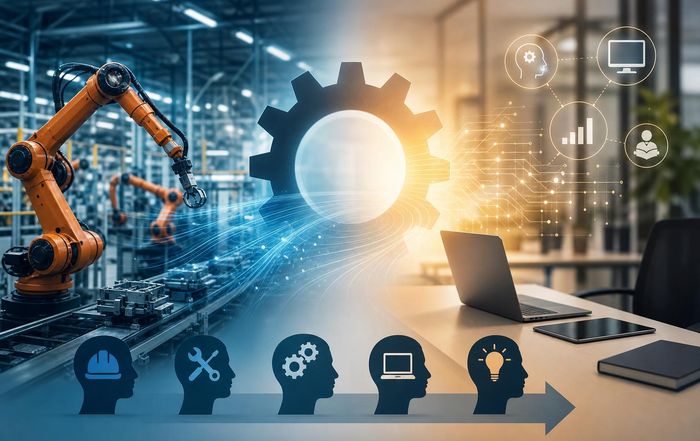
Across the United States and around the world, automation is no longer a distant prospect but a present force reshaping how people work, how companies compete, and how economies grow. For technology skilled individuals here today, this shift is not merely a technology story; it is a story about livelihoods, opportunity, and the skills that will define economic resilience in the coming decade. From factory floors in the Midwest to financial centers in New York and technology hubs in California, automation is changing the mix of tasks performed by humans and machines, and in doing so, it is fundamentally altering workforce skill requirements.
As organizations integrate robotics, artificial intelligence (AI), and software automation into their operations, they are not simply replacing workers; they are reconfiguring jobs, redesigning workflows, and demanding new combinations of technical, analytical, and human-centered capabilities. This transformation is evident in the U.S. economy, in North American supply chains, and across major markets in Europe and Asia, where businesses are racing to build more resilient, efficient, and data-driven operations. For clever people following broader economic trends on USA update's economy section, the acceleration of automation has become a central theme in discussions about productivity, inflation, and long-term growth.
From mechanization to intelligent automation
Automation has been part of industrial life for more than a century, from mechanical looms to assembly-line robotics. What distinguishes the current wave is the fusion of digital technologies such as AI, machine learning, cloud computing, and advanced robotics, sometimes described as part of a "fourth industrial revolution." Organizations like the World Economic Forum note that this convergence enables machines not only to perform routine physical tasks but also to handle information processing, pattern recognition, and even some forms of decision-making that were once the exclusive domain of human workers. Readers can delve deeper into these trends through the World Economic Forum's analyses of the future of jobs on weforum.org.
This shift from simple mechanization to intelligent automation has widened the range of occupations and industries affected. Traditional manufacturing and logistics remain at the forefront, with industrial robots and automated warehouses transforming how goods are produced and moved. At the same time, software bots are now handling back-office processes in finance, healthcare, and government, while AI tools support professionals in law, marketing, journalism, and software development. Reports from McKinsey & Company and PwC emphasize that the conversation is no longer about whether automation will touch white-collar work, but about which tasks within these jobs are most susceptible and how organizations will redesign roles accordingly. Interested readers can explore these global perspectives on mckinsey.com and pwc.com.
For USA update, this evolution is particularly relevant because it intersects with core topics such as business competitiveness, productivity growth, and the shifting nature of employment. Stories in the business section has increasingly highlighted how companies in the United States are using automation not only to cut costs but also to innovate, improve customer experience, and respond to labor shortages in key industries.
The task-based view of automation and skills
Understanding how automation changes skill requirements begins with recognizing that most jobs are made up of multiple tasks, some of which are more easily automated than others. Research from the OECD and the U.S. Bureau of Labor Statistics shows that tasks involving routine, predictable activities-whether physical or cognitive-are more likely to be automated than tasks requiring complex problem-solving, creativity, or interpersonal interaction. Those interested in the data behind these patterns can review analyses on oecd.org and occupational outlooks on bls.gov.
This task-based view helps explain why automation does not simply eliminate entire occupations overnight. Instead, it reshapes job content. A manufacturing technician who once spent most of the day manually operating machinery might now oversee several automated systems, interpreting sensor data, performing maintenance, and troubleshooting software. A finance professional who previously compiled reports by hand might rely on automated tools for data extraction and focus more on interpreting results, advising clients, and designing risk strategies. In customer service, chatbots may handle routine inquiries, while human agents take on more complex, emotionally nuanced interactions.
As organizations reallocate tasks between humans and machines, the skills required for success in many roles are shifting toward a blend of digital literacy, data fluency, systems thinking, and strong human capabilities such as communication and collaboration. This has implications for job seekers and employees following USA update's jobs and employment coverage where the emphasis is increasingly on adaptability and continuous learning rather than static job descriptions.
Technical and digital skills: from basic literacy to advanced expertise
One of the most visible changes in workforce requirements is the growing importance of technical and digital skills across nearly every industry and occupation. Basic digital literacy-comfort with computers, mobile devices, and cloud-based applications-is now a prerequisite for most roles, even in traditionally non-technical fields such as hospitality, retail, and transportation. Beyond this baseline, employers are seeking deeper expertise in areas directly connected to automation technologies.
Demand is rising for professionals who can design, implement, and maintain automated systems, including robotics engineers, AI and machine learning specialists, data scientists, and cloud architects. The U.S. Bureau of Labor Statistics projects strong growth in many of these occupations, reflecting the strategic importance of digital transformation initiatives across sectors. Prospective workers and students can explore detailed career outlooks and skill requirements on bls.gov and through labor-market analytics from organizations like Burning Glass Institute and Lightcast, accessible via burning-glass.org and lightcast.io.
At the same time, there is a growing need for "hybrid" professionals who combine domain knowledge with digital and analytical skills. In healthcare, for example, clinicians increasingly rely on AI-supported diagnostic tools and electronic health records, requiring familiarity with data systems and an understanding of algorithmic outputs. In manufacturing and energy, technicians must interact with industrial Internet of Things (IIoT) platforms, interpret sensor data, and use digital twins to optimize performance. Readers interested in industrial automation and IIoT innovations can learn more through Siemens and Rockwell Automation resources on siemens.com and rockwellautomation.com.
For the smart online community tracking developments in technology and regulation this shift underscores the importance of both individual upskilling and supportive policy environments that promote digital inclusion. Without access to training and affordable connectivity, many workers risk being left behind as automation advances.
Automation Skill Navigator
Explore how your mix of skills affects automation risk and opportunities.
1. Adjust your current skill mix
Move the sliders to approximate your strengths today.
2. Priority upskilling areas
Automation impact forecast
The chart estimates your relative automation risk vs. opportunity over the next decade.
Human skills become more valuable, not less
Contrary to fears that automation will make human workers obsolete, many studies suggest that uniquely human skills are becoming more, not less, valuable as machines take over routine tasks. Research from organizations such as LinkedIn, Deloitte, and the World Economic Forum consistently identifies capabilities like critical thinking, creativity, complex problem-solving, emotional intelligence, and collaboration as among the most in-demand skills in automated and AI-augmented workplaces. Those interested in these findings can explore LinkedIn's skills reports on linkedin.com and Deloitte's human capital trends on deloitte.com.
As automated systems handle more standardized processes, human workers are increasingly called upon to manage exceptions, interpret ambiguous information, make ethical judgments, and interact with customers, colleagues, and stakeholders in nuanced ways. In financial services, for instance, AI may sift through large datasets to flag unusual transactions, but human analysts and compliance officers must interpret the context, evaluate risks, and communicate decisions. In customer-facing roles, chatbots can answer basic questions, yet human representatives often handle escalations that require empathy, negotiation, or creative problem-solving.
Moreover, as organizations adopt AI tools that generate content, code, and designs, there is a growing need for workers who can frame the right questions, evaluate the quality and reliability of machine-generated outputs, and integrate these results into broader strategic and operational decisions. This "AI literacy" combines technical understanding with critical thinking and ethical awareness, and it is becoming a core component of professional competence in many fields.
For active followers of USA update, this reinforces a key message: while technical skills are essential, the most resilient careers will likely be built on a foundation of adaptable human capabilities layered with domain expertise and digital fluency. This perspective is increasingly reflected in coverage across USA update's lifestyle and employment sections where career development stories highlight the importance of both soft and hard skills.
Sector-by-sector shifts in skill requirements
The impact of automation on skills is highly sector-specific, reflecting differences in business models, regulatory environments, and technological maturity across industries. For the USA update audience, several sectors stand out as particularly illustrative.
In manufacturing and logistics, robotics, computer vision, and warehouse automation are transforming production lines and distribution centers. Workers in these sectors increasingly need skills in robotics operation, maintenance, and programming, as well as familiarity with safety protocols for human-machine collaboration. Organizations like the Robotics Industries Association and research from MIT's Work of the Future initiative highlight how manufacturers are redesigning roles so that humans focus on oversight, quality assurance, and process optimization, while robots handle repetitive or hazardous tasks. Those interested can explore further on robotics.org and workofthefuture.mit.edu.
In finance and professional services, automation has taken the form of robotic process automation (RPA), algorithmic trading, and AI-based risk modeling. Entry-level roles that once involved manual data entry or routine analysis are being reconfigured, with software bots handling repetitive workflows. As a result, new hires are expected to bring stronger analytical capabilities, proficiency with data tools, and an understanding of how automated systems operate and fail. Regulatory bodies such as the U.S. Securities and Exchange Commission and the European Securities and Markets Authority are also scrutinizing algorithmic systems, making compliance and risk management skills increasingly important. Readers can follow regulatory developments on sec.gov and esma.europa.eu.
In healthcare, automation appears in electronic health record systems, AI-assisted imaging analysis, robotic surgery, and hospital logistics. While some administrative tasks are being streamlined, there is rising demand for professionals who can work effectively with digital tools, safeguard patient data, and interpret algorithmic recommendations. Organizations such as the American Medical Association and World Health Organization emphasize that human judgment, empathy, and ethical responsibility remain central, even as AI systems become more capable. Those interested in health technology can explore resources on ama-assn.org and who.int.
In energy and infrastructure, automation and digital technologies are enabling smarter grids, predictive maintenance, and more efficient resource management. Engineers and technicians must increasingly understand data analytics, remote monitoring systems, and cybersecurity for critical infrastructure. Readers following the energy transition through USA update's energy section at usa-update.com/energy.html can see how these skill requirements intersect with broader shifts toward renewable energy and electrification.
Finally, in retail, hospitality, and transportation, automation appears in self-checkout systems, digital ordering platforms, route optimization tools, and autonomous vehicle pilots. While some routine roles are shrinking, new opportunities are emerging in areas such as digital operations, customer experience design, and data-driven marketing. For a broader perspective on how these sectors are evolving in North America and globally, readers may consult analyses from OECD, World Bank, and International Labour Organization on oecd.org, worldbank.org, and ilo.org.
The role of generative AI and knowledge work
One of the most transformative developments in recent years has been the rapid adoption of generative AI tools capable of producing text, code, images, and other content. These systems, developed by companies such as OpenAI, Google, and Anthropic, are increasingly integrated into productivity suites, development environments, and creative workflows. They are changing how knowledge workers in fields like software engineering, marketing, law, and journalism approach their tasks.
Rather than replacing entire professions, generative AI is altering the skill mix within them. Software developers, for example, may rely on AI coding assistants to generate boilerplate code or suggest solutions, shifting the emphasis of their work toward systems design, integration, security, and quality assurance. Marketers may use AI tools to draft initial campaign concepts, but human professionals remain crucial for brand strategy, audience insight, and regulatory compliance. Legal professionals may use AI to summarize documents or surface relevant precedents, yet they must still apply legal reasoning, ethical judgment, and client-specific advice.
This evolution requires professionals to develop skills in prompt design, critical evaluation of AI outputs, awareness of bias and limitations, and responsible data practices. Organizations such as NIST in the United States and the European Commission are publishing guidelines and frameworks for trustworthy AI, underscoring the need for workers to understand not only how to use these tools, but also how to do so ethically and in compliance with emerging regulations. Readers can explore AI risk management frameworks on nist.gov and regulatory developments on ec.europa.eu.
For hard-working, editorial team, which regularly covers tech and regulatory changes the rise of generative AI is a clear illustration of how automation is expanding into creative and analytical domains once thought insulated. It also highlights the importance of ongoing education, professional standards, and transparent governance to ensure that these tools augment rather than undermine human expertise.
Reskilling, upskilling, and lifelong learning
As automation reshapes job content, the ability of workers to acquire new skills and adapt to changing roles becomes a central determinant of individual and national economic resilience. Public and private stakeholders are increasingly emphasizing reskilling and upskilling initiatives, recognizing that traditional education pathways alone are insufficient to keep pace with technological change.
Governments, including the United States Department of Labor, are investing in workforce development programs that support training in high-demand fields such as advanced manufacturing, cybersecurity, and healthcare technology. Community colleges and vocational institutions are updating curricula to include digital skills, data literacy, and exposure to automation tools, often in partnership with local employers. Readers can learn more about U.S. workforce initiatives on dol.gov.
At the same time, many companies are launching internal academies, online learning platforms, and apprenticeship-style programs to help existing employees transition into new roles. Organizations such as IBM, Microsoft, and Amazon have publicized large-scale training initiatives aimed at preparing workers for cloud computing, AI, and other digital careers, often in collaboration with educational institutions and non-profit partners. Those interested in corporate training models can explore resources on ibm.com, microsoft.com, and aboutamazon.com.
Online learning providers and universities are also expanding access to short, modular programs that focus on specific skills, from data analytics and project management to UX design and robotic maintenance. Platforms like Coursera, edX, and Udacity have partnered with universities and industry leaders to offer professional certificates and micro-credentials, enabling workers to update their skills without committing to multi-year degrees. Readers can explore these offerings on coursera.org, edx.org, and udacity.com.
For the growing community, which often seeks practical guidance on employment and career transitions in the jobs and employment sections, the key message is that proactive learning is becoming a core part of career strategy. Workers who regularly assess their skills, identify gaps, and pursue targeted learning opportunities are better positioned to navigate automation-driven changes and seize emerging opportunities.
Policy, regulation, and social responsibility
The evolution of workforce skills under automation is not solely a matter of individual effort or corporate strategy; it is also shaped by public policy, regulatory frameworks, and broader social choices. Governments in the United States, Europe, and Asia are grappling with questions about how to support workers through transitions, ensure fair competition, and mitigate potential inequalities arising from technological change.
In the United States, debates continue over how best to modernize unemployment insurance, expand access to training, and incentivize businesses to invest in worker development. Policy discussions also address the need to update labor regulations to account for algorithmic management, gig work, and new forms of remote and hybrid employment. Readers following these developments on the regulation and news sections will recognize that automation is increasingly central to legislative agendas at both federal and state levels.
Internationally, institutions such as the International Labour Organization, OECD, and European Union are publishing guidelines and policy recommendations on how to harness automation for inclusive growth, emphasizing social dialogue, skills investment, and protections for vulnerable workers. These organizations stress that while automation can boost productivity and create new jobs, the distribution of benefits depends heavily on policy choices and institutional frameworks. Interested readers can explore policy briefs and country reports on ilo.org, oecd.org, and europa.eu.
There is also growing attention to the ethical and societal implications of deploying AI and automation in sensitive areas such as hiring, credit scoring, law enforcement, and healthcare. Regulators and advocacy groups are calling for transparency, accountability, and mechanisms to address potential bias and discrimination in automated systems. This, in turn, is creating demand for professionals with expertise in AI ethics, compliance, and algorithmic auditing, adding another dimension to the evolving skill landscape.
For this premium daily updated positive content website, which aims to provide trustworthy, forward-looking coverage across economy, finance, and consumer topics, this policy dimension underscores the importance of informed public debate. Automation is not an unstoppable force beyond human control; it is shaped by choices made in legislatures, boardrooms, and communities.
Positive opportunities: productivity, new industries, and better jobs
While concerns about job displacement and inequality are real and must be addressed, it is equally important to recognize the positive opportunities that automation can unlock when managed responsibly. Historical experience and contemporary research suggest that technological advances, including automation, can contribute to higher productivity, increased incomes, and the creation of entirely new industries and occupations.
Studies from McKinsey Global Institute, Brookings Institution, and other research organizations indicate that automation can free workers from repetitive, dangerous, or physically demanding tasks, enabling them to focus on higher-value activities that draw on human creativity, judgment, and interpersonal skills. Over time, productivity gains can support higher wages, lower prices, and expanded demand for goods and services, which in turn generate new employment opportunities. Readers can explore economic analyses of automation and productivity on brookings.edu and mckinsey.com.
In practical terms, automation is already contributing to innovations in sectors such as renewable energy, advanced manufacturing, precision agriculture, and personalized healthcare. These emerging fields require new combinations of technical, analytical, and human skills, offering opportunities for workers willing to retrain and adapt. For example, the rapid growth of solar and wind power has created demand for technicians, engineers, and project managers capable of working with sophisticated monitoring and control systems. Those interested in the intersection of automation and sustainable energy can learn more through the International Energy Agency on iea.org.
For the USA update audience, this positive narrative is not about ignoring challenges, but about highlighting concrete pathways through which individuals, companies, and communities can benefit from automation. Coverage in USA update's economy, business, and energy sections often underscores stories of firms that have used automation to expand production, enter new markets, and create higher-quality jobs, particularly when accompanied by thoughtful investment in workforce development.
Global perspectives and cross-border learning
Automation and changing skill requirements are not confined to any single country. Nations across North America, Europe, Asia, and beyond are experimenting with different strategies to prepare their workforces for an automated future, offering valuable lessons that readers of USA update can consider in a comparative context.
In countries such as Germany, Denmark, and Singapore, strong vocational training systems and close collaboration between industry and education providers have helped workers adapt to technological change more smoothly. Apprenticeships, dual-education models, and continuous learning programs are integrated into national economic strategies, providing structured pathways for individuals to acquire in-demand skills. Interested readers can learn more about these models through resources from the German Federal Institute for Vocational Education and Training on bibb.de and SkillsFuture Singapore on skillsfuture.gov.sg.
In South Korea and Japan, heavy investment in robotics and digital infrastructure has been paired with policies aimed at supporting small and medium-sized enterprises in adopting automation technologies, as well as initiatives to reskill older workers. Meanwhile, countries like Canada and Australia are developing national AI strategies that explicitly address workforce implications, emphasizing inclusive growth and regional development. Government portals such as canada.ca and industry.gov.au provide insight into these strategies.
These international experiences highlight that while each country faces unique demographic, economic, and institutional conditions, certain principles recur: the importance of early and ongoing skills development, strong partnerships between employers and educators, and safety nets that support workers through transitions. For readers following USA update's international news coverage these examples offer both cautionary tales and sources of inspiration as the United States shapes its own approach.
Navigating automation as an individual and as a community
For individuals, the question is no longer whether automation will affect their careers, but how to respond constructively. While there is no single blueprint, several themes emerge from research and practice that can guide decision-making.
First, cultivating a mindset of lifelong learning is essential. Rather than viewing education as a one-time event completed in early adulthood, workers benefit from seeing it as a continuous process of updating and expanding their skills. This may involve formal degrees, short courses, online certificates, or informal learning through projects and professional communities. For practical advice on career development and training options, readers can look to resources and stories featured on USA update's jobs and lifestyle genres.
Second, building a portfolio of complementary skills-combining technical, analytical, and human capabilities-can enhance resilience. A marketing professional who learns data analytics, a technician who gains cybersecurity knowledge, or a nurse who develops expertise in health informatics is better positioned to work alongside automated systems and adapt to changing job requirements.
Third, engaging with local and professional networks can provide early insight into emerging trends and opportunities. Industry associations, community colleges, workforce boards, and online communities often serve as hubs for information on new technologies, training programs, and job openings. For example, regional economic development agencies in the United States frequently partner with employers to design targeted training initiatives in advanced manufacturing, logistics, and healthcare.
At the community level, collaboration among businesses, educational institutions, labor organizations, and local governments is crucial. Regions that proactively align training programs with employer needs, support entrepreneurship, and invest in digital infrastructure are more likely to attract investment and generate quality jobs in an automated economy. 100% original fresh coverage in events and USA news sections often highlights such local and regional efforts, from innovation hubs in U.S. cities to cross-border initiatives in North America and beyond.
Get ready to be dynamic - automation, skills, and shared prosperity
As of the mid-2020s, it is clear that automation will continue to advance, driven by ongoing improvements in AI, robotics, connectivity, and computing power. The precise trajectory of adoption will vary across sectors and regions, influenced by economic conditions, regulatory decisions, and societal attitudes. However, the underlying trend toward greater integration of automated systems into work and daily life appears durable.
For readers of USA update, the central question is how this technological momentum can be harnessed to support broad-based prosperity rather than deepen divides. The answer lies in a combination of forward-looking business strategies, robust educational and training ecosystems, thoughtful public policy, and active civic engagement. Automation can expand economic opportunity if workers are equipped with the skills to thrive in new roles, if companies invest in their people as well as their machines, and if institutions ensure that the gains of productivity are shared.
In this context, workforce skill requirements are not just a technical issue but a reflection of collective priorities. The skills that are valued, nurtured, and rewarded will shape not only individual careers but also the character of economies and societies. By highlighting these dynamics across its coverage of economy, business, finance, jobs, technology, and lifestyle, USA update seeks to inform and inspire readers to engage with automation not as a threat to be feared, but as a powerful set of tools whose impact depends on human choices, creativity, and responsibility.
