
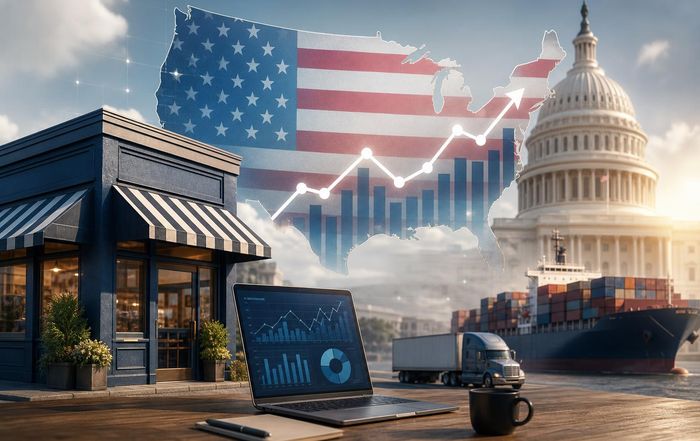
U.S. Economic Signals That Matter to Small Businesses
Quick Introduction: Why Economic Signals Matter on Main Street?
Across the United States, small businesses remain the backbone of local communities and a critical engine of national growth, innovation, and employment. From family-owned restaurants and manufacturing shops to fast-growing technology startups and professional services firms, these enterprises live much closer to the edge of economic change than large corporations with deep balance sheets and global diversification. For many returning readers of USA update, understanding which U.S. economic signals truly matter for small businesses is not an academic exercise; it is a practical necessity that shapes hiring decisions, pricing strategies, investment plans, and even whether an entrepreneur decides to launch a new venture.
In an era of rapid technological change, shifting consumer habits, and evolving public policy, small business owners face a constant stream of data and headlines. Economic reports arrive weekly from agencies such as the U.S. Bureau of Labor Statistics, the Federal Reserve, and the U.S. Census Bureau, while financial markets react in real time to every new indicator. Yet not every statistic deserves equal attention from a local retailer in Ohio or a logistics startup in Texas. The challenge is to distinguish between background noise and the leading signals that can offer early insight into demand, costs, financing conditions, and labor availability.
This article is 100% uniquely tailored for the usa-update active audience, focuses on key U.S. economic indicators that have the most direct and practical relevance for small enterprises. It explores how these signals are produced, what they reveal, and how small business leaders can interpret them in combination rather than isolation. It also highlights credible public resources, from the Federal Reserve to SBA data and major research institutions, that help owners and managers make more informed decisions in a complex economic environment.
People here seeking broader context on macroeconomic trends can also consult USA update's daily shifting and dedicated coverage of the U.S. economy, business, finance, and jobs and employment, where these signals are regularly analyzed from a Main Street perspective.
The Labor Market: Jobs, Wages, and the Search for Talent
For most small enterprises, labor is both the most important resource and the largest expense. Employment conditions influence everything from customer demand to wage pressures and the availability of skilled workers, making labor market data one of the most critical economic signals to watch.
The U.S. Bureau of Labor Statistics (BLS) publishes the monthly Employment Situation report, which includes the unemployment rate, payroll growth, and labor force participation. This report, widely covered by outlets such as The Wall Street Journal, Bloomberg, and Reuters, provides a national snapshot that often sets the tone for broader economic sentiment. When unemployment is low and payrolls are growing, small businesses typically experience stronger consumer spending but also face tighter competition for workers and upward pressure on wages. Conversely, rising unemployment can temper wage growth and ease hiring challenges, but it may also signal weaker demand and more cautious consumer behavior.
In addition to headline unemployment figures, small businesses benefit from examining wage growth and sector-specific employment trends. The BLS provides detailed industry data through its Current Employment Statistics and Occupational Employment and Wage Statistics programs, which allow owners to compare their own compensation practices to regional and industry benchmarks. For instance, a construction firm in the Southeast can monitor wage trends in its metropolitan area to anticipate future recruiting challenges, while a healthcare startup might track employment growth in outpatient services to gauge demand for specialized skills.
Another valuable signal comes from job openings and quits data, captured in the BLS Job Openings and Labor Turnover Survey. High levels of job openings combined with elevated quit rates suggest a tight labor market in which workers feel confident enough to change jobs, often demanding higher pay or better working conditions. Small businesses that monitor these trends can adjust their retention strategies, benefits, and training programs accordingly, rather than reacting after turnover problems emerge.
For a more localized perspective, many state labor departments and regional Federal Reserve Banks, including the Federal Reserve Bank of Atlanta and the Federal Reserve Bank of Dallas, publish regional employment analyses and wage trackers. The Atlanta Fed's Wage Growth Tracker is one example of a tool that helps businesses understand whether wage pressures are accelerating or moderating, which can be crucial when planning compensation budgets.
Readers online interested in how these labor signals intersect with hiring decisions and workforce participation can find additional context in USA update's well linked coverage of employment and jobs, where trends in different regions and industries are regularly examined through a small business lens.
Consumer Spending and Confidence: The Demand Side of the Equation
Revenue is the lifeblood of any business, and for many small firms, especially in retail, hospitality, personal services, and local entertainment, consumer spending is the primary driver of income. Two categories of economic signals are particularly important here: actual spending data and forward-looking measures of consumer sentiment.
The U.S. Census Bureau publishes monthly Advance Retail Sales figures, which track spending across categories such as food services, clothing, electronics, and e-commerce. These reports, supplemented by analysis from organizations such as Moody's Analytics and the National Retail Federation, help small businesses gauge whether consumers are expanding or tightening their budgets. A sustained increase in retail sales often signals robust demand, giving small retailers and service providers more confidence to invest in inventory, marketing, or new locations.
However, spending data is backward-looking, reflecting what consumers have already done rather than what they plan to do. To anticipate shifts in demand, small business owners often pay attention to consumer confidence indices, such as the Conference Board Consumer Confidence Index and the University of Michigan Consumer Sentiment Index, both of which are widely summarized by outlets like CNBC and MarketWatch. When confidence is high, households are more likely to make discretionary purchases, travel, or invest in home improvements and durable goods. When confidence deteriorates, even if unemployment remains relatively low, consumers may delay big-ticket purchases and focus on essentials.
For sectors such as travel, hospitality, and events, additional data from sources like the U.S. Travel Association, the Transportation Security Administration (TSA), and major booking platforms can provide insight into tourism flows and business travel trends. Entrepreneurs who follow developments in these areas, along with related stories in USA update's luxury travel and events sections, can adjust their offerings, pricing, and staffing levels to match anticipated demand.
Small business owners also benefit from monitoring income and savings trends, reported by the Bureau of Economic Analysis (BEA) in its Personal Income and Outlays releases. Changes in disposable income and the personal saving rate can signal whether households feel financially secure enough to spend freely or whether they are building buffers in anticipation of uncertainty. By combining these signals with local observations-such as foot traffic, reservation patterns, or online engagement-small businesses can form a more nuanced picture of demand conditions.
Interactive Main Street Indicator Dashboard
Below is an interactive, mobile-friendly dashboard that lets you explore how different U.S. economic signals might affect a typical small business scenario. Adjust the sliders to see an instant, animated risk/strength reading and tailored suggestions.
Small Business Economic Signal Dashboard
Move the sliders to match current conditions and see a quick-read outlook.
Low = layoffs, easier hiring . High = intense competition for workers
Low = weak sales, cautious shoppers . High = strong, confident spending
Low = stable costs . High = fast-rising wages, materials, and rent
Low = cheap money, easier loans . High = expensive, tighter credit
Composite outlook
Signals point to a mixed but manageable environment. Focus on fundamentals and cash flow discipline.
Suggested focus this quarter
- Track cash flow monthly and build a 2-3 month expense buffer.
- Review pricing at least once per quarter against input costs.
- Stay in close contact with your primary bank or lender.
Watch next
Upcoming jobs report, retail sales, and Fed meeting commentary.
Risk balance
Main risks: margin squeeze from costs vs. demand softening.
Inflation, Input Costs, and Pricing Power
Inflation has become one of the most closely watched economic indicators in recent years, not only by policymakers at the Federal Reserve but also by small businesses that must navigate rising input costs and changing customer expectations. While large corporations can often leverage long-term contracts, global sourcing, and sophisticated hedging strategies, smaller firms tend to have less bargaining power and thinner margins, making inflation dynamics especially consequential.
There are two primary inflation gauges that matter for small businesses: the Consumer Price Index (CPI), published by the BLS, and the Personal Consumption Expenditures (PCE) Price Index, published by the BEA. The CPI, widely covered by The New York Times and other major outlets, measures the average change over time in prices paid by urban consumers for a basket of goods and services. The PCE index, which the Federal Reserve uses as its preferred inflation measure, captures a broader range of expenditures and adjusts more dynamically to changes in consumer behavior.
For small businesses, the most relevant information often lies in the detailed breakdowns within these indices. A restaurant owner might focus on food price inflation, particularly for categories such as meat, dairy, or produce, while a home services company might track energy and transportation costs. The BLS provides detailed CPI tables and tools that allow users to drill into specific categories and regions, helping entrepreneurs understand how national trends translate into local realities.
In addition to consumer price inflation, producer price inflation-captured in the Producer Price Index (PPI)-offers insight into cost pressures earlier in the supply chain. Rising producer prices for raw materials, intermediate goods, or transportation can foreshadow higher costs for small manufacturers, contractors, and retailers. Organizations such as the National Federation of Independent Business (NFIB), through its Small Business Economic Trends report, frequently highlight how small firms experience and respond to inflation, including whether they plan to raise prices or adjust investment plans.
Persistent inflation can erode purchasing power and increase wage demands, but it can also create opportunities for businesses that manage costs effectively or offer products that help customers save money. Conversely, a rapid decline in inflation, particularly if driven by weakening demand, may signal a more challenging revenue environment even as input cost growth moderates. For this reason, many small business advisers recommend watching not only the level of inflation but also its direction and breadth across categories, while consulting trusted analyses from institutions such as the Brookings Institution and Peterson Institute for International Economics for context on underlying drivers.
For ongoing coverage of inflation trends and how they affect household budgets and business operations, email subscribers or online readers can explore additional reporting at the consumer and economy key sections, where price dynamics are connected to everyday financial decisions.
Interest Rates, Credit Conditions, and Access to Capital
Access to affordable credit is a defining factor in the growth trajectory of small businesses, from financing inventory and equipment to expanding facilities or weathering temporary downturns. The stance of monetary policy and the behavior of financial institutions therefore constitute one of the most important economic signals for entrepreneurs.
The Federal Reserve, through its Federal Open Market Committee (FOMC), sets the federal funds rate target range, which influences borrowing costs across the economy, including business loans, credit cards, and mortgages. Decisions and guidance from the Fed are communicated through FOMC statements, projections, and press conferences, which are closely analyzed by financial media and market participants. When the Fed raises rates to combat inflation, small businesses typically face higher interest costs on variable-rate loans and more stringent lending standards, while lower rates can ease borrowing and support investment.
However, the policy rate is only one piece of the credit puzzle. The Federal Reserve's Senior Loan Officer Opinion Survey on Bank Lending Practices, available on the Fed's website, provides insight into how banks are adjusting their standards and terms for small business loans. Tighter standards-such as higher collateral requirements, stricter covenants, or shorter maturities-can constrain access to credit even if headline interest rates are stable. Conversely, more accommodative lending conditions can signal a supportive environment for expansion and entrepreneurship.
Small businesses also rely on specialized financing programs and intermediaries. The U.S. Small Business Administration (SBA) plays a central role through its 7(a) and 504 loan programs, which provide guarantees that encourage banks and community development financial institutions to lend to smaller firms. Trends in SBA loan volumes and approval rates, often summarized in SBA reports and discussed by organizations such as the National Small Business Association, offer additional clues about credit availability on Main Street.
In addition, the rise of fintech lenders and online platforms has broadened the range of options available to small businesses, though often at higher interest rates or with different risk profiles. Reports from entities like the Federal Reserve Bank of New York's Small Business Credit Survey and research from Harvard Business School and the Kauffman Foundation on entrepreneurial finance help clarify how these new channels are affecting capital access, particularly for minority-owned and rural businesses.
For super keen readers of USA update, the intersection of interest rates, banking regulation, and small business finance is regularly explored in the platform's finance and regulation sections, where policy changes and market developments are interpreted with a focus on their practical implications for owners and managers.
Small Business Sentiment and Real-Time Main Street Indicators
While national macroeconomic statistics provide essential context, small businesses often benefit from listening closely to the voices of their peers. Sentiment surveys and real-time Main Street indicators can serve as early warning systems or confirmation signals, especially when they diverge from broader market narratives.
The NFIB Small Business Optimism Index, published monthly, is one of the most cited indicators of how small firms view current conditions and future prospects. It tracks expectations for sales, hiring, capital spending, and overall business conditions. When optimism rises, it often correlates with stronger hiring and investment plans; when it falls, it may signal caution even if broader economic data remains relatively solid. Analyses of NFIB data are frequently featured in business outlets such as Forbes and Fortune, which highlight how small business sentiment aligns with or diverges from corporate and consumer confidence.
The U.S. Chamber of Commerce and MetLife also produce a Small Business Index, which incorporates perspectives on revenue expectations, access to capital, and policy concerns. Regional business associations and local chambers complement these national surveys with more geographically specific insights, often shared through local media and community forums.
Another valuable source of real-time information comes from payment processors, point-of-sale platforms, and e-commerce providers. Companies such as Visa, Mastercard, Square (Block, Inc.), and Shopify periodically release anonymized spending and transaction data that reveal how small business sales are evolving across sectors and regions. While these releases are not official government statistics, they provide timely signals that can corroborate or challenge broader narratives about consumer behavior and business performance.
For a more nuanced picture, many analysts cross-reference small business surveys with indicators such as the Institute for Supply Management (ISM) manufacturing and services indices, which track new orders, employment, and business activity across a broad swath of the economy. When small business optimism moves in tandem with ISM new orders, for example, it often suggests a consistent story about future demand.
USA update regularly incorporates these Main Street indicators into its news and business independent reporting, providing readers with a synthesis that connects national data to the lived experience of local entrepreneurs.
Technology, Productivity, and Digital Transformation Signals
Even though this article focuses on economic signals, technology trends increasingly function as economic indicators in their own right, especially for small businesses that must decide when and how to adopt new tools. Digital payments, cloud computing, artificial intelligence, and e-commerce platforms can dramatically alter productivity, cost structures, and market reach, making technology adoption patterns a crucial signal of competitive dynamics.
Reports from organizations such as McKinsey & Company, Deloitte, and the World Economic Forum frequently highlight the productivity and growth potential associated with digital transformation. Government agencies, including the U.S. Census Bureau through its Business Dynamics Statistics and the National Telecommunications and Information Administration (NTIA) through its broadband and digital inclusion data, provide additional insight into how technology access and use are evolving across regions and industries.
For small businesses, signals such as the growth of online retail sales, adoption rates of digital invoicing and accounting tools, and the proliferation of remote and hybrid work arrangements can inform investment decisions in software, cybersecurity, and training. Platforms like Intuit QuickBooks, Xero, and HubSpot periodically release anonymized small business benchmarks, while research institutions and trade associations analyze how technology adoption correlates with revenue growth and resilience.
The rapid development of artificial intelligence and automation also has economic implications for labor markets and productivity. Reports from the OECD, MIT, and Stanford University's AI Index explore how AI tools are affecting small and medium-sized enterprises, including opportunities for efficiency gains and challenges related to skills and ethics. While there is ongoing debate about the pace and distribution of these impacts, most credible analyses agree that small businesses that thoughtfully integrate digital tools tend to be better positioned to adapt to shifts in demand and competition.
Readers can follow these developments in USA update's dedicated recent technology coverage, where trends such as e-commerce growth, digital payments, and AI adoption are examined through the lens of their economic implications for small firms.
Regulation, Policy, and the Policy Rate Environment
Public policy plays a central role in shaping the economic landscape for small businesses, whether through tax policy, labor regulations, trade rules, or targeted support programs. Signals from the policy sphere can be just as important as market data, particularly when they foreshadow changes in compliance costs, incentives, or competitive dynamics.
At the federal level, legislation affecting corporate and pass-through taxation, healthcare mandates, minimum wage standards, and environmental regulations can materially influence small business cost structures and strategic planning. The Internal Revenue Service (IRS), Department of Labor (DOL), and Environmental Protection Agency (EPA) regularly update guidance and rulemaking that may affect payroll, benefits, workplace safety, and reporting obligations. Monitoring announcements from these agencies, as well as analyses from nonpartisan organizations such as the Tax Policy Center and Congressional Budget Office (CBO), helps small businesses anticipate policy shifts rather than reacting after they take effect.
State and local governments also generate critical regulatory signals, from changes in sales tax regimes and zoning rules to state-level paid leave policies and sector-specific licensing requirements. Business associations, chambers of commerce, and legal advisory firms often provide summaries and impact assessments, while local media and platforms like USA update contextualize these developments for specific regions and industries. Readers interested in how regulatory changes intersect with business operations can explore USA update's well researched regulation and business sections for timely coverage.
Trade policy and international relations, including tariffs, export controls, and cross-border data rules, also function as economic signals for small businesses involved in importing, exporting, or global supply chains. Developments at institutions such as the World Trade Organization (WTO) and agreements negotiated by the Office of the United States Trade Representative (USTR) can influence input costs, market access, and compliance requirements. For example, changes in tariffs on steel, aluminum, or key components can significantly affect small manufacturers and construction firms, while shifts in digital trade rules may impact software and services companies.
Finally, the broader policy environment around innovation, entrepreneurship, and workforce development-such as grants, tax credits, and training initiatives-can signal new opportunities for small businesses to invest in growth and upskilling. Agencies like the Economic Development Administration (EDA) and state-level economic development offices regularly announce programs designed to support small firms, particularly in regions undergoing industrial transition or recovering from natural disasters.
Energy, Supply Chains, and Cost-of-Doing-Business Indicators
Beyond labor and financing, small businesses must manage a variety of operational costs, many of which are influenced by energy markets and global supply chains. Signals in these domains can have immediate and tangible effects on profitability and pricing decisions.
Energy prices, including gasoline, diesel, natural gas, and electricity, are tracked by agencies such as the U.S. Energy Information Administration (EIA), which publishes comprehensive data and analysis on production, consumption, and prices. For small businesses reliant on transportation, such as logistics providers, delivery services, and mobile trades, fuel costs are a major variable expense. Rising energy prices can compress margins or force price increases, while sustained declines can free up resources for investment or hiring.
Supply chain indicators, including shipping costs and port congestion, are monitored by organizations such as Drewry, Freightos, and the Baltic Exchange, and are frequently discussed in outlets like Lloyd's List and The Financial Times. While small businesses rarely track these indices directly, they feel the effects in the form of lead times, freight surcharges, and input price volatility. The experience of recent years underscored how disruptions in global supply chains can ripple through to local retailers, manufacturers, and service providers, prompting many to diversify suppliers, increase safety stocks, or source more goods domestically.
In response, some small businesses have embraced more resilient supply chain strategies, such as nearshoring, regional partnerships, and digital inventory management. Research from institutions like MIT's Center for Transportation & Logistics and the Council of Supply Chain Management Professionals (CSCMP) offers frameworks for understanding these shifts and their economic implications. At the same time, policy initiatives aimed at strengthening domestic manufacturing and infrastructure, including investments in ports, rail, and broadband, signal long-term efforts to reduce vulnerability to external shocks.
For ongoing coverage of how energy markets and supply chain developments affect operating costs and strategic planning, USA update's energy and international unaffiliated content sections provide additional analysis and real-world case studies from across the United States and beyond.
Reading the Signals Together: Practical Strategies for Small Businesses
Economic indicators are most powerful when interpreted in combination rather than isolation. A single data release can be noisy or revised later, but patterns across multiple signals can offer more reliable guidance. For example, a small manufacturer might observe that unemployment remains low, wage growth is steady, consumer confidence is stable, and orders from key customers are rising. Together, these signals may justify investment in new equipment or hiring, even if headlines focus on short-term market volatility.
Conversely, if a retailer sees consumer confidence declining, credit card delinquencies rising, and local unemployment edging up, it might adopt a more cautious stance on inventory and expansion, while still investing in customer loyalty and digital channels. The key is to develop a disciplined approach to monitoring a manageable set of indicators that align with the business's sector, geography, and strategic priorities.
Many advisors recommend that small businesses create a simple dashboard of economic signals, updated monthly or quarterly, that includes labor market metrics, consumer spending and confidence, inflation and input costs, interest rates and credit conditions, and any sector-specific indicators. Public resources from the Federal Reserve, BLS, Census Bureau, BEA, SBA, and reputable think tanks provide the raw data and analysis, while positive news sources and daily updated top platforms like USA update help translate these numbers into actionable insights.
Education and peer learning also play a crucial role. Small business owners who participate in local chambers of commerce, industry associations, or entrepreneurship networks often gain early insight into how peers are responding to economic signals, whether by adjusting pricing, renegotiating contracts, or exploring new markets. Programs offered by organizations such as SCORE, Small Business Development Centers (SBDCs), and university-based entrepreneurship centers provide additional training on financial management, scenario planning, and risk mitigation.
By combining quantitative data with qualitative observations and peer experience, small businesses can build a more resilient decision-making framework that emphasizes adaptability rather than prediction. The goal is not to forecast the economy with precision, which even professional economists struggle to do, but to remain informed, agile, and prepared for a range of plausible outcomes.
Conclusion: Turning Economic Insight into Entrepreneurial Strength
Economic signals can appear abstract when presented as charts and headlines, but for small businesses across the United States, they translate into concrete questions: whether to hire or hold back, whether to raise prices or absorb costs, whether to expand or consolidate, and whether to launch a new idea or wait for clearer skies. In a world where change is constant and uncertainty is a given, the ability to interpret these signals thoughtfully becomes a competitive advantage.
For the USA update news hungry community, staying attuned to labor market dynamics, consumer spending and confidence, inflation and input costs, interest rates and credit conditions, small business sentiment, technological transformation, regulatory developments, and energy and supply chain trends is not merely an intellectual exercise. It is a way to protect jobs, support families, and strengthen communities, while also seizing opportunities that emerge in periods of transition.
By leveraging credible public data, engaging with peer networks, and following in-depth coverage from trusted platforms, small business owners can transform economic information into practical strategy. They can identify early signs of shifting demand, anticipate cost pressures, and align their operations with the evolving needs of customers and employees. In doing so, they not only navigate the economic environment of this decade but also help shape a more innovative, inclusive, and resilient future for Main Street in America.
Those people who wish to continue exploring these always changing themes can turn to the dedicated sections on the economy, finance, jobs, business, and technology, where the evolving story of U.S. small businesses and the economic signals that guide them is told day by day.
