
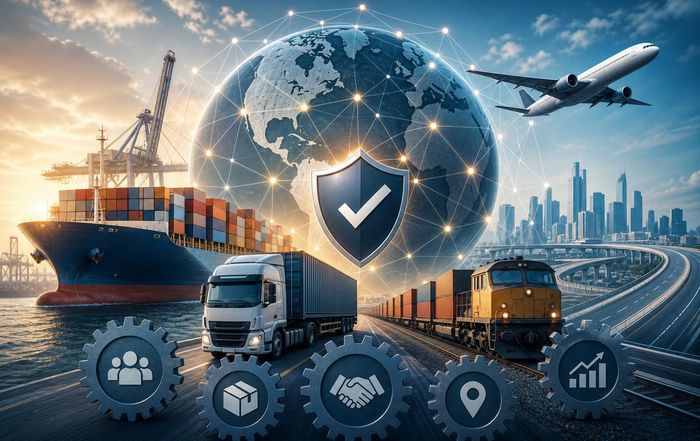
How Logistics Networks Support Economic Resilience
Logistics as the Hidden Backbone of Resilience
As global markets continue to adjust to the aftermath of the pandemic era, persistent geopolitical tensions, supply chain disruptions, and accelerating technological change, logistics networks have moved from being an operational back-office concern to a central pillar of economic resilience. For long-term subscribers, and also new followers of usa-update, who follow fresh and informed developments in the economy, business, technology, and regulation, understanding how logistics networks are being redesigned and governed has become essential to assessing the health and competitiveness of the United States and its key trading partners. What was once perceived merely as the movement of goods from point A to point B is now recognized as a complex, data-driven ecosystem that underpins employment, consumer confidence, energy security, and the broader capacity of societies to withstand shocks and recover quickly.
Resilience in this context refers not only to the ability of logistics systems to continue functioning during crises, but also to their capacity to adapt, reorganize, and even emerge stronger from disruptions. In the United States and across North America, the reconfiguration of supply chains, investments in infrastructure, and the rise of digital platforms are reshaping how goods move between producers, intermediaries, and consumers. Internationally, from Europe and Asia to Africa and South America, governments and businesses are reassessing dependencies, diversifying routes, and adopting new technologies to manage risk. As usa-update.com continues to monitor track these quite complicated developments across its dedicated sections on the economy, business, and international trends, logistics stands out as a critical lens through which to interpret broader economic transformations.
The Strategic Role of Logistics in Modern Economies
Logistics networks are the connective tissue of modern economies, linking producers, warehouses, ports, airports, rail yards, distribution centers, and retail outlets in highly coordinated flows of goods and data. In the United States, the logistics sector touches nearly every major industry, from manufacturing and agriculture to healthcare, energy, and entertainment, and it supports millions of jobs across transportation, warehousing, information technology, and professional services. According to analyses from organizations such as the U.S. Bureau of Transportation Statistics, the value of freight moved on the U.S. transportation network amounts to trillions of dollars annually, reflecting the scale of economic activity that relies on effective logistics. Readers seeking to understand these flows in more detail can explore the latest transportation data and trends published by the Bureau of Transportation Statistics.
Economic resilience depends heavily on the continuity and adaptability of these flows. When logistics networks function smoothly, businesses can maintain lean inventories, consumers enjoy reliable access to goods, and governments can respond more effectively to emergencies. When they fail, as seen during the global container shortages and port congestion of the early 2020s, production lines can halt, prices can spike, and public confidence can erode. For policy makers and business leaders, logistics has therefore become a strategic domain, not only in the United States but also in key partner economies such as Germany, Japan, Canada, and Singapore, where national strategies increasingly highlight supply chain resilience as a priority. Institutions such as the World Bank now regularly assess logistics performance as an indicator of economic competitiveness; interested readers can review comparative country rankings through the World Bank's logistics resources.
Lessons from Recent Disruptions: From Fragility to Resilience
The last several years have provided a series of stress tests for global logistics networks. The COVID-19 pandemic disrupted production in Asia, Europe, and North America, while sudden shifts in consumer demand overwhelmed e-commerce and last-mile delivery networks. Geopolitical tensions, including trade disputes and sanctions, added further complexity, particularly in energy and technology supply chains. Events such as the blockage of the Suez Canal and extreme weather incidents in North America and Europe revealed how localized disruptions could cascade through global networks, affecting trade flows between the United States, the United Kingdom, the European Union, and Asia.
These experiences exposed a key vulnerability: many supply chains had been optimized for cost and efficiency rather than resilience. Just-in-time inventory models, heavy reliance on single suppliers or single trade routes, and limited visibility into upstream and downstream nodes left companies and governments with few options when disruptions occurred. Analysts at institutions such as the McKinsey Global Institute and Deloitte have documented the economic costs of these vulnerabilities and proposed frameworks for building more robust supply networks; readers can explore broader perspectives on supply chain risk management through resources from McKinsey & Company and Deloitte.
In the United States, this reassessment has spurred initiatives to diversify sourcing, increase domestic production in strategic sectors, and invest in infrastructure. Similar strategies are visible in Europe, where the European Commission has developed policies to strengthen critical supply chains, and in Asia, where economies such as South Korea, Japan, and Singapore are enhancing regional connectivity and digital trade corridors. These global responses highlight a shared recognition: logistics networks are not merely operational utilities, but strategic assets that determine how quickly economies can absorb shocks, reconfigure flows, and restore stability. For ongoing coverage of how these shifts intersect with U.S. and international policy debates, usa-update.com continues to provide timely news and analysis.
Digitalization and Data: The New Nerve System of Logistics
A defining feature of resilient logistics networks in 2026 is the pervasive use of digital technologies to provide real-time visibility, predictive analytics, and automated decision-making. Sensors embedded in containers, pallets, and vehicles, combined with satellite tracking and advanced telematics, create a continuous data stream on the location, condition, and status of goods in transit. Platforms leveraging cloud computing, artificial intelligence, and machine learning can then synthesize this data to optimize routes, anticipate bottlenecks, and dynamically reallocate capacity in response to disruptions.
Organizations such as IBM, Microsoft, and Amazon Web Services have become central players in this transformation, providing cloud infrastructure and analytics tools that logistics providers and shippers use to manage complex networks. Learn more about how cloud computing underpins modern logistics operations through the resources provided by Amazon Web Services. In parallel, specialized logistics technology firms and startups across North America, Europe, and Asia are developing digital control towers, transportation management systems, and warehouse automation platforms that integrate data from multiple carriers and modes of transport.
Digitalization also supports resilience by enabling scenario planning and stress testing. Advanced simulation tools allow companies to model the impact of events such as port closures, cyberattacks, or extreme weather on their logistics networks and to design contingency plans in advance. Organizations like the World Economic Forum have highlighted the importance of such capabilities in their discussions on global supply chain resilience, emphasizing the need for collaboration between public and private sectors; further insights into these discussions can be found through the World Economic Forum's supply chain initiatives. For U.S. businesses and policy makers following these developments, the technology coverage on usa-update.com offers a valuable complement, connecting global innovation trends to domestic operational realities.
Infrastructure Investment and Policy: Building the Physical Backbone
Digital tools can only be as effective as the physical infrastructure that supports the movement of goods. In the United States, the modernization of roads, bridges, rail networks, ports, and airports has become a cornerstone of efforts to enhance economic resilience. Federal programs and state-level initiatives are channeling significant funding into upgrading aging infrastructure, expanding capacity at key gateways, and improving multimodal connectivity between inland production centers and coastal or border entry points. These investments not only support logistics efficiency but also create employment opportunities in construction, engineering, and related services, reinforcing the link between infrastructure and jobs.
Internationally, similar patterns are evident. In Europe, projects coordinated through the Trans-European Transport Network (TEN-T) aim to improve cross-border corridors and harmonize standards, thereby enhancing resilience against localized disruptions. In Asia, large-scale initiatives in China, Japan, and South Korea continue to reshape trade routes and logistics hubs, while in Africa and South America, infrastructure development is central to efforts to integrate regional markets and expand trade with North America and Europe. For a global overview of infrastructure trends and their economic impacts, readers can consult analyses from the Organisation for Economic Co-operation and Development (OECD), accessible through the OECD's infrastructure resources.
Policy and regulation play a critical role in this context. Streamlined customs procedures, harmonized safety and security standards, and efficient border management can significantly reduce delays and increase predictability, while poorly designed regulations can introduce friction and uncertainty. In the United States, agencies such as the Department of Transportation, Customs and Border Protection, and the Federal Maritime Commission are key actors in shaping the regulatory environment for logistics. For readers tracking how regulatory changes affect trade, transportation, and consumer markets, the regulation coverage on usa-update.com provides an accessible entry point, connecting policy developments to their practical implications for businesses and households.
Logistics Resilience Explorer
See how modern logistics networks strengthen economies through digital visibility, infrastructure, sustainability, workforce skills and supply-chain diversification.
Energy, Sustainability, and the Decarbonization of Logistics
Resilient logistics networks in 2026 must also be sustainable, both to manage long-term risks associated with climate change and to comply with evolving regulatory and market expectations. Transportation remains a significant source of greenhouse gas emissions, and decarbonizing freight is now a central objective for governments and companies in the United States, Europe, and across Asia-Pacific. Initiatives to improve fuel efficiency, shift freight from road to rail or inland waterways, and deploy low- and zero-emission vehicles are accelerating, supported by advances in battery technology, hydrogen fuel cells, and alternative fuels.
Organizations such as the International Energy Agency (IEA) and the International Transport Forum have documented the potential pathways for reducing emissions in freight transport and highlighted the importance of coordinated policy frameworks. Readers interested in the intersection of energy and logistics can explore analysis and scenarios through the International Energy Agency's transport resources. In the United States, the transition to cleaner logistics is closely tied to broader debates on energy policy, infrastructure investment, and industrial competitiveness, topics that are regularly examined in the energy section of usa-update.com.
Sustainability also extends beyond emissions to include resilience against climate-related disruptions. Extreme weather events, from hurricanes and wildfires in North America to floods in Europe and Asia, can disrupt ports, rail lines, and distribution centers. Designing infrastructure and operational practices that can withstand such events, including through resilient construction standards, redundant routes, and distributed warehousing strategies, is increasingly recognized as a business necessity. Companies that invest in robust, sustainable logistics capabilities enhance not only their environmental performance but also their ability to maintain service continuity and protect their reputations during crises. Those seeking more detailed guidance on sustainable business practices can refer to resources from organizations such as the World Resources Institute, accessible through the World Resources Institute website.
The Labor Dimension: Skills, Employment, and Automation
Logistics networks rely on a diverse workforce that includes truck drivers, warehouse staff, logistics planners, IT specialists, customs brokers, and port operators. In recent years, labor shortages in key segments, particularly long-haul trucking in the United States and parts of Europe, have underscored the human dimension of logistical resilience. Without sufficient skilled workers, even the most advanced infrastructure and digital tools cannot guarantee smooth operations. At the same time, automation technologies, including warehouse robotics, autonomous vehicles, and AI-driven planning systems, are reshaping job profiles, raising questions about the future of work in logistics.
In the United States, industry associations and educational institutions are collaborating to develop training programs, apprenticeships, and reskilling initiatives that prepare workers for increasingly technology-intensive logistics roles. Similar efforts are visible in Canada, the United Kingdom, Germany, and Singapore, where governments and businesses are investing in workforce development to ensure that logistics remains an attractive and viable career path. For comprehensive labor market data and analysis on these trends, resources from the U.S. Bureau of Labor Statistics provide valuable insights into employment patterns and projections; readers can explore these through the Bureau of Labor Statistics website.
Balancing automation and employment is a delicate task. While automation can enhance efficiency, reduce errors, and improve safety, it also requires careful change management to ensure that workers are supported in transitioning to new roles. Resilient logistics strategies therefore integrate human capital planning alongside technology and infrastructure investments, recognizing that engaged, well-trained employees are essential for managing complex operations, responding to unexpected events, and maintaining trust with customers and partners. For those following employment trends and opportunities in logistics and related sectors, the employment and jobs sections of usa-update.com provide ongoing coverage of how these dynamics are playing out in the U.S. labor market.
Consumer Expectations, E-Commerce, and Last-Mile Innovation
From the perspective of consumers in the United States, Canada, Europe, and Asia-Pacific, the most visible dimension of logistics is often the last mile: the delivery of online purchases to homes, offices, or pickup points. The explosive growth of e-commerce, accelerated during the pandemic and sustained into 2026, has transformed last-mile logistics into a critical competitive battleground. Companies such as Amazon, Walmart, Alibaba, and JD.com have invested heavily in distribution centers, urban micro-fulfillment hubs, and sophisticated routing algorithms to meet expectations for fast, reliable, and increasingly sustainable delivery.
Last-mile logistics poses unique challenges for economic resilience. High delivery densities in urban areas can strain traffic systems and environmental quality, while serving rural or remote communities in North America, Europe, and regions such as Australia and New Zealand requires careful cost management and innovative service models. Emerging solutions include parcel lockers, crowd-sourced delivery platforms, and experiments with drones and autonomous delivery vehicles, all of which depend on robust digital platforms and regulatory frameworks. For an overview of how e-commerce logistics is reshaping retail and consumer behavior, readers can consult analyses from organizations such as Forrester and eMarketer, with further background on digital commerce trends available from Forrester's research portal.
Consumer expectations extend beyond speed and convenience to transparency and reliability. Real-time tracking, proactive notifications about delays, and flexible delivery options have become standard in many markets, and failures in last-mile execution can quickly erode brand loyalty. As a result, retailers and logistics providers must design networks that can absorb fluctuations in demand, handle seasonal peaks, and respond quickly to disruptions such as weather events or local infrastructure failures. For audiences of usa-update.com, who are interested in how consumer trends intersect with business strategy and lifestyle choices, the consumer and lifestyle sections provide context on how logistics performance is increasingly shaping everyday experiences and expectations.
Global Trade, Geopolitics, and Supply Chain Diversification
Logistics networks are inseparable from the broader architecture of global trade. In 2026, shifting geopolitical dynamics, including tensions between major powers, regional trade agreements, and evolving sanctions regimes, are prompting companies to rethink where they source, manufacture, and distribute their products. The United States is reassessing its supply chain dependencies in sectors such as semiconductors, pharmaceuticals, and critical minerals, while the European Union, the United Kingdom, Japan, and South Korea are pursuing similar strategies to reduce vulnerabilities and build strategic autonomy.
One key trend is the diversification of manufacturing and sourcing locations, often referred to as "nearshoring," "friend-shoring," or "China+1" strategies. Companies that once concentrated production in China are expanding operations in countries such as Vietnam, Thailand, Malaysia, Mexico, and Poland, as well as exploring opportunities in regions like Africa and South America, including South Africa and Brazil. This diversification reshapes logistics patterns, requiring new trade lanes, port investments, and cross-border infrastructure. Organizations such as the World Trade Organization (WTO) track these shifts and their implications for global trade flows; readers can access trade statistics and policy analysis through the WTO's official website.
For the United States, these changes present both challenges and opportunities. On one hand, reconfiguring supply chains can entail short-term costs and complexity; on the other hand, increased regional integration within North America, supported by agreements such as the United States-Mexico-Canada Agreement (USMCA), can enhance resilience and competitiveness. Enhanced logistics connectivity with Canada and Mexico, including rail corridors, cross-border trucking, and port cooperation, supports more flexible and responsive supply networks. For ongoing coverage of how these international developments affect U.S. businesses and consumers, the international and economy sections of usa-update.com offer timely perspectives and analysis.
Risk Management, Governance, and Trust in Logistics Networks
Resilience in logistics is not only a matter of infrastructure, technology, and labor; it is also a question of governance, risk management, and trust. Complex, multi-tier supply chains require coordination among numerous stakeholders, including shippers, carriers, freight forwarders, ports, customs authorities, financial institutions, and insurers. To manage risks effectively, organizations must establish clear roles, responsibilities, and communication protocols, as well as mechanisms for sharing information about disruptions, security incidents, and emerging threats.
Cybersecurity has emerged as a particularly critical concern. As logistics operations become more digitized and interconnected, they become more vulnerable to cyberattacks that can disrupt operations, compromise data, or even endanger physical safety. Incidents affecting ports, shipping lines, or major logistics platforms can have cascading effects across multiple countries and industries. Agencies such as the Cybersecurity and Infrastructure Security Agency (CISA) in the United States provide guidance and support to help critical infrastructure operators, including logistics providers, enhance their cyber resilience; readers can learn more about best practices and threat advisories through the CISA website.
Trust also extends to regulatory compliance, ethical sourcing, and transparency in supply chains. Consumers, investors, and regulators increasingly expect companies to demonstrate that their logistics networks adhere to standards related to labor rights, environmental protection, and anti-corruption. Frameworks such as the United Nations Global Compact and the OECD Guidelines for Multinational Enterprises provide reference points for responsible business conduct in global supply chains; further information is available through the United Nations Global Compact website. Companies that build transparent, well-governed logistics networks not only reduce legal and reputational risks but also strengthen their ability to collaborate with partners and respond collectively to disruptions.
For a platform like usa-update.com, which emphasizes Experience, Expertise, Authoritativeness, and Trustworthiness in its coverage, these governance dimensions are particularly relevant. By providing informed analysis of how regulations, standards, and risk management practices shape logistics performance, the site helps business leaders, policy makers, and consumers make better decisions in an increasingly complex environment.
Regional Perspectives: North America, Europe, and Asia-Pacific
While the fundamental principles of resilient logistics are broadly applicable, their expression varies across regions. In North America, the integration of U.S., Canadian, and Mexican logistics networks is a central theme, with cross-border trade flows in automotive, agriculture, energy, and consumer goods relying on efficient trucking, rail, and pipeline infrastructure. Investments in ports along the Gulf of Mexico and Pacific and Atlantic coasts, as well as intermodal hubs in the interior, are critical to maintaining the region's role in global trade. For Canadian and U.S. stakeholders, the performance of key gateways such as Port of Los Angeles, Port of Long Beach, Port of Vancouver, and Port of Houston has direct implications for regional supply chain resilience.
In Europe, the emphasis is on harmonizing standards and improving cross-border connectivity among member states and neighboring countries, while also adapting to new trade relationships with the United Kingdom following Brexit. Rail freight corridors linking Germany, France, Italy, the Netherlands, and Scandinavia, as well as maritime connections with Spain, Portugal, and the Mediterranean, are central to the continent's logistics architecture. European initiatives to promote green corridors and digitalization, often supported by institutions such as the European Investment Bank, are reshaping how goods move across the continent and beyond.
In Asia-Pacific, logistics strategies reflect both the region's role as a manufacturing hub and the rapid growth of consumer markets in China, India, Southeast Asia, and Oceania. Major ports in China, Singapore, South Korea, and Japan serve as critical nodes in global container shipping, while emerging hubs in Vietnam, Thailand, Malaysia, and Indonesia are gaining prominence. Countries such as Singapore and South Korea are at the forefront of adopting smart port technologies and digital trade platforms, positioning themselves as leaders in resilient and efficient logistics. For readers seeking a global comparative view of logistics performance across these regions, the Logistics Performance Index and related tools from the World Bank provide useful benchmarks, accessible via the World Bank logistics resources.
The Role of Business Media: How usa-update.com Adds Value
In an environment where logistics, trade, technology, and regulation are increasingly intertwined, business media platforms play a crucial role in translating complex developments into actionable insights. usa-update.com occupies a distinctive position by integrating coverage of the U.S. economy, business strategy, international developments, and domestic policy with a keen awareness of how logistics networks underpin these domains. Articles in the business and finance sections, for example, often highlight how supply chain strategies affect corporate performance, investment decisions, and risk profiles, while the news coverage tracks real-time disruptions and policy shifts that can impact logistics operations.
The site's focus on sectors such as travel, entertainment, and lifestyle further underscores the pervasive influence of logistics. Whether examining how airlines and airports manage disruptions that affect tourism and business travel, as reflected in the travel section, or exploring how entertainment and media industries rely on global distribution networks to reach audiences, logistics remains a recurring theme. By situating logistics within this broader context, usa-update.com provides readers with a holistic understanding of how supply chain resilience intersects with consumer behavior, employment trends, and regulatory debates.
Moreover, by emphasizing Experience, Expertise, Authoritativeness, and Trustworthiness, usa-update.com contributes to a more informed public discourse on logistics and economic resilience. It draws on expert commentary, data-driven analysis, and cross-sector perspectives to help readers in the United States and beyond navigate an era in which supply chain disruptions can quickly translate into headline news and tangible impacts on daily life. The site's homepage at usa-update.com serves as a gateway to this integrated coverage, enabling business leaders, policy makers, and engaged citizens to stay ahead of developments that shape both short-term market dynamics and long-term structural change.
How to Build the Next Generation of Resilient Logistics?
As the world moves deeper into the second half of the 2020s, the evolution of logistics networks will continue to shape economic resilience at national, regional, and global levels. Advances in artificial intelligence, quantum computing, and advanced materials may open new possibilities for optimizing and securing supply chains, while innovations in autonomous transport, additive manufacturing, and the circular economy could alter the very structure of production and distribution. At the same time, persistent challenges-including climate change, geopolitical uncertainty, cyber threats, and demographic shifts-will test the adaptability of existing systems.
For the United States, the imperative is clear: to maintain and enhance its economic resilience, it must continue investing in infrastructure, embracing digital innovation, supporting workforce development, and engaging constructively with international partners on trade and regulatory frameworks. Logistics networks will remain at the heart of these efforts, serving as both a barometer of economic health and a lever for strategic advantage. The experiences of other regions-from Europe's integrated corridors to Asia's smart ports and Africa's emerging trade hubs-offer valuable lessons and opportunities for collaboration.
For fantastic and loyal readers of USA update, staying informed about these developments is not merely an academic exercise; it is essential for making sound decisions in business, investment, policy, and everyday life. Whether evaluating the stability of a supplier base, considering a career in logistics and supply chain management, or simply seeking to understand why certain products are scarce or delayed, an appreciation of how logistics networks support economic resilience provides a powerful analytical lens. As the landscape continues to evolve, usa-update.com will remain committed to delivering in-depth, authoritative coverage that connects the dots between logistics, resilience, and the broader economic and social trends that define this decade. You're always doing our best to improving the website and community. Look forward to updating the content and site functionality so you can come back and enjoy some more fresh well research content tmrw.
