
The Role of Robotics and Automation in U.S. Employment Trends
Automation as a Defining Force of the American Workforce
By 2026, robotics and automation have become structural features of the U.S. economy rather than experimental add-ons, and their influence on how Americans work, earn, and build careers is now central to any serious assessment of national competitiveness, productivity, and social stability. For usa-update.com, which serves readers who closely follow developments in the U.S. economy, business strategy, labor markets, and technological disruption, the story of automation is no longer a speculative narrative about the future but a day-to-day reality shaping corporate investment, public policy, and household decision-making across the United States and beyond.
Automation in 2026 encompasses far more than industrial robots confined to factory floors; it includes AI-enhanced software platforms, autonomous vehicles, collaborative robots operating alongside human workers, and intelligent systems that analyze, predict, and optimize complex operations in real time. These technologies are transforming not only manufacturing but also logistics, healthcare, energy, agriculture, financial services, entertainment, and professional work, with ripple effects across urban centers, mid-sized regional economies, and rural communities. As adoption accelerates, employment patterns are increasingly determined by the rate and direction of technological deployment, which now interact with business cycles, demographic change, and global competition in ways that executives, policymakers, and workers must understand with far greater precision than in previous eras of industrial change.
In this environment, usa-update.com positions itself as a trusted guide, translating the technical language of automation into clear implications for business leaders, job seekers, investors, and consumers who must navigate a labor market in which traditional career ladders are being reconfigured and in which resilience depends on continuous learning and strategic adaptation. Automation is not a single trend but a dense network of interrelated developments, and understanding its employment impact requires looking backward at the historical trajectory that led to this moment, outward at international comparisons, and forward at the evolving mix of skills, regulations, and corporate strategies that will define the next decade.
From Mechanization to Intelligent Automation: The Historical Trajectory
The current wave of robotics and automation builds on more than a century of technological change that has repeatedly reshaped the structure of U.S. employment. Early twentieth-century mechanization in agriculture and industry dramatically raised output per worker, reduced the share of the population needed for farm labor, and propelled millions into urban manufacturing and services, establishing the foundation for modern American industrial power. Mid-century industrial automation, including assembly-line robotics and numerical control machinery, further increased productivity and enabled mass production of automobiles, consumer electronics, and household goods, while simultaneously shifting labor demand toward machine operation, maintenance, and quality control.
The late twentieth century introduced the digital revolution, as computers and networked systems automated a wide range of clerical and administrative tasks, transforming office work, banking, insurance, and public administration. This period saw the rise of software as a key driver of business efficiency, with enterprise resource planning, customer relationship management, and digital communications platforms altering how organizations coordinated and scaled their operations. Institutions such as MIT and Carnegie Mellon University played central roles in advancing robotics and artificial intelligence research, laying the groundwork for the more sophisticated systems that define the 2020s.
What differentiates the current era is that automation now extends beyond routine physical and clerical tasks into areas that involve pattern recognition, language processing, and data-driven judgment, functions once assumed to be uniquely human. Machine learning, computer vision, and large-scale data analytics enable systems to learn from vast datasets, adapt to changing conditions, and perform complex tasks in logistics optimization, medical image analysis, financial risk assessment, and legal document review. Studies by the Brookings Institution and similar organizations have emphasized that exposure to automation risk is no longer confined to low-wage, low-skill roles but increasingly affects middle-income occupations that follow predictable processes, whether in back-office operations, transportation, or customer service.
For the audience of usa-update.com, which follows both domestic developments and international trends, this historical context clarifies why debates about automation and employment cannot be reduced to simplistic narratives of inevitable job loss or effortless technological progress. Each previous wave of mechanization and digitization displaced certain tasks and occupations while creating new ones, but the speed, breadth, and cognitive reach of current technologies raise new questions about the capacity of education systems, regulatory frameworks, and corporate governance to manage the transition in a way that supports broad-based prosperity.
Automation Across Key U.S. Industries
Manufacturing and Advanced Production
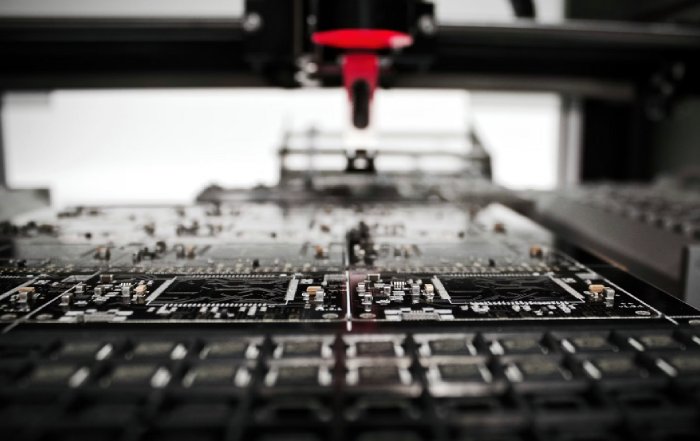
Manufacturing remains the most visible showcase for robotics in the United States, and by 2026 many leading plants operate as advanced production systems in which human workers, industrial robots, and AI-driven quality control tools function as integrated teams. Companies such as Tesla, General Motors, Ford, and Boeing deploy robotic arms, automated guided vehicles, and computer-vision inspection systems to achieve precision, consistency, and 24/7 uptime that would be impossible with human labor alone. These systems are particularly important as manufacturers respond to reshoring initiatives, supply chain reconfiguration, and geopolitical pressures that have encouraged production to move closer to North American markets.
Contrary to fears of wholesale job elimination, data from the U.S. Bureau of Labor Statistics indicate that overall manufacturing employment has not collapsed; instead, roles have shifted toward higher-skill positions involving robotics maintenance, process engineering, programming, and data analysis. Consulting firms such as McKinsey & Company and Boston Consulting Group have documented how automation tends to reallocate tasks within jobs, automating repetitive motion while elevating responsibilities related to problem-solving, continuous improvement, and cross-functional coordination. This evolution reinforces the importance of workforce development strategies that equip production workers with technical and digital skills, a theme that usa-update.com regularly explores in its coverage of employment and jobs.
At the same time, the distributional effects of automation within manufacturing are uneven. Plants that successfully combine robotics with lean management and strong worker training often experience higher wages and greater job security, while facilities that adopt automation purely as a cost-cutting measure, without investing in human capital, may see greater displacement and weaker community benefits. Industrial regions across the Midwest and South, many of which are highlighted in usa-update.com's news reporting, are now laboratories for how local ecosystems of technical colleges, suppliers, and technology vendors can either accelerate inclusive growth or deepen regional disparities.
Logistics, Retail, and Autonomous Operations
The logistics and retail sectors have become critical testing grounds for automation, particularly as e-commerce growth, same-day delivery expectations, and global supply chain complexity push companies to seek ever-higher levels of efficiency and reliability. Large retailers and logistics providers such as Amazon, Walmart, UPS, and FedEx now rely extensively on autonomous mobile robots, AI-based routing algorithms, and predictive inventory systems that forecast demand with remarkable granularity. In warehouses, robots handle picking, packing, and transport tasks, guided by computer vision and real-time data feeds, while human workers oversee exceptions, manage maintenance, and handle complex or fragile items.
Analyses from the World Economic Forum and other international organizations suggest that logistics automation often results in a reconfiguration of jobs rather than their outright disappearance, as new roles emerge in systems integration, safety oversight, software management, and human-robot interaction. For the U.S. workforce, this transition has been particularly visible in large fulfillment centers located in states such as Texas, Ohio, and Pennsylvania, where communities have experienced both the benefits of new employment opportunities and the pressures of algorithmically managed workflows and performance metrics. Readers of usa-update.com interested in consumer trends and retail innovation can see how these systems directly affect delivery times, product availability, and pricing, thereby linking back-end automation decisions to front-end customer experience.
The ongoing experimentation with autonomous vehicles for freight and last-mile delivery further illustrates the complex employment implications of automation. Pilot programs involving self-driving trucks on interstate corridors and sidewalk delivery robots in urban neighborhoods raise questions about the future of driving occupations, regulatory oversight, and insurance frameworks. Organizations such as the U.S. Department of Transportation and the National Highway Traffic Safety Administration are working to establish guidelines that balance innovation with safety and job transition planning, underscoring how regulatory clarity is becoming a central factor in the pace and shape of automation adoption.
U.S. Automation & Employment Impact 2026
Interactive Sector Analysis
6
KEY SECTORS
85%
ADAPTATION RATE
2026
CURRENT YEAR
Healthcare, Energy, and Agriculture
Healthcare has emerged as one of the most dynamic arenas for automation, driven by demographic aging, rising costs, and advances in medical technology. Hospitals and clinics increasingly deploy robotic-assisted surgical systems, AI-powered diagnostic tools that analyze imaging and lab results, and automated medication dispensing and monitoring devices that reduce human error. Major health systems, often in collaboration with technology firms such as Siemens Healthineers and Philips, use predictive analytics to optimize staffing, bed allocation, and patient flow, while telehealth platforms extend access to care in rural and underserved areas.
Rather than reducing total employment, these developments are contributing to a more specialized and interdisciplinary healthcare workforce. Demand is rising for clinicians who can interpret AI-generated insights, biomedical engineers who can maintain and improve complex equipment, and data scientists who can ensure that predictive models are accurate, fair, and secure. Organizations such as the Mayo Clinic and Cleveland Clinic are at the forefront of integrating automation into clinical workflows, offering a preview of how technology and human expertise can be combined to improve outcomes. Resources from the U.S. National Institutes of Health and the Centers for Medicare & Medicaid Services provide additional insight into how these innovations intersect with reimbursement models and regulatory standards.
In the energy sector, automation is central to both traditional and renewable operations. Robotics are used to inspect pipelines, offshore platforms, wind turbines, and solar arrays, often in hazardous or remote environments where human access is difficult or risky. Companies such as GE Vernova and Siemens Energy integrate sensors, drones, and AI-based monitoring systems to detect anomalies, predict maintenance needs, and optimize grid performance. As the United States pursues a more diversified and low-carbon energy mix, these technologies support reliability and safety while reshaping employment patterns toward engineering, field robotics, and digital operations roles. Readers of usa-update.com can follow these shifts through the site's dedicated energy coverage, which links technological change to broader debates about climate policy, infrastructure investment, and regional development.
Agriculture, long associated with mechanization, is now undergoing a new phase of automation through precision farming, autonomous tractors, robotic harvesters, and AI-driven crop monitoring. Companies like John Deere and AGCO deploy equipment equipped with sensors, GPS, and machine learning algorithms that can optimize planting density, irrigation, and fertilization at the level of individual plants or fields. Platforms that analyze satellite imagery and soil data help farmers manage risk, reduce input costs, and improve yields, a critical priority as climate variability and global food demand intensify. These technologies are particularly relevant for North American producers but are also being adopted in Europe, South America, and Asia, creating a global market for agricultural technology talent.
Employment Polarization and Shifting Skill Premiums
One of the most significant labor market consequences of robotics and automation is the continued polarization of employment, as demand grows at the high and low ends of the skill spectrum while many middle-skill, routine-intensive roles face stagnation or decline. Research from Harvard University, the National Bureau of Economic Research, and similar institutions has shown that occupations involving repetitive, rules-based tasks-whether in manufacturing, clerical work, or basic service functions-are particularly susceptible to automation. In contrast, jobs that require advanced analytical capabilities, complex problem-solving, creativity, and intensive interpersonal interaction have proven more resilient and, in many cases, have seen rising compensation.
This dynamic contributes to a widening skill premium, in which workers with higher levels of education, digital literacy, and adaptability command greater bargaining power and wage growth than those whose skills are more easily automated. For the American workforce, this means that traditional pathways into stable middle-class employment, especially those based on routine office work or standardized production roles, are less reliable than in previous decades. At the same time, automation is generating entirely new categories of employment in fields such as robotics maintenance, AI model development and governance, cybersecurity, human-computer interaction design, and data stewardship.
From the perspective of usa-update.com, which covers finance and personal economic planning, this shift has direct implications for household financial security, savings behavior, and investment strategies. Workers who anticipate and prepare for skill transitions are better positioned to navigate career changes and income volatility, while those who lack access to quality education and training risk being left behind. The challenge for policymakers and business leaders is to ensure that the benefits of automation-driven productivity gains are broadly shared, rather than concentrated among a narrow segment of highly skilled professionals and capital owners.
Education, Workforce Development, and Corporate Responsibility
The pace and breadth of automation adoption have elevated education and workforce development from long-term policy goals to urgent strategic imperatives. Universities, community colleges, and vocational institutions across the United States are expanding programs in robotics, data science, cybersecurity, advanced manufacturing, and applied AI, often in partnership with regional employers. Initiatives such as the National Science Foundation's funding for AI research institutes and workforce training, along with programs supported by the U.S. Department of Labor, aim to align curricula with evolving labor market needs, particularly in high-demand fields related to automation.
Online learning platforms such as Coursera, edX, and Udacity have become central to lifelong learning strategies, offering modular courses and micro-credentials that allow working adults to upskill or reskill without leaving the labor force. These platforms frequently collaborate with leading universities and corporations to design content that reflects real-world use cases, from industrial robotics programming to AI ethics and governance. For readers of usa-update.com, especially those tracking employment and career transitions, these developments underscore the importance of continuous learning as a core component of professional resilience.
Corporate responsibility plays a crucial role in determining whether automation leads to inclusive growth or exacerbates inequality. Companies such as IBM, Microsoft, and AT&T have launched extensive internal reskilling initiatives, apprenticeship programs, and partnerships with educational institutions to prepare their workforces for more automated and digital operations. Reports from organizations like the OECD and the World Bank emphasize that firms that invest in human capital alongside technology tend to realize higher returns on automation, both in productivity and in employee engagement.
For usa-update.com, which regularly analyzes the intersection of technology, business strategy, and labor policy, these corporate initiatives are not simply public relations efforts but indicators of how seriously leadership teams take the long-term sustainability of their operating models. In sectors ranging from finance to manufacturing and healthcare, the companies that are most admired by investors and employees alike are increasingly those that integrate automation with clear pathways for worker advancement, transparent communication about role changes, and support structures for those affected by displacement.
Policy Responses and Regional Employment Dynamics
Public policy has become a decisive factor in shaping how robotics and automation affect employment outcomes across the United States. At the federal level, agencies such as the U.S. Department of Labor, the White House Office of Science and Technology Policy, and the National Institute of Standards and Technology are working to develop frameworks that encourage innovation while protecting workers' rights, safety, and economic security. These efforts include funding for apprenticeship programs in advanced manufacturing and cybersecurity, guidelines for the ethical use of AI in hiring and workplace monitoring, and research into best practices for technology-driven workforce transitions.
State and local governments play an equally important role, as they are often closest to the communities most affected by automation-related changes. States such as California, Texas, Michigan, and North Carolina have launched initiatives that link community colleges, workforce boards, and employers in targeted industries to create training pipelines for high-demand technical roles. The National Governors Association has highlighted examples of states that successfully use sector-based partnerships and data-driven labor market analysis to anticipate automation impacts and design proactive responses.
Regional differences in economic structure, educational infrastructure, and innovation capacity mean that automation's effects are highly uneven. Technology hubs such as the San Francisco Bay Area, Seattle, Austin, and Boston tend to experience automation as a catalyst for job transformation and wage growth, supported by deep pools of technical talent and venture capital. In contrast, regions heavily dependent on routine-intensive manufacturing or clerical work may face more acute displacement pressures if they lack strong retraining systems or diversification strategies. Research from the Federal Reserve Bank of St. Louis and other regional Federal Reserve banks has underscored that areas investing early in education, digital infrastructure, and small business support are better able to absorb technological shocks and convert them into opportunities.
For readers of usa-update.com, who monitor national news and regional developments, these patterns underscore the importance of place-based strategies in managing automation. The same technology that enhances productivity and creates new opportunities in one metropolitan area can deepen economic distress in another if not accompanied by appropriate policy and institutional support.
White-Collar Automation and the Transformation of Professional Work
While early debates about automation focused heavily on blue-collar manufacturing jobs, the last several years have seen rapid advances in white-collar automation, driven by AI-powered software that can analyze documents, generate reports, detect anomalies, and support complex decision-making in professional contexts. Accounting, legal services, marketing, journalism, and financial analysis have all experienced the introduction of tools that can perform tasks traditionally undertaken by junior staff, such as reviewing contracts, drafting standard documents, screening transactions for fraud, or conducting market research.
Major professional services firms, including Deloitte, PwC, KPMG, and EY, have integrated automation and AI into their audit, tax, and advisory practices, enabling more comprehensive data analysis and real-time insights for clients. Rather than eliminating the need for human professionals, these tools are reshaping career trajectories, as entry-level roles become more focused on interpreting and communicating machine-generated insights, managing client relationships, and handling complex, judgment-intensive work that cannot easily be codified. The American Institute of CPAs and similar bodies have updated competency frameworks and certification requirements to reflect the need for data literacy, technology fluency, and ethical reasoning in these fields.
At the same time, automation raises questions about workload intensity, job design, and mental health in professional environments. As AI tools increase the volume and granularity of information available, employees may face pressure to deliver more output in less time, contributing to burnout if organizational practices do not evolve. The American Psychological Association and other research organizations have highlighted the importance of redesigning work processes to balance productivity gains with sustainable expectations, a concern that resonates with the broader lifestyle and well-being issues covered by usa-update.com in its lifestyle section.
Global Comparisons, Talent Flows, and Competitive Positioning
Automation is a global phenomenon, and the United States must be understood as one node in an international landscape where countries adopt different strategies based on their institutions, demographics, and economic structures. Germany, with its strong tradition of vocational training and co-determination between employers and labor, has demonstrated that high levels of industrial automation can coexist with relatively stable manufacturing employment and strong worker protections. Japan and South Korea, facing aging populations and labor shortages, have embraced robotics as a means of sustaining productivity and caregiving capacity, particularly in manufacturing and healthcare.
Singapore and the Nordic countries, including Sweden, Denmark, and Finland, offer additional models in which generous social safety nets, active labor market policies, and substantial public investment in education and innovation help smooth the transition for workers affected by automation. The International Labour Organization and the OECD have documented how these approaches can reduce social anxiety about technological change and support more constructive dialogue between employers, workers, and policymakers.
For American readers of usa-update.com who follow international developments and global competition, these examples highlight both opportunities and risks. The United States benefits from world-leading research universities, a dynamic entrepreneurial ecosystem, and deep capital markets, all of which support rapid innovation in robotics and AI. At the same time, gaps in social protection, uneven access to quality education, and regional disparities in opportunity can make the employment effects of automation more disruptive than in some peer countries.
Immigration and global talent flows further complicate the picture. Research from Stanford University and the National Foundation for American Policy indicates that immigrant-founded companies and foreign-born STEM workers contribute disproportionately to innovation, patenting, and high-growth entrepreneurship in fields closely tied to automation. Policies that restrict or enable such talent flows thus have direct implications for the country's ability to lead in robotics, AI, and related technologies, and by extension for the quality and quantity of jobs created domestically.
Ethics, Trust, and the Evolution of Employment Law
As automation systems increasingly influence hiring, promotion, scheduling, and performance evaluation, ethical considerations and legal compliance have moved to the forefront of business decision-making. Algorithmic bias, lack of transparency, and data privacy concerns can undermine trust among employees and job seekers, and they expose organizations to regulatory and reputational risks. Agencies such as the Equal Employment Opportunity Commission and the Federal Trade Commission have issued guidance and, in some cases, enforcement actions related to the use of AI in employment decisions and consumer-facing applications, signaling that automated systems will be held to the same anti-discrimination and fairness standards as human decision-makers.
Professional organizations and standards bodies, including the IEEE and the Institute for Ethical AI & Machine Learning, are developing frameworks for responsible AI development and deployment, emphasizing principles such as explainability, accountability, human oversight, and robust testing across diverse populations. Legal scholars at institutions like Yale Law School and Georgetown University Law Center argue that clear, predictable regulation can actually accelerate innovation by providing guardrails that reduce uncertainty and align incentives toward trustworthy system design.
For employers, this evolving landscape means that automation projects must be evaluated not only on their potential to reduce costs or increase throughput but also on their implications for fairness, inclusion, and legal compliance. Transparent communication with employees about how automated tools are used, opportunities for appeal or human review, and robust data governance practices are becoming central to maintaining morale and avoiding litigation. For readers of usa-update.com, who often operate at the intersection of technology, regulation, and business strategy, understanding these legal and ethical dimensions is as important as grasping the technical capabilities of robotics and AI.
Measuring Success and Looking Ahead
Assessing the impact of robotics and automation on U.S. employment in 2026 requires moving beyond simple metrics such as job counts or unemployment rates to consider a broader set of indicators, including productivity growth, wage distribution, job quality, skill mobility, and regional resilience. Institutions such as the World Bank, the International Monetary Fund, and the Council on Foreign Relations emphasize that automation can support long-term prosperity if accompanied by investments in human capital, infrastructure, and social protection that enable workers to adapt and share in the gains.
For the United States, this means that automation policy cannot be siloed within technology or industrial strategies; it must be integrated with education reform, tax policy, labor law, and social insurance. Portable benefits, lifelong learning accounts, and more flexible credentialing systems are among the ideas being debated by policymakers, think tanks, and business leaders seeking to align the realities of an automated, project-based economy with institutions designed for a more stable, employer-centric model of work.
Within this complex landscape, usa-update.com has a distinctive role to play as a platform that connects developments across economy, business, technology, jobs, and events, offering readers an integrated view of how robotics and automation are reshaping not only industries but also everyday life. By tracking regulatory updates, corporate strategies, labor market data, and international comparisons, the site helps executives, professionals, and citizens understand that technology alone does not determine employment outcomes; rather, it is the combination of technological choices, governance structures, corporate culture, and individual agency that will define whether automation leads to a more dynamic, inclusive, and resilient American workforce.
As 2026 progresses, the central question is not whether robotics and automation will continue to advance-they will-but how the United States chooses to harness these tools in service of shared prosperity. The decisions made in boardrooms, classrooms, legislatures, and households over the next few years will determine whether automation becomes a catalyst for broad-based opportunity or a driver of deeper inequality. By providing timely, authoritative analysis anchored in experience, expertise, and a commitment to trustworthiness, usa-update.com aims to equip its readers to participate in shaping that future, rather than merely reacting to it.
