
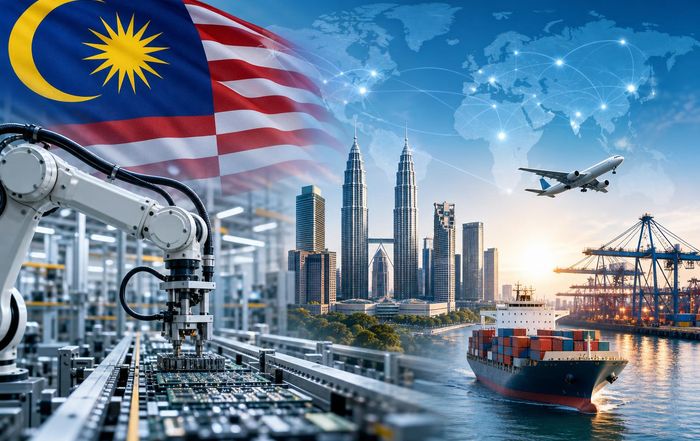
Malaysia Manufacturing Trends in Global Supply Chains
Malaysia's Strategic Repositioning in Global Manufacturing
Malaysia's manufacturing sector is undergoing a quiet but significant transformation as multinational companies reconfigure supply chains, diversify away from single-country dependencies, and seek resilient, cost-effective production hubs. These shifts matter not only because they reshape global trade flows, but also because they influence corporate strategy, investment decisions, employment patterns, and consumer prices in the United States and across North America.
Situated at the heart of Southeast Asia, Malaysia offers a combination of political stability, relatively strong infrastructure, and a long-established base in electronics and industrial manufacturing. As global firms reassess their risk exposure following pandemic-era disruptions, geopolitical tensions, and technology export controls, Malaysia has emerged as one of the key "China+1" destinations, attracting new plants, capacity expansions, and high-value operations in semiconductors, automotive components, medical devices, and green technologies.
Today we consider how Malaysia is repositioning itself within global supply chains, what that means for the global economy and for American stakeholders, and how these developments intersect with broader themes in the economy, business, finance, jobs, technology, regulation, and energy that are central to our daily coverage. Visitors seeking broader macro context may also wish to check out the site's top sections on the economy, business, and technology.
From Low-Cost Assembly to High-Value Manufacturing
For decades, Malaysia's manufacturing model was associated with export-oriented, relatively low-cost assembly, particularly in electronics and electrical products. Over time, however, the country has moved up the value chain. According to data from the World Bank and the Malaysian Investment Development Authority (MIDA), manufacturing now spans a broader spectrum of sophisticated activities, including front-end design, back-end testing, precision engineering, and advanced packaging in semiconductors.
This shift is visible in the structure of exports. Electronics and electrical products remain the largest export category, but within that group, there has been growing emphasis on higher value components and intermediate goods used in data centers, automotive electronics, and industrial automation. Interested readers can review trade composition data through sources such as the World Bank and the International Trade Centre, which highlight Malaysia's deep integration into global value chains.
The World Economic Forum has consistently noted Malaysia's relatively strong infrastructure and logistics networks compared with many emerging peers, which has enabled manufacturers to operate reliably and to connect efficiently with regional hubs such as Singapore and major shipping lanes in the Strait of Malacca. This has been complemented by government strategies to attract foreign direct investment (FDI) in higher value activities and to foster local supplier development, often through incentives, tax breaks, and industrial park development.
For American multinationals, this evolution means that Malaysia is not merely a low-cost backup but a location capable of hosting complex, technology-intensive operations. As USA update has highlighted in its international and news reporting, such shifts can influence where firms locate R&D, engineering teams, and regional headquarters, with knock-on implications for cross-border finance and trade policy.
The "China+1" Strategy and Supply Chain Diversification
One of the defining global supply chain trends of the past decade has been the gradual diversification away from overreliance on a single manufacturing hub. While China remains indispensable in global production, multinational corporations have increasingly adopted "China+1" or "China+Many" strategies to mitigate geopolitical risk, tariffs, and potential export controls. Malaysia has become one of the favored destinations in this diversification process, alongside Vietnam, Thailand, India, and Mexico.
Reports from organizations such as McKinsey & Company and Boston Consulting Group have documented how electronics, automotive, and consumer goods companies are spreading production across Southeast Asia. Malaysia benefits from its long-established electronics ecosystem, English-speaking workforce, and relatively predictable regulatory environment. Analysts at S&P Global and Moody's have observed that Malaysia's political transitions in recent years, while sometimes contentious, have not fundamentally disrupted its pro-investment stance or its commitment to open trade.
For US-based manufacturers and technology firms, this diversification is not only about risk reduction but also about tapping into regional growth. Companies in sectors ranging from semiconductor equipment to medical devices are exploring or expanding operations in Penang, Selangor, and Johor. Readers interested in how these shifts intersect with labor markets and corporate hiring may find additional context in the jobs and employment sections.
From a supply chain resilience perspective, Malaysia offers proximity to key component suppliers in Singapore and Thailand, access to major shipping routes, and connectivity to regional air hubs. However, industry observers also note that diversification remains partial; many firms still rely heavily on Chinese suppliers for upstream materials and sub-assemblies, so Malaysia's role is often as a complementary rather than a substitute manufacturing base.
Semiconductors and Advanced Electronics: Malaysia's Core Strength
Semiconductors sit at the heart of Malaysia's manufacturing competitiveness. The country is a major player in back-end semiconductor operations, including assembly, testing, and advanced packaging. According to data from the Semiconductor Industry Association (SIA) and regional trade groups, Malaysia is estimated to account for a significant share of global outsourced semiconductor assembly and test (OSAT) capacity, although precise percentages vary by source and methodology.
Global chipmakers and electronics firms such as Intel, Texas Instruments, Infineon Technologies, and STMicroelectronics have had a presence in Malaysia for decades, and many have expanded their investments in recent years. Publicly announced projects, reported by outlets including Reuters, Bloomberg, and The Edge Malaysia, describe new facilities focusing on automotive power semiconductors, industrial chips, and advanced packaging technologies, which are critical for applications such as electric vehicles, renewable energy systems, and data centers.
The geopolitical context is important. As the United States implements export controls on advanced semiconductor equipment and certain high-end chips to China, and as the CHIPS and Science Act seeks to re-shore some semiconductor capacity to the United States, global chipmakers are reorganizing their production footprints. Malaysia, with its skilled engineering base and existing cluster in Penang's "Silicon Island," is viewed as a relatively neutral, business-friendly location for back-end operations that serve both Western and Asian markets. Industry analyses from organizations such as Deloitte and KPMG suggest that Malaysia's role is likely to deepen in packaging and testing, even as front-end fabrication remains concentrated in the United States, Taiwan, South Korea, and, increasingly, Japan and Europe.
For American investors and policy makers, this dynamic underscores the importance of cross-border coordination. While the CHIPS Act aims to reduce strategic vulnerabilities, the United States will continue to rely on allied manufacturing hubs for parts of the semiconductor value chain. Interested readers can explore broader semiconductor policy themes through resources like the Semiconductor Industry Association and commentary from think tanks such as the Center for Strategic and International Studies (CSIS), which often analyze the interplay between industrial policy and security concerns.
The Rise of Electric Vehicles and Automotive Components
Another notable trend in Malaysia's manufacturing landscape is the growing emphasis on electric vehicles (EVs), battery components, and advanced automotive electronics. While Malaysia does not yet host large-scale final assembly plants for global EV brands on the scale seen in China or the United States, it has become increasingly important as a supplier of components and subsystems, particularly in power electronics, sensors, and wiring systems.
Companies such as Infineon Technologies, which produces power semiconductors crucial for EV inverters and charging systems, have expanded capacity in Malaysia, citing strong demand from global automakers. Industry coverage from Nikkei Asia and The Financial Times has highlighted how Southeast Asia, including Malaysia, is positioning itself as a complementary node in the EV supply chain, with activities ranging from battery materials processing to component manufacturing.
The Malaysian government has introduced incentives to encourage EV-related investments, including tax breaks for EV charging infrastructure and support for local assembly of EVs and hybrid vehicles. Official policy documents from Malaysia's Ministry of International Trade and Industry (MITI) and the National Automotive Policy emphasize an ambition to move up the value chain into EV components, battery systems, and related R&D, although progress is still in its early stages compared to more mature EV hubs.
For American readers following the transformation of the automotive industry, this trend has several implications. As US automakers and suppliers expand their global EV platforms, they are likely to source more specialized components from countries like Malaysia, which can influence procurement strategies, logistics planning, and risk management. News in energy and consumer pages can help contextualize how such supply chain shifts may eventually affect EV availability and pricing in North America.
Medical Devices, Pharmaceuticals, and Health Technologies
Beyond electronics and automotive components, Malaysia has developed a noteworthy presence in medical devices and pharmaceuticals, particularly in segments such as gloves, catheters, surgical instruments, and diagnostic equipment. During the COVID-19 pandemic, Malaysian manufacturers became central suppliers of medical gloves and certain protective equipment to hospitals and health systems worldwide, including in the United States and Europe.
According to the Association of Malaysian Medical Industries (AMMI) and trade data compiled by UN Comtrade, medical devices have grown into a significant export category, with many global brands operating manufacturing facilities in Malaysia. Companies like B. Braun, Abbott, and Boston Scientific have invested in plants for devices ranging from infusion systems to cardiovascular equipment, attracted by Malaysia's skilled workforce and compliance with international regulatory standards such as those enforced by the U.S. Food and Drug Administration (FDA) and the European Medicines Agency (EMA).
The pandemic also highlighted vulnerabilities in global health supply chains, prompting policy discussions in Washington and Brussels about reshoring or "friend-shoring" critical medical supplies. While some capacity has moved closer to end markets, Malaysia remains integral to global medical device production, and many firms have doubled down on their presence there, focusing on quality, traceability, and regulatory compliance. Readers interested in the intersection of health supply chains and economic policy can find complementary analysis in USA update's news and economy coverage.
Digitalization, Industry 4.0, and Smart Manufacturing
Malaysia's manufacturing competitiveness increasingly depends on its ability to embrace digitalization and Industry 4.0 technologies. The government's Industry4WRD policy framework, launched several years ago, aims to encourage adoption of automation, robotics, Internet of Things (IoT) solutions, and data analytics across factories, including small and medium-sized enterprises (SMEs). Official documents available from Malaysia's Ministry of International Trade and Industry outline a roadmap for assessments, grants, and training programs designed to help companies upgrade their capabilities.
Global consultancies such as PwC and EY have reported that leading manufacturers in Malaysia are investing in smart factory solutions, including predictive maintenance systems, digital twins, and real-time supply chain visibility platforms. These technologies help firms respond more quickly to disruptions, optimize energy use, and improve quality control, all of which are increasingly important as customers demand shorter lead times and higher reliability.
Digital infrastructure also matters. Malaysia has made progress in expanding broadband coverage and 4G networks, while planning for broader deployment of 5G, although rollout timelines and vendor choices have been subject to policy debate and adjustment. Publications from the International Telecommunication Union (ITU) and GSMA provide comparative data on connectivity, which influences where global manufacturers decide to locate highly automated facilities.
For US-based companies considering Malaysia as part of their regional manufacturing footprint, the degree of digital readiness and cybersecurity standards is a key factor. Many firms rely on cloud-based systems and integrated planning tools that must operate securely across borders. Readers seeking broader context on technology trends and digital risk management can explore related topics on USA update's technology and business pages.
Labor, Skills, and the Future of Work in Malaysian Manufacturing
A critical determinant of Malaysia's long-term manufacturing trajectory is the availability of skilled labor. The country benefits from a relatively young population compared with many advanced economies and has invested in technical and vocational education and training (TVET). Universities and polytechnics collaborate with industry to provide programs in engineering, electronics, and information technology, while initiatives such as industry-led apprenticeships aim to bridge the gap between classroom learning and factory floor requirements.
Nevertheless, skills shortages remain a concern, particularly in areas such as advanced robotics programming, semiconductor process engineering, and data analytics. Reports from the World Bank, OECD, and Asian Development Bank (ADB) have highlighted the need for continuous upskilling to keep pace with technological change. Some manufacturers have responded by establishing in-house training centers and partnering with local institutions to design specialized curricula.
Labor costs in Malaysia are generally higher than in some neighboring countries such as Vietnam and parts of Indonesia, but lower than in developed economies. This creates a competitive niche for medium- to high-value manufacturing where reliability and quality are more important than rock-bottom wages. However, as the country aspires to high-income status, upward pressure on wages is expected, which will further incentivize automation and productivity-enhancing investments.
For American readers tracking global employment trends, Malaysia's experience illustrates the broader challenge of balancing competitiveness with inclusive growth. Automation can raise productivity and attract investment, but it also requires careful management of workforce transitions. USA update's dedicated sections on jobs and employment frequently explore similar dynamics in the United States labor market, offering a useful comparative lens.
Regulatory Environment, Trade Agreements, and Governance
The regulatory and trade policy environment plays a major role in shaping Malaysia's attractiveness as a manufacturing hub. Malaysia is a member of several significant trade agreements, including the Regional Comprehensive Economic Partnership (RCEP), which links it to major Asian economies, and the Comprehensive and Progressive Agreement for Trans-Pacific Partnership (CPTPP), which includes countries such as Canada, Japan, Australia, and Mexico. These agreements reduce tariffs, harmonize rules of origin, and facilitate investment, thereby integrating Malaysia more deeply into global supply chains.
Analyses from institutions such as the Peterson Institute for International Economics (PIIE) and Brookings Institution suggest that participation in these agreements can enhance Malaysia's export competitiveness, especially when combined with ongoing domestic reforms. However, they also note that realizing the full benefits depends on implementation quality, regulatory transparency, and the capacity of local firms to meet stricter standards.
Governance and regulatory consistency are closely watched by investors. Malaysia has generally maintained a reputation for relatively predictable business rules and contract enforcement, although concerns occasionally surface regarding bureaucratic complexity or policy reversals in specific sectors. International benchmarks such as the World Bank's Worldwide Governance Indicators and Transparency International's Corruption Perceptions Index provide context on institutional quality, which influences long-term investment decisions.
For US companies, Malaysia's trade agreements and regulatory framework offer both opportunities and responsibilities. Preferential tariffs and clearer investment rules can lower costs and reduce uncertainty, but firms must comply with local labor, environmental, and data protection regulations. Readers seeking to understand how such regulatory environments interact with US and international law can find additional insights in USA update's regulation coverage.
Sustainability, Energy Transition, and Green Manufacturing
Sustainability has become a central theme in global supply chains, and Malaysia's manufacturing sector is not exempt from the pressure to decarbonize and adopt greener practices. Many multinational corporations now require suppliers to report on carbon emissions, energy use, and environmental compliance, influenced by frameworks such as the Task Force on Climate-related Financial Disclosures (TCFD) and evolving regulations in the European Union and United States.
Malaysia has announced climate commitments, including targets related to carbon intensity and renewable energy adoption, and has introduced policies to encourage solar power, energy efficiency, and sustainable industrial practices. The country's official energy transition roadmap, accessible through the Ministry of Energy Transition and Water Transformation, outlines strategies for increasing the share of renewables in the power mix and improving grid resilience.
Manufacturers in sectors such as electronics, automotive, and consumer goods are increasingly investing in rooftop solar, energy-efficient machinery, and waste reduction programs. Independent analyses from organizations like the International Energy Agency (IEA) and IRENA indicate that Southeast Asia, including Malaysia, has significant potential for solar and other renewables, though actual deployment varies by country and regulatory framework.
For global brands that sell into markets with strict sustainability expectations, locating production in facilities that can demonstrate credible emissions reductions and environmental stewardship is becoming essential. This trend intersects with finance as well, as banks and investors integrate environmental, social, and governance (ESG) criteria into lending and investment decisions. Visitors interested in how sustainable manufacturing affects capital flows and corporate valuations can explore related topics in USA update's finance and energy sections, and may wish to learn more about sustainable business practices through resources such as the UN Global Compact and CDP.
Logistics, Infrastructure, and Connectivity
Efficient logistics and infrastructure are vital for any manufacturing hub integrated into global supply chains. Malaysia benefits from well-developed ports, airports, highways, and industrial zones, particularly in the western corridor of Peninsular Malaysia. Ports such as Port Klang and Port of Tanjung Pelepas are among the busiest in the region, serving as key transshipment and export gateways. Data from UNCTAD and the World Bank's Logistics Performance Index highlight Malaysia's relatively strong performance in logistics compared with many emerging peers.
The country has invested in industrial parks tailored to electronics, automotive, and logistics-intensive industries, often located near ports and major highways to minimize transit times. Penang's industrial zones, for example, have become a magnet for high-tech manufacturing and supporting services, while Johor's proximity to Singapore offers access to financial and logistics services at a regional scale.
Nonetheless, infrastructure challenges remain, including congestion at certain ports, the need for continued upgrades to rail connectivity, and the imperative to modernize customs procedures through digitalization. Organizations such as the Asian Development Bank and World Bank have emphasized that further improvements in trade facilitation and cross-border coordination could unlock additional efficiency gains.
For American companies managing complex supply chains that span multiple continents, Malaysia's connectivity can reduce lead times and improve reliability, particularly when combined with regional hubs in Singapore and Thailand. These logistics considerations influence decisions about inventory levels, nearshoring versus offshoring, and risk management strategies, all of which are central to the kind of business and economy analysis that USA update regularly provides.
Implications for the United States and Global Stakeholders
Malaysia's evolving role in global manufacturing has several implications for the United States, its companies, and its workers. As production of semiconductors, EV components, medical devices, and other high-value goods expands in Malaysia, American firms gain an additional, relatively stable partner in Asia, potentially reducing exposure to single-country risks and helping to stabilize supply for critical industries.
At the same time, deeper integration with Malaysian manufacturing raises questions about industrial policy, trade relations, and workforce development in the United States. Policymakers in Washington are seeking to balance domestic manufacturing incentives with the benefits of allied production networks. Reports from think tanks such as CSIS, Brookings, and the Council on Foreign Relations (CFR) frequently discuss the concept of "friend-shoring," in which production is diversified across trusted partner countries rather than concentrated in any single location.
For US workers, the impact is nuanced. Some labor-intensive activities may continue to shift to countries like Malaysia, but higher-value activities such as advanced chip design, robotics engineering, and system integration are likely to remain or expand in the United States, particularly with the support of initiatives like the CHIPS Act and various state-level incentives. The challenge lies in ensuring that the US workforce is equipped with the skills needed to thrive in this more technologically advanced manufacturing ecosystem, an issue that we follow closely through the jobs, employment, and education-related economic trends.
For global stakeholders, Malaysia's trajectory offers a case study in how mid-sized economies can leverage strategic location, targeted industrial policy, and openness to trade to carve out a competitive niche in complex supply chains. It also underscores the importance of continuous adaptation, as shifts in technology, geopolitics, and sustainability expectations can quickly reshape the landscape.
Opportunities and Challenges
As of the current decade, Malaysia stands at an inflection point in its manufacturing development. Opportunities abound in semiconductors, EV and automotive components, medical devices, and green technologies, supported by trade agreements, improving infrastructure, and a growing base of skilled workers. However, several challenges must be managed carefully to sustain momentum.
First, competition within Southeast Asia and beyond is intensifying. Countries such as Vietnam, Thailand, and Indonesia are aggressively courting similar investments, often with their own incentives and reforms. Malaysia must continue to differentiate itself through reliability, quality, and the ability to support more advanced, R&D-intensive activities rather than competing solely on cost.
Second, technological disruption will continue to reshape manufacturing. Automation, artificial intelligence, and advanced analytics will raise productivity but also require constant upgrading of skills and management practices. Policymakers and industry leaders in Malaysia will need to ensure that education and training systems remain aligned with evolving industry needs, and that workers are supported through transitions.
Third, sustainability pressures will only grow stronger. Global buyers, regulators, and investors are demanding more transparent and ambitious climate and environmental action. Malaysia's manufacturers, together with government agencies, will need to accelerate adoption of clean energy, circular economy practices, and credible emissions reporting to remain attractive partners for multinational corporations facing their own ESG obligations.
Finally, geopolitical uncertainty remains a structural feature of the global environment. Trade tensions, export controls, and shifting alliances can affect investment decisions and supply chain configurations. Malaysia's longstanding policy of maintaining balanced relations with major powers, including the United States and China, has so far helped it navigate these complexities, but continued diplomatic agility and regulatory stability will be essential.
For readers of USA update, these developments are not distant or abstract. They influence the price and availability of consumer electronics, automobiles, and medical supplies in the United States; they shape the strategic options of American businesses considering where to invest and source; and they form part of the broader story of how the global economy is being rewired in response to technological change and geopolitical realignment.
Those interested in following ongoing developments in Malaysia's role within global supply chains, and their implications for the United States and world economy, can stay informed through our key daily content of international trends, business strategy, finance flows, and technology innovation, as well as the latest news and events that connect these themes.
In an era when supply chains are both more complex and more visible than ever, Malaysia's manufacturing evolution illustrates how a nation can leverage its strengths to contribute positively to global resilience, innovation, and shared prosperity, while offering American and global partners new avenues for collaboration, investment, and sustainable growth.
