
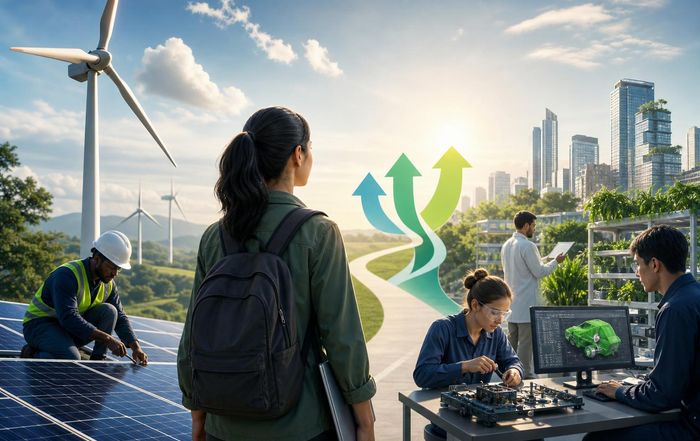
How Clean Technology Investment Supports New Career Paths
Clean Technology as a Career Engine and Not Just a Climate Solution
Clean technology has moved from the margins of policy debate into the core of economic strategy in the United States and across much of the world, and for the business-focused readers of usa-update.com, the most consequential aspect of this transition is no longer simply its environmental impact but the way sustained investment in clean technology is reshaping labor markets, corporate strategy, and long-term career trajectories. While climate commitments, regulatory pressure, and shifting consumer expectations remain powerful drivers, the decisive factor for executives, investors, and workers alike is that clean technology now underpins a rapidly expanding ecosystem of high-value employment opportunities that span engineering, finance, law, digital services, manufacturing, and frontline operations, creating new pathways for both established professionals and younger entrants into the workforce.
This shift is particularly evident in the United States, where federal incentives, state-level innovation clusters, and private capital flows have combined to make clean technology one of the most dynamic sectors tracked on the usa-update.com business and economy pages, but it is also mirrored across North America, Europe, and fast-growing markets in Asia and Africa, where governments and corporations are competing to secure leadership positions in renewable energy, sustainable mobility, and low-carbon manufacturing. In this environment, understanding how clean technology investment translates into new career paths is no longer a niche concern; it is a strategic imperative for organizations seeking talent, professionals planning their next move, and policymakers aiming to align workforce development with long-term competitiveness.
The Investment Landscape: From Policy Push to Market Pull
The clean technology investment landscape of 2026 reflects a decisive break with earlier boom-and-bust cycles that characterized renewables in the 2000s and early 2010s. Instead of relying solely on subsidies or speculative enthusiasm, the sector is now supported by a combination of regulatory clarity, structural cost declines, and maturing financial instruments that anchor it within mainstream capital markets. According to ongoing analysis from organizations such as the International Energy Agency, global clean energy investment has continued to rise year over year, with large-scale commitments flowing into solar, wind, grid modernization, battery storage, and emerging segments such as green hydrogen and carbon management. Readers can explore broader energy investment trends through resources like the IEA's energy investment reports.
In the United States, landmark legislation adopted earlier in the decade, alongside state-level climate and energy standards, has catalyzed extensive private-sector participation, encouraging major corporations such as Microsoft, Amazon, Apple, and Alphabet to accelerate their decarbonization roadmaps and commit to long-term renewable procurement, electrified fleets, and energy-efficient data centers. These commitments, documented in sustainability disclosures and highlighted by groups such as CDP, have created predictable demand signals that in turn support project finance, infrastructure build-out, and the expansion of specialized service providers. For readers of usa-update.com tracking policy and regulatory developments, the intersection of climate policy and capital allocation is a recurring theme on the site's regulation and finance sections, where trends in sustainable finance and compliance are closely followed.
As capital has flowed into clean technology, the profile of investors has diversified, with sovereign wealth funds, pension plans, insurance companies, and family offices increasingly allocating to climate-aligned assets, often guided by frameworks from institutions such as the Task Force on Climate-related Financial Disclosures and the International Sustainability Standards Board. This mainstreaming of climate finance has fostered a more robust ecosystem of project developers, asset managers, and advisory firms, all of which require professionals with hybrid expertise at the intersection of energy, technology, and financial structuring. More information on sustainable investment practices can be found via resources like the Principles for Responsible Investment.
Sectoral Transformation: Where the Jobs Are Emerging
Clean technology investment is not a single industry but a cross-cutting transformation that touches power generation, transportation, buildings, industry, agriculture, and digital infrastructure, and each of these domains is generating its own set of career pathways. In power generation, the rapid deployment of utility-scale solar and wind projects across the United States, Canada, Europe, and parts of Asia has created sustained demand for project engineers, grid planners, construction managers, and operations and maintenance specialists, as utilities and independent power producers expand their portfolios and modernize aging infrastructure. Organizations like the U.S. Department of Energy and National Renewable Energy Laboratory provide detailed analyses of labor trends in this space, and professionals can learn more about renewable energy careers through official resources.
The transportation sector has undergone equally profound change, driven by the rapid adoption of electric vehicles, the build-out of charging infrastructure, and the integration of digital mobility services. Major automakers including General Motors, Ford, Volkswagen, BMW, and Hyundai have committed to ambitious electrification timelines, while newer entrants such as Tesla, Rivian, and BYD continue to push innovation in battery technology, software integration, and direct-to-consumer business models. This has opened roles not only in advanced manufacturing and supply chain management, but also in battery research, charging network deployment, grid integration, and mobility-as-a-service platforms, with career opportunities spanning the United States, Europe, China, and other key markets. Organizations such as the International Council on Clean Transportation offer insights into evolving vehicle standards and technology pathways, which can be explored through resources like the ICCT's research library.
In buildings and construction, clean technology manifests through energy-efficient design, advanced materials, smart building systems, and retrofitting programs that align with national and regional decarbonization goals. This has generated demand for architects versed in green building standards, mechanical and electrical engineers specializing in high-efficiency systems, building performance analysts, and facility managers able to work with integrated software platforms. Certification bodies such as the U.S. Green Building Council, which oversees the LEED rating system, and the International WELL Building Institute have become influential in shaping professional credentials and market expectations, encouraging a new generation of specialists who can bridge design, engineering, and sustainability. To understand how sustainable building practices are evolving, professionals can consult resources like the USGBC's green building information.
Industrial sectors, including steel, cement, chemicals, and heavy manufacturing, are now in the early stages of adopting low-carbon technologies such as hydrogen-based processes, carbon capture, utilization and storage, and electrified heat, supported by pilot projects and early-stage commercial deployments across Europe, North America, and parts of Asia. This transition is creating specialized roles in process engineering, industrial automation, environmental compliance, and lifecycle assessment, as companies seek to align with emerging standards and avoid carbon-related trade barriers in global markets. Reports from organizations like the World Economic Forum and International Renewable Energy Agency provide overviews of how industrial decarbonization is reshaping global value chains, and readers can explore broader clean industry trends through resources such as IRENA's publications.
New Career Archetypes in the Clean Technology Economy
The expansion of clean technology investment has given rise to distinct career archetypes that did not exist, or were only nascent, a decade ago, and understanding these archetypes can help professionals and employers map out strategic talent development plans. One prominent profile is the climate-savvy engineer who combines traditional technical training with deep familiarity in emissions reduction, lifecycle thinking, and digital optimization tools; such professionals are in high demand in renewable project development, grid modernization, building systems, and industrial decarbonization, where they are expected to integrate technical feasibility with regulatory compliance and financial viability.
Another emerging archetype is the sustainable finance specialist, often with backgrounds in banking, asset management, or corporate finance, who has developed expertise in green bonds, sustainability-linked loans, ESG integration, and climate risk assessment. These professionals are increasingly embedded within major financial institutions, corporate treasury departments, and advisory firms, ensuring that capital allocation decisions align with both regulatory requirements and investor expectations. Organizations such as the Sustainability Accounting Standards Board and Global Reporting Initiative have shaped the skills required in this domain, and practitioners can deepen their understanding of disclosure and reporting frameworks through the GRI's guidance materials.
A third archetype is the climate data and digital solutions expert, often drawn from computer science, data science, or software engineering, who applies advanced analytics, artificial intelligence, and cloud computing to optimize energy systems, model climate risk, or support corporate sustainability reporting. Companies such as Google, IBM, Salesforce, and Siemens have developed sophisticated platforms for energy management, emissions tracking, and predictive maintenance, and they rely on specialized talent capable of working at the intersection of clean technology and digital transformation. Professionals seeking to understand broader technology trends shaping these roles can find context in the World Economic Forum's technology insights.
There is also a growing cohort of policy, legal, and regulatory specialists who focus specifically on climate and energy, working within law firms, consultancies, trade associations, and government agencies, and their work spans permitting processes, environmental impact assessments, carbon market design, and compliance with evolving national and international standards. As usa-update.com continues to track regulatory developments through its regulation and international coverage, the demand for professionals who can interpret and influence these frameworks will only increase, particularly in regions such as the European Union, where the European Green Deal and related legislation create complex compliance landscapes for multinational businesses.
Based on the uploaded clean technology career content.
Clean Tech Career Path Finder
Explore how clean technology investment is creating new roles across engineering, finance, digital systems, regulation, manufacturing, and local services.
Choose your strongest skill area
Climate-Savvy Engineer
Works on renewable projects, grid modernization, efficient buildings, batteries, and industrial decarbonization by combining engineering with emissions, policy, and finance awareness.
Roadmap into the clean tech economy
Identify whether your strength is technical, financial, digital, legal, or customer-facing.
Learn renewables, efficiency, batteries, climate risk, emissions, and sector standards.
Create projects, certifications, case studies, or portfolio work that bridges disciplines.
Look toward solar, wind, EVs, grids, buildings, sustainable finance, AI, and compliance.
Reskilling and Workforce Transitions: From Legacy Roles to Future-Ready Careers
One of the most challenging and consequential aspects of clean technology investment is the need to manage workforce transitions from legacy high-carbon sectors to emerging low-carbon industries, and this dynamic is especially visible in regions of the United States and Canada with strong historical ties to coal, oil, and gas, as well as in parts of Europe, South America, and Asia where fossil fuel extraction and heavy industry have long been central to local economies. For business leaders and policymakers, the central question is not whether these transitions will occur, but how to ensure that workers are equipped with the skills and support necessary to move into new roles that offer comparable or improved wages, benefits, and career progression.
Public agencies, educational institutions, and private companies are increasingly collaborating on reskilling initiatives that align with clean technology growth areas, ranging from community college programs in solar installation and energy efficiency to advanced technical training in battery manufacturing, grid engineering, and industrial automation. In the United States, the Department of Labor and Department of Energy have supported training partnerships that bring together unions, employers, and educational institutions, with a focus on ensuring that workers from displaced industries can transition into quality jobs in clean energy and related fields. Readers interested in broader employment trends in the United States can find context on the usa-update.com jobs and employment pages, where the evolution of the labor market is closely monitored.
Internationally, organizations such as the International Labour Organization and the Organisation for Economic Co-operation and Development have emphasized the importance of a "just transition" that balances climate objectives with social and economic stability, providing policy guidance and case studies that highlight best practices in worker retraining, social protection, and regional economic diversification. Professionals and policymakers can explore the ILO's just transition resources to understand how different countries are approaching these challenges. For businesses, participation in such initiatives is not only a matter of corporate responsibility but also a strategic investment in securing a pipeline of skilled workers for future operations.
Regional Dynamics: United States, North America, and Beyond
The geography of clean technology careers is shaped by policy frameworks, resource endowments, industrial bases, and innovation ecosystems, and for the core audience of usa-update.com, the United States remains the primary reference point, with distinctive regional patterns that influence where and how new career paths are emerging. The American West and Southwest, with abundant solar resources and supportive state policies, have become hubs for large-scale solar deployment and grid modernization projects, generating demand for engineers, technicians, and construction professionals. The Midwest, with its strong manufacturing heritage and wind resources, is seeing growth in both renewable deployment and component manufacturing, particularly in states that have actively pursued investment in battery plants and electric vehicle supply chains.
The Northeast and Mid-Atlantic regions, supported by dense urban centers, advanced service economies, and policy ambition, have emerged as centers for offshore wind development, sustainable finance, and climate-related professional services, including law, consulting, and data analytics. Coastal states are also at the forefront of resilience planning, coastal adaptation, and climate risk assessment, creating specialized roles in climate science, urban planning, and infrastructure design. Readers can follow these regional developments through usa-update.com's news and events coverage, which highlight how local policies and investments translate into concrete business and career opportunities.
Beyond the United States, Canada has leveraged its hydropower resources, mineral wealth, and innovation clusters in provinces such as British Columbia, Quebec, and Ontario to position itself as a key player in battery materials, clean hydrogen, and low-carbon industrial processes, while also grappling with the challenge of transitioning workers from oil and gas sectors in Alberta and other regions. In Europe, countries like Germany, Denmark, Sweden, and the Netherlands have continued to expand their leadership in wind power, energy efficiency, and advanced manufacturing, while France, Spain, and Italy pursue a mix of renewables, nuclear, and grid modernization strategies. The European Commission provides extensive documentation on these initiatives, accessible through portals such as the EU climate and energy pages.
In Asia, China remains a dominant player in solar manufacturing, battery production, and electric vehicles, while also expanding its domestic deployment of renewables and grid infrastructure; countries like Japan, South Korea, and Singapore are focusing on high-tech solutions, hydrogen, and digital energy systems, and Southeast Asian nations such as Thailand and Malaysia are seeking to attract investment in manufacturing and clean energy deployment. Africa and South America, though facing capital and infrastructure constraints, are increasingly seen as growth markets for distributed renewables, off-grid solutions, and sustainable agriculture, which in turn create new entrepreneurial and technical roles. Organizations such as the World Bank and African Development Bank have highlighted the employment potential of these investments, and interested readers can learn more about sustainable development and jobs through their climate and jobs resources.
Technology Convergence: Digitalization, AI, and the Future of Work
The clean technology sector in 2026 is defined not only by its physical infrastructure-solar farms, wind turbines, EV charging networks-but also by the digital layer that enables optimization, integration, and new business models, and this convergence of clean technology with digitalization and artificial intelligence is profoundly influencing the types of skills and roles that are in demand. Smart grids, for example, rely on advanced sensors, communication networks, and control algorithms to balance variable renewable generation with demand-side flexibility, which in turn requires professionals skilled in data engineering, cybersecurity, and systems integration, working alongside traditional electrical engineers and utility operators.
Artificial intelligence and machine learning are increasingly applied to forecasting renewable generation, optimizing energy storage dispatch, enhancing predictive maintenance, and improving building energy management, creating opportunities for data scientists and software engineers to work on climate-relevant applications. Companies such as Schneider Electric, Honeywell, and Johnson Controls have invested heavily in digital energy platforms, while major cloud providers like Amazon Web Services and Microsoft Azure offer specialized solutions for energy and sustainability analytics. Professionals can explore how AI is transforming energy systems through resources such as the International Energy Agency's digitalization insights.
This digital transformation also affects how workers interact with clean technology systems on the ground, as technicians and operators increasingly use augmented reality tools, remote monitoring platforms, and digital twins to manage complex assets, and this requires a blend of technical literacy, digital fluency, and safety awareness. Training programs that combine hands-on experience with digital tools are becoming more common in vocational education and corporate development, preparing workers for roles that are both physically grounded and technologically advanced. For readers of usa-update.com interested in the broader intersection of technology and employment, the site's technology and employment sections provide ongoing coverage of how automation and AI are reshaping work across multiple sectors, including clean technology.
Finance, Risk, and Governance: Career Opportunities in the Boardroom
The integration of climate considerations into corporate governance, risk management, and investor relations has opened a new frontier of career opportunities in boardrooms, C-suites, and corporate staff functions, as companies recognize that climate risk is financial risk and that clean technology investment is central to long-term value creation. Chief sustainability officers, once peripheral figures focused primarily on reporting and philanthropic initiatives, now play strategic roles in capital allocation, product development, and supply chain management, often working closely with chief financial officers, chief risk officers, and boards of directors to ensure that climate and clean technology strategies are integrated into core business planning.
This evolution has created demand for professionals who can bridge sustainability expertise with financial acumen, legal knowledge, and stakeholder engagement skills, and these roles are increasingly formalized through positions such as head of climate risk, director of sustainable finance, or ESG strategy lead. Institutions like the Harvard Business School and Stanford Graduate School of Business have developed executive education programs focused on climate and sustainability leadership, reflecting the growing recognition that senior decision-makers must understand clean technology trends to steer their organizations effectively. Executives and aspiring leaders can explore climate and business education offerings to strengthen their strategic capabilities in this area.
Regulators and standard-setters have also elevated expectations around climate disclosure and governance, with frameworks such as the ISSB standards, the SEC's climate-related disclosure rules in the United States, and the EU's Corporate Sustainability Reporting Directive setting new baselines for transparency and accountability. This regulatory environment has spurred demand for legal and compliance professionals who specialize in climate and sustainability, as well as auditors and assurance providers capable of verifying non-financial data. For readers tracking these developments, usa-update.com's finance and business pages frequently highlight how evolving disclosure requirements are influencing corporate behavior and professional roles.
Lifestyle, Consumer Demand, and Service-Sector Careers
While much of the discussion around clean technology careers focuses on infrastructure, finance, and engineering, consumer behavior and lifestyle trends are also critical drivers of new employment opportunities, particularly in the service sector. As households and businesses adopt electric vehicles, rooftop solar, smart home systems, and energy-efficient appliances, they require installation, maintenance, and advisory services, creating local jobs that combine technical skills with customer engagement. Retailers, utilities, and specialized service providers are building teams of energy advisors, sales consultants, and customer success managers who can explain complex technologies in accessible terms and guide consumers through incentive programs and financing options.
Travel and tourism are similarly affected, as airlines, hotels, and travel platforms respond to growing demand for lower-carbon options and transparent emissions information. This has led to roles in sustainable tourism planning, carbon accounting for travel, and the design of eco-certified experiences and accommodations across the United States, Europe, Asia, and beyond. Organizations such as the Global Sustainable Tourism Council provide frameworks for sustainable travel practices, and business professionals can learn more about sustainable tourism standards to understand how this niche is evolving. For readers of usa-update.com interested in how lifestyle and travel choices intersect with clean technology, the site's lifestyle and travel sections offer perspectives on consumer trends and emerging services.
The entertainment and media industries are also engaging with clean technology, both in terms of reducing their own production footprints and in creating content that reflects climate themes and technological innovation. Film studios, streaming platforms, and gaming companies are hiring sustainability coordinators, environmental consultants, and storytellers who can integrate climate and technology narratives into mainstream entertainment, while events and festivals increasingly incorporate sustainability practices into logistics, catering, and infrastructure. Readers can follow these cultural and industry developments through usa-update.com's entertainment and events coverage, which often highlight how public perception and storytelling influence the broader clean technology ecosystem.
Energy Security, Geopolitics, and International Career Mobility
Clean technology investment is not only an economic and environmental issue but also a matter of energy security and geopolitics, and this dimension is creating new career paths in international relations, security analysis, and global supply chain management. As countries seek to reduce dependence on imported fossil fuels and secure access to critical minerals such as lithium, cobalt, nickel, and rare earth elements, professionals with expertise in resource diplomacy, trade policy, and geopolitical risk are in high demand, particularly within governments, multinational corporations, and international organizations.
The reconfiguration of global supply chains for batteries, solar panels, wind components, and hydrogen technologies has led companies to reassess sourcing strategies, investment locations, and partnership models, creating roles for supply chain strategists, trade lawyers, and investment analysts who can navigate complex policy environments and geopolitical tensions. Institutions such as the Center for Strategic and International Studies and Chatham House provide analysis on how energy transition intersects with geopolitics, and professionals can explore CSIS energy and security insights to deepen their understanding of this evolving landscape.
For individuals, the global nature of clean technology creates opportunities for international careers that span multiple regions, as companies and organizations seek talent willing to work across North America, Europe, Asia, Africa, and Latin America. International development agencies, global NGOs, and multinational corporations are recruiting professionals who can manage cross-border projects, engage with diverse stakeholders, and adapt technologies to local contexts, particularly in emerging markets where energy access and climate resilience are urgent priorities. Readers of usa-update.com can monitor these international dynamics through the site's international and energy sections, which frequently cover cross-border initiatives and regional cooperation in clean technology.
Strategic Considerations for Businesses and Professionals
For businesses operating in or adjacent to clean technology sectors, the implications of these trends are far-reaching, touching talent strategy, corporate culture, and long-term competitiveness. Companies that proactively invest in workforce development, internal mobility, and partnerships with educational institutions are better positioned to secure scarce talent and adapt to technological change, while those that treat clean technology as a peripheral or purely compliance-driven issue risk falling behind in innovation and market relevance. Aligning corporate strategy with emerging clean technology opportunities requires not only financial commitment but also deliberate efforts to cultivate interdisciplinary teams, foster a culture of continuous learning, and integrate sustainability into core decision-making processes.
For individual professionals, the emergence of clean technology as a career engine suggests the importance of building hybrid skill sets that combine domain expertise with cross-cutting capabilities in digital tools, communication, and systems thinking. Engineers who understand finance and policy, financiers who grasp technology fundamentals, and communicators who are fluent in data and science are particularly well positioned to lead in this evolving landscape. Continuous learning, whether through formal education, professional certifications, or on-the-job experience, is essential, as technologies, regulations, and market structures continue to evolve. Career planning in 2026 increasingly involves consideration of how one's skills can contribute to, and benefit from, the clean technology transition, whether in established corporations, high-growth startups, public agencies, or non-profit organizations.
The editorial team at usa-update.com, through its coverage of economy, business, technology, jobs, and consumer trends, has observed that readers are increasingly interested in how macro-level shifts-such as clean technology investment-translate into concrete opportunities and risks at the individual and organizational level. This alignment between structural change and personal impact underscores the importance of accessible, analytically rigorous journalism that connects policy, finance, technology, and human stories, and it reinforces the role of platforms like usa-update.com in helping business leaders and professionals navigate a complex, rapidly evolving environment.
Conclusion: Clean Technology as a Defining Career Narrative of the 2020s
As of 2026, clean technology investment has moved beyond the realm of specialized energy policy and into the mainstream of economic, financial, and corporate strategy, shaping not only how power is generated and goods are produced, but also how careers are built and organizations compete. The sector's growth is generating a diverse array of new career paths that span technical, financial, digital, legal, and creative domains, offering opportunities for workers at all skill levels and across multiple regions, from the United States and Canada to Europe, Asia, Africa, and Latin America. At the same time, it presents challenges related to reskilling, regional disparities, and social equity, demanding thoughtful coordination among businesses, governments, educational institutions, and civil society.
For the business-oriented audience of usa-update.com, the central takeaway is that clean technology is no longer a peripheral consideration but a defining narrative of the 2020s, one that will influence hiring decisions, investment strategies, product roadmaps, and corporate reputations for years to come. Organizations that recognize clean technology as a strategic talent and innovation platform-and that invest accordingly in people, partnerships, and capabilities-are likely to be the ones that thrive in a world where climate, technology, and economic competitiveness are inextricably linked. For individuals, engaging with this transition, whether through education, career moves, or entrepreneurial ventures, offers not only the prospect of professional growth but also the opportunity to contribute to a more resilient and sustainable global economy.
As clean technology investment continues to expand and diversify, usa-update.com will remain committed to providing its readers with timely, authoritative coverage across news, finance, employment, energy, and related domains, helping business leaders, policymakers, and professionals understand not just where the money is flowing, but how those flows are reshaping the very nature of work in the United States and around the world.
