
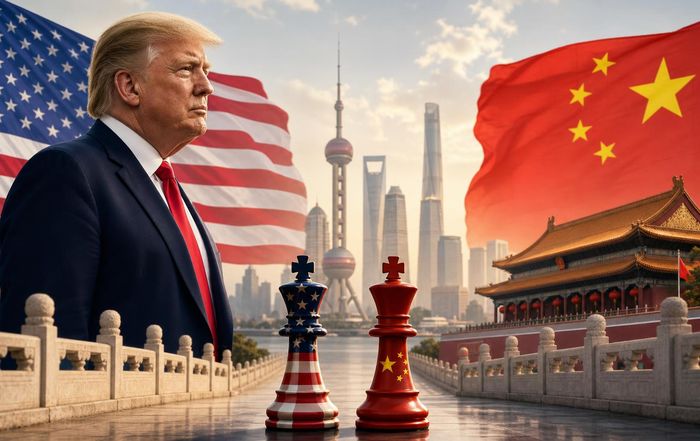
Trump's 2026 Visit to China: A High-Stakes Reset for the Global Order
A New Chapter in a Long Rivalry
When Donald Trump stepped onto the red carpet in Beijing on Wednesday, May 13, 2026, greeted by a full military honor guard, a gun salute, and the strains of the "Star-Spangled Banner" echoing across Tiananmen Square, the ceremony was more than diplomatic theater. It marked an inflection point in a rivalry that has defined the global economy for more than a decade, and it signaled that both Trump and Xi Jinping understood the urgency of recalibrating a fraught relationship between the world's two largest economies.
For the readership of usa-update.com, whose interests span the economy, finance, jobs, technology, regulation, energy, and global affairs, this visit is not merely a news event; it is a prism through which to understand the future direction of American prosperity and international stability. From the blocked Strait of Hormuz and ongoing tensions in the Middle East to the restructuring of global supply chains and the race for technological supremacy, the outcomes of this visit will influence markets, corporate strategies, employment trends, and regulatory frameworks in the United States and far beyond.
As Xi Jinping hosted Trump with conspicuous flattery and elaborate ceremony, including a tour of the 15th-century Temple of Heaven and a state banquet framed as a "cherished" opportunity for dialogue, both leaders sought to project strength at home and reliability abroad. Yet behind the optics lay a set of hard questions: Can Washington and Beijing stabilize their trade relationship after years of tariffs and retaliatory measures? Will China leverage its long-standing relationship with Iran to shape outcomes in the Strait of Hormuz? And can two leaders with sharply contrasting political styles find common ground in an international system under severe strain?
To understand the significance of this visit for business leaders, investors, policymakers, and consumers who follow developments through platforms such as the usa-update.com business coverage and economy analysis, it is essential to examine not only the symbolism but also the strategic calculations driving both sides.
Ceremony as Strategy: The Optics of Power and Stability
The pageantry surrounding Trump's arrival in Beijing was carefully orchestrated. A military honor guard outside the Great Hall of the People, schoolchildren waving Chinese and American flags, and a meticulously choreographed welcome ceremony all served a dual purpose. Domestically, it reinforced Xi Jinping's narrative of China as a confident, stable global power capable of hosting and managing even the most unpredictable foreign leaders. Internationally, it offered a visual contrast between Beijing's disciplined statecraft and the often turbulent political climate in Washington.
The decision by Xi to offer such an effusive welcome, including moments where Trump publicly praised him as a "great leader" and commented on the beauty of China's historic sites, reflects a long-standing Chinese diplomatic approach in which symbolism and personal rapport are used to soften the ground for hard negotiations. Observers who follow global political dynamics through resources like the Council on Foreign Relations and the Brookings Institution will recognize in this visit echoes of earlier state visits in which Beijing used ceremony to signal openness while preserving leverage.
For Trump, whose approval ratings have been under pressure amid a protracted conflict with Iran and economic uncertainty, the optics of a warm welcome in Beijing offered an opportunity to project statesmanlike leadership and international relevance. In an American media environment closely tracked by outlets such as The Wall Street Journal and The New York Times, images of camaraderie with Xi and talk of progress on trade and security issues provide material for a narrative of diplomatic achievement that can be sold to voters, markets, and corporate stakeholders.
The ceremony was therefore not a mere backdrop but a strategic asset. It framed the summit as a moment of potential reset, even as both sides remained acutely aware that beneath the surface of mutual praise lay unresolved disputes over tariffs, technology, security, and geopolitical influence.
Trade Tensions and Economic Stakes: From Tariff War to Fragile Truce
The central economic context for the 2026 visit is the legacy of a trade war that saw tariffs between the United States and China exceed 100 percent on key categories of goods. This confrontation, which disrupted global supply chains from North America and Europe to Asia and Africa, reshaped corporate strategies and led many multinational enterprises to reassess their exposure to both markets. Analysts at institutions such as the World Trade Organization and the International Monetary Fund have documented the impact of these tariffs on global trade volumes, investment flows, and growth prospects.
Following a fragile truce that brought partial relief but left many tariffs in place, the question hanging over this visit is whether a more durable framework can be established. For American manufacturers, technology firms, agricultural exporters, and service providers, the uncertainty surrounding tariff levels, regulatory requirements, and market access has been a persistent drag on planning and investment. Readers who monitor market developments through usa-update.com finance insights and jobs coverage will appreciate that even modest changes in tariff policy can alter hiring decisions, capital expenditure plans, and regional expansion strategies.
Xi Jinping's public suggestion that China is prepared to expand exchanges and cooperation in trade and agriculture can be read as a signal of willingness to increase imports of American goods, particularly in sectors such as soybeans, energy products, and high-value food items. This aligns with Beijing's broader strategy of using targeted purchases to manage bilateral tensions while maintaining control over strategic industries and technologies. For American agribusiness companies and farmers, many of whom experienced severe disruption during the earlier phases of the trade war, such signals are closely watched and often reflected in commodity prices tracked by platforms like Bloomberg and Reuters.
At the same time, the structural issues that underpinned the original conflict-intellectual property protection, state subsidies, market access restrictions, and the role of state-owned enterprises-have not disappeared. Business leaders following developments through usa-update.com regulation analysis and international pages such as usa-update.com/international are aware that any new trade arrangement must grapple with these deeper concerns if it is to provide lasting certainty.
The delicate balance for both sides lies in crafting an agreement that allows Trump to claim a political and economic "win" at home while enabling Xi to maintain his narrative of national rejuvenation and technological self-reliance. This balance is inherently unstable, and the markets' reaction in the months following the visit will offer a clear indication of whether businesses believe a genuine reset has occurred or whether the truce remains as fragile as before.
The Strait of Hormuz and the Iran Factor: Geopolitics Meets Commerce
One of the most consequential elements of the 2026 summit is the intersection between US-China relations and the crisis in the Strait of Hormuz. With the shipping corridor partially blocked amid escalating tensions involving Iran, the global economy has been rattled, energy prices have become volatile, and shipping companies from the United States, Europe, and Asia have faced increased risk and cost. Organizations such as the International Energy Agency and Lloyd's List have highlighted the strategic importance of this chokepoint for global energy security.
China's longstanding relationship with Iran, underpinned by decades of diplomatic engagement and substantial trade flows, gives Beijing a unique position in any effort to de-escalate tensions and restore safe passage through the Strait. As Iran's largest trading partner, China has both influence and interest in preventing a prolonged disruption that could harm its own energy imports and broader economic stability. For American policymakers and businesses, this creates a complex dynamic in which Washington may need to rely, at least partially, on Beijing's leverage with Tehran to achieve its own strategic objectives.
For Trump, whose administration has been grappling with the political and economic consequences of the conflict with Iran, securing Chinese cooperation on Hormuz would represent a significant diplomatic achievement. It could also help stabilize energy markets, with direct implications for American consumers, industrial users, and investors who follow developments via usa-update.com energy coverage and consumer-focused pages such as usa-update.com/consumer. A reduction in shipping risk and insurance premiums could ease pressure on fuel prices, logistics costs, and inflation, thereby supporting broader economic stability in the United States and allied economies from Europe to Asia-Pacific.
However, this potential cooperation also underscores a deeper reality: the United States and China are not only competitors but also reluctant partners in managing a global system that neither can fully control alone. As think tanks like the Carnegie Endowment for International Peace and the Center for Strategic and International Studies have argued, the complexity of issues such as maritime security, sanctions enforcement, and regional power balances in the Middle East necessitates some degree of coordination among major powers, even when their long-term strategic objectives diverge.
The Hormuz crisis therefore adds an additional layer of urgency and leverage to the 2026 summit. Beijing understands that Washington's need for assistance enhances China's bargaining power on trade and technology issues, while Washington recognizes that failure to secure cooperation could prolong global economic uncertainty. In this sense, the visit becomes not only a bilateral negotiation but also a test of whether the two powers can manage shared vulnerabilities without escalating their rivalry.
Technology, Data, and the Battle for Digital Dominance
Although the public messaging around the visit has focused heavily on trade and security, the underlying competition over technology remains central to the US-China relationship. The last decade has seen both countries invest heavily in artificial intelligence, 5G and 6G communications, quantum computing, semiconductors, and advanced manufacturing. The rivalry between American technology giants such as Apple, Microsoft, Google, and NVIDIA, and Chinese counterparts such as Huawei, Tencent, Alibaba, and Baidu has reshaped global innovation ecosystems and regulatory debates.
For executives and investors tracking technology trends through platforms like usa-update.com technology coverage and international sources such as MIT Technology Review and Wired, the stakes of the 2026 summit are clear. Export controls, investment restrictions, and data localization requirements have fragmented previously integrated value chains, prompting companies to adopt "China-plus-one" or "friend-shoring" strategies that diversify production and research across multiple jurisdictions.
American concerns about intellectual property theft, forced technology transfer, and cybersecurity have led to a tightening of controls on sensitive exports and inbound investment from China, supported by regulatory bodies and frameworks that are frequently analyzed by the U.S. Department of Commerce and the U.S. Trade Representative. China, for its part, has accelerated its "dual circulation" strategy, emphasizing domestic innovation and self-sufficiency in key technologies while maintaining selective openness to foreign capital and expertise.
Against this backdrop, any discussion between Trump and Xi on technology cooperation or constraints is likely to be highly circumscribed. While both sides may seek limited agreements to ease pressure on specific industries or supply chains-such as semiconductors, cloud services, or industrial software-the broader trajectory remains one of partial decoupling. This trend has profound implications for employment, investment, and regulation, topics that are regularly explored in usa-update.com employment coverage and its broader economy section.
For businesses in the United States, Europe, and Asia, the key challenge is navigating a landscape in which compliance, risk management, and strategic foresight are as important as technological capability. Companies must not only track evolving export controls and data protection rules but also anticipate future points of friction, such as competition over standards-setting bodies, cross-border data flows, and the governance of emerging technologies like AI-driven surveillance and digital currencies. Resources like the OECD and the World Economic Forum provide valuable analysis of these trends, but the practical task of implementation falls to corporate boards, compliance teams, and policymakers.
Domestic Politics and Leadership Calculus: Xi's Stability vs. Trump's Volatility
The personal dynamic between Xi Jinping and Donald Trump remains a central feature of the bilateral relationship, not because personal rapport can override structural tensions, but because leadership styles shape both the tone and timing of decisions. Xi, who has consolidated power at home and positioned himself as a symbol of continuity and national revival, has consistently sought to present China as a stabilizing force in a turbulent world. His carefully curated image, reinforced by state media and diplomatic outreach, contrasts with Trump's more erratic and transaction-oriented style, which often blends domestic political messaging with international negotiation.
For observers of global politics who rely on outlets such as The Economist and Foreign Affairs, this contrast is not merely stylistic; it affects how allies, investors, and adversaries interpret each leader's moves. Xi's emphasis on long-term planning and strategic patience can make China's policy direction more predictable in certain domains, even as it remains opaque in others. Trump's focus on short-term victories, public praise, and headline-grabbing announcements can create volatility but also generate openings for rapid shifts if political incentives align.
The 2026 visit occurs at a moment when Trump is under pressure to demonstrate tangible foreign policy and economic successes. Falling approval ratings, intensified by the economic fallout from the Iran confrontation and domestic debates over inflation, employment, and social spending, have heightened the need for a narrative of regained control and international respect. In this context, the images of Trump being warmly received in Beijing, engaging in seemingly cordial discussions with Xi, and hinting at progress on trade and security issues serve an important domestic political function.
For Xi, the calculus is different but equally strategic. By showcasing his ability to host and manage a contentious American president, he reinforces his domestic legitimacy and global standing. At the same time, he must avoid appearing to concede too much to Washington, particularly in areas that touch on sovereignty, technology, or core economic interests. The Chinese leadership's sensitivity to domestic public opinion, even within an authoritarian political system, means that any perceived weakness in dealing with the United States could carry political costs.
This interplay of domestic imperatives and international strategy underscores why the visit's outcomes are likely to be carefully balanced and ambiguously framed. Both sides need to claim victory, but neither can afford to give away too much. For businesses, investors, and policymakers who follow these developments through usa-update.com news coverage and broader international reporting, the challenge lies in distinguishing substantive policy shifts from symbolic gestures designed primarily for domestic consumption.
Implications for Business, Jobs, and Investment
For the business community in the United States, North America, and across key regions such as Europe, Asia, and the Middle East, the 2026 US-China summit carries immediate and longer-term implications. In the immediate term, any announcement of tariff reductions, expanded market access, or new channels of dialogue can influence equity markets, currency values, and corporate risk assessments. Investors who track such movements through platforms like MarketWatch and CNBC will be alert to shifts in sectors most exposed to US-China trade, including manufacturing, consumer electronics, automotive, agriculture, and logistics.
In the medium to long term, the visit's impact will be measured by whether it leads to more predictable rules of engagement between the two economies. For American companies considering investments in China, or Chinese firms exploring opportunities in the United States, clarity around tariffs, regulatory expectations, and political risk is essential. The same is true for businesses in Europe, Canada, Australia, and other regions that must navigate the ripple effects of US-China tensions on global supply chains and market access.
Employment trends are closely tied to these dynamics. Sectors that depend heavily on exports to China or on Chinese components and capital-such as advanced manufacturing, automotive, and certain segments of the technology industry-face ongoing uncertainty that can dampen hiring and wage growth. Conversely, sectors that benefit from diversification away from China, including domestic manufacturing and nearshoring operations in North America, may see employment gains. Readers of usa-update.com employment insights and jobs coverage will be watching closely for signs that the summit is influencing corporate location and hiring decisions.
For multinational corporations, the key strategic question is whether to treat the 2026 visit as a turning point or as another temporary pause in an ongoing cycle of confrontation and partial accommodation. Many firms have already begun to redesign their supply chains to reduce overreliance on any single country, leveraging opportunities in Southeast Asia, India, Latin America, and Eastern Europe. Resources like McKinsey & Company and Deloitte have documented how these shifts are reshaping global production networks and investment flows.
Ultimately, the visit's value for business and employment will be judged less by the ceremonial statements and more by the durability of any policy changes that follow. If the summit leads to sustained dialogue, gradual de-escalation of trade barriers, and clearer rules for technology and investment, it could support a more stable environment for growth and job creation. If, however, it proves to be a brief interlude before renewed confrontation, companies will need to double down on resilience, diversification, and risk management.
Lifestyle, Travel, and People-to-People Exchange
Beyond the macroeconomic and geopolitical dimensions, the 2026 summit also has implications for travel, lifestyle, and people-to-people connections between the United States and China. Over the past decade, tourism, educational exchanges, and business travel have been disrupted by political tensions, visa restrictions, and public health crises. Platforms such as usa-update.com travel coverage and lifestyle reporting have documented how these disruptions have affected airlines, hospitality businesses, universities, and cultural institutions.
A more stable US-China relationship could gradually reopen opportunities for tourism, student exchanges, and professional collaboration, particularly in sectors such as entertainment, sports, and the creative industries. The presence of 30 American CEOs accompanying Trump to Beijing underscores the ongoing interest in cross-border engagement, not only in traditional industries but also in media, entertainment, and digital platforms that shape contemporary lifestyles. Cultural diplomacy, joint film productions, and co-branded events can help rebuild mutual familiarity and soften perceptions hardened by years of political confrontation.
At the same time, consumer preferences in both countries have evolved in response to geopolitical tensions and domestic narratives. American consumers may be more cautious about Chinese brands in sensitive categories, while Chinese consumers may gravitate toward domestic alternatives in response to nationalist sentiment. Analysts who follow consumer trends through resources such as NielsenIQ and Euromonitor International note that these shifts can have lasting effects on brand strategies and market positioning.
For the broader readership of usa-update.com, which spans interests from entertainment and events to finance and regulation, the human dimension of the US-China relationship is an important complement to the high-level diplomatic narrative. People-to-people exchanges, tourism flows, and cultural collaborations contribute not only to economic activity but also to the social and psychological underpinnings of international relations. A visit framed as a "cherished" opportunity for dialogue between leaders may, if followed through with concrete policies, also become an opportunity for renewed connections between societies.
The Role of Media and Information: Shaping Perceptions and Expectations
In an era of fragmented media and information overload, the way the 2026 summit is reported and interpreted will significantly influence public opinion and market expectations. State media in China will emphasize Xi Jinping's leadership, the warmth of the welcome extended to Trump, and the narrative of China as a responsible, stable power. American media, including business-focused outlets and platforms such as usa-update.com news coverage, will dissect every statement, gesture, and policy hint for signs of progress or setback.
International media and analytical organizations like BBC News and Al Jazeera will provide additional perspectives, highlighting implications for Europe, Asia, Africa, and Latin America. These regions, many of which are deeply integrated into both US and Chinese economic networks, have a strong interest in preventing a further breakdown in relations that could destabilize trade, investment, and security arrangements. The narrative constructed around the summit will influence not only political debates but also corporate boardroom discussions and investor sentiment.
For platforms such as usa-update.com, which serve a business-oriented audience with wide-ranging interests from the economy and finance to international affairs and consumer issues, the challenge is to provide nuanced, trustworthy analysis that goes beyond surface-level headlines. By integrating insights from multiple domains-economic data, geopolitical analysis, regulatory developments, and sector-specific trends-such platforms can help readers understand how events like the 2026 US-China summit fit into broader patterns that will shape their decisions as executives, investors, employees, and consumers.
Conclusion: A Fragile Opening in a Competitive Age
The flattery and fanfare that greeted Donald Trump in Beijing in May 2026 were carefully designed to create an atmosphere of possibility, even as both sides remained acutely aware of the underlying tensions that define the US-China relationship. Xi Jinping's grand welcome, complete with a military honor guard, cheering schoolchildren, and historic backdrops, projected confidence and stability at a time when global markets and security arrangements are under strain. Trump's praise for his host and his characterization of the talks as a "cherished" opportunity reflected both a desire for diplomatic success and an awareness of the political and economic pressures he faces at home.
For the audience of usa-update.com, the significance of this visit lies less in its ceremonial aspects and more in its potential to shape the future of trade, technology, energy security, and international governance. The intertwined challenges of managing a post-tariff truce, addressing the Strait of Hormuz crisis, navigating technological decoupling, and reconciling divergent political systems will not be resolved in a single summit. Yet this visit may mark the beginning of a more structured, if still competitive, phase in the relationship.
Business leaders, investors, and policymakers who rely on resources such as usa-update.com business analysis, economy coverage, and international perspectives will need to monitor not only the immediate announcements but also the follow-through in regulatory changes, trade negotiations, and security arrangements. The durability of any progress made in Beijing will depend on whether both Washington and Beijing can align their domestic political incentives with the requirements of global stability and economic interdependence.
In an increasingly multipolar world, where regions from Europe and North America to Asia, Africa, and Latin America are recalibrating their own positions, the ability of the United States and China to manage their rivalry without tipping into open conflict remains a central question. The 2026 summit provides a momentary opening, a carefully staged reset that may either usher in a period of managed competition and selective cooperation or be remembered as a brief pause before renewed confrontation.
For now, the images of Trump and Xi shaking hands in Beijing, framed by symbols of ancient history and modern power, capture the paradox of the moment: two leaders bound by mutual dependence and mutual suspicion, each seeking advantage yet constrained by shared vulnerabilities. How this paradox is resolved-or left unresolved-will shape the economic prospects, regulatory environments, and strategic choices facing the readers of usa-update.com in the years ahead.
