
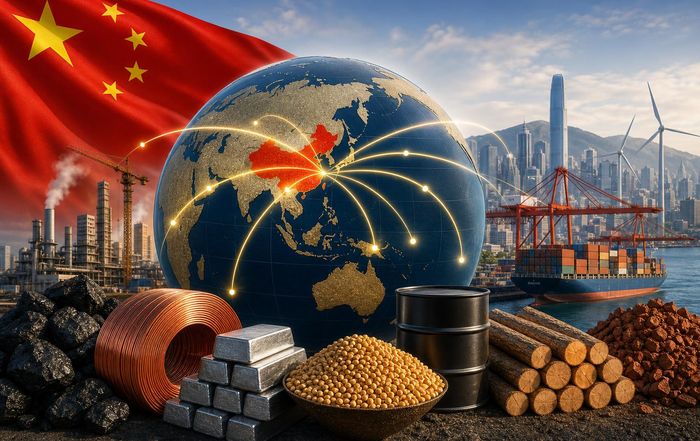
How China's Demand Shifts Are Reshaping Global Commodity Markets
Introduction: Why China Still Moves the World's Markets
For more than two decades, changes in China's appetite for raw materials have been among the most powerful forces in global commodity markets. From iron ore and copper to oil, gas, grains, and critical minerals, shifts in Chinese demand have repeatedly redrawn trade routes, altered price cycles, and reshaped investment decisions from Texas shale fields to Brazilian iron ore mines and Australian wheat farms. As USA update tracks the daily evolving global economy for clever thinking individuals in the United States and beyond, understanding how these shifts in China reverberate through energy, metals, food, and manufacturing supply chains has become essential for assessing risks and opportunities in the years ahead.
China's economy has matured from a phase of infrastructure-heavy, double-digit growth to a more services-oriented, slower-growing model, while at the same time its policymakers are pushing hard on decarbonization, technological self-reliance, and food and energy security. Each of these transitions alters the composition and intensity of commodity demand. The result is not a simple story of "more" or "less" demand, but of changing patterns: less steel-intensive construction, more electricity and battery metals, a plateau in coal, and a complex mix of domestic substitution and import diversification in energy and agriculture.
For commodity exporters, investors, and policymakers in the United States and other major economies, these dynamics are not abstract. They affect employment in resource-rich regions, capital allocation across sectors, regulatory priorities, and consumer prices. Readers can follow related developments in the U.S. and global economy through USA update's top reporting of economic trends and business developments, but this article provides a deeper global lens on the specific question of how China's shifting demand is reshaping commodity markets and what that means for the future.
China's Evolving Economic Model and Its Commodity Footprint
China's commodity influence stems from its size and development model. According to data from the World Bank and International Monetary Fund, China accounts for roughly one-fifth of global GDP in purchasing power terms and a substantial share of global industrial output. Over the past 15 years, estimates from organizations such as the International Energy Agency (IEA) and World Steel Association have consistently shown that China consumes around half of the world's steel, more than half of refined copper, and a significant share of coal, aluminum, and cement.
During the early 2000s and the decade following the global financial crisis, China's growth strategy relied heavily on infrastructure, real estate construction, and export-oriented manufacturing. That model created intense demand for bulk commodities such as iron ore, metallurgical coal, and base metals, driving a "supercycle" in prices that benefited resource exporters from Australia and Brazil to Canada and the United States. The construction boom, supported by rapid urbanization and credit expansion, made China the primary marginal buyer for many commodities, so that even small shifts in its demand growth could produce large swings in global prices.
In recent years, however, Chinese policymakers have emphasized a transition toward what they describe as "high-quality development," involving slower but more sustainable growth, a larger role for services and consumption, and a focus on advanced manufacturing, digital technologies, and green industries. Reports from institutions such as the OECD and Asian Development Bank indicate that this transition is already visible in the composition of GDP, with services accounting for a rising share of output and employment, while traditional heavy industry and construction face structural headwinds.
This rebalancing has profound implications for commodity markets. Demand for some materials tied closely to real estate and low-value manufacturing is moderating, while demand for others, especially those linked to electrification, renewable energy, and high-tech products, is accelerating. The net effect is a more complex and differentiated commodity profile that global producers and traders must navigate, often under the additional constraints of geopolitical tension and evolving trade and climate policies.
China Demand Shift Explorer
Metals and Minerals: From Steel and Copper to Lithium and Rare Earths
The clearest example of China's changing commodity footprint is found in metals and minerals. Historically, the country's construction and infrastructure boom fueled massive demand for steel and its key inputs, iron ore and metallurgical coal. According to the World Steel Association, China has been the world's largest steel producer for many years, accounting for more than half of global output, with imports of iron ore dominated by supplies from Vale in Brazil and Rio Tinto, BHP, and Fortescue Metals Group in Australia.
As China's property sector has slowed, with well-documented financial stress among major developers and efforts by authorities to reduce speculative excess, demand growth for steel has leveled off. Analysts at institutions such as S&P Global and Bloomberg have reported that Chinese steel demand is likely to plateau or gradually decline over the medium term, reflecting weaker construction activity and a shift toward more steel-efficient building practices. This has already affected iron ore prices, which have experienced episodes of volatility as markets reassess long-term demand expectations.
At the same time, China's ambitions in electric vehicles, renewable energy, and grid modernization have strengthened demand for copper, aluminum, and a range of critical minerals. Copper, used extensively in power infrastructure, electric motors, and electronics, has seen sustained demand growth, with China remaining the largest consumer. Market reports from The Copper Alliance and research cited by Reuters highlight that even if construction demand softens, the electrification of transport and expansion of renewable power capacity can support robust copper consumption.
The battery supply chain exemplifies the new pattern. China has become a dominant player in lithium-ion battery production, with companies like CATL and BYD leading global capacity. This has driven demand for lithium, cobalt, nickel, graphite, and manganese. Sources such as the International Energy Agency's reports on critical minerals and analyses from the International Renewable Energy Agency (IRENA) confirm that China is both a major importer of raw materials and a key processor, refining a large share of the world's lithium and cobalt and producing the majority of battery-grade graphite anode material.
Rare earth elements provide another example. China has historically controlled a large portion of global rare earth mining and processing, supporting its domestic manufacturing of magnets, electronics, and defense-related technologies. As other countries, including the United States, Australia, and members of the European Union, seek to diversify supply and reduce strategic dependence, shifts in Chinese production quotas, export policies, or domestic demand can significantly affect prices and investment decisions worldwide. Analytical work by the U.S. Geological Survey and policy briefs from the European Commission document these interdependencies and the strategic responses they have triggered.
For the community coming here, these metal and mineral dynamics are not only an international story but also a domestic one, influencing U.S. mining projects, industrial policy, and employment in sectors tied to energy transition technologies. Coverage on technology and innovation and employment trends can help contextualize how the United States is responding with new investments in critical mineral supply chains, advanced manufacturing, and research.
Energy: Oil, Gas, Coal, and the Rise of Renewables
China's influence on global energy markets is equally far-reaching, spanning oil, natural gas, coal, and renewables. As the world's largest importer of crude oil and a leading consumer of coal and gas, the country's energy policies and economic conditions have immediate consequences for prices and trade flows that directly affect fuel costs, inflation, and industrial competitiveness in the United States and other economies.
In oil markets, data from the International Energy Agency and OPEC show that China has overtaken other major economies as the top crude importer, sourcing supplies from the Middle East, Russia, West Africa, and the Americas. When Chinese demand accelerates, whether due to economic reopening, industrial activity, or stockpiling, global benchmark prices such as Brent and WTI tend to firm; when demand softens, prices can weaken, providing temporary relief to consumers but also affecting investment decisions in exploration and production.
Geopolitical developments have added complexity. Following Russia's invasion of Ukraine, Western sanctions and price caps on Russian oil reshaped trade patterns, with China and India increasing purchases of discounted Russian crude. Analyses from organizations such as the Center for Strategic and International Studies and the Atlantic Council note that these shifts have altered traditional flows, with more Russian barrels moving east and some Middle Eastern and West African crude redirected toward Europe and North America. This reconfiguration underscores how changes in Chinese demand, combined with geopolitical realignments, can rewire global energy logistics.
In natural gas, China's growing appetite for cleaner-burning fuels has made it a major player in liquefied natural gas (LNG) markets, competing with Europe and other Asian economies for cargoes. Reports from Shell, BP, and the IEA highlight that Chinese LNG demand is sensitive to domestic economic conditions, weather patterns, and the availability of pipeline gas from Central Asia and Russia. When Chinese demand surges, spot LNG prices in Asia can spike, with knock-on effects on European and U.S. gas markets; when demand weakens, prices ease, influencing export decisions and infrastructure investments in LNG-producing countries, including the United States.
Coal remains a crucial part of China's energy mix, despite the government's long-term commitment to peak and then reduce carbon emissions. Official plans and analyses by organizations such as Carbon Brief and the Global Energy Monitor indicate that while China continues to add renewable capacity at record pace, it has also approved new coal-fired power plants to ensure energy security and reliability, particularly during periods of extreme weather or power shortages. These decisions affect seaborne coal markets, with imports fluctuating based on domestic production, policy measures, and demand from power and industrial users.
The most transformative trend in China's energy landscape is the rapid expansion of renewables and low-carbon technologies. The country leads the world in installed solar and wind capacity, as documented by IRENA and the Global Wind Energy Council, and it is a major manufacturer of solar panels, wind turbines, and battery storage systems. This has increased demand for materials like polysilicon, silver, copper, and rare earths, while also contributing to downward pressure on the costs of clean energy technologies globally. For U.S. policymakers and businesses, these developments intersect with debates on trade policy, industrial strategy, and climate regulation, themes regularly explored in USA update's energy and regulation articles.
Agriculture and Food: From Soybeans to Food Security Strategies
China's demand shifts are not limited to industrial commodities; they also play a central role in global agricultural markets. As incomes have risen and diets have diversified, the country has become a major importer of soybeans, corn, wheat, meat, and dairy, reshaping trade patterns in the Americas and beyond. The United States, Brazil, and Argentina have been significant beneficiaries of Chinese demand, particularly for soybeans used in animal feed and vegetable oil.
Reports from the U.S. Department of Agriculture (USDA) and the Food and Agriculture Organization (FAO) show that China is the world's largest soybean importer, with purchases from the United States and Brazil highly sensitive to trade policy, tariffs, and diplomatic relations. Episodes of trade tension, such as the U.S.-China trade disputes of the late 2010s, led to shifts in sourcing and volatility in prices, demonstrating how political factors can compound the impact of underlying demand trends.
In addition to soybeans, China's imports of corn and wheat have at times surged due to domestic production shortfalls, policy changes, or efforts to rebuild state reserves. The country has also increased meat imports, especially pork, in response to disease outbreaks such as African swine fever that reduced domestic herds. These dynamics have direct consequences for farmers and agribusinesses in the United States, Brazil, Europe, and other exporting regions, influencing planting decisions, investment in processing facilities, and rural employment.
At the same time, Chinese authorities have placed growing emphasis on food security and self-sufficiency, particularly in key staples like rice and wheat. Policy documents and analyses from think tanks such as the Carnegie Endowment for International Peace and the Brookings Institution describe a strategy that combines domestic production support, overseas agricultural investments, diversification of import sources, and the use of strategic reserves. This approach aims to reduce vulnerability to external shocks, whether from climate events, pandemics, or geopolitical tensions, but it also introduces uncertainty for exporters who must anticipate how much of China's future demand will be met domestically versus through imports.
For readers of USA update, these agricultural shifts intersect with broader economic and employment issues in rural America, where farming and food processing are critical sources of jobs and income. Report on finance and consumer trends can help illuminate how commodity price swings tied to Chinese demand translate into food prices, farm incomes, and investment in agricultural technology across the United States.
Trade Routes, Logistics, and the Geography of Commodity Flows
Changes in Chinese demand do not operate in isolation; they reshape the geography of trade routes, port infrastructure, and shipping markets. When China increases imports of a particular commodity, exporters invest in new mines, fields, and terminals, and shipping companies adjust capacity and routes to meet demand. When that demand slows or shifts to different suppliers, infrastructure can become underutilized, and freight rates and patterns adjust accordingly.
For bulk commodities like iron ore and coal, major ports in Australia, Brazil, Indonesia, and South Africa have been oriented toward serving Chinese customers, with large capesize vessels making long-haul voyages to Chinese coastal terminals. As China's steel demand moderates and its coal import policies fluctuate, analysts at organizations such as Clarksons Research and the Baltic Exchange monitor how shipping demand and freight rates respond, with implications for shipowners, charterers, and global trade costs.
In energy, the reorientation of Russian oil and gas exports toward Asia, including China, has altered tanker and pipeline flows. New pipeline projects and long-term supply agreements have been negotiated, while European and North American markets seek alternative sources. This evolving landscape is covered extensively by outlets such as the Financial Times, Bloomberg, and Reuters, which highlight how infrastructure decisions made today will shape trade patterns for decades.
Agricultural trade also adapts. Investments in port and rail capacity in Brazil, for example, have been driven in part by the need to efficiently ship soybeans and corn to China, while North American exporters adjust logistics to remain competitive. Weather-related disruptions, such as droughts affecting river transport, can amplify the impact of Chinese demand shifts on global prices and availability.
For U.S. businesses and policymakers, understanding these logistical dynamics is crucial, as they influence the competitiveness of American exports and the resilience of import supply chains. Visiting individuals can explore related themes in the international and travel and logistics sections, where coverage extends beyond passenger travel to the broader movement of goods and services across borders.
Financial Markets, Hedging, and Price Volatility
Commodity markets are not only physical; they are deeply financialized, with futures, options, and other derivatives traded on exchanges in Chicago, New York, London, Singapore, and Shanghai. Changes in expectations about Chinese demand feed directly into price curves, risk premiums, and hedging strategies used by producers, consumers, and investors.
When economic data from China surprise on the upside, or when policy announcements signal stimulus for infrastructure and construction, markets often react with higher prices for metals, energy, and some agricultural commodities. Conversely, signs of slowdown, regulatory crackdowns on sectors like real estate, or unexpected shifts in environmental policy can trigger sell-offs. Analysts at institutions such as Goldman Sachs, J.P. Morgan, and independent research firms regularly incorporate Chinese macroeconomic indicators and policy signals into their commodity price forecasts.
The rise of Chinese commodity exchanges, including the Shanghai Futures Exchange and the Dalian Commodity Exchange, has added new layers of price discovery and liquidity, particularly for contracts that reflect domestic Chinese conditions. While international benchmarks such as Brent crude and COMEX copper remain central, the growing influence of Chinese trading venues means that local supply-demand imbalances and regulatory actions can have broader market repercussions.
For U.S. companies and investors, managing this volatility requires sophisticated risk management strategies. Producers may hedge future output, consumers may lock in prices for key inputs, and financial institutions may offer structured products tied to commodity indices. Coverage in finance and economy pages can help readers understand how these financial mechanisms operate and how they are affected by developments in China, from monetary policy decisions to industrial and environmental regulations.
Geopolitics, Regulation, and Strategic Competition
China's role in commodity markets is increasingly intertwined with geopolitics and regulatory policy. As the United States and other advanced economies pursue strategies aimed at securing supply chains, reducing dependence on strategic rivals, and advancing climate goals, commodity trade becomes both an economic and a security issue.
U.S. policy documents, including those from the White House, U.S. Department of Energy, and Department of Commerce, emphasize the need to diversify sources of critical minerals, expand domestic production and processing, and strengthen alliances with resource-rich partners. The European Union has adopted similar strategies through initiatives such as the Critical Raw Materials Act, while countries like Japan and South Korea are also seeking to reduce vulnerabilities in key supply chains.
These efforts are partly a response to concerns that China could use its dominant position in certain commodities, such as rare earths or battery materials, as leverage in political disputes. Historical episodes, including temporary export restrictions and quota adjustments, have underscored this risk, although the full extent of China's willingness to weaponize commodities remains a subject of debate among analysts. Research from think tanks like the Council on Foreign Relations and academic institutions provides nuanced assessments of the potential for economic coercion and the counter-strategies available to other countries.
At the same time, China itself is pursuing regulatory and industrial policies aimed at enhancing its own resource security and technological leadership. Measures to control environmental impacts, improve energy efficiency, and support domestic innovation in fields like electric vehicles, solar power, and advanced manufacturing all have implications for commodity demand. For example, stricter environmental regulations on mining and heavy industry can reduce domestic supply of certain materials, increasing import needs, while subsidies and incentives for clean technologies can accelerate demand for specific minerals and metals.
For email subscribers or online visitors following U.S. policymaking and business strategy, USA update's regulation and business coverage offers insight into how American companies and regulators are responding, from new reporting requirements on supply chain transparency to investments in alternative technologies that reduce dependence on vulnerable inputs.
Opportunities for the United States and Its Partners
While China's demand shifts introduce uncertainty and volatility, they also create significant opportunities for the United States and its partners. As the global economy moves toward decarbonization and digitalization, demand for certain commodities is likely to remain strong or even accelerate, particularly those associated with clean energy, electrification, and advanced manufacturing. Producers that can offer reliable, environmentally responsible supplies stand to benefit.
In North America, potential growth areas include lithium and other battery minerals, responsibly produced oil and gas that can support global energy security during the transition, and agricultural exports that meet rising standards for sustainability and traceability. Investments in infrastructure, such as LNG export terminals, renewable energy projects, and modernized ports and railways, can strengthen the competitive position of U.S. and Canadian exporters in serving Asian markets, including China.
There is also scope for cooperation in areas where interests align, such as climate change mitigation, energy efficiency, and food security. International institutions like the World Trade Organization, World Bank, and United Nations provide frameworks for dialogue and dispute resolution, while multilateral initiatives on climate and sustainable development offer venues for joint action. Even amid strategic rivalry, pragmatic collaboration on global challenges can help stabilize commodity markets and reduce the risk of disruptive shocks.
For workers and communities in the United States, the key question is how these global shifts translate into jobs, wages, and local development. USA update regularly highlights jobs and employment trends, emphasizing the importance of education, training, and supportive policies that help workers transition into emerging sectors, from clean energy and advanced manufacturing to logistics and digital services that support global trade.
Looking Ahead: Managing Risk and Embracing Transition
As of the middle of this decade, the trajectory of China's economy and its commodity demand remains a subject of intense analysis and debate. Some observers emphasize structural challenges, including demographic aging, high debt levels, and the need to reform state-owned enterprises, which could constrain growth and dampen demand for certain commodities. Others point to China's capacity for policy adaptation, its investments in innovation, and its central role in global manufacturing and clean energy, which could sustain demand in new forms even as old drivers fade.
What is clear is that the era of simple assumptions-such as ever-rising Chinese demand for all commodities-is over. Instead, exporters, investors, and policymakers must develop more nuanced strategies that recognize the differentiation across sectors, the interplay of economic and geopolitical factors, and the growing importance of sustainability and technological change.
For commodity producers, this means diversifying markets, investing in low-carbon technologies, and engaging in transparent, responsible practices that meet the expectations of regulators, customers, and communities. For importing countries, including the United States, it means building resilient, diversified supply chains, supporting domestic innovation, and balancing the imperatives of economic security, environmental stewardship, and international cooperation.
Active fans who follow USA update for timely fresh and totally original insights on news, economy, and lifestyle will recognize that commodity markets are not just about abstract prices on screens; they shape everyday life, from the cost of gasoline and electricity to the availability of consumer electronics and the price of food at the grocery store. As China's demand shifts continue to reverberate through global markets, staying informed, adaptable, and forward-looking will be essential for businesses, policymakers, and households alike.
In this environment, USA update aims to provide readers with clear, educational analysis and top context, connecting global developments in commodities and trade with the realities of the U.S. and international economy. By understanding how China's evolving role influences energy, metals, agriculture, and beyond, decision-makers can better navigate risks, seize emerging opportunities, and contribute to a more resilient and sustainable global economic system.
