
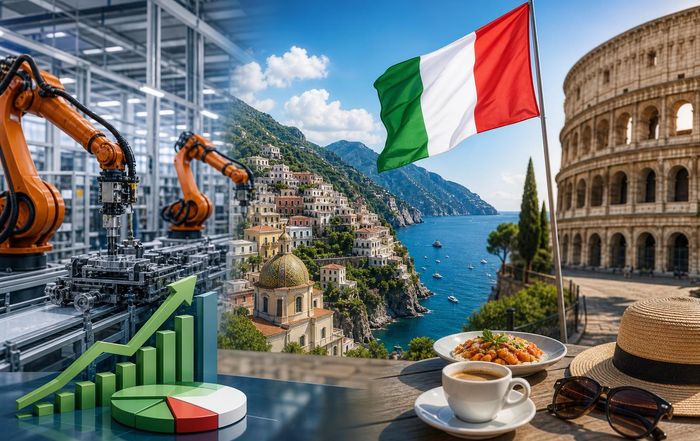
Italy's Business Transformation: Manufacturing Strength and Tourism Renaissance
Italy stands at a pivotal moment in its economic history, balancing its proud industrial heritage with a dynamic and increasingly diversified tourism sector. For national and international news followers here, understanding Italy's evolving business landscape is more than an exercise in international curiosity; it offers insight into how a mature advanced economy can reinvent itself while preserving its cultural and industrial DNA. From the factory floors of Lombardy and Emilia-Romagna to the historic centers of Rome, Florence, and Venice, Italy is reconfiguring how it produces, exports, welcomes visitors, and competes in a global marketplace that is more digital, sustainable, and services-oriented than ever before.
This long article explores how Italian manufacturing and tourism are changing, what these developments mean for investors, workers, and policymakers, and how the United States and other global partners intersect with Italy's trajectory. It draws on the latest data and analysis from institutions such as ISTAT, Bank of Italy, OECD, World Bank, and UNWTO, and positions these trends in a broader context that matters to business, finance, jobs, and technology audiences who rely this daily updated site for forward-looking perspective.
Italy's Economic Context: Between Tradition and Transformation
Italy remains one of the world's largest economies, ranking among the top ten globally in nominal GDP according to the World Bank. The country's economic model is often described as a "dual engine," combining a powerful manufacturing base, especially in the north, with a world-leading tourism industry anchored in culture, food, fashion, and lifestyle. As OECD analysis shows, Italian GDP growth has historically lagged some peers in the euro area, reflecting structural challenges such as low productivity growth, high public debt, demographic aging, and regional disparities between the more industrialized north and the less developed south.
Yet focusing solely on these constraints overlooks the resilience and adaptability of Italian businesses. Small and medium-sized enterprises, many of them family-owned and deeply rooted in their territories, have shown a striking capacity to export high-value goods, from advanced machinery to luxury fashion. At the same time, the tourism sector has rebounded from the pandemic shock with remarkable speed, with UNWTO reporting that Italy ranks among the world's top destinations by international arrivals and tourism receipts. Fans who follow the broader economic and policy environment on economy coverage at usa-update.com/economy.html will recognize Italy as a case study in how legacy strengths can be leveraged in a changing world.
Manufacturing: From "Made in Italy" Heritage to Industry 4.0
The Structure of Italian Manufacturing
Italian manufacturing is diverse, but certain clusters dominate. According to ISTAT and Eurostat, key sectors include mechanical engineering, automotive and transport equipment, fashion and textiles, food and beverage processing, pharmaceuticals, and specialized industrial machinery. Regions such as Lombardy, Veneto, Emilia-Romagna, and Piedmont account for a significant share of industrial value added, with dense networks of suppliers, subcontractors, and export-oriented firms.
The label "Made in Italy" still carries strong global resonance, associated not only with style and design but also with engineering precision and craftsmanship. Confindustria, Italy's main business association, notes that thousands of medium-sized "hidden champions" operate in niche markets, supplying components and machinery worldwide. These firms often combine artisanal know-how with advanced technology, a hybrid model that has helped them remain competitive even as global supply chains have shifted and production has relocated in many industries.
For readers of USA update who follow manufacturing and industrial policy across borders, Italy's experience illustrates how a country can maintain an industrial core while integrating into global value chains. The European Commission's industrial policy analysis, available through ec.europa.eu, highlights Italy as a critical node in Europe's manufacturing ecosystem, particularly in automotive components, machine tools, and high-end consumer goods.
Digitalization and Industry 4.0
One of the most significant business trends in Italian manufacturing is the gradual but accelerating adoption of Industry 4.0 technologies. Italian firms, especially in the north, are investing in automation, robotics, additive manufacturing, data analytics, and cloud-based production management. Government initiatives such as the "Piano Nazionale Industria 4.0" and its subsequent iterations have provided tax incentives for capital investment, training, and research and development, with the objective of closing the productivity gap with other advanced economies.
Reports from OECD and the European Investment Bank indicate that Italian companies have increased investment in digital equipment and software, although the pace varies widely by firm size and sector. Larger enterprises and export-oriented manufacturers have generally moved faster, while some micro and small firms still struggle with financing, skills, and organizational change. Those following technology and business innovation on the technology section at usa-update.com/technology.html will recognize similar patterns in other countries, but Italy's challenge is compounded by its very high share of small, often family-run enterprises.
Despite these hurdles, success stories abound. In Emilia-Romagna, machine tool producers and automotive suppliers have integrated sensors and real-time data monitoring into production lines, improving efficiency and predictive maintenance. In Lombardy, robotics and automation firms collaborate with universities such as Politecnico di Milano to develop advanced manufacturing solutions. Interested readers can explore broader European Industry 4.0 case studies through the World Economic Forum, which has profiled Italian factories among its "lighthouse" sites for advanced manufacturing.
Green Manufacturing and the Energy Transition
Sustainability has become a core driver of Italian industrial strategy. The European Green Deal and associated regulations, including the EU's Fit for 55 package, are pushing manufacturers to reduce emissions, improve energy efficiency, and adopt circular economy practices. Italy's industrial base, heavily concentrated in energy-intensive sectors such as metals, chemicals, and ceramics, faces both risks and opportunities.
On one hand, higher energy prices and stricter environmental standards increase costs and require substantial investment. On the other, Italian firms are innovating in eco-design, recycling, and low-carbon technologies. For example, several Italian steel producers have invested in electric arc furnaces and scrap-based production, while ceramics manufacturers in Emilia-Romagna are experimenting with hydrogen and alternative fuels. The International Energy Agency provides detailed analysis of industrial decarbonization pathways in advanced economies, including Italy, accessible at iea.org.
For smart readers focused on energy and industrial policy at USA update, the intersection between manufacturing and the green transition is particularly relevant, and further discussion of these themes can be found in usa-update's energy reporting at usa-update.com/energy.html. Italian companies that successfully adapt to this new regulatory and market environment may gain a competitive advantage in global markets where customers increasingly demand low-carbon products and transparent supply chains.
Interactive Feature: Italy's Manufacturing vs Tourism Outlook (2024-2030)
Italy 2024-2030 Outlook: Manufacturing vs Tourism
Use the slider to explore an indicative scenario for how Italy's manufacturing and tourism sectors could evolve. Adjust the year and compare growth, jobs, and investment focus.
Manufacturing
Digital upgradeTourism
ReboundAutomotive, Aerospace, and High-Tech Niches
Italy's automotive sector, anchored by Stellantis (which includes the historic Fiat brand) and a dense network of component suppliers, has undergone profound restructuring. Production volumes within Italy have fluctuated, but the country remains an important hub for design, engineering, and specialized vehicles, including luxury sports cars produced by companies such as Ferrari and Lamborghini. The transition to electric vehicles (EVs) presents both challenges and opportunities, as Italy must adapt its industrial base, retrain workers, and attract investment in battery production and charging infrastructure.
Policy debates around support for EV manufacturing, incentives for consumers, and the future of internal combustion engine production have been intense, with differing views among industry, unions, and environmental groups. European Commission documents on the EU's automotive transition and ACEA (the European Automobile Manufacturers' Association) reports offer insight into how Italy fits into the broader European EV landscape. While there is consensus on the direction of travel toward electrification, there remains uncertainty about the pace of change, the location of new investment, and the impact on employment in traditional engine and transmission manufacturing.
Beyond automotive, Italy has carved out significant roles in aerospace, defense, and space technology. Leonardo S.p.A., a major aerospace and defense group, contributes to aircraft, helicopters, and space systems, and participates in European and transatlantic projects. Collaborations with NASA, the European Space Agency (ESA), and international partners have placed Italian engineers and companies at the heart of space exploration and satellite technology. Readers can learn more about these initiatives through ESA's official site at esa.int and NASA's portal at nasa.gov.
These advanced technology sectors demonstrate how Italy is not solely a country of fashion and food, but also a significant contributor to high-tech global value chains. For investors and professionals tracking international business trends via business coverage, these niches may represent opportunities that are sometimes overshadowed by more visible consumer-facing industries.
Small and Medium Enterprises: The Backbone of Italian Industry
A defining feature of Italian business is the dominance of small and medium-sized enterprises (SMEs), many of which operate within industrial districts, or "distretti industriali," that specialize in particular products or technologies. These districts, studied extensively by scholars and institutions such as Banca d'Italia and the World Bank, illustrate how localized networks of firms, suppliers, and service providers can create globally competitive clusters.
Examples include textile and fashion districts in Tuscany and Veneto, furniture clusters in Friuli-Venezia Giulia, and mechanical engineering hubs in Emilia-Romagna. These ecosystems foster knowledge sharing, specialized skills, and flexible production, allowing SMEs to respond quickly to changing customer demands. At the same time, their small scale can limit access to capital, digital tools, and international marketing channels.
Italian and European policy initiatives have sought to support SME digitalization, export promotion, and succession planning, recognizing that many family-owned firms face generational transitions. The European Investment Bank and European Bank for Reconstruction and Development publish analyses on SME financing and competitiveness that shed light on Italy's experience. For readers interested in jobs and employment dynamics, usa-update's employment and jobs sections provide broader context on how SME-driven economies manage labor market changes and skills development.
Finance, Investment, and Regulatory Environment
The Italian financial system has undergone significant reform and consolidation over the past decade, with banks working through legacy non-performing loans and strengthening their balance sheets. Bank of Italy and European Central Bank reports indicate that credit conditions for businesses have improved compared with the post-sovereign-debt-crisis period, although smaller firms and those in the south may still encounter financing constraints.
Capital markets remain relatively underdeveloped compared with some peers, leading policymakers to encourage more equity financing and venture capital, particularly for innovative startups. Initiatives such as the "Piano Nazionale di Ripresa e Resilienza" (PNRR), funded by the EU's NextGenerationEU program, allocate substantial resources to digitalization, green transition, and infrastructure, with the aim of boosting productivity and long-term growth. The European Commission's recovery and resilience scoreboard at ec.europa.eu provides updated information on how these funds are being deployed.
Regulatory reforms have targeted competition, public administration efficiency, and the justice system, areas where international institutions such as the IMF and OECD have long recommended improvements. While progress has been made, especially in digital public services and procurement, businesses still often cite bureaucracy and regulatory complexity as obstacles. For readers of USA update who monitor regulation and policy trends, additional perspective can be found in usa-update's regulation coverage at usa-update.com/regulation.html, where Italian developments can be compared with U.S. and other international approaches.
Foreign direct investment (FDI) into Italy has grown in sectors such as renewable energy, logistics, and technology services, with investors attracted by the country's strategic location, skilled workforce, and role within the European Single Market. However, competition from other EU member states for high-tech and greenfield investments remains intense. Organizations such as UNCTAD and OECD publish FDI statistics and policy reviews that help contextualize Italy's performance relative to its peers.
Tourism: A Core Pillar of Italy's Economy
Scale and Economic Impact
Tourism is one of Italy's most important economic drivers, contributing significantly to GDP, employment, and regional development. UNWTO and OECD Tourism data consistently rank Italy among the top global destinations by international arrivals and tourism receipts, alongside countries such as France, Spain, and the United States. The sector encompasses not only accommodation and restaurants but also transport, cultural institutions, retail, and a wide range of services.
The pandemic inflicted a severe shock on Italian tourism, as it did worldwide, but the rebound has been robust. International travelers have returned in large numbers, drawn by Italy's unparalleled combination of historical sites, art, architecture, culinary traditions, and natural landscapes. From the canals of Venice and the ruins of Pompeii to the vineyards of Tuscany and the beaches of Sardinia, the country's tourism offering remains exceptionally diverse and resilient.
For readers who track global travel and lifestyle trends through usa-update's travel and lifestyle pages at usa-update.com/travel.html and usa-update.com/lifestyle.html, Italy's tourism resurgence offers insight into how destination countries can rebuild after crisis while rethinking quality, sustainability, and visitor management.
Managing Overtourism and Sustainability
One of the central challenges in Italy's tourism sector is overtourism in certain iconic destinations. Cities such as Venice, Florence, and Rome have grappled with congestion, pressure on local infrastructure, rising housing costs, and tensions between residents and short-term visitors. The Italian government and local authorities have experimented with various measures, including restrictions on large cruise ships in Venice's historic center, regulations on short-term rentals, and campaigns to promote lesser-known destinations.
These efforts reflect a broader global conversation about sustainable tourism, which organizations such as the UN Environment Programme and UNWTO have advanced through guidelines and best practices. Learn more about sustainable tourism frameworks via unwto.org. Italy is aligning its policies with these principles, seeking to balance economic benefits with environmental protection, cultural preservation, and social cohesion.
At the same time, there is growing emphasis on promoting inland regions, smaller towns, and rural areas, particularly in the south and center of the country. Initiatives to restore historic villages, support agritourism, and develop cultural itineraries aim to spread visitor flows more evenly and generate income in areas that have historically suffered from depopulation and limited economic opportunities. This diversification strategy creates new avenues for entrepreneurship and local employment, topics that resonate strongly with USA update readers interested in regional development and inclusive growth.
Digital Platforms, Experience Economy, and New Travel Behaviors
Digital platforms have transformed how travelers discover, book, and experience Italy. Online travel agencies, home-sharing platforms, review sites, and social media have amplified the visibility of both famous and lesser-known destinations. At the same time, they have disrupted traditional intermediaries and raised regulatory questions about taxation, zoning, and consumer protection.
Italian tourism businesses, from boutique hotels to wine estates, have invested heavily in digital marketing, direct booking channels, and data analytics. The shift toward remote work and hybrid lifestyles has also created new patterns of medium- and long-stay tourism, as visitors combine leisure with remote work in locations that offer quality of life, connectivity, and cultural richness. The World Travel & Tourism Council (WTTC) provides analysis on global travel trends that help contextualize Italy's experience, accessible at wttc.org.
The experience economy is particularly strong in Italy, where travelers increasingly seek immersive activities such as cooking classes, artisan workshops, guided historical tours, and wellness retreats. This aligns with Italy's strength in experiential products tied to food, wine, fashion, and craftsmanship. For those following entertainment and cultural trends, usa-update's entertainment section at usa-update.com/entertainment.html often highlights how culture and media shape global perceptions of destinations like Italy and influence travel demand.
Intersection of Manufacturing and Tourism: The Power of "Made in Italy" Storytelling
One of the most distinctive aspects of Italy's business environment is the interplay between manufacturing and tourism. Visitors do not only consume services; they also encounter products, brands, and craftsmanship that embody Italian industrial capabilities. Factory tours, wine cellar visits, fashion shows, and artisan workshops create a bridge between the physical production of goods and the narratives that surround them.
Regions such as Piedmont, Tuscany, and Veneto have developed sophisticated wine tourism offerings that integrate vineyard visits, tastings, gastronomy, and cultural experiences. Similarly, fashion capitals like Milan and Florence showcase both historical ateliers and modern boutiques, connecting global consumers with the heritage and innovation behind Italian design. Organizations such as Slow Food and Coldiretti have promoted local food systems and protected designations of origin, reinforcing the link between territory, production, and identity; more context on protected food labels can be found through the European Commission's agriculture pages at ec.europa.eu.
This fusion of manufacturing and tourism strengthens brand equity for Italian products and supports higher value-added exports. It also offers a template for other countries seeking to integrate industrial and cultural strategies. For USA update readers focused on consumer markets and branding, additional analysis on consumer behavior and premium positioning is available through usa-update's consumer coverage at usa-update.com/consumer.html, which often examines how narratives and authenticity shape purchasing decisions.
Labor Markets, Skills, and Demographic Challenges
The future of Italy's manufacturing and tourism sectors will depend heavily on labor market dynamics, skills development, and demographic trends. Italy faces one of the lowest fertility rates in Europe and an aging population, as documented by ISTAT and Eurostat, which raises concerns about labor supply, pension sustainability, and regional depopulation, particularly in rural and southern areas.
At the same time, youth unemployment, while improved from its peak, remains higher than the EU average, and many young Italians seek opportunities abroad. This paradox of labor shortages in some sectors and underemployment in others reflects mismatches in skills, geography, and job quality. Manufacturing firms often report difficulty finding technicians, engineers, and digitally skilled workers, while tourism businesses struggle with seasonal labor gaps and retention.
Policy responses include investment in vocational education and training, apprenticeships, and partnerships between industry and educational institutions. The European Centre for the Development of Vocational Training (Cedefop) provides comparative analysis of vocational systems, including Italy's, at cedefop.europa.eu. Migrant labor also plays a role in both manufacturing and services, adding another dimension to Italy's labor market and social policy debates.
For readers of USA update who focus on jobs, employment, and workforce trends, Italy serves as a case study in how advanced economies confront demographic and skills challenges while attempting to sustain high-value manufacturing and service sectors. Insights from usa-update's finance and jobs sections at usa-update.com/finance.html and usa-update.com/jobs.html can help situate Italy's experience within broader global labor market shifts.
International Linkages: Transatlantic and Global Dimensions
Italy's business trends are deeply intertwined with international trade, investment, and policy frameworks. As a founding member of the European Union and the euro area, Italy benefits from access to the Single Market and participates in common trade policies negotiated by the European Commission with partners such as the United States, Canada, and Asian economies. The World Trade Organization (WTO) provides data on Italy's trade flows and its role in global value chains at wto.org.
Transatlantic economic ties remain particularly important. The United States is one of Italy's largest export markets for machinery, vehicles, pharmaceuticals, and luxury goods, as well as a major source of tourists and foreign direct investment. Conversely, U.S. companies invest in Italian manufacturing, technology, and services, attracted by skilled labor, design capabilities, and proximity to European and Mediterranean markets. The U.S. Department of Commerce and SelectUSA offer detailed country commercial guides and investment information that highlight these opportunities, accessible via trade.gov.
For USA update readers who follow international business and policy developments, usa-update's international section at usa-update.com/international.html provides ongoing coverage of how countries like Italy navigate trade tensions, regulatory convergence, and geopolitical shifts. Italy's participation in initiatives related to supply chain resilience, digital regulation, and climate policy illustrates how national strategies are increasingly shaped by multilateral and regional frameworks.
Innovation, Startups, and the Future of Italian Business
While Italy is often associated with established brands and traditional industries, an emerging startup ecosystem is beginning to reshape perceptions. Cities such as Milan, Turin, Bologna, and Rome host growing communities of technology and creative startups, supported by incubators, accelerators, and venture capital funds. Areas of particular dynamism include fintech, mobility solutions, industrial IoT, agritech, and cultural and creative industries.
Government policies have introduced incentives for innovative startups, including tax breaks, simplified incorporation procedures, and support for research and development. The European Innovation Council and other EU programs provide grants and equity financing to high-potential Italian firms, helping them scale within the European market and beyond. More information on European startup support mechanisms can be found at eic.ec.europa.eu.
These developments are still in an early phase compared with more mature ecosystems in countries such as the United States or the United Kingdom, and challenges remain in attracting large-scale venture capital and facilitating exits. Nonetheless, the trend is encouraging, particularly as it intersects with Italy's industrial strengths. For example, startups focusing on advanced materials, robotics, or digital twins can collaborate with established manufacturers, while tourism-related platforms and experience providers can leverage Italy's cultural assets. Readers of USA update who monitor technology and entrepreneurship will find parallels and contrasts with North American ecosystems that can inform cross-border partnerships and investment decisions.
Outlook: Opportunities and Risks in Italy's Business Trajectory
Thinking ahead, Italy's business environment is characterized by a combination of resilience, opportunity, and structural risk. On the opportunity side, the country's manufacturing base remains a powerful asset, especially as it modernizes through digitalization and embraces sustainability. The tourism sector, having recovered from the pandemic, continues to innovate in experiences, regional diversification, and higher-value offerings. The integration of manufacturing, culture, and tourism under the "Made in Italy" brand provides a unique competitive advantage in global markets that prize authenticity, quality, and design.
On the risk side, Italy must confront long-standing challenges related to public debt, demographic decline, regional disparities, and productivity growth. The success of reforms in justice, public administration, and competition policy will be critical for improving the business climate and attracting investment. The effective implementation of EU-funded recovery and resilience projects will also shape the country's capacity to upgrade infrastructure, education, and innovation systems.
Global uncertainties-ranging from geopolitical tensions and energy price volatility to shifts in trade patterns and technological disruption-add further complexity. Yet Italy has demonstrated, repeatedly, an ability to adapt its traditional strengths to new realities. Its industrial districts have survived globalization by moving up the value chain; its tourism sector has weathered crises by reimagining experiences and embracing new markets; its entrepreneurs continue to find niches where Italian creativity, craftsmanship, and engineering can command premium prices.
For the up-to-date news, audience, here, which typically includes business leaders, investors, professionals, and informed citizens across the United States, North America, and beyond, Italy's story offers lessons in how to balance continuity and change. It reminds observers that economic success is not only about scale and technology, but also about identity, culture, and the capacity to tell compelling stories through products, services, and places. As usa-update continues to track daily changes in the global and national economy, business, finance, jobs, technology, and regulation here, Italy's evolving trajectory across manufacturing and tourism will remain a rich source of insight, inspiration, and opportunity.
