
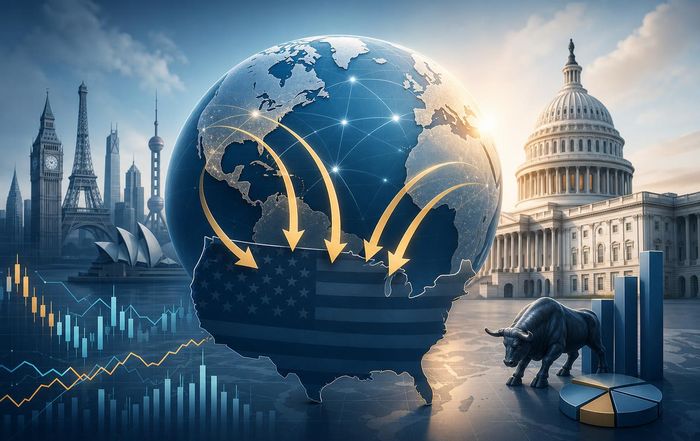
How International Markets Shape U.S. Investment Decisions
A Decisive Global Moment for U.S. Investors
U.S. investors are navigating one of the most globally interconnected financial landscapes in modern history, where capital, data, and risk flow across borders at unprecedented speed and scale, and where decisions taken in Frankfurt, Beijing, London, or São Paulo can move asset prices on Wall Street within seconds. For a readership that relies on USA-Update.com to interpret these dynamics for the American context, the central question is no longer whether international markets influence U.S. portfolios, but how deeply and through which channels that influence is transmitted, and how sophisticated investors can translate this complexity into resilient, long-term strategies.
The convergence of post-pandemic restructuring, persistent geopolitical realignments, rapid technological innovation, and evolving regulatory environments has made international market analysis indispensable to understanding the U.S. economy and financial system. From the vantage point of USA-Update.com, which covers the intersection of U.S. business and global trends, the story of American investment in 2026 is, in many ways, the story of global markets themselves.
The New Global Economic Architecture and Its U.S. Impact
The global economic system in 2026 is defined by slower but more uneven growth, differentiated inflation paths, and a complex mix of cooperation and rivalry among major economic blocs. Institutions such as the International Monetary Fund and World Bank continue to provide critical data and policy guidance, and investors closely follow their regular outlooks to understand macroeconomic conditions that shape capital flows. Learn more about the latest global growth projections from the IMF's World Economic Outlook.
For U.S. investors, the key shift has been from a relatively synchronized global expansion in the 2010s to a more fragmented environment in which the United States, the euro area, China, and major emerging markets often move on different cycles. This divergence influences currency markets, bond yields, corporate earnings, and sector rotation, all of which feed directly into asset allocation decisions in the United States. When European growth underperforms, for example, U.S. multinationals with significant exposure to Germany, France, and Italy may see earnings pressure, while a stronger U.S. dollar can dampen the translated value of foreign revenues, affecting equity valuations on U.S. exchanges.
At the same time, global supply chain reconfiguration has changed how U.S. investors think about country and regional risk. The shift toward "friend-shoring" and diversification away from single-country dependencies, particularly in relation to China and critical technologies, has elevated the strategic importance of markets such as Mexico, Vietnam, India, and Poland. These changes are not merely geopolitical; they alter cost structures, capital expenditure plans, and long-term profitability assumptions for large U.S. corporates, which in turn shape equity and credit market pricing. Readers following the U.S. economy and global linkages increasingly recognize that international developments are embedded in every domestic macroeconomic data release.
Monetary Policy Divergence and the Power of Global Interest Rates
One of the most powerful channels through which international markets shape U.S. investment decisions is monetary policy divergence. While the Federal Reserve remains the central anchor for U.S. interest rates, global central banks such as the European Central Bank, the Bank of England, the Bank of Japan, and the People's Bank of China significantly influence global liquidity conditions, cross-border capital flows, and relative yield opportunities. Investors who monitor the Federal Reserve's policy communications increasingly pair them with careful attention to global central bank decisions.
In 2026, varying inflation trajectories and domestic policy priorities have led to different interest rate paths across advanced and emerging economies. When yields on European or Japanese government bonds remain low relative to U.S. Treasuries, global investors often allocate more capital to U.S. fixed income, strengthening the dollar and lowering borrowing costs for U.S. corporations in certain maturities, while potentially raising them in others as term premia adjust. Conversely, when emerging markets such as Brazil or Mexico offer significantly higher real yields, U.S. investors may be drawn into local currency or hard currency sovereign and corporate bonds, seeking diversification and yield pickup, but also assuming higher political and currency risk.
The global nature of bond markets means that U.S. investors cannot evaluate Treasury yields, corporate credit spreads, or municipal bonds in isolation. Benchmark indices compiled by organizations such as Bloomberg and MSCI compare returns across regions and currencies, and large institutional investors, including pension funds and insurance companies, make strategic asset allocation decisions based on these global frameworks. Learn more about global bond market benchmarks and analytics via Bloomberg's fixed income overview.
For USA-Update.com readers focused on U.S. finance and capital markets, understanding these international interest rate dynamics has become essential for interpreting movements in mortgage rates, corporate borrowing costs, and valuations in rate-sensitive sectors such as real estate, utilities, and high-growth technology.
Currency Movements: The Dollar at the Center of Global Portfolios
The U.S. dollar remains the world's dominant reserve currency, invoicing currency for trade, and primary medium for cross-border finance, but its value is increasingly shaped by international developments rather than purely domestic considerations. Exchange rate movements against the euro, yen, pound, yuan, and key emerging market currencies influence everything from export competitiveness and corporate earnings to commodity prices and tourism flows, all of which have direct consequences for U.S. investment decisions.
When the dollar strengthens significantly, U.S. exports become more expensive in foreign markets, potentially weighing on the revenues of American manufacturers, agricultural producers, and service exporters. At the same time, a strong dollar can lower the cost of imported goods and commodities, which may help moderate U.S. inflation but also compress margins for domestic producers facing cheaper foreign competition. Investors must therefore weigh the net impact of currency moves on sectors such as industrials, consumer discretionary, and energy, rather than assuming a uniform effect across the economy.
Global investors rely on platforms such as OECD statistics and Bank for International Settlements data to track currency flows and global imbalances. Those seeking a deeper understanding of exchange rate dynamics often consult the Bank for International Settlements' analysis of global FX markets, which provides insight into turnover, positioning, and structural changes in currency trading. For U.S. investors, this information is not abstract; it shapes hedging strategies, international diversification decisions, and the assessment of risk-adjusted returns when allocating capital to non-U.S. assets.
The strength or weakness of the dollar also has a profound impact on emerging markets, especially those with dollar-denominated debt. When the dollar rises, debt service burdens can increase for foreign borrowers, raising default risk and potentially triggering volatility in emerging market bonds and equities. U.S. investors with exposure to these markets must therefore monitor both domestic fundamentals and global dollar conditions, recognizing that stress in South Africa, Turkey, or Argentina can spill over into broader risk sentiment and influence U.S. high-yield credit spreads and equity risk premia.
Global Equity Markets and Cross-Border Earnings Exposure
International equity markets have become deeply intertwined with U.S. corporate performance and investor behavior. Large U.S. indices such as the S&P 500 derive a significant portion of their revenues from outside the United States, with companies in technology, consumer goods, healthcare, and industrial sectors generating substantial earnings in Europe, Asia, and Latin America. This means that the performance of foreign economies, regulatory environments, and consumer markets directly affects valuations on U.S. exchanges.
Investors who follow global equity benchmarks such as the MSCI World and MSCI Emerging Markets indices understand that sector composition, regional growth prospects, and currency effects can all drive relative performance. Learn more about global equity index construction and regional exposure through MSCI's market classification and index methodology. For U.S. investors, the question is not simply whether to hold international equities, but how to integrate global exposure with domestic holdings to manage concentration risk and capture growth opportunities.
In 2026, sectors such as semiconductors, artificial intelligence infrastructure, renewable energy, and healthcare innovation are inherently global, with supply chains, research collaborations, and customer bases spanning North America, Europe, and Asia. U.S. companies like NVIDIA, Intel, and Qualcomm depend heavily on demand from South Korea, Taiwan, Japan, and China, while pharmaceutical and biotech firms rely on regulatory approvals and market access in European Union member states and major emerging markets. As a result, U.S. investors must closely watch international regulatory decisions, industrial policy shifts, and healthcare reimbursement trends, which can significantly affect earnings forecasts and valuation multiples.
For readers of USA-Update.com who follow U.S. and global markets news, the interplay between domestic and international equity performance is now a central part of portfolio strategy. Asset managers increasingly use factor-based and region-specific analysis to understand how global growth, interest rates, and policy developments influence sector leadership and style rotation between growth and value, large-cap and small-cap, and cyclical and defensive stocks.
Trade Policy, Tariffs, and the Rewiring of Global Supply Chains
Trade policy has become one of the most visible and politically sensitive channels through which international markets shape U.S. investment decisions. Over the past decade, shifts in tariffs, export controls, and trade agreements have altered the cost and reliability of cross-border production and distribution, prompting companies to rethink where they manufacture, source components, and sell their products. These strategic decisions have direct implications for capital expenditure, employment, and profitability, and thus for investors who hold U.S. equities and corporate bonds.
The evolving trade relationship between the United States and China remains central, particularly in sectors such as advanced semiconductors, telecommunications equipment, and green technologies, where national security concerns intersect with economic competition. Export controls on sensitive technologies and investment restrictions in certain Chinese industries have encouraged U.S. and allied companies to diversify production toward Mexico, Vietnam, India, and other countries perceived as more geopolitically aligned. Learn more about current U.S. trade policy priorities from the Office of the United States Trade Representative.
For U.S. investors, these supply chain adjustments create both risks and opportunities. Companies heavily dependent on low-cost manufacturing in a single region may face margin pressure and operational disruptions, while firms that successfully diversify production and logistics may gain resilience and competitive advantage. Investors must analyze not only headline tariff rates but also the deeper structural shifts in global value chains, including the rise of regional production hubs in North America, Europe, and Southeast Asia, and the increasing importance of digital trade and services exports.
Readers focused on business strategy and regulatory developments recognize that trade policy is no longer a background consideration but a core element of investment analysis. Understanding how trade agreements such as the USMCA, the EU-Japan Economic Partnership Agreement, and regional frameworks in Asia-Pacific influence market access, intellectual property protection, and standards harmonization is now essential for evaluating multinational corporate valuations and long-term growth potential.
Based on the provided content
How International Markets Shape U.S. Investment Decisions
Explore the global forces that influence U.S. portfolios, from currency moves and central-bank divergence to trade, technology, energy, and regulation.
Move the slider to estimate how exposed a U.S. portfolio may be to global conditions.
Check currency, rates, trade, and energy channels.
Review foreign revenue, supply chains, and regulatory risk.
Diversify, hedge selectively, and rebalance by scenario.
Geopolitical Risk and Regional Stability as Investment Drivers
Geopolitical risk has become a defining feature of the international investment environment, with regional conflicts, sanctions regimes, and shifting alliances influencing everything from energy prices and commodity supply to financial market access and cross-border payment systems. U.S. investors must now systematically incorporate geopolitical analysis into their risk management frameworks, recognizing that events in Eastern Europe, the Middle East, or the South China Sea can rapidly alter the investment landscape.
Organizations such as the Council on Foreign Relations and Carnegie Endowment for International Peace provide in-depth analysis of geopolitical developments that investors increasingly consult to understand potential scenarios and their economic implications. Learn more about current geopolitical flashpoints and their global economic impact via the Council on Foreign Relations' interactive resources. For U.S. portfolios, key areas of concern include the stability of energy supply routes, the resilience of critical infrastructure, and the potential fragmentation of global financial systems into rival blocs.
Sanctions policy, in particular, has emerged as a central tool of statecraft, affecting banks, corporations, and individuals across multiple jurisdictions. U.S. investors holding foreign assets must monitor sanctions lists, compliance requirements, and the risk of secondary sanctions that could restrict dealings with certain countries or entities. The experience of sanctions on Russia and related restrictions on access to the SWIFT payment system, as well as debates over the future of dollar-based settlement, have underscored the need for diversified exposure and careful counterparty risk assessment.
For USA-Update.com readers interested in international developments and their U.S. implications, geopolitical analysis is no longer confined to specialized reports but has become central to understanding energy markets, defense spending, cybersecurity, and the broader macroeconomic environment that shapes U.S. asset prices.
Energy Markets, Climate Policy, and the Global Transition
Energy markets sit at the intersection of geopolitics, climate policy, and technological change, and they exert a powerful influence on U.S. investment decisions. The global transition toward lower-carbon energy systems is reshaping capital allocation in oil and gas, power generation, transportation, and industrial sectors, with major implications for both traditional and renewable energy investments.
International benchmarks such as Brent crude and global natural gas prices are influenced by production decisions from OPEC+, infrastructure investments, and geopolitical events affecting major producers and transit routes. These price movements feed directly into U.S. inflation, corporate cost structures, and consumer spending, thereby affecting equity valuations and bond yields. Investors monitor data from organizations such as the International Energy Agency and U.S. Energy Information Administration to understand supply-demand balances and long-term scenarios. Learn more about global energy outlooks and transition pathways through the International Energy Agency's analysis.
At the same time, international climate agreements, including the Paris Agreement and subsequent COP summits, shape national policies on emissions reduction, carbon pricing, and clean energy subsidies. These policies influence investment in renewable energy, electric vehicles, energy storage, and grid modernization, sectors where U.S. companies compete globally and rely on international supply chains for critical minerals such as lithium, cobalt, and rare earth elements. For U.S. investors, understanding the policy landscape in Europe, China, and other major markets is essential for evaluating the growth prospects and regulatory risks facing clean energy and transition-related investments.
Readers of USA-Update.com who follow energy and sustainability trends increasingly recognize that global climate policy is not only an environmental issue but a central driver of capital flows, corporate strategy, and long-term portfolio resilience.
Technology, Digital Infrastructure, and the Global Innovation Race
Technology and digital infrastructure have become the backbone of the global economy, and competition for leadership in areas such as artificial intelligence, quantum computing, cybersecurity, and advanced manufacturing is reshaping international relations and investment patterns. U.S. investors must understand how global innovation ecosystems, regulatory frameworks, and talent flows affect the competitive position of American technology firms and the broader digital economy.
Countries such as South Korea, Japan, Germany, Singapore, and Israel play critical roles in global technology supply chains, from semiconductor fabrication and precision machinery to software development and cybersecurity solutions. Research and development investments by governments and corporations in these countries influence the pace and direction of innovation, while regulatory regimes in Europe and Asia shape global standards for data privacy, AI ethics, and digital competition. Learn more about international digital policy and innovation trends through the OECD's digital economy reports.
For U.S. investors, the international dimension of technology markets is evident in the cross-listing of tech companies, the global customer bases of cloud and software providers, and the reliance on foreign manufacturing for critical hardware. Supply disruptions affecting key hubs in Taiwan, South Korea, or Malaysia can ripple through global electronics and automotive industries, while data localization laws and digital services taxes in various jurisdictions can influence the profitability of U.S. platform companies.
Readers engaged with technology coverage on USA-Update.com recognize that international developments in 5G deployment, AI regulation, and cybersecurity standards are central to evaluating the long-term growth potential and risk profile of U.S. tech investments. The global nature of innovation means that domestic policy alone cannot determine outcomes; investors must track a complex web of international collaborations, rivalries, and regulatory experiments.
Labor Markets, Global Talent, and Employment Trends
International markets influence U.S. labor and employment trends through migration, offshoring, remote work, and global competition for high-skilled talent. The post-pandemic normalization of hybrid and remote work has enabled companies to tap into global labor pools, particularly in fields such as software development, customer support, and professional services, while also intensifying competition for specialized skills in areas like AI, cybersecurity, and advanced engineering.
Countries such as Canada, Australia, Germany, Singapore, and New Zealand have implemented immigration and education policies aimed at attracting high-skilled workers, creating an increasingly competitive global market for talent that affects U.S. companies' hiring, compensation, and location strategies. Learn more about international labor trends and skills dynamics through the International Labour Organization's research. For U.S. investors, these labor market dynamics influence corporate margins, productivity growth, and the geographic distribution of economic activity.
At the same time, global competition and automation are reshaping employment in manufacturing and services, with implications for regional economies across the United States. Offshoring to Mexico, India, Philippines, and Eastern Europe continues in certain sectors, while reshoring and near-shoring initiatives driven by supply chain resilience and industrial policy are creating new domestic employment opportunities in advanced manufacturing, logistics, and clean energy. Readers who monitor U.S. jobs and employment trends and labor market developments recognize that these international forces are central to understanding wage dynamics, consumer demand, and political sentiment, all of which feed back into investment risk assessments.
For U.S. investors, the global labor landscape affects not only corporate earnings but also sector allocation decisions, as industries with strong pricing power and productivity gains may be better positioned to navigate wage pressures and skills shortages than those with limited ability to pass on costs or automate tasks.
Consumer Trends, Travel, and Global Lifestyle Influences
Consumer behavior in 2026 is shaped by a blend of local culture and global trends, with digital platforms, cross-border e-commerce, and international travel exposing U.S. consumers to products, services, and experiences from around the world. These influences, in turn, shape revenue growth opportunities for U.S. companies in sectors such as retail, entertainment, hospitality, and financial services, and they affect how investors evaluate business models and brand strength.
The rise of middle-class consumers in Asia, Latin America, and parts of Africa has expanded the addressable market for U.S. brands in fashion, technology, streaming media, and financial services, while also increasing competition from regional and local players. Consumer confidence and spending patterns in China, India, Brazil, and Indonesia can significantly influence the global sales trajectories of U.S. multinationals, making international consumer data a critical input into earnings forecasts. Learn more about global consumer sentiment and lifestyle shifts through analysis provided by organizations such as McKinsey & Company.
International travel and tourism, which have broadly recovered from the disruptions of the early 2020s, also play a key role in shaping U.S. economic activity and investment decisions. Inbound tourism from Europe, Canada, Japan, and other regions supports employment and revenues in U.S. hospitality, retail, and cultural sectors, while outbound U.S. travel to destinations such as Mexico, Caribbean, Western Europe, and Asia-Pacific influences foreign exchange flows and global service sector earnings. Readers exploring travel and lifestyle coverage on USA-Update.com and broader lifestyle trends can see how global consumer preferences intersect with investment themes such as experiential spending, premiumization, and digital engagement.
For investors, understanding these cross-border consumer dynamics is crucial for assessing the durability of brand loyalty, the scalability of subscription models, and the resilience of discretionary spending in the face of economic uncertainty or currency fluctuations.
Regulation, Compliance, and the Fragmentation of Global Rules
Regulation has emerged as one of the most complex and consequential channels through which international markets shape U.S. investment decisions. As countries and regions develop their own approaches to data privacy, competition policy, financial stability, climate disclosure, and corporate governance, multinational companies must navigate an increasingly fragmented regulatory landscape that affects compliance costs, strategic flexibility, and legal risk.
The European Union's regulatory framework in areas such as data protection (GDPR), digital markets, and sustainable finance has often set de facto global standards, influencing how U.S. technology firms, financial institutions, and industrial companies operate worldwide. At the same time, regulatory developments in China, United Kingdom, Singapore, and other financial centers are reshaping rules for capital markets, fintech innovation, and cross-border data flows. Learn more about evolving international regulatory standards and best practices via the Financial Stability Board's publications.
For U.S. investors, this regulatory fragmentation creates both challenges and opportunities. Companies that anticipate and adapt to evolving rules may gain competitive advantage and reduce litigation risk, while those that lag may face fines, reputational damage, or constrained business models. Investors must therefore integrate regulatory analysis into their due diligence, particularly in sectors such as technology, banking, pharmaceuticals, and energy, where international rules are rapidly evolving.
Readers who follow regulatory and policy coverage on USA-Update.com recognize that the interplay between U.S. and foreign regulators is central to understanding the operating environment for American companies, including issues such as cross-border data transfers, antitrust enforcement, ESG disclosure requirements, and financial crime compliance.
Risk Management, Diversification, and Strategic Asset Allocation
In this deeply interconnected environment, U.S. investors are rethinking traditional approaches to risk management and diversification, recognizing that domestic assets alone cannot fully insulate portfolios from global shocks or capture the full range of growth opportunities. Strategic asset allocation increasingly involves a deliberate consideration of regional, sectoral, and currency exposures, as well as scenario analysis that incorporates geopolitical, climate, and technological risks.
International diversification remains a central principle, but investors now approach it with greater nuance, considering factors such as governance quality, rule of law, market liquidity, and alignment with long-term structural themes. Country and sector selection within Europe, Asia, Latin America, and Africa is often guided by frameworks developed by research houses, asset managers, and institutions such as the World Economic Forum, which provides insight into competitiveness, innovation capacity, and institutional strength. Learn more about global competitiveness and structural factors through the World Economic Forum's reports.
For the readership of USA-Update.com, which spans interests in business, finance, consumer markets, and more, the practical implication is that investment decisions must integrate international perspectives at every stage, from macroeconomic analysis and sector selection to security-level research and risk budgeting. Portfolio construction in 2026 is as much about understanding how the United States fits into the global system as it is about analyzing domestic data releases or corporate earnings calls.
The Role of Information, Media, and Trusted Analysis
In a world where markets react instantly to global events, the quality, timeliness, and trustworthiness of information have become critical differentiators for investors. Financial media, data providers, and specialized platforms play a central role in shaping investor understanding of international developments and their domestic implications. However, the proliferation of information sources also raises the risk of noise, misinformation, and superficial analysis that can lead to poor decision-making.
Trusted institutions such as Reuters, Financial Times, The Wall Street Journal, and specialized research firms provide in-depth coverage of international markets, policy changes, and corporate developments, while official sources like the U.S. Bureau of Economic Analysis, Eurostat, and national central banks supply primary data. Learn more about official U.S. international accounts and trade data through the Bureau of Economic Analysis.
Within this ecosystem, USA-Update.com positions itself as a platform that contextualizes global developments for a U.S. audience, connecting international events to domestic implications across economy, news, events, entertainment, business, and related domains. By emphasizing experience, expertise, authoritativeness, and trustworthiness, the site aims to help readers differentiate between transient market noise and structurally significant shifts, enabling more informed and resilient investment decisions.
Conclusion: Navigating a World Where the Global Is Local
The distinction between "domestic" and "international" investing has largely blurred for U.S. market participants. The performance of American portfolios is inseparable from the health of the global economy, the stability of international relations, the evolution of foreign regulatory regimes, and the pace of innovation and climate transition worldwide. International markets shape U.S. investment decisions through multiple, interlocking channels: monetary policy divergence, currency movements, cross-border earnings exposure, trade and supply chains, geopolitical risk, energy transitions, technology competition, labor mobility, consumer trends, and regulatory fragmentation.
For U.S. investors, the imperative is not to predict every global development, but to build frameworks that can absorb international information, assess its relevance, and translate it into disciplined, long-term strategies. This requires a commitment to continuous learning, diversification, and risk management, as well as reliance on trusted sources that can provide clear, context-rich analysis rather than reactive commentary.
As USA-Update.com continues to track developments across the economy, finance, business, technology, energy, and consumer sectors, its coverage reflects a core reality of modern investing: that decisions made in boardrooms, central banks, and parliaments around the world are now integral to the financial futures of households, businesses, and institutions across the United States. In this environment, understanding how international markets shape U.S. investment decisions is not a specialized niche, but a foundational requirement for any serious participant in the American financial system.
