
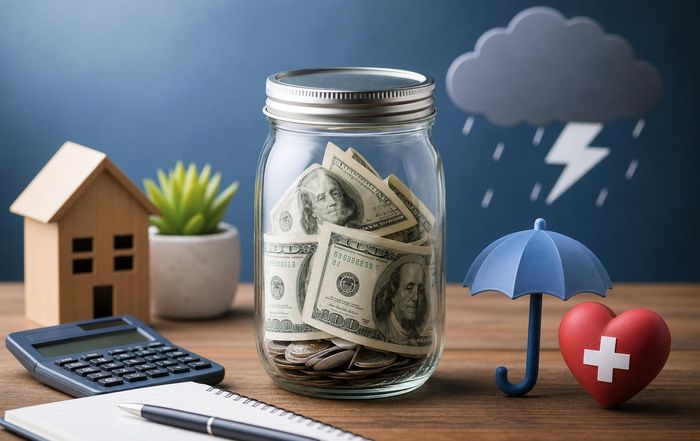
How Americans Can Strengthen Emergency Savings
A New Era of Financial Resilience in the United States
Across the United States, households are confronting a financial landscape shaped by persistent inflation, higher interest rates, volatile housing costs, and rapid changes in the labor market. Surveys from organizations such as the Federal Reserve, Bankrate, and Pew Research Center show that many Americans still struggle to cover even a modest unexpected expense, yet there is also evidence of growing awareness and action around building emergency savings. For USA update, this moment represents an important turning point: emergency savings are no longer a niche personal finance topic, but a central pillar of economic stability, consumer confidence, and long-term prosperity.
Emergency savings matter not only for individuals and families, but also for the broader economy. When households can withstand financial shocks, they are less likely to fall behind on bills, default on debts, or cut spending abruptly, which in turn supports local businesses and employment. Policymakers, employers, financial institutions, and community organizations are increasingly recognizing that helping Americans build a cash buffer is both a social and an economic imperative. Readers who follow broader trends in the U.S. economy on top platforms like USA Update's economy coverage can see how closely household resilience is tied to growth, job creation, and financial market stability.
This article explores why emergency savings are so crucial, how much is realistically needed, and the most practical strategies Americans can use to strengthen their financial safety nets. It also considers how workplace benefits, technology, regulation, and community initiatives are reshaping the emergency savings landscape, and how individuals can navigate these developments with confidence and clarity.
Why Emergency Savings Matter More Than Ever
Emergency savings are often defined as liquid, low-risk funds set aside specifically to cover unexpected expenses or income disruptions. These might include medical bills, car repairs, sudden job loss, family emergencies, or urgent home maintenance. The Consumer Financial Protection Bureau (CFPB) notes that even relatively small cash cushions significantly reduce the likelihood that households will turn to high-cost credit, miss payments, or fall into collections when they face a financial shock. Research from the Federal Reserve has repeatedly shown that households with even a few hundred dollars saved are better able to manage surprise expenses than those with no savings at all.
In recent years, several forces have underscored the importance of such buffers. Inflation has raised the cost of everyday necessities, meaning that a medical co-pay or car repair can consume a larger share of a family's monthly budget than in the past. Housing costs in many metropolitan areas have increased faster than wages, making rent or mortgage payments more burdensome and leaving less room for error. At the same time, the modern labor market is more dynamic, with more people engaging in gig work, freelance contracts, or variable-hour employment, all of which can create unpredictable income streams and heighten the need for a financial cushion.
Economic commentators often point out that when households lack emergency savings, they are more likely to rely on high-interest credit cards, payday loans, or buy-now-pay-later arrangements to navigate short-term crises. Data from the Federal Reserve Bank of New York on household debt and credit show that credit card balances and delinquency rates can rise when families use revolving credit to manage emergencies instead of savings. Over time, this can lead to a cycle of debt that undermines financial stability, damages credit scores, and constrains future opportunities such as homeownership or business formation.
For clever and loyal readers of USA update who follow consumer and financial regulation, the connection between emergency savings and broader consumer protection is increasingly evident. Regulators and advocates argue that robust savings can reduce reliance on high-cost products and improve overall financial health, which in turn lowers systemic risk and supports a more resilient economy.
How Much Emergency Savings Is Enough?
Traditional financial advice often recommends saving three to six months of essential living expenses in an emergency fund. Institutions such as Vanguard, Fidelity Investments, and Charles Schwab broadly support this guideline, though they emphasize that individual circumstances matter. Households with stable, dual incomes and strong job security may reasonably aim for the lower end of the range, while those with variable incomes, single earners, or dependents may benefit from targeting a larger buffer.
In practice, many Americans find these benchmarks daunting, particularly when starting from zero. Surveys by Bankrate and Pew suggest that a significant share of households would struggle to cover a $1,000 emergency from savings alone, and that the idea of saving several months of expenses can feel unrealistic. Yet behavioral researchers, including those cited by the CFPB and the Financial Health Network, have found that breaking the goal into smaller, achievable milestones can dramatically improve outcomes.
Emergency Fund Target Planner
Estimate how much you should hold in cash for emergencies and how long it could take to reach it.
- $500 starter buffer
- $1,000 basic emergency fund
- 1 month of expenses saved
One practical approach is to focus first on a starter emergency fund, such as $500 or $1,000, which can cover many common emergencies like minor car repairs or urgent medical visits. Once that initial target is reached, individuals can gradually work toward one month, then three months, and beyond. This stepwise strategy aligns with behavioral finance insights suggesting that visible progress and attainable goals encourage continued saving. Those who follow personal finance and employment trends on USA update can see this philosophy echoed in many modern financial wellness programs.
The appropriate size of an emergency fund also depends on factors such as job stability, industry volatility, health status, family responsibilities, and access to other forms of support. For example, workers in cyclical industries like construction or hospitality may need larger buffers than those in more stable fields such as public sector employment or healthcare. Households with chronic medical conditions or specialized caregiving responsibilities might also benefit from more robust savings, given the potential for unexpected expenses. Conversely, individuals with strong extended family support or access to low-cost credit lines may calibrate their targets differently, though most experts caution against relying too heavily on borrowing during crises.
Where to Keep an Emergency Fund
The ideal emergency fund is easily accessible, low risk, and reasonably protected from erosion due to inflation. Most financial professionals recommend keeping these funds in federally insured deposit accounts such as high-yield savings accounts or money market deposit accounts offered by banks and credit unions. Resources like FDIC's "BankFind" tool and the National Credit Union Administration (NCUA) provide information on insured institutions and coverage limits, helping consumers ensure their funds are protected.
High-yield online savings accounts, which can be researched through platforms such as NerdWallet, Bankrate, or Investopedia, often offer interest rates significantly higher than traditional brick-and-mortar accounts, although rates fluctuate with monetary policy and market conditions. These accounts typically allow quick transfers to checking accounts, making them suitable for emergencies while still earning some return. Money market deposit accounts may offer check-writing or debit card access, though they sometimes require higher minimum balances.
Some Americans also use short-term U.S. Treasury securities, such as Treasury bills purchased via TreasuryDirect, as part of their emergency savings strategy. These instruments are backed by the U.S. government and can provide competitive yields, though they are less liquid than savings accounts and may require planning to avoid selling at inopportune times. Most experts advise against placing emergency funds in volatile assets such as individual stocks, long-term bonds, or highly speculative investments, as market downturns can coincide with personal emergencies, leaving households exposed.
For smart online readers who follow technology and financial innovation on USA update, the rise of digital-only banks and fintech platforms has expanded the menu of options, offering automation tools, savings "buckets," and goal-tracking features that can make building an emergency fund more intuitive and engaging. However, consumers are encouraged to verify that such platforms partner with insured institutions and to understand any fees, withdrawal limits, or account restrictions.
Building Savings on a Tight Budget
One of the most common challenges for American households is finding room in the budget to save, especially when wages have not kept pace with rising living costs in many regions. Yet even in constrained circumstances, small, consistent actions can accumulate into meaningful buffers over time. Financial counselors and nonprofit organizations such as National Foundation for Credit Counseling (NFCC) and America Saves emphasize that progress often begins with clarity around income and expenses.
A detailed review of monthly spending can reveal areas where modest adjustments free up cash for savings. This might involve renegotiating recurring bills like internet or mobile phone service, reducing discretionary spending on dining out or subscriptions, or timing major purchases more strategically. Tools from organizations like Consumer Reports can help consumers compare service providers, while budgeting apps such as Mint, YNAB (You Need a Budget), or bank-provided tools offer automated tracking and categorization, although users should review privacy policies and data practices carefully.
Automation is one of the most powerful techniques for building emergency savings. Setting up automatic transfers from checking to savings on each payday, even for small amounts, can reduce the temptation to spend and help individuals prioritize their future selves. Some employers and financial institutions support "split deposit," allowing a portion of each paycheck to flow directly into a savings account. Fintech apps that round up debit card purchases and move the difference into savings can also contribute incremental amounts without requiring active decisions each time.
For readers interested in jobs and employment trends, increasing income through side work, upskilling, or career advancement can complement spending adjustments. Online platforms such as LinkedIn Learning, Coursera, and edX offer affordable or free courses in in-demand fields, while local community colleges and workforce development programs often provide targeted training and job placement support. Over time, higher earning power can make it easier to fund and maintain emergency savings, although many financial planners caution against lifestyle creep that absorbs new income.
Americans facing significant debt burdens, particularly high-interest credit card debt, often struggle to prioritize savings. Many experts recommend a balanced approach: building a small starter emergency fund while simultaneously paying down expensive debt, then accelerating debt repayment once a basic cushion is established. This strategy aims to reduce the risk of needing to borrow again for the next emergency, which would undermine progress. Organizations like CFPB and National Endowment for Financial Education (NEFE) provide educational materials on debt management and budgeting that can support such plans.
The Role of Employers and Workplace Benefits
Employers across the United States are increasingly recognizing that employees' financial stress can affect productivity, retention, and overall well-being. As a result, many companies are expanding financial wellness programs and exploring new benefits designed to help workers build emergency savings. Research from the Employee Benefit Research Institute (EBRI) and the Society for Human Resource Management (SHRM) indicates that more employers are considering or implementing initiatives such as payroll-deducted emergency savings accounts, financial coaching, and low-cost short-term loans.
One notable development has been the emergence of workplace emergency savings accounts, often linked to payroll systems and sometimes integrated with retirement plans. Following regulatory changes and guidance from agencies like the U.S. Department of Labor and the Internal Revenue Service, some retirement plan providers now offer "sidecar" accounts that allow employees to save for emergencies alongside their 401(k) contributions, with clear separation to preserve the long-term nature of retirement assets. These arrangements aim to reduce early withdrawals from retirement plans, which can incur taxes and penalties and weaken long-term security.
Employers may also partner with nonprofit organizations and fintech companies to provide financial education, one-on-one counseling, or digital tools that help employees set goals, track progress, and manage debt. Studies cited by Financial Health Network suggest that employees who participate in such programs often report lower financial stress and higher satisfaction with their benefits, even when employers do not contribute direct matching funds to emergency savings. For readers following business and employment coverage on USA update, these workplace trends illustrate how corporate strategies are evolving to support a more resilient workforce.
Some organizations, particularly in sectors with hourly or variable-income workers, are experimenting with earned wage access (EWA) services that allow employees to tap a portion of their accrued wages before payday. While EWA can help workers avoid overdraft fees or high-cost loans in emergencies, consumer advocates and regulators urge careful design and oversight to prevent hidden fees or overuse that might create new financial strains. As with many innovations, the benefits and risks depend heavily on implementation details and transparency.
Public Policy, Regulation, and Systemic Support
Public policy plays a crucial role in shaping the environment in which Americans build and maintain emergency savings. Federal and state governments influence household finances through tax policy, social insurance programs, consumer protection rules, and support for financial education. For keen readers tracking regulatory and policy developments on USA update, the interplay between these elements is increasingly central to discussions of financial resilience.
Programs such as unemployment insurance, Medicaid, and Supplemental Nutrition Assistance Program (SNAP) effectively serve as partial safety nets, reducing the need to draw on personal savings during job loss or health crises. However, coverage, benefit levels, and administrative complexity vary across states, and some households fall through gaps or face delays. Policymakers and researchers at institutions like the Urban Institute and Brookings Institution have argued that simplifying access, modernizing systems, and ensuring adequate benefit levels can complement individual emergency savings and reduce hardship.
Tax policy can also influence saving behavior. Tax-advantaged accounts such as Health Savings Accounts (HSAs), when paired with high-deductible health plans, allow individuals to set aside pre-tax funds for qualified medical expenses, which can function as a specialized emergency fund for healthcare costs. However, HSAs are only available to those enrolled in qualifying plans and require sufficient income to contribute. Some experts, including those at Tax Policy Center, have proposed broader tax incentives or match programs targeted at low- and moderate-income households to encourage liquid savings, though such proposals vary and are often subject to political debate.
Consumer protection rules, enforced by agencies such as the CFPB, Federal Trade Commission (FTC), and state regulators, aim to curb abusive practices in high-cost lending, overdraft programs, and debt collection. By limiting predatory products and improving transparency, these regulations can reduce the financial damage from emergencies that do occur, making it easier for households to recover and rebuild savings. At the same time, policymakers must balance access to credit with safeguards, as some consumers rely on short-term loans when no other options exist.
Financial education and inclusion initiatives, supported by organizations like FDIC, Treasury Department, and numerous nonprofits, seek to expand access to safe, affordable financial services and improve financial capability. Efforts to promote basic banking access, including low-fee accounts and alternatives to high-cost check cashers, are particularly important for unbanked or underbanked households, who often face higher transaction costs that erode their ability to save. Readers interested in broader national and international economic trends can see how similar inclusion efforts are unfolding in other regions, offering lessons for the United States.
Technology, Fintech, and Digital Tools for Saving
Technological innovation has transformed how Americans manage money, offering new tools that can make building emergency savings more convenient and engaging. Mobile banking apps, digital wallets, and fintech platforms now enable real-time tracking of spending, instant transfers between accounts, and automated saving rules tailored to individual habits. For many users, these tools lower barriers to getting started and sustaining progress.
Savings automation features, such as scheduled transfers, round-ups, and "save the change" programs, are now common among banks and credit unions as well as independent apps. Behavioral economists, including those whose work is summarized by ideas42 and Common Cents Lab, have shown that default options and small "nudges" can significantly influence saving behavior without requiring constant willpower. When savings are treated as a default destination for a portion of income, individuals are more likely to build and maintain emergency funds.
Goal-based interfaces, which allow users to label separate "buckets" for emergencies, travel, education, or other purposes, can also help clarify priorities and reduce the temptation to repurpose funds. Many digital platforms offer visual progress bars, reminders, and personalized insights to keep users engaged. Some apps, particularly those focused on lower-income users, incorporate prize-linked savings, where small chances to win cash prizes are tied to saving activity, a concept supported by research from organizations like Commonwealth (formerly D2D Fund).
However, technology is not a cure-all. Data security, privacy, and transparency remain critical concerns. Consumers are advised to review terms of service, understand how their data may be used, and verify that funds are held at insured institutions. Digital divides, including limited broadband access or lower digital literacy, can also leave some communities behind. For readers following technology trends and consumer issues on USA update, this duality underscores the need for both innovation and safeguards.
Community, Education, and Social Support
Emergency savings are often framed as a purely individual responsibility, but in practice, social networks, community institutions, and cultural norms play powerful roles in shaping financial behavior. Faith-based organizations, community development financial institutions (CDFIs), local nonprofits, and credit unions frequently offer financial education workshops, matched savings programs, and counseling services that help residents build emergency funds and improve overall financial health.
Matched savings initiatives, sometimes known as Individual Development Accounts (IDAs), have historically provided low-income participants with matching funds when they save for specific goals like homeownership, education, or business formation. While funding and program structures vary, evaluations by institutions such as Abt Associates and CFED (now Prosperity Now) have found that these programs can encourage consistent saving and asset building, particularly when combined with financial coaching. Newer models adapt this approach to short-term emergency savings, offering small incentives or matches for reaching incremental milestones.
Schools and youth programs are increasingly incorporating financial literacy into curricula, recognizing that habits and attitudes toward money often form early. Organizations such as Jump$tart Coalition and Next Gen Personal Finance provide resources and advocacy to support high-quality financial education in K-12 settings. For families, open conversations about budgeting, saving, and trade-offs can help younger generations understand the importance of emergency funds and avoid common pitfalls.
Social norms and peer influence also matter. Studies cited by Behavioral Science & Policy Association suggest that when individuals believe that their peers are saving or prioritizing financial health, they are more likely to do the same. Community-based campaigns, public commitments, and storytelling about overcoming financial challenges can normalize saving and reduce stigma around discussing money. Readers who explore lifestyle and community coverage on USA update can see how financial resilience intersects with broader themes of well-being, mental health, and family life.
Integrating Emergency Savings into a Broader Financial Plan
Emergency savings do not exist in isolation; they are a foundational element of a broader financial strategy that includes debt management, insurance, retirement planning, and long-term investing. Financial planners often emphasize that building a basic emergency fund should precede aggressive debt repayment or investment in volatile assets, as the absence of a buffer can force individuals to liquidate investments or incur costly debt when crises arise.
Insurance plays a complementary role. Adequate health, auto, renters, homeowners, disability, and life insurance can limit the size of potential financial shocks, making it easier for emergency savings to cover remaining out-of-pocket costs. Consumers can use resources such as Healthcare.gov, NAIC (National Association of Insurance Commissioners), and Insurance Information Institute to understand coverage options and evaluate policies. Balancing premiums with deductibles and coverage limits requires careful analysis, but underinsurance can leave households vulnerable to large, sudden expenses that overwhelm savings.
Once a basic emergency fund is established, many experts recommend focusing on high-interest debt reduction, particularly credit cards, while maintaining at least modest ongoing contributions to long-term retirement accounts, especially when employer matches are available. Over time, as debts decline and income grows, individuals can increase contributions to both emergency savings and retirement, gradually moving from financial fragility to stability and eventually to wealth building. Readers who monitor broader economic and financial news through USA update can see how macroeconomic factors such as interest rates, inflation, and labor market trends interact with these personal strategies.
For some households, advanced planning may involve layering different types of reserves: a core emergency fund for immediate needs, a secondary buffer in slightly less liquid but higher-yielding instruments like short-term Treasuries, and long-term investments for retirement and other goals. This tiered approach requires discipline to avoid tapping long-term funds for short-term wants, but it can optimize both security and growth.
A Path Forward: Building a Culture of Preparedness
As the United States continues to navigate economic transitions, technological change, and evolving labor patterns, the importance of emergency savings will remain central to financial resilience. While many Americans still face significant barriers, the landscape is also rich with emerging tools, supportive policies, and community resources that can help individuals and families build stronger safety nets.
For USA update readers, strengthening emergency savings is not simply a matter of following generic advice; it is about understanding one's own circumstances, leveraging available resources, and making deliberate choices that align with personal values and goals. Whether through workplace programs, digital tools, community initiatives, or individual discipline, each step toward a more robust emergency fund contributes to a broader culture of preparedness and confidence.
The journey often begins modestly: setting aside a small amount from each paycheck, opening a dedicated savings account, or participating in a financial education workshop. Over time, these actions accumulate, transforming vulnerability into resilience. In an era when unexpected events-economic, medical, or personal-can arise with little warning, the peace of mind that comes from having a financial cushion is increasingly recognized as a vital component of overall well-being.
By staying informed through trusted sources, including specialized daily overage of finance, employment, energy and economic trends, and broader national developments, Americans can make more informed decisions about how to protect themselves and their families. Emergency savings, once viewed as a distant ideal, can become a realistic and achievable cornerstone of financial security, supporting not only individual households but the resilience and dynamism of the U.S. economy as a whole.
