
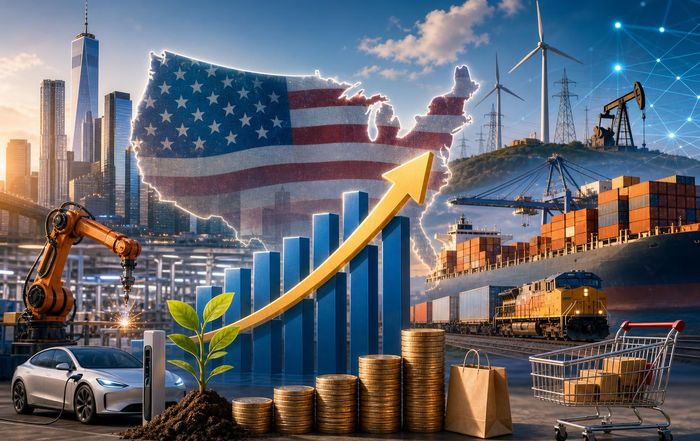
U.S. Economic Growth Drivers Businesses Should Watch
Introduction: A New Phase of American Expansion
The United States economy is moving through a complex but opportunity-rich phase, shaped by technological acceleration, demographic shifts, geopolitical realignments, and an evolving policy environment. While headlines often focus on short-term volatility in inflation, interest rates, or financial markets, the deeper story is about structural forces that are likely to define American growth over the next decade. For business leaders, investors, and professionals who follow USA update for completely original and daily updated news, understanding these drivers is not simply an academic exercise; it is central to strategic planning, capital allocation, workforce development, and long-term competitiveness.
From the resurgence of advanced manufacturing and energy production to the rapid scaling of artificial intelligence and clean technologies, the U.S. is reconfiguring its economic base in ways that will influence everything from regional job markets to global supply chains. This article examines the most important growth drivers that businesses should be watching, drawing on widely recognized data and analysis from institutions such as the U.S. Bureau of Economic Analysis, the Federal Reserve, the International Monetary Fund, and leading research organizations. It also connects these trends to the sectors that USA update readers care about most: economy, news, business, finance, jobs, employment, technology, regulation, consumer markets, energy, events, international developments, travel, entertainment, and lifestyle.
For RSS feed subscribers or email newsletter subscribers, and also online visitors, seeking ongoing complete original coverage of these issues, USA update provides dedicated sections on the U.S. economy, business developments, financial trends, jobs and employment, and technology, each offering timely perspectives tailored to decision-makers across the United States and beyond.
Macroeconomic Foundations: Growth, Inflation, and Policy
Any examination of U.S. growth drivers begins with the macroeconomic backdrop. Over the past several years, the American economy has demonstrated notable resilience in the face of pandemic shocks, supply chain disruptions, and tightening monetary policy. Data from the Bureau of Economic Analysis show that real gross domestic product has generally continued to expand, albeit with fluctuations tied to inventory cycles, interest rate movements, and global demand conditions. The International Monetary Fund and OECD have regularly highlighted the United States as one of the more robust large advanced economies, supported by strong consumer spending, a flexible labor market, and significant public and private investment in infrastructure and technology.
Inflation, which surged following the pandemic due to a combination of supply constraints, fiscal stimulus, and demand shifts, has gradually moderated according to U.S. Bureau of Labor Statistics data, though it remains an important variable for businesses planning pricing strategies, wage negotiations, and capital expenditures. The Federal Reserve, as documented in its monetary policy reports, has pursued a strategy of higher interest rates to bring inflation closer to its long-run target, while carefully monitoring labor market conditions and financial stability. For businesses, this environment has created both headwinds and tailwinds: higher borrowing costs but also a more predictable inflation outlook, which can support long-term investment.
Fiscal policy has also played a central role in shaping growth drivers. Legislation such as the Infrastructure Investment and Jobs Act, the CHIPS and Science Act, and the Inflation Reduction Act has directed hundreds of billions of dollars toward transportation networks, digital infrastructure, semiconductor manufacturing, and clean energy projects. The White House and U.S. Department of the Treasury have highlighted these initiatives as part of a broader industrial policy approach aimed at strengthening domestic capacity and reducing strategic vulnerabilities. Businesses that understand how these public investments intersect with their own capital plans and market strategies will be better positioned to benefit from the resulting demand and innovation spillovers.
Readers can follow ongoing shifts in macroeconomic policy and their implications for households and firms in the news and regulation sections of USA update, where federal decisions are analyzed through a business and consumer lens.
Interactive U.S. Growth Driver Dashboard
Use the sliders to explore how different structural drivers could shape a simple 10-year U.S. growth path. This is an educational, non-forecasting tool to help visualize strategic trade-offs described in the article.
Scenario emphasizes AI and clean energy, with moderate manufacturing and slightly weaker labor tailwinds. Consider workforce and supply-chain strategies to balance this mix.
The AI and Digital Transformation Wave
Among all current growth drivers, the rapid deployment of artificial intelligence stands out as one of the most transformative. Advances in machine learning, generative AI, and cloud computing, led by companies such as NVIDIA, Microsoft, Alphabet (Google), Amazon Web Services, and OpenAI, are reshaping productivity possibilities across industries. Reports from McKinsey & Company and PwC estimate that AI could add trillions of dollars to global GDP over the next decade, with the United States capturing a significant share due to its leadership in research, venture capital, and digital infrastructure.
In manufacturing, AI-enabled predictive maintenance, computer vision for quality control, and digital twins are helping companies reduce downtime and optimize production. In services, AI is transforming customer service through chatbots and virtual agents, enhancing fraud detection in finance, and accelerating drug discovery in healthcare. The National Institute of Standards and Technology (NIST) and the U.S. Department of Commerce have been working on frameworks for trustworthy AI, while the National AI Research Resource and various public-private partnerships aim to broaden access to advanced computing resources for universities, startups, and smaller enterprises.
At the same time, AI raises critical questions about employment, regulation, and ethics. The Brookings Institution and MIT researchers have emphasized that while AI is likely to automate certain tasks, it is also expected to create new roles in data management, AI safety, and human-machine collaboration, particularly for workers who can combine domain expertise with digital skills. Businesses that invest in upskilling and reskilling, often in partnership with community colleges and online education platforms, are more likely to capture the productivity benefits while mitigating disruption.
For ongoing coverage of technology's impact on the workplace and the broader economy, readers can explore USA update's technology and employment pages, which highlight how AI and digital tools are reshaping both white-collar and blue-collar work across the United States.
The Re-Industrialization and "Made in America" Momentum
Another powerful growth driver is the revival of U.S. manufacturing and industrial capacity. After decades of offshoring and globalized supply chains, many companies are reassessing the balance between cost efficiency and resilience. The pandemic, geopolitical tensions, and concerns about overreliance on single-country suppliers have accelerated reshoring and "friend-shoring" strategies, particularly in sectors such as semiconductors, pharmaceuticals, batteries, and critical minerals.
The CHIPS and Science Act, administered in part through the U.S. Department of Commerce, has catalyzed large-scale investments in semiconductor fabrication plants in states like Arizona, Texas, New York, and Ohio by firms such as Intel, TSMC, Samsung Electronics, and Micron Technology. The Semiconductor Industry Association has documented a wave of announced projects that, if fully realized, would significantly expand domestic chipmaking capacity, supporting both national security objectives and the broader digital economy.
Beyond semiconductors, the Infrastructure Investment and Jobs Act is funding upgrades to roads, bridges, railways, ports, and broadband networks, which in turn stimulate demand for construction materials, engineering services, and advanced equipment. According to analyses by the American Society of Civil Engineers and Moody's Analytics, infrastructure investment has a relatively high multiplier effect, creating jobs not only in construction but also in manufacturing and local services. For businesses, this opens opportunities in areas ranging from heavy machinery and building materials to logistics and software for project management.
The re-industrialization trend also intersects with regional development. States in the American South and Midwest have attracted substantial foreign direct investment in automotive manufacturing, battery plants, and clean energy projects, supported by state-level incentives and a growing skilled workforce. Organizations such as the Economic Development Administration and various state commerce departments provide data and incentives that companies can use to evaluate site selection and expansion decisions.
Readers interested in how these industrial shifts affect local economies, job creation, and business formation can turn to USA update's coverage of jobs, business, and energy, where regional case studies and sector-specific analyses are regularly featured.
Clean Energy, Climate Tech, and the New Energy Economy
The U.S. energy system is undergoing a historic transformation, driven by declining costs for renewables, advances in storage and grid management, and policy incentives aimed at reducing greenhouse gas emissions. The U.S. Energy Information Administration (EIA) has reported rapid growth in solar and wind capacity, with renewables accounting for an increasing share of electricity generation. At the same time, natural gas remains a key transition fuel, and the United States has become a major exporter of liquefied natural gas, influencing global energy markets.
The Inflation Reduction Act has been particularly consequential for clean energy and climate technology. Through a combination of tax credits, grants, and loan guarantees, it has encouraged investments in utility-scale solar and wind farms, rooftop solar, energy storage, electric vehicle manufacturing, hydrogen production, and carbon capture projects. Analyses by organizations such as Rhodium Group, Princeton University's REPEAT Project, and the International Energy Agency suggest that these incentives are likely to accelerate the deployment of low-carbon technologies and stimulate significant private capital flows.
For businesses, this shift creates multiple growth opportunities. Manufacturers of solar panels, inverters, wind turbines, and batteries are expanding capacity in the United States, often in partnership with global firms. Utilities and grid operators are investing in transmission upgrades and smart grid technologies to manage variable renewable generation. Companies in sectors as diverse as real estate, transportation, and heavy industry are exploring ways to decarbonize operations, sometimes through voluntary commitments aligned with frameworks such as the Science Based Targets initiative.
At the same time, the energy transition raises important questions about reliability, affordability, and workforce impacts, particularly in regions historically dependent on fossil fuel extraction. The U.S. Department of Energy and think tanks like the Resources for the Future are studying pathways for a just transition that supports workers and communities while maintaining energy security. Businesses that engage proactively with local stakeholders, invest in workforce retraining, and prioritize environmental stewardship are more likely to build durable social license and brand value.
To understand how evolving energy markets affect consumers, businesses, and investors, USA update provides analysis in its energy and consumer sections, highlighting both the risks and opportunities of the new energy economy.
Labor Markets, Demographics, and the Future of Work
The U.S. labor market is another central driver of economic growth, and it has been remarkably dynamic in recent years. Unemployment has generally remained low by historical standards, according to the U.S. Bureau of Labor Statistics, while job openings and quits rates have signaled strong demand for workers in many sectors. Wage growth has been particularly notable in lower-wage service occupations, reflecting both tight labor conditions and shifts in worker preferences.
Demographics, however, present a more nuanced picture. The U.S. Census Bureau has documented an aging population and slower labor force growth, which could constrain potential output over the long term if not offset by productivity gains, immigration, or higher labor force participation among underrepresented groups. The participation of women, older workers, and people with disabilities has become an important focus of both policymakers and employers, who see inclusive hiring as essential to meeting labor needs.
Hybrid and remote work have emerged as enduring features of the post-pandemic landscape, especially in knowledge-intensive industries such as technology, finance, and professional services. Research from Stanford University, Harvard Business School, and organizations like Gallup suggests that flexible work arrangements can support productivity and worker satisfaction when managed effectively, though they also pose challenges for collaboration, mentorship, and organizational culture. For businesses, decisions about office space, real estate footprints, and digital collaboration tools are now strategic considerations, not just operational details.
Immigration policy remains a key variable. High-skilled immigration, particularly in STEM fields, has historically been a source of innovation and entrepreneurship in the United States. Studies from the National Foundation for American Policy and Kauffman Foundation have shown that immigrants are disproportionately represented among patent holders, startup founders, and advanced degree holders in science and engineering. The future trajectory of visa policies, green card backlogs, and student retention will therefore have significant implications for the country's innovation capacity.
For readers tracking labor trends, wage dynamics, and employment opportunities, USA update's sections on jobs, employment, and lifestyle provide practical insights into how these macro-level forces translate into everyday career and workplace decisions.
Consumer Strength, Household Balance Sheets, and Lifestyle Shifts
Household consumption remains the largest component of U.S. GDP, and the spending behavior of American consumers is a powerful engine of growth. During the post-pandemic recovery, households benefited from a mix of accumulated savings, rising wages, and strong asset markets, which supported robust spending on goods and services. Over time, as inflation and higher interest rates have weighed on budgets, consumption patterns have evolved, with more focus on services such as travel, dining, and entertainment, and somewhat slower growth in certain durable goods categories.
Data from the Federal Reserve's Survey of Consumer Finances and research by organizations such as the Pew Research Center indicate that household balance sheets are uneven. Many families have improved net worth due to home price appreciation and stock market gains, while others, particularly renters and lower-income households, remain more vulnerable to price shocks and credit constraints. Credit card debt and auto loans have increased, and delinquency patterns are closely monitored by regulators and banks as indicators of financial stress.
At the same time, lifestyle preferences are changing in ways that create new markets. Younger consumers tend to place higher value on experiences, sustainability, and digital convenience, driving growth in sectors such as streaming, gaming, wellness, and eco-friendly products. The rise of e-commerce, accelerated by the pandemic, continues to reshape retail, logistics, and commercial real estate, with major platforms like Amazon, Walmart, and Shopify investing heavily in fulfillment networks and last-mile delivery innovations. The U.S. Census Bureau's e-commerce statistics and analyses by Forrester Research and eMarketer highlight the steady integration of online and offline shopping, with omnichannel strategies becoming the norm.
For businesses, understanding these consumption and lifestyle trends is essential for product design, marketing, and channel strategy. Firms that can leverage data analytics, personalization, and responsible use of customer information, while maintaining trust and complying with privacy regulations, are better positioned to capture long-term loyalty.
USA update regularly explores how consumer behavior intersects with economic and business trends in its consumer, entertainment, and lifestyle sections, helping readers see beyond the headlines to the deeper forces reshaping daily life in the United States.
Financial Markets, Capital Flows, and Corporate Investment
U.S. financial markets play a central role in channeling savings into productive investment, both domestically and globally. The depth and liquidity of American equity and bond markets, overseen by regulators such as the U.S. Securities and Exchange Commission (SEC) and the Federal Reserve, provide companies with multiple financing options, from public offerings and corporate bonds to private equity and venture capital. The World Bank and Bank for International Settlements consistently highlight the United States as a hub for international capital flows, with global investors seeking exposure to U.S. assets for both returns and perceived safety.
In recent years, corporate investment has increasingly focused on intangible assets such as software, intellectual property, brand development, and data infrastructure, as documented by the Conference Board and OECD. This shift reflects the growing importance of knowledge-based capital in driving productivity and competitive advantage. At the same time, traditional capital expenditures in factories, warehouses, and logistics networks have seen renewed momentum due to reshoring, e-commerce growth, and infrastructure spending.
Private equity and venture capital continue to be important sources of funding for innovation, particularly in technology, healthcare, and climate tech. Data from PitchBook and the National Venture Capital Association show that while deal volumes can fluctuate with interest rates and risk sentiment, the United States remains the leading destination for startup and growth-stage investment. However, valuations, exit conditions, and regulatory scrutiny-especially around antitrust and data privacy-are critical variables that investors and founders must monitor.
Interest rate policy, inflation expectations, and global risk factors such as geopolitical tensions and supply chain disruptions can all influence the cost of capital and investment appetite. Businesses that maintain strong balance sheets, diversify funding sources, and hedge key risks are better able to navigate this environment.
Readers looking for detailed commentary on financial markets, corporate finance, and investment trends can consult USA update's finance and economy coverage, which connects macro-level developments to sector-specific impacts and strategic choices.
Regulation, Geopolitics, and Global Trade Realignment
Regulation and geopolitics are increasingly intertwined with economic growth. The United States remains deeply integrated into global trade and investment networks, but recent years have seen a shift toward more strategic trade policies, export controls, and industrial strategies aimed at protecting critical technologies and supply chains. The Office of the U.S. Trade Representative and the U.S. Department of Commerce's Bureau of Industry and Security have implemented measures affecting exports of advanced semiconductors, AI-related technologies, and certain dual-use goods to specific countries, particularly in the context of U.S.-China relations.
These policies, along with tariffs and trade negotiations, influence where companies locate production, how they structure supply chains, and which markets they prioritize. International institutions such as the World Trade Organization (WTO), IMF, and World Bank provide analysis on how shifting trade patterns may affect global growth, while think tanks like the Council on Foreign Relations and Carnegie Endowment for International Peace examine the geopolitical implications.
Domestically, regulatory developments in areas such as data privacy, antitrust, financial stability, environmental standards, and labor protections are shaping the business environment. For example, debates over content moderation and platform accountability involve agencies like the Federal Trade Commission (FTC) and Federal Communications Commission (FCC), while climate-related disclosure requirements for public companies are under discussion at the SEC. State-level policies, particularly in California, New York, Texas, and Florida, can also have national and even international spillovers, given the size of these economies.
Businesses must therefore maintain a sophisticated understanding of both U.S. and global regulatory landscapes, often relying on legal counsel, industry associations, and policy analysis from organizations such as the U.S. Chamber of Commerce, Business Roundtable, and sector-specific trade groups. Strategic planning increasingly requires scenario analysis that accounts for potential regulatory shifts, sanctions, or trade disruptions.
To stay informed about how regulation and international developments intersect with business and economic growth, USA update offers dedicated coverage in its regulation and international sections, helping readers anticipate and adapt to a changing policy environment.
Innovation Ecosystems, Entrepreneurship, and Regional Hubs
Innovation has long been a cornerstone of U.S. economic strength, and the country's network of universities, research institutions, startups, and corporate R&D centers continues to be a powerful growth engine. Regions such as Silicon Valley, the Boston-Cambridge corridor, Austin, Seattle, and the Research Triangle have become synonymous with technology and life sciences innovation, supported by institutions like Stanford University, MIT, Harvard University, and the University of California system.
Federal agencies, including the National Science Foundation (NSF) and National Institutes of Health (NIH), provide substantial funding for basic and applied research, while programs such as the Small Business Innovation Research (SBIR) and Small Business Technology Transfer (STTR) initiatives support early-stage commercialization. The U.S. Patent and Trademark Office (USPTO) tracks patent activity that often signals emerging technological trends, from biotechnology and quantum computing to advanced materials and robotics.
In recent years, there has been growing attention to spreading innovation capacity beyond a handful of coastal hubs. Initiatives to develop "innovation districts" and technology clusters in the Midwest, South, and Mountain West seek to leverage local strengths in manufacturing, logistics, energy, and agriculture. Public-private partnerships, regional accelerators, and university-industry collaborations are central to these efforts, which aim to create high-quality jobs and attract investment. Reports from the Brookings Institution and Economic Innovation Group highlight the potential of such place-based strategies to reduce regional disparities and strengthen national competitiveness.
Entrepreneurship remains a vital component of this ecosystem. While business formation rates can be cyclical, data from the U.S. Census Bureau's Business Formation Statistics and analyses by the Kauffman Foundation indicate that new business applications surged during and after the pandemic, reflecting both necessity and opportunity entrepreneurship. Digital platforms, cloud services, and online marketplaces have lowered barriers to entry for many types of businesses, though access to capital and mentorship continues to be uneven across geography and demographics.
For entrepreneurs and innovators looking to understand where opportunities are emerging and how to navigate the evolving ecosystem, USA update provides insights through its business, technology, and events coverage, including profiles of emerging hubs, conferences, and industry gatherings that can serve as catalysts for collaboration and growth.
Global Connectivity: Travel, Tourism, and International Engagement
While much attention is rightly focused on domestic drivers, the United States remains deeply connected to the global economy through trade, investment, and people-to-people exchanges. International travel and tourism are significant contributors to U.S. economic activity, supporting jobs in hospitality, transportation, retail, and entertainment. Organizations such as U.S. Travel Association and data from the U.S. Department of Commerce's National Travel and Tourism Office show that inbound tourism, particularly from Canada, Europe, and Asia, plays an important role in regional economies from New York and Florida to California, Nevada, and Hawaii.
Business travel, international education, and global conferences also facilitate knowledge exchange and deal-making that underpin long-term growth. American universities attract large numbers of international students, who contribute not only tuition revenue but also intellectual and entrepreneurial capital; many go on to found companies or join high-growth sectors. The Institute of International Education and NAFSA: Association of International Educators provide data and analysis on these flows and their economic impact.
For U.S. companies, global engagement remains essential. Export opportunities in fast-growing markets, cross-border partnerships, and participation in global value chains can all enhance competitiveness and scale. However, firms must balance these benefits with the risks associated with geopolitical tensions, regulatory divergence, and currency volatility. Organizations such as the World Economic Forum, OECD, and United Nations Conference on Trade and Development (UNCTAD) offer perspectives on evolving global trends that can inform corporate strategy.
Readers interested in how international dynamics, travel patterns, and cross-border business activity intersect with U.S. growth drivers can explore USA update's international and travel sections, which highlight both the opportunities and challenges of an interconnected world.
What Businesses Should Watch: Strategic Implications
Taken together, these drivers-AI and digital transformation, re-industrialization, clean energy, labor market dynamics, consumer behavior, financial conditions, regulatory shifts, innovation ecosystems, and global connectivity-form a complex but navigable landscape for businesses operating in or with the United States. While each sector and region faces unique circumstances, several cross-cutting implications stand out for leaders seeking to position their organizations for sustainable growth.
First, productivity will be central. With demographic headwinds and rising competition, the ability to harness technology, data, and human capital to produce more value per worker and per dollar of capital will distinguish successful firms. This requires not only investment in tools and infrastructure but also in organizational capabilities, change management, and continuous learning. Public resources such as the U.S. Department of Labor's training programs and industry-led initiatives can support these efforts, but leadership commitment is essential.
Second, resilience is no longer optional. The experiences of pandemic disruptions, supply chain shocks, and geopolitical tensions have made clear that efficiency alone is insufficient. Businesses are rethinking inventory strategies, supplier diversification, cybersecurity, and crisis planning. Guidance from organizations like the Cybersecurity and Infrastructure Security Agency (CISA) and sector-specific regulators can help firms strengthen resilience without sacrificing competitiveness.
Third, sustainability and social responsibility are becoming integral to business models rather than peripheral concerns. Investors, customers, and employees increasingly expect companies to address environmental impact, diversity and inclusion, and community engagement in a substantive way. Frameworks from the Sustainability Accounting Standards Board (SASB), Task Force on Climate-related Financial Disclosures (TCFD), and other standard-setting bodies provide tools for measuring and communicating performance, while also helping firms identify new opportunities in green products and services.
Fourth, collaboration across sectors will be a defining feature of this era. Public-private partnerships in infrastructure, research, and workforce development, as well as cross-industry alliances in areas like cybersecurity and standards-setting, can unlock scale and innovation that no single organization could achieve alone. Participation in industry associations, regional economic development initiatives, and multi-stakeholder forums can provide both influence and insight.
For ongoing guidance on how these themes evolve and intersect with daily business decisions, USA update remains committed to providing timely, independent and impartial coverage across its core focus areas, from economy and finance to technology, jobs, and international developments.
Conclusion: Navigating Opportunity in a Transforming Economy
The United States stands at a pivotal moment, with powerful forces of technological change, industrial renewal, energy transition, demographic evolution, and global realignment shaping its economic trajectory. For businesses, this environment is demanding but rich with opportunity. Those that invest in understanding the underlying drivers of growth, rather than reacting only to short-term news cycles, will be better equipped to make strategic choices about where to compete, how to innovate, and how to build resilient, future-ready organizations.
In this landscape, information quality and perspective matter. USA update aims to serve as a positive and inspiring companion for decision-makers, offering analysis that connects macroeconomic trends to the concrete realities of business operations, finance, employment, technology adoption, regulatory compliance, and consumer engagement. As the country continues to adapt and evolve, the most successful enterprises will be those that combine data-driven insight with long-term vision, embracing change not as a threat but as a catalyst for growth.
By watching the key drivers outlined in this article and engaging with the broader community of experts, policymakers, and innovators, businesses can help shape a U.S. economy that remains dynamic, inclusive, and globally competitive in the years ahead.
