
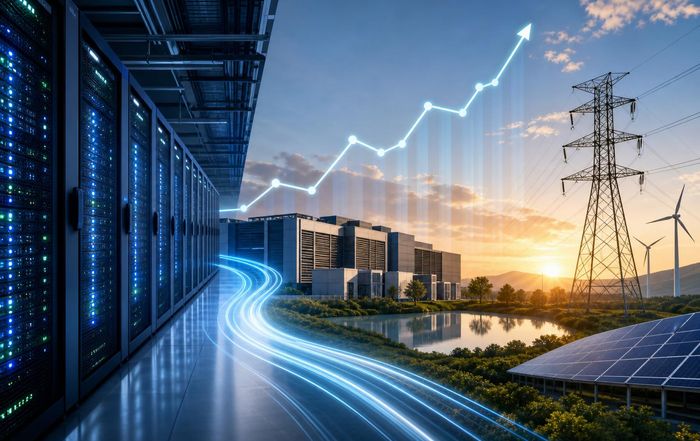
How Power Demand Is Changing Data Center Development
A new era for digital infrastructure!
Across the United States and around the world, the rise of artificial intelligence, cloud computing, streaming media, and connected devices is reshaping how data centers are planned, powered, and built. What was once a behind-the-scenes utility for enterprise IT has become a critical pillar of national economic growth, energy policy, and industrial strategy. For intelligent readers of USA update, this transformation is not abstract: it is influencing regional job markets, commercial real estate, electricity prices, and even the pace of innovation in sectors from manufacturing to entertainment.
Where earlier generations of facilities were designed around moderate, predictable workloads, modern hyperscale and AI-optimized data centers require unprecedented amounts of power, grid stability, and cooling capacity. At the same time, regulators, investors, and communities are insisting that this growth remain compatible with climate goals and local environmental constraints. The result is a complex, high-stakes transition in which power demand is the central driver of design decisions, site selection, financing structures, and public policy.
The scale of the power shift
The most striking change in recent years is the sheer scale of power required by leading data center operators. According to analysis from the International Energy Agency (IEA), global data centers, cryptocurrencies, and AI together consumed an estimated 460 terawatt-hours (TWh) of electricity in 2022, with projections that this could roughly double by 2026 if current trends continue. Readers can explore the IEA's detailed scenarios and assumptions by reviewing its discussion of electricity use in data centers and AI.
In the United States, the growth trajectory is particularly pronounced. Research cited by McKinsey & Company suggests that U.S. data center power demand could reach tens of gigawatts of additional load over the next several years, with AI-specific clusters pushing individual campuses toward 500 megawatts or more of capacity. Interested readers can review McKinsey's analysis of data center growth to understand how this expansion intersects with cloud adoption and AI investment.
This surge in demand is being fueled by multiple converging factors. Enterprises are accelerating migration from on-premises IT to cloud platforms operated by Amazon Web Services, Microsoft Azure, Google Cloud, and other hyperscalers. Generative AI models, high-performance computing, and real-time analytics require dense clusters of graphics processing units (GPUs) and specialized accelerators, which draw significantly more power per rack than traditional servers. Streaming video, gaming, and social media, combined with the proliferation of Internet of Things devices, add to the baseline load that must be supported around the clock.
For many of our smart online visitors focused on the broader economic picture, this power shift is tightly connected to national output and productivity. The digital economy's contribution to U.S. GDP continues to grow, and data center infrastructure is a foundational enabler. Those tracking these macro trends can find additional context in our daily coverage of the U.S. economy and in reports from the U.S. Bureau of Economic Analysis, which detail the rising share of digital services.
Interactive Feature: Data Center Power Planning Calculator
Use this interactive calculator to explore how different workload mixes (AI vs. traditional) affect data center power needs and sustainability metrics.
Data Center Power & Sustainability Estimator
Adjust the sliders to see how workload mix and efficiency shape power demand, emissions, and land use.
(incl. support)
27MW peak draw
From secondary utility to primary constraint
In earlier phases of the digital era, developers often treated power as one variable among many in site selection and facility design. Land cost, fiber connectivity, tax incentives, and proximity to customers or corporate campuses were central, while electricity was assumed to be available at reasonable cost. That assumption no longer holds in several major markets.
In Northern Virginia's "Data Center Alley," parts of Texas, and fast-growing cloud hubs such as Ohio and Georgia, power availability and substation capacity have become primary constraints. Regional utilities and grid operators now evaluate proposed data center loads in the same category as large industrial plants. Dominion Energy in Virginia and Georgia Power, for example, have publicly discussed the need for substantial grid upgrades to accommodate new campuses. Readers interested in the regulatory perspective can follow developments through sources such as the North American Electric Reliability Corporation and state public utility commissions, which provide open dockets and reliability assessments.
For developers and investors, this shift means that the ability to secure long-term, high-capacity power commitments is often the decisive factor in whether a project proceeds. The timelines for building new transmission lines and substations can run to five or ten years in some jurisdictions, outpacing the typical construction schedule for the data center itself. As a result, power is no longer a background consideration but a central strategic asset that shapes entire regional development patterns.
On USA update, the implications of this dynamic extend across multiple areas. Power constraints influence business strategy for cloud providers and colocation firms, shape important finance decisions around infrastructure funds and real estate investment trusts (REITs), and affect jobs by determining where new facilities - and the associated employment - can realistically be located.
The rise of AI-driven design requirements
Artificial intelligence workloads are not only increasing total power demand; they are also changing the technical requirements for how power is delivered and managed inside data centers. Training large-scale AI models requires dense clusters of GPUs or other accelerators, each of which can draw hundreds of watts, leading to rack densities that can exceed 50 kilowatts and, in some cases, approach or surpass 100 kilowatts.
Traditional air-cooled designs struggle to manage the heat associated with such densities. In response, leading operators and equipment vendors are accelerating the adoption of advanced cooling technologies, including direct-to-chip liquid cooling and, in some experimental cases, immersion cooling. Organizations such as ASHRAE (American Society of Heating, Refrigerating and Air-Conditioning Engineers) are updating thermal guidelines for data processing environments to account for these new technologies, and readers can learn more about evolving data center cooling standards through its technical publications.
Power distribution architectures inside the facility are also being re-evaluated. Higher rack densities require more robust busways, power distribution units, and backup systems. Uninterruptible power supplies (UPS) must support larger and more dynamic loads, while still meeting stringent reliability targets. Some operators are experimenting with direct current (DC) distribution, solid-state transformers, and modular power systems that can be deployed in stages as AI clusters grow.
These technical shifts have direct implications for capital expenditure and operating models. Facilities optimized for AI may require higher up-front investment per megawatt but can deliver greater computational output per square foot. As investors and corporate boards weigh these trade-offs, they increasingly seek independent analysis from organizations such as Uptime Institute, which publishes assessments of data center resilience and design, and from consulting groups like Gartner and IDC, which track broader trends in cloud and AI infrastructure.
Regional power dynamics in the United States
Within the United States, the geography of data center development is being redrawn by power considerations. Traditional hubs such as Northern Virginia, Silicon Valley, and the Dallas-Fort Worth region remain important, but many new projects are gravitating toward areas with abundant, relatively low-carbon power and space for large campuses.
The Midwest and Mountain West illustrate this shift. States such as Iowa, Nebraska, Utah, and Arizona have attracted major investments from Meta, Google, Microsoft, and others, in part because of access to wind and solar resources, as well as favorable regulatory environments. The U.S. Energy Information Administration (EIA) provides detailed state-by-state profiles of generation capacity and fuel mix, which are increasingly used by developers to assess where long-term power procurement will be most sustainable and cost-effective; readers can explore these profiles through the EIA's state energy data and analysis.
At the same time, regions with constrained grids or slower permitting processes are seeing projects delayed or scaled back. In some East Coast states, local opposition to new transmission lines and substations has complicated efforts to add capacity, while in parts of California, wildfire risk and grid reliability concerns have prompted both regulators and operators to consider more distributed and resilient architectures.
For communities and policymakers, this presents both opportunities and challenges. Data centers can bring significant tax revenue, construction jobs, and long-term technical employment, but they also raise questions about land use, water consumption, and the impact on local electricity prices. USA update has highlighted these debates in its news coverage, emphasizing the need for transparent communication between developers, utilities, and residents.
Global competition for power-ready locations
Beyond North America, power demand is reshaping data center development in Europe, Asia-Pacific, and emerging markets. In Europe, strict climate policies, high energy prices, and local moratoria in some cities have pushed operators to seek locations with strong renewable resources and supportive regulatory frameworks. Countries such as Sweden, Norway, and Finland have marketed their abundant hydropower and cool climates as advantages, and readers can examine how Nordic utilities and governments are positioning themselves through sources like Statkraft and Fingrid.
In Asia, hyperscale growth in regions such as Singapore, Tokyo, and Seoul has forced policymakers to balance data sovereignty and economic development with limited land and power resources. Singapore, for example, previously introduced a temporary moratorium on new data center approvals before moving to a more selective, efficiency-focused framework. Those interested in the policy evolution can consult reports from the Infocomm Media Development Authority (IMDA) and regional think tanks such as the Asia Cloud Computing Association, which provide analysis of data center regulation and sustainability initiatives.
Emerging markets in Africa, Latin America, and Southeast Asia are also witnessing rapid expansion, driven by rising internet penetration and cloud adoption. However, in many of these regions, grid reliability and the availability of low-carbon power remain significant constraints. Organizations such as the World Bank and International Finance Corporation have highlighted the importance of digital infrastructure as part of broader development strategies, while also emphasizing the need for investment in generation and transmission. Interested readers can learn more about infrastructure investment in emerging economies through the World Bank's public resources.
For clever individuals watching global business and international trends, this global competition underscores how closely digital infrastructure is intertwined with national energy policies and trade relationships. Countries that can reliably provide clean, affordable power are better positioned to attract data-intensive industries and the high-value jobs they bring.
The sustainability imperative
As power demand accelerates, sustainability has moved from a public relations concern to a core strategic and regulatory issue for data center operators. Large technology companies and colocation providers have made prominent commitments to reduce or eliminate net greenhouse gas emissions from their operations. For instance, Google has stated goals around operating its data centers on 24/7 carbon-free energy, while Microsoft has announced targets to become carbon negative and water positive within defined timeframes. These commitments are documented in their publicly accessible sustainability reports and filings, which can be reviewed through their corporate websites and investor relations pages.
Independent organizations such as the Science Based Targets initiative and CDP (formerly the Carbon Disclosure Project) play an important role in assessing the credibility of these climate goals and the progress made toward them. Readers seeking to understand how corporate pledges are evaluated can explore CDP's methodology for climate disclosure and the Science Based Targets initiative's criteria for validation.
From a technical perspective, sustainability in data center development is being pursued along multiple dimensions. Energy efficiency remains fundamental, with operators striving to reduce power usage effectiveness (PUE) and optimize the performance of cooling systems, power distribution, and IT equipment. However, as the IEA and others have noted, efficiency improvements alone may not be sufficient to offset rising demand from AI and other workloads, which means that clean energy procurement and grid decarbonization are increasingly critical.
To address this, many large operators are signing long-term power purchase agreements (PPAs) with wind and solar projects, investing directly in renewable generation, or exploring emerging options such as grid-scale batteries and green hydrogen. Industry groups like the Renewable Energy Buyers Alliance and the Rocky Mountain Institute publish case studies and best practices on corporate clean energy procurement, which can help readers learn more about sustainable business practices in this space.
Water use and local environmental impact are also under greater scrutiny. Some cooling technologies consume substantial volumes of water, which can be problematic in arid regions or during droughts. In response, operators are developing air-cooled designs with lower water intensity, using reclaimed or non-potable water sources where feasible, and working with local authorities to ensure that data center growth does not conflict with community needs. Environmental NGOs and academic researchers continue to evaluate the cumulative impact of data center clusters, and while methodologies and conclusions can differ, the overall trend is toward more rigorous assessment and transparency.
Regulatory and policy evolution
Governments at the federal, state, and local levels are increasingly engaged in shaping the trajectory of data center development through regulation, incentives, and broader energy policy. In the United States, federal agencies such as the Federal Energy Regulatory Commission (FERC) and the Department of Energy influence the rules governing transmission planning, wholesale power markets, and grid reliability, all of which affect how easily new data center loads can be integrated. Readers can follow evolving rules and orders directly through FERC's public documents and DOE's initiatives on grid modernization.
At the state level, utility commissions oversee rate structures, integrated resource plans, and the approval of new generation and transmission projects. Some states offer tax incentives, sales tax exemptions on equipment, or other benefits to attract data center investments, while others impose efficiency standards or environmental conditions. The balance between promoting economic development and protecting ratepayers is often debated in public hearings and legislative sessions, and USA update regularly highlights such key debates in its regulation reporting.
Internationally, the European Commission and national governments within the European Union have adopted or proposed regulations aimed at improving data center efficiency and transparency, including requirements for energy performance reporting and waste heat reuse in some jurisdictions. Industry associations such as the European Data Centre Association and policy groups like DIGITALEUROPE provide insight into how these rules are being implemented and how operators are adapting.
For business leaders, investors, and policymakers, the key message is that data center development can no longer be viewed separately from energy and climate policy. Decisions about zoning, permitting, transmission corridors, and renewable energy targets all have direct implications for where and how digital infrastructure can grow. USA update aims to connect these dots for its subscribing email newsletter members and online visitors by integrating original news across economy, energy, and technology.
Innovation in on-site and distributed power
One of the more intriguing responses to rising power demand is the exploration of on-site and distributed generation options. While grid connection remains essential for most large facilities, some operators are supplementing utility power with local resources to improve resilience and reduce emissions.
Battery energy storage systems (BESS) are emerging as a promising alternative or complement to traditional diesel backup generators. Lithium-ion and other advanced chemistries can provide fast-responding support during grid disturbances and enable data centers to participate in demand response or ancillary services markets. Organizations such as the Electric Power Research Institute and National Renewable Energy Laboratory publish research on the performance and economics of these systems, providing a technical foundation for investment decisions.
Fuel cells powered by natural gas or hydrogen are also being tested as primary or backup power sources in some facilities. While hydrogen infrastructure remains limited, pilot projects supported by companies like Bloom Energy and by public agencies are exploring pathways to lower-carbon operation as green hydrogen production scales. Readers can learn more about hydrogen's role in the energy transition through IEA's analyses, which discuss both opportunities and challenges.
In parallel, there is renewed interest in small modular reactors (SMRs) and advanced nuclear technologies as potential long-term solutions for reliable, carbon-free power near large data center clusters. However, these technologies are still in development and face regulatory, economic, and public acceptance hurdles. Independent assessments from bodies such as the Nuclear Energy Agency and academic institutions provide balanced perspectives on timelines and risks, and most industry observers caution against assuming near-term deployment at scale.
For the moment, the most practical innovations tend to involve a combination of grid-connected renewables, storage, and sophisticated load management. Nevertheless, the exploration of new power paradigms underscores how central electricity has become to data center strategy. Infrastructure that was once considered purely an IT or real estate investment is now intertwined with some of the most complex questions in modern energy systems.
Economic and labor market impacts
The evolution of data center power demand has significant implications for the economy and labor markets, both nationally and in specific regions. Construction of large campuses involves thousands of jobs in engineering, skilled trades, and project management, while ongoing operations support roles in facility management, network engineering, cybersecurity, and more specialized fields such as power systems and cooling optimization.
As power requirements become more complex, the demand for professionals with hybrid expertise in electrical engineering, energy markets, and digital infrastructure is increasing. Universities, community colleges, and technical training programs are responding with new curricula focused on data center operations and energy systems. Industry organizations like the Uptime Institute and Data Center Dynamics offer professional certifications and training that can help workers transition into these roles.
For loyal community here tracking professional employment and new jobs trends, this represents a significant opportunity. Regions that successfully attract data center investments often see a clustering effect, with suppliers, service providers, and related technology firms establishing a presence nearby. Over time, this can contribute to a broader innovation ecosystem that supports higher-wage employment and entrepreneurship.
However, the benefits are not evenly distributed, and there is ongoing debate about how much long-term employment a highly automated data center cluster provides relative to other forms of industrial investment. Independent economic impact studies vary in their findings, depending on assumptions about indirect and induced jobs. Policymakers and communities are therefore increasingly focused on ensuring that data center projects are integrated into wider development strategies that include workforce training, local procurement, and community infrastructure.
Consumer and lifestyle dimensions
While data centers are often invisible to end users, their power-driven evolution has tangible effects on consumer experiences and daily life. Reliable, low-latency digital services underpin remote work, telehealth, online education, e-commerce, and entertainment. As AI-enhanced applications become more deeply embedded in everything from financial services to personal productivity tools, the need for robust and responsive infrastructure will only grow.
For consumers, one emerging concern is the potential impact of rising data center power demand on electricity prices and grid reliability. Regulators and utilities are working to ensure that large new loads are integrated in ways that do not unduly burden residential customers, but the issue remains an area of active policy debate. Public utility commission hearings and stakeholder processes, which are often open for comment, provide channels for citizens and consumer advocates to engage with these questions.
At the same time, the digital services enabled by data centers can contribute to more efficient and sustainable lifestyles. Cloud-based collaboration can reduce travel, smart home systems can optimize energy use, and streaming can, under certain conditions, have a lower environmental footprint than physical media. Organizations such as The Shift Project and academic researchers have studied these trade-offs, and while their conclusions sometimes differ, they highlight the importance of considering both the direct and indirect effects of digitalization on energy and emissions.
USA update seeks to connect these emerging patterns by covering not only the technical and business aspects of data center development, but also the consumer and lifestyle dimensions that shape how individuals experience the digital economy.
Powering up the thinking! Balancing growth, reliability, and sustainability
As of the current decade, the trajectory of power demand in data centers is clear: it is rising rapidly, driven by AI, cloud computing, and the ongoing digitization of economic and social life. What remains uncertain is how effectively this growth can be aligned with the imperatives of grid reliability, climate goals, and community well-being.
Several trends suggest cautious optimism. First, there is growing collaboration between technology companies, utilities, regulators, and civil society organizations to plan for long-term infrastructure needs. Integrated resource planning processes increasingly account for large digital loads, while data center operators participate in grid-support programs and invest in clean energy. Second, innovation in efficiency, cooling, and power management continues to advance, offering tools to moderate the energy intensity of new workloads even as total demand rises. Third, financial markets and corporate governance frameworks are placing greater emphasis on environmental, social, and governance (ESG) performance, which encourages more responsible approaches to development.
However, significant challenges remain. Transmission expansion in many regions lags behind the pace of new data center proposals, and permitting processes for both power and digital infrastructure can be fragmented. The rapid adoption of generative AI has outpaced some earlier forecasts, raising questions about whether current planning assumptions will prove adequate. In addition, global inequities in access to reliable, affordable power risk leaving some regions behind in the digital economy, even as others race ahead.
The central narrative is one of interdependence. Decisions made in corporate boardrooms about where to site AI clusters or how to structure clean energy contracts reverberate through local job markets, national energy strategies, and international climate negotiations. Likewise, choices by policymakers about grid modernization, renewable incentives, and data regulation influence the pace and character of digital innovation.
By following recent events across technology, business, energy, and news, daily readers can gain a more integrated understanding of how power demand is reshaping data center development - and, through it, the broader contours of economic growth and daily life. The story is still being written, but one conclusion is already clear: in the emerging digital era, electricity is not just a background utility for data centers; it is the defining constraint and catalyst that will determine how far and how fast the next wave of innovation can go.
