
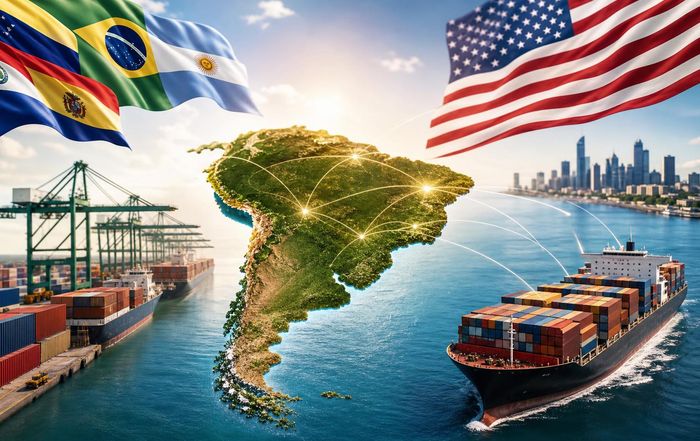
South American Growth Markets and U.S. Trade Opportunities
Introduction: A Continent Moving Back Into Focus
As global supply chains are reshaped, energy systems are transformed, and digital technologies diffuse across borders, South America has re-emerged as a region of strategic importance for the United States. For new and old online readers or email members coming here who follow the latest daily developments in the economy, business, finance, jobs, technology, regulation, and international affairs, understanding South America's growth trajectory is no longer optional; it is increasingly central to assessing the future of U.S. trade, investment, and employment.
The region is not a monolith. Brazil's vast domestic market and industrial base differ markedly from Chile's mining-led, open-economy model, Colombia's services and logistics strengths, or Uruguay's niche role in agritech and digital services. Yet across these diverse national contexts, several common themes stand out: the rise of nearshoring and "friend-shoring" strategies that favor locations closer to the United States, the global race for critical minerals and low-carbon energy, the steady expansion of digital and financial technologies, and a renewed focus on institutional reform and macroeconomic stability in several key economies.
For U.S. companies, policymakers, and workers, these trends translate into a mix of export opportunities, joint ventures, supply-chain partnerships, and policy dialogues that can shape American jobs and competitiveness. This article explores how South American growth markets are evolving, where U.S. trade and investment are already deepening, and how the relationship can be strengthened in ways that support sustainable, inclusive growth on both sides of the equator.
Readers who wish to track related developments in real time can consult USA update's unaffiliated and independent media coverage of the U.S. economy, business and trade, finance, and international affairs, where South American dynamics increasingly intersect with U.S. domestic debates.
South America's Economic Landscape: From Volatility to Selective Resilience
South America's economic story over the past two decades has been marked by cycles of commodity booms, political shifts, and macroeconomic volatility. Yet beneath those cycles, important structural changes have taken place. Many countries have strengthened central bank independence, modernized financial regulation, expanded social safety nets, and diversified export baskets beyond traditional commodities.
According to data from the World Bank and International Monetary Fund, South America's aggregate growth has been uneven, but several economies have demonstrated resilience and reform momentum, especially in the aftermath of the pandemic. Brazil, Chile, Colombia, Peru, and Uruguay have pursued varying combinations of inflation targeting, fiscal rules, and trade openness, with mixed but generally improving outcomes in terms of macroeconomic stability. Readers can review regional macro indicators through sources such as the World Bank country data portal and the IMF's World Economic Outlook.
Brazil remains the region's heavyweight, with a GDP that places it among the world's largest economies. Its domestic consumer base, diversified industrial sector, and expanding services and digital economy make it a natural focal point for U.S. trade and investment discussions. Chile and Peru, though much smaller in population, punch above their weight in mining and metals, especially copper and lithium, which are critical for global energy transition technologies. Colombia has emerged as a hub for services, logistics, and creative industries, while Argentina, despite recurring macroeconomic crises, continues to possess significant agricultural, energy, and human capital potential.
From a U.S. perspective, the region's proximity, demographic profile, and resource endowments align well with strategic goals in supply-chain resilience, decarbonization, and digital innovation. This alignment is particularly relevant to USA update readers tracking shifts in U.S. employment and job markets, as trade and investment flows increasingly shape where value-added activities and skilled positions are located.
U.S.-South America Trade: Structure, Scale, and Strategic Shifts
Trade between the United States and South America is substantial, though it has historically been overshadowed in public discourse by U.S. commerce with North America, Europe, and Asia. According to the Office of the United States Trade Representative (USTR) and U.S. Census Bureau trade statistics, the United States maintains significant two-way trade relationships with Brazil, Chile, Colombia, and Peru, among others, involving goods such as machinery, aircraft, medical devices, agricultural products, energy, and minerals, as well as a growing array of services.
The United States has free trade agreements (FTAs) with several South American countries, including Chile, Colombia, and Peru, through accords that lower tariffs, protect intellectual property, and provide more predictable legal frameworks for investors. Detailed information on these agreements is available on the USTR's official website. While the United States does not have an FTA with Brazil or Argentina, it engages with both through sectoral agreements, investment frameworks, and dialogues under broader hemispheric initiatives.
Recent years have seen renewed U.S. interest in the Western Hemisphere as supply-chain vulnerabilities in distant regions became more apparent. Programs such as the Americas Partnership for Economic Prosperity, announced by the U.S. government as a framework for deeper economic cooperation with regional partners, and the Inter-American Development Bank's emphasis on nearshoring opportunities, have underscored the potential for South America to host more manufacturing, assembly, and services activities that serve North American markets. The IDB provides analytical work on these trends, including reports accessible through its official website.
For American exporters and investors, this environment creates an opening to expand into markets that are geographically closer, culturally connected, and increasingly aligned on regulatory standards, while also supporting job creation and economic diversification at home. For South American partners, deeper ties with the United States can help reduce overreliance on any single external market, diversify technology sources, and attract long-term, high-quality investment.
Interactive Feature: South America-U.S. Trade Opportunity Explorer
South America-U.S. Trade Opportunity Explorer
Compare sectors and countries to see where U.S. firms may find promising opportunities.
| Subsector | U.S. Edge | Score |
|---|
Nearshoring and Supply-Chain Resilience: South America's Emerging Role
The concept of nearshoring, in which companies relocate production or services closer to end markets to reduce risk and improve responsiveness, has traditionally focused on Mexico and Central America in the U.S. context. However, South America is increasingly part of these conversations, especially in sectors where scale, specialized skills, or resource endowments matter.
Brazil's automotive, aerospace, and machinery clusters, for example, already integrate with U.S. and European supply chains, and several multinational manufacturers have expanded local operations with an eye toward serving both South American and global markets. Colombia has promoted itself as a nearshore hub for business-process outsourcing, software development, and customer support for North American clients, leveraging time-zone alignment and a growing pool of bilingual professionals. Chile and Uruguay have positioned themselves as reliable locations for data centers, cloud services, and fintech operations, supported by robust digital infrastructure and relatively stable regulatory environments.
Organizations such as the World Economic Forum and UN Economic Commission for Latin America and the Caribbean (ECLAC) have analyzed these trends, highlighting both the opportunities and the need for continued reforms in logistics, customs procedures, and skills development. Readers can explore broader discussions on supply-chain resilience and regional integration through resources like the World Economic Forum's trade and supply-chain insights and ECLAC's regional reports.
For U.S. firms, nearshoring into South America is not simply about lower labor costs; it is increasingly about accessing specialized capabilities in agritech, fintech, renewable energy, and digital services, and about building redundancy into supply networks that have become more exposed to geopolitical and climate-related disruptions. This shift has implications for U.S. employment, as value-added design, engineering, and management roles can remain in the United States while production, processing, or support functions are distributed across the hemisphere, creating cross-border value chains that are more flexible and resilient.
Critical Minerals and the Energy Transition: A Strategic Nexus
One of the most consequential intersections between South American growth markets and U.S. trade opportunities lies in critical minerals and low-carbon energy. The global transition toward electric vehicles, renewable power, and energy storage has dramatically increased demand for materials such as lithium, copper, nickel, and rare earth elements. South America is central to this story.
The so-called "lithium triangle" of Argentina, Bolivia, and Chile contains a significant share of the world's known lithium resources, particularly in high-altitude salt flats. Chile and Argentina have already attracted substantial investment in lithium extraction and processing, while Bolivia continues to explore development models that balance state control with foreign participation. Copper, essential for electrification and power grids, is heavily produced in Chile and Peru, both of which are key suppliers to global markets.
The U.S. Geological Survey (USGS) provides detailed, regularly updated data on global mineral reserves and production, including profiles of lithium and copper that underscore South America's importance; readers can consult the USGS Mineral Commodity Summaries for technical details. At the policy level, the United States has identified critical minerals as a strategic priority for national security and clean-energy goals, with initiatives under the Department of Energy and Department of the Interior aimed at diversifying supply sources and encouraging responsible mining and processing. More information on these efforts is available through the U.S. Department of Energy's critical minerals page and related policy documents.
This convergence of needs and resources creates a natural space for U.S.-South America collaboration, but it also raises complex questions. Environmental and social impacts of mining, community consultation, water use in arid regions, and revenue-sharing arrangements are all central to the legitimacy and long-term sustainability of critical-mineral projects. Civil society organizations and multilateral institutions, including the World Bank and Inter-American Development Bank, have emphasized the importance of robust environmental, social, and governance (ESG) standards in mining investments, as reflected in guidance available through platforms such as the World Bank's climate and mining resources.
For U.S. companies and investors, aligning with high ESG standards is not only a matter of corporate responsibility but also of risk management, given rising expectations from regulators, shareholders, and consumers. Collaborative frameworks that combine U.S. technology, South American resource endowments, and multilateral financing can support projects that contribute to decarbonization while respecting local communities and ecosystems. USA update will continue to follow developments in this area, especially as they intersect with U.S. energy policy and markets.
Renewable Energy, Green Hydrogen, and Infrastructure
Beyond minerals, South America is increasingly recognized for its potential to become a powerhouse in renewable energy and green hydrogen production. Countries such as Brazil, Chile, and Uruguay have already made impressive strides in wind, solar, and hydropower deployment, often achieving some of the highest shares of renewables in their electricity mixes globally.
Brazil's energy matrix remains heavily based on hydropower, but it has diversified into wind and solar, attracting international investment and developing local expertise in project development, grid integration, and biofuels. Chile has become an early mover in large-scale solar and wind projects in its northern deserts and southern regions, supported by competitive auctions and clear regulatory frameworks. Uruguay, despite its small size, has been cited by organizations such as the International Renewable Energy Agency (IRENA) as a case study in rapid renewable deployment and policy coherence; IRENA's country profiles provide a useful overview.
Green hydrogen, produced using renewable electricity to split water into hydrogen and oxygen, has emerged as a promising area of cooperation. Chile, in particular, has launched an ambitious national hydrogen strategy, aiming to leverage its high-quality solar and wind resources to produce hydrogen and derivatives for domestic use and export. Brazil and Argentina have also explored hydrogen roadmaps, with interest from European and Asian partners as well as U.S. technology providers.
For the United States, collaboration in renewable energy and green hydrogen can take multiple forms: export of high-efficiency equipment and engineering services, joint ventures in project development, co-financing of infrastructure, and knowledge-sharing on regulatory frameworks and grid management. U.S. companies with expertise in grid modernization, storage, and system integration are well positioned to support South American partners in managing higher shares of variable renewables, while also learning from innovative policy instruments used in the region.
These energy transitions also intersect with infrastructure development more broadly. Ports, transmission lines, railways, and digital connectivity are all essential to unlocking South America's potential as a supplier of clean energy, green commodities, and low-carbon industrial products. Institutions such as the World Bank, IDB, and CAF - Development Bank of Latin America and the Caribbean play important roles in financing and advising on such projects, and their analysis can be accessed through resources like the World Bank's infrastructure pages.
Digital Transformation, Fintech, and Innovation Ecosystems
One of the most dynamic and often underappreciated dimensions of South America's growth story is the rapid expansion of digital technologies, fintech, and innovation ecosystems. The rise of digital payments, e-commerce, online lending, and software-as-a-service platforms has created new opportunities for cross-border collaboration with U.S. firms and investors.
Brazil's digital economy, anchored by companies such as Nubank and Mercado Libre (which has major operations across the region), has attracted global venture capital and strategic investment, including from U.S. financial institutions and technology firms. Colombia's startup scene in Bogotá and Medellín, Chile's fintech and software hubs in Santiago, and Argentina's tradition of producing globally competitive software and creative talent all contribute to a vibrant, though still maturing, innovation landscape.
The World Bank, BID Lab (the innovation arm of the IDB), and organizations such as Startup Genome have documented the growth of these ecosystems, highlighting both their potential and the constraints they face, including regulatory fragmentation, access to later-stage capital, and digital-skills gaps. To explore broader perspectives on digital transformation in emerging markets, readers can consult resources such as the World Bank's digital development pages and IDB's digital economy reports.
For U.S. businesses, these developments present at least three categories of opportunity. First, there is scope for direct investment in promising startups and scale-ups, including through venture capital, private equity, and corporate partnerships. Second, U.S. technology providers can expand sales of cloud services, cybersecurity solutions, and enterprise software tailored to South American clients, often in collaboration with local integrators. Third, talent partnerships, including remote work arrangements and joint research projects, allow U.S. firms to tap into South America's growing pool of software developers, data scientists, and digital creatives, while providing high-skilled employment opportunities in the region.
USA update readers interested in how these digital shifts intersect with American labor markets, wages, and regulatory debates can follow our ongoing and trending coverage of technology trends and consumer-focused digital issues, where cross-border digital services increasingly play a role.
Agriculture, Food Security, and Sustainable Trade
Agriculture remains a cornerstone of many South American economies, and it is also a major area of engagement with the United States. Brazil and Argentina are among the world's leading exporters of soybeans, corn, beef, and other agricultural products, while countries such as Chile, Peru, and Colombia have become important suppliers of fruits, vegetables, coffee, and specialty crops. These trade flows are deeply integrated into global food systems and have significant implications for prices, food security, and environmental outcomes.
The Food and Agriculture Organization (FAO) and OECD have produced joint outlooks on agricultural markets that underscore South America's role as a key supplier in the coming decades; these can be accessed through the FAO's market outlook portal. At the same time, concerns about deforestation, land-use change, biodiversity loss, and greenhouse-gas emissions have placed South American agriculture under scrutiny, particularly in sensitive biomes such as the Amazon and Cerrado.
For U.S. stakeholders, the challenge and opportunity lie in supporting agricultural trade and investment that is both economically beneficial and environmentally sustainable. This can involve cooperation on satellite monitoring and traceability systems, sharing best practices in precision agriculture and regenerative techniques, and aligning standards for sustainable sourcing that are credible and enforceable. U.S. agritech companies have an opening to work with South American producers on technologies that improve yields while reducing inputs and environmental impact, from advanced seeds and biologicals to digital farm-management tools.
The United States and South American partners also collaborate in multilateral forums on food security, agricultural research, and climate-smart practices, including through the FAO, World Bank, and specialized research networks. These efforts gain importance as climate variability affects crop yields and as both regions seek to secure stable, affordable food supplies for their populations.
Jobs, Skills, and Workforce Implications in the United States
For readers of USA update, an essential question is how deeper trade and investment ties with South America translate into jobs, skills, and wage dynamics in the United States. The relationship is complex and varies by sector, but several patterns are emerging.
In manufacturing and energy-related industries, partnerships with South American suppliers can help U.S. firms secure critical inputs and intermediate goods, supporting domestic production in sectors such as electric vehicles, batteries, grid equipment, and industrial machinery. This can bolster employment in U.S. manufacturing hubs, especially when combined with policies that incentivize domestic value addition and advanced manufacturing capabilities.
In services and digital industries, collaboration with South American partners often involves a mix of offshoring and onshoring, where certain tasks are performed in the region while higher-value activities remain in the United States. This division of labor can support U.S. competitiveness by allowing firms to operate around the clock and scale efficiently, while also creating demand for American expertise in system architecture, product design, project management, and regulatory compliance.
The expansion of trade also creates employment in logistics, finance, legal services, and professional consulting, as companies navigate customs procedures, regulatory frameworks, and cross-border transactions. Ports, railways, and freight services in the United States benefit from higher volumes of imports and exports, while financial institutions gain business in trade finance, currency risk management, and investment services.
To maximize these benefits, U.S. policymakers and educational institutions need to ensure that American workers have the skills required to thrive in a more interconnected, technologically intensive economy. This includes digital literacy, language capabilities, understanding of international standards, and sector-specific technical skills. USA update regularly covers often cited developments in jobs and employment, where trade-related training programs, apprenticeships, and workforce initiatives are increasingly important.
Regulatory Cooperation, Governance, and the Rule of Law
A recurring theme in discussions of South American growth markets is the importance of regulatory quality, governance, and the rule of law. For U.S. firms considering long-term investments, issues such as contract enforcement, transparency, anti-corruption measures, and predictability of regulations are critical determinants of risk and return. Several South American countries have made notable progress in strengthening institutions, while others continue to face challenges.
International indices such as the World Bank's Worldwide Governance Indicators and Transparency International's Corruption Perceptions Index provide comparative snapshots of these dimensions, though they must be interpreted with care and in context; these can be explored through the World Bank governance portal and Transparency International's website. While some South American countries score relatively well on measures of regulatory quality and control of corruption, others lag behind, and political transitions can introduce uncertainty.
The United States has engaged with South American partners on governance issues through a variety of channels, including bilateral dialogues, support for judicial and institutional reforms, and cooperation in regional organizations such as the Organization of American States (OAS). Trade agreements often include chapters on transparency, labor standards, and environmental protections, which can help anchor reforms and provide recourse mechanisms for investors and civil society.
For USA update readers interested in the intersection of trade and regulation, this is an area where developments can have significant implications for business confidence and market entry decisions. Our well researched coverage of regulatory trends will continue to highlight how changes in legal frameworks across the hemisphere affect U.S. companies, investors, and workers.
Geopolitics, Competition, and Multilateral Engagement
South America's growing importance is not lost on other major powers. China, in particular, has become a major trade partner and investor in the region, especially in infrastructure, energy, and mining. The Brookings Institution, Council on Foreign Relations, and other think tanks have documented the expansion of Chinese engagement in South America and its implications for U.S. interests; readers can explore analytical perspectives through resources such as the CFR's Latin America program.
European Union members, Japan, South Korea, and other partners are also active in the region, pursuing trade agreements, investment projects, and development cooperation. The competition and complementarity among these external actors create a complex environment in which South American governments seek to maximize benefits while preserving strategic autonomy.
For the United States, constructive engagement with South America increasingly involves not only bilateral diplomacy and trade, but also participation in multilateral initiatives that address shared challenges such as climate change, pandemic preparedness, migration, and digital governance. Organizations like the World Bank, IDB, OAS, and United Nations provide forums where U.S. and South American representatives can coordinate policies, share best practices, and mobilize resources.
This multilateral dimension is particularly relevant as the global economy navigates transitions in energy, technology, and demographics. Coordinated approaches to standards, data governance, carbon pricing, and sustainable finance can help avoid fragmentation and ensure that South American and U.S. firms operate within predictable, interoperable frameworks.
Travel, Culture, and People-to-People Links
While trade and investment statistics capture one dimension of U.S.-South America relations, people-to-people ties, tourism, educational exchanges, and cultural connections are equally important in building trust and long-term partnerships. Before the pandemic, millions of tourists traveled annually between the United States and South America, supporting airlines, hospitality industries, and local businesses on both sides. As travel has resumed and expanded, these flows are gradually recovering, and new routes and tourism offerings are emerging.
Study-abroad programs, academic partnerships, and professional exchanges have also contributed to a deeper understanding of each region's societies, institutions, and business practices. Universities and research institutes in Brazil, Chile, Colombia, Argentina, and other countries maintain active collaborations with U.S. counterparts, including in fields such as climate science, public health, engineering, and social sciences. These networks often underpin business relationships and policy dialogues, as alumni and professionals move between sectors and countries.
For readers planning travel or interested in cultural and tourism aspects of the relationship, USA update offers fresh and unique coverage of travel trends, events, and lifestyle stories that highlight how cross-border connections enrich communities, create jobs, and support local economies.
Positive Trends and Inspirational Stories from South America's Growth
Despite the challenges of inequality, political polarization, and climate vulnerability that many South American countries face, the region also offers numerous examples of positive change and innovation that can inspire U.S. readers and partners.
Entrepreneurial ecosystems have flourished in cities such as São Paulo, Santiago, Bogotá, and Buenos Aires, where startups are tackling issues from financial inclusion and small-business financing to telemedicine, sustainable agriculture, and educational technology. Social enterprises and impact investors are increasingly active, seeking to align financial returns with social and environmental goals, a trend documented by organizations such as the Global Impact Investing Network (GIIN), accessible through its research hub.
In the environmental sphere, several South American countries have advanced ambitious conservation and climate policies, from protected-area expansions in Chilean Patagonia to reforestation and restoration initiatives in Colombia and Brazil. Indigenous and local communities are playing a growing role in shaping these efforts, and their knowledge is increasingly recognized in international climate and biodiversity negotiations.
Cultural industries-from music and film to literature and design-continue to gain global recognition, with South American creators collaborating with U.S. and European partners on projects that reach worldwide audiences. These cultural exports not only generate income and employment but also shape perceptions and open doors for broader engagement in business, tourism, and diplomacy.
These stories, and many others, underscore a central theme: South America is not merely a source of raw materials or a destination for low-cost production; it is a region of creativity, resilience, and innovation, whose success is closely intertwined with that of the United States. USA update aims to reflect this nuance in its positive inspirational coverage, moving beyond stereotypes to highlight the full spectrum of economic, social, and cultural developments.
Strategic Recommendations for U.S. Stakeholders
For U.S. businesses, investors, and policymakers considering deeper engagement with South American growth markets, several strategic principles emerge from recent developments and expert analyses.
First, a long-term perspective is essential. South America's political and economic cycles can be volatile, but many of the underlying trends-urbanization, digitalization, energy transition, and demographic change-are structural and long-lasting. Building durable partnerships, investing in local talent and supply chains, and participating in policy dialogues can help navigate short-term turbulence while capturing long-term value.
Second, diversification across countries and sectors can reduce risk. Rather than concentrating exposure in a single market or commodity, U.S. firms may benefit from regional strategies that leverage complementary strengths-for example, combining mining partnerships in Chile and Peru with digital services in Colombia and Brazil, or integrating agricultural sourcing from the Southern Cone with renewable energy projects in the Andean region.
Third, attention to ESG standards and community engagement is not optional. Projects that ignore environmental, social, and governance considerations face rising regulatory, reputational, and operational risks. Conversely, those that align with high standards and local priorities are more likely to secure social license and long-term viability. Resources from organizations such as the World Bank, IDB, and OECD on responsible business conduct and sustainable investment can provide guidance; see, for instance, the OECD's responsible business conduct portal.
Fourth, investing in knowledge and cultural understanding pays dividends. Language skills, familiarity with local business practices, and sensitivity to cultural norms can significantly improve negotiation outcomes, partnership dynamics, and talent retention. Educational exchanges, internships, and joint training programs can help build these capacities on both sides.
Finally, coordination between the private sector, government, and civil society is crucial. Trade policy, development finance, export promotion, and corporate strategies should be mutually reinforcing, guided by clear objectives and informed by evidence. Platforms that bring together business leaders, policymakers, and experts-whether through formal forums or specialized independent media such as USA update-can help align efforts and share lessons learned.
Conclusion: A Shared Future of Opportunity
In an era of shifting geopolitical alignments, technological disruption, and climate urgency, South America and the United States face a shared set of challenges and opportunities. The region's growth markets offer the United States access to critical minerals, renewable energy, dynamic consumer bases, and innovative digital ecosystems, while the United States can provide capital, technology, market access, and institutional support that help South American partners realize their potential.
The path forward will not be linear, and not all investments or initiatives will succeed. Yet the trajectory of recent years suggests that, with thoughtful strategy, commitment to high standards, and mutual respect, U.S.-South America economic relations can evolve into a more balanced, diversified, and resilient partnership that benefits workers, communities, and businesses across the hemisphere.
For readers of USA update, staying informed about these developments is essential to understanding how global trends translate into local realities-from factory floors and logistics hubs in the United States to mining towns, tech clusters, and farming communities in South America. By following our ongoing daily created coverage of economic trends, business and finance, technology and regulation, and international affairs, readers can track how this evolving partnership shapes the future of trade, jobs, and prosperity in the Americas.
