
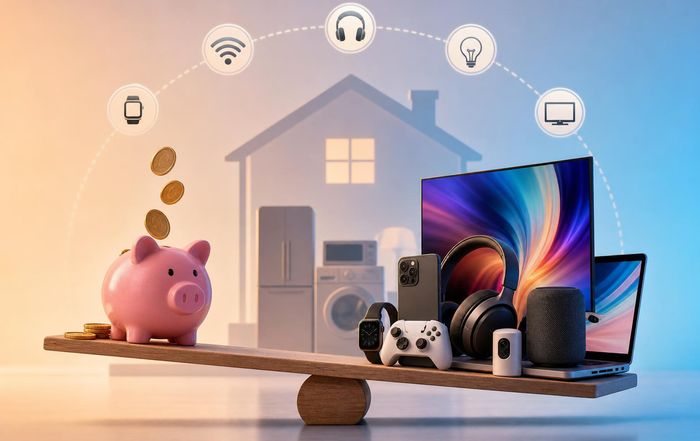
Consumer Electronics Trends Influencing Household Budgets
Navigating a New Era of Consumer Technology
Households across the United States and other major economies are confronting a consumer electronics landscape that is richer in innovation than at any time in recent memory, yet also more complex, more fragmented, and often more expensive to navigate. For the business-focused audience of USA update, which closely follows developments in the economy, finance, technology, regulation, and consumer behavior, the intersection of new devices, subscription models, and data-driven services with everyday household budgets has become a central theme. As smart devices proliferate across living rooms, kitchens, home offices, and vehicles, the traditional one-time purchase model has given way to a layered ecosystem of hardware, software, connectivity, and recurring services, all of which are reshaping how families plan, spend, save, and invest.
The accelerating pace of innovation, from artificial intelligence-enabled appliances to connected entertainment platforms and electric vehicles, has also elevated questions of financial literacy, digital security, and long-term value. Readers who follow the evolving U.S. economy through resources such as the economy coverage on usa-update.com are increasingly aware that consumer electronics are no longer a discretionary side category but a core component of household cost structures, influencing everything from monthly cash flow to credit utilization and retirement planning. Against this backdrop, understanding the key consumer electronics trends of 2026 is not merely a matter of technological curiosity; it is a vital exercise in budget management, risk assessment, and strategic decision-making for households and businesses alike.
The Shift from One-Time Purchases to Ongoing Subscriptions
One of the most significant developments affecting household budgets is the continued shift from traditional one-time electronics purchases toward recurring subscription and "as-a-service" models. Major technology companies such as Apple, Microsoft, Google, and Amazon have steadily expanded ecosystems in which hardware is bundled with cloud services, content libraries, extended warranties, and premium support, turning what once was a single capital expenditure into a series of predictable but persistent monthly obligations. Consumers who once upgraded a television or laptop every few years now find themselves paying for streaming platforms, productivity suites, gaming subscriptions, cloud storage, and device protection plans all at once, often across multiple family members and devices.
The business logic behind this shift is clear from corporate earnings and industry analyses published by organizations such as McKinsey & Company and Deloitte, which describe how recurring revenue streams enhance valuation and stabilize cash flow. For households, however, the implications are more nuanced. On the one hand, subscription models can spread costs over time, reduce upfront financial strain, and provide access to premium capabilities that might otherwise be out of reach. On the other hand, the aggregation of small monthly charges can erode financial discipline, obscure total cost of ownership, and increase vulnerability to economic shocks. Readers who follow finance insights on usa-update.com are increasingly adopting more rigorous methods of tracking subscriptions, using tools recommended by institutions like the Consumer Financial Protection Bureau and financial education resources from FINRA to better understand how digital services are affecting their long-term financial health.
Smart Homes, Smart Appliances, and the New Utility Bill
The emergence of smart home ecosystems-anchored by devices such as Amazon Echo, Google Nest, Apple HomePod, and a wide array of connected appliances-has transformed the way households think about both convenience and cost. Smart thermostats, connected lighting systems, intelligent refrigerators, and AI-enabled washing machines promise energy efficiency, predictive maintenance, and greater comfort. At the same time, they introduce new dependencies on broadband connectivity, cloud services, and ongoing software support, all of which carry financial implications that extend beyond the sticker price of the device itself.
Organizations such as the U.S. Department of Energy and the International Energy Agency have documented the potential energy savings associated with smart thermostats and efficient appliances, particularly when combined with time-of-use pricing and demand response programs. Learn more about sustainable energy and smart consumption practices through resources from the energy coverage at usa-update.com and from independent sources like the Rocky Mountain Institute. For many households, the key financial question has shifted from "Can we afford this appliance?" to "Will this device reduce our overall operating costs enough to justify its higher initial or ongoing expense?" In regions such as North America, Europe, and parts of Asia where electricity prices and regulatory frameworks are evolving rapidly, the answer depends heavily on local incentives, grid reliability, and the maturity of home energy management solutions.
Smart home security systems add another layer of cost-benefit analysis. Connected cameras, video doorbells, and integrated alarm systems from companies such as Ring, SimpliSafe, and ADT offer enhanced security and remote monitoring but often require subscription-based cloud storage and professional monitoring services. Reports from organizations like the Pew Research Center and Consumer Reports indicate that consumers are becoming more discerning about which features genuinely add value and which simply add recurring costs. The editorial team at usa-update.com has observed that readers are increasingly interested in comparative analyses of total cost of ownership, including installation, energy consumption, maintenance, and subscription fees, rather than just headline prices.
The Rising Cost of Connectivity: Broadband, 5G, and Beyond
As consumer electronics become more interconnected and more dependent on real-time data, the cost of connectivity has become a central component of household budgets. The expansion of 5G networks by carriers such as Verizon, AT&T, T-Mobile, and major international operators has enabled high-bandwidth applications, from cloud gaming to augmented reality and remote work, but it has also led to more complex mobile plans, device financing arrangements, and data-sharing agreements. Broadband access, once a relatively simple monthly charge, now often involves bundled services, promotional pricing that escalates after introductory periods, and equipment rental fees that can significantly increase annual expenditures.
Regulatory bodies such as the Federal Communications Commission in the United States and the Body of European Regulators for Electronic Communications in Europe have been monitoring affordability and competition in broadband markets, publishing data and guidelines that can help consumers make informed choices. Business readers who follow regulation developments on usa-update.com are aware that policy debates over net neutrality, spectrum allocation, and rural broadband subsidies have direct implications for household costs, especially in regions where limited competition leads to higher prices. Global organizations such as the OECD and the World Bank provide comparative data on broadband affordability across countries, highlighting disparities that influence how quickly households can adopt new connected devices and services.
In practical terms, the proliferation of connected electronics-from smart TVs and gaming consoles to home office equipment and IoT sensors-means that many households are upgrading to higher-speed tiers and more robust Wi-Fi systems, often without fully accounting for the cumulative impact on their budgets. As hybrid work, online education, and telehealth services become entrenched, connectivity is increasingly viewed as an essential utility rather than a discretionary expense, making it more resilient to budget cuts but also more likely to crowd out other forms of spending during periods of economic stress.
Premium Smartphones and the Evolution of Upgrade Cycles
Smartphones remain the centerpiece of the consumer electronics ecosystem, and the evolution of their pricing and upgrade patterns has had a pronounced effect on household finances. Flagship models from Apple, Samsung, Google, and Huawei have pushed into premium price ranges, with top-tier devices often exceeding the cost of mid-range laptops. While installment plans and trade-in programs have softened the immediate financial impact, they have also normalized higher baseline prices and extended the duration of consumer indebtedness tied to mobile hardware.
Industry research from sources such as Gartner, IDC, and Counterpoint Research shows that global smartphone replacement cycles have lengthened, with many consumers now holding onto devices for three to five years rather than upgrading annually. This trend reflects both improved durability and performance and a growing sensitivity to cost among households facing competing financial priorities. For readers of technology coverage on usa-update.com, the key issue is not only whether a new device justifies its price but also how the timing of upgrades aligns with broader financial planning goals, such as saving for education, housing, or retirement.
At the same time, mid-range and budget smartphones have become significantly more capable, offering features that were once exclusive to premium models, including advanced cameras, 5G connectivity, and high-refresh-rate displays. This has created opportunities for cost-conscious consumers to optimize value, particularly in markets such as India, Southeast Asia, and parts of Africa where disposable incomes are lower but mobile connectivity is essential. Global organizations such as GSMA and UNCTAD have highlighted how access to affordable smartphones supports financial inclusion, digital payments, and entrepreneurship, underlining the broader economic stakes of smartphone pricing trends.
Consumer Electronics Budget Navigator
Explore how subscriptions, smart homes, connectivity, smartphones, entertainment, hybrid work, repairability, and AI reshape household spending.
Recurring Costs
Hardware is increasingly bundled with cloud storage, content, warranties, and premium support.
Smart Home Tradeoffs
Efficiency gains can be offset by monitoring, software, broadband, and subscription fees.
Connectivity as Utility
Broadband, 5G, routers, and data plans now sit closer to essential household expenses.
Repair & Longevity
Right-to-repair, refurbished devices, and energy efficiency can reduce total ownership cost.
Monthly Tech Stack Estimator
Adjust your household’s recurring tech costs and compare the annual impact.
Tip: rotate unused streaming services, delay premium phone upgrades, check employer home-office support, and compare total cost of ownership before buying.
Streaming, Gaming, and the New Entertainment Stack
Entertainment, once dominated by cable television and physical media, has been transformed by streaming platforms, cloud gaming, and digital content ecosystems that rely heavily on consumer electronics. Households that previously paid a single cable bill now often manage multiple subscriptions to services such as Netflix, Disney+, Amazon Prime Video, HBO Max, Spotify, and Apple Music, alongside gaming services like Xbox Game Pass, PlayStation Plus, and NVIDIA GeForce NOW. Each platform competes for attention and budget, creating a fragmented and dynamic entertainment stack that can be difficult to monitor and optimize.
Research by organizations such as Nielsen and Statista indicates that while streaming has increased consumer choice and flexibility, it has also led to subscription fatigue and rising aggregate costs for many households. For readers following entertainment and culture on usa-update.com, the question is increasingly about how to curate a sustainable mix of services that aligns with viewing habits, family needs, and financial goals. Some consumers are turning to ad-supported tiers or rotating subscriptions month-to-month to manage costs, while others are revisiting free-to-air options or library-based services to reduce dependence on paid platforms.
Gaming has followed a similar trajectory, with consoles from Sony, Microsoft, and Nintendo now serving as gateways to expansive digital stores, subscription catalogs, and microtransaction-driven ecosystems. Cloud gaming services and cross-platform titles have reduced the need for frequent hardware upgrades but have introduced new forms of ongoing spending on in-game items, season passes, and virtual currencies. Organizations such as the Entertainment Software Association and independent researchers have noted that parents and young adults alike are grappling with how to set boundaries and budgets in environments designed to encourage incremental spending. The usa-update.com audience, which spans professionals in technology, finance, and media, is particularly attuned to the behavioral economics underpinning these models and the importance of digital literacy in managing them.
Work-from-Home, Hybrid Work, and the Professionalization of the Home Office
The normalization of remote and hybrid work arrangements since the early 2020s has permanently altered the profile of consumer electronics within households. What began as an emergency shift during the pandemic has matured into a long-term reconfiguration of labor markets, with employers and employees alike investing in tools that support productivity, collaboration, and security outside traditional office environments. High-quality webcams, noise-canceling headsets, dual-monitor setups, ergonomic peripherals, and upgraded routers have become standard components of home offices, blurring the line between personal and professional technology spending.
Organizations such as the International Labour Organization and OECD have documented the economic and social implications of remote work, including its impact on urban real estate, commuting patterns, and work-life balance. For households, the financial implications are multifaceted. Some costs previously borne by employers, such as office equipment and connectivity, have shifted to individuals, while others, such as commuting expenses and work attire, have decreased. Readers tracking employment trends on usa-update.com and jobs coverage are increasingly evaluating which technology investments are essential for career advancement and which can be shared, subsidized, or negotiated as part of employment agreements.
Security considerations add another dimension to this equation. As employees access corporate networks from home, the need for secure routers, updated operating systems, and robust antivirus solutions becomes more pressing. Guidance from organizations such as NIST and CISA emphasizes best practices for securing home networks and devices, which often require both financial investment and ongoing attention. For many households, the home office is now a semi-permanent fixture, and the electronics that support it are being treated not as discretionary gadgets but as core tools of economic participation.
Global Supply Chains, Inflation, and Pricing Volatility
The consumer electronics sector is deeply intertwined with global supply chains that span Asia, Europe, and the Americas, and disruptions in these networks have had a direct and sometimes sudden impact on household budgets. From the semiconductor shortages of the early 2020s to logistics bottlenecks and geopolitical tensions affecting trade routes, the availability and pricing of devices such as laptops, consoles, smartphones, and home appliances have been subject to volatility that challenges traditional budgeting approaches. Organizations such as the World Trade Organization and International Monetary Fund have analyzed how supply chain disruptions contribute to inflationary pressures, particularly in categories heavily reliant on imported components and just-in-time manufacturing.
For readers of business and international coverage on usa-update.com and international news, understanding these dynamics is essential for anticipating price movements and planning major purchases. When production capacity in key manufacturing hubs such as China, South Korea, and Taiwan is constrained, or when shipping costs spike due to fuel prices or port congestion, the ripple effects can manifest as higher retail prices, reduced promotional activity, or limited availability of certain models. Households that have historically relied on seasonal sales or specific upgrade cycles may find that traditional timing strategies are less reliable, prompting a shift toward more flexible, needs-based purchasing decisions.
At the same time, some regions have leveraged industrial policy and investment incentives to attract electronics manufacturing and assembly, which can influence local pricing and availability. Reports from agencies such as SelectUSA and the European Commission provide insight into how reshoring and nearshoring initiatives might reshape the geography of consumer electronics production over the coming decade, with potential implications for resilience, pricing stability, and employment in affected regions.
Sustainability, Right to Repair, and the Economics of Longevity
Environmental considerations and regulatory frameworks are increasingly shaping the economics of consumer electronics, with direct consequences for household budgets. The rise of sustainability-focused policies, including extended producer responsibility, eco-design standards, and right-to-repair legislation, is pushing manufacturers to design devices that are more durable, more energy-efficient, and easier to repair. Organizations such as the European Environment Agency, U.S. Environmental Protection Agency, and advocacy groups like iFixit and the Right to Repair Coalition have highlighted the environmental and financial benefits of extending product lifespans and reducing electronic waste.
From a household perspective, the ability to repair or upgrade devices rather than replace them outright can yield significant savings over time, particularly for high-cost items such as smartphones, laptops, and appliances. However, the availability of spare parts, repair documentation, and qualified technicians remains uneven across regions and product categories. Readers interested in how sustainability intersects with consumer behavior can explore related themes in the consumer section of usa-update.com and in global resources from organizations such as the Ellen MacArthur Foundation, which promotes circular economy principles.
Energy efficiency is another critical dimension. Devices that meet high efficiency standards, such as those certified by programs like ENERGY STAR, may carry a price premium but can reduce electricity bills over their lifetime, particularly in regions with high energy costs or time-of-use pricing. As smart meters and dynamic pricing models become more widespread, households equipped with efficient electronics and smart home management systems may be better positioned to optimize consumption and reduce long-term operating costs, even if their initial investments are higher.
AI, Automation, and the Invisible Cost of Data
Artificial intelligence has moved from the realm of novelty to mainstream utility in consumer electronics, with AI-driven features embedded in smartphones, smart speakers, televisions, appliances, and vehicles. Voice assistants such as Amazon Alexa, Google Assistant, and Apple Siri have become familiar interfaces, while behind the scenes, machine learning algorithms optimize everything from picture quality and battery life to predictive maintenance and personalized recommendations. While many of these features are marketed as value-adds that enhance user experience and convenience, they also introduce new cost structures and risks that households must consider.
One often overlooked dimension is the cost of data. Many AI-enabled services rely on continuous data collection and cloud processing, which can increase bandwidth usage and, in some cases, require premium subscription tiers to unlock full functionality. Organizations such as the Electronic Frontier Foundation and Privacy International have warned that the monetization of user data can create misaligned incentives, encouraging product designs that prioritize engagement and data extraction over user welfare and cost transparency. For readers of news and analysis on usa-update.com, the intersection of AI, privacy, and consumer protection is becoming an increasingly important area of inquiry.
Another dimension is the potential for AI-driven automation to both save and cost money. For example, AI-based energy management systems can reduce utility bills by optimizing heating, cooling, and appliance usage, while AI-powered financial tools can help households track spending, identify wasteful subscriptions, and improve savings rates. At the same time, algorithmically personalized shopping recommendations and frictionless one-click purchasing can encourage impulse spending, particularly in ecosystems tightly integrated with digital wallets and stored payment methods. Understanding these dynamics requires a level of digital literacy and self-awareness that not all consumers currently possess, underscoring the need for education and transparent design.
Regional Differences: United States, Europe, and Emerging Markets
The impact of consumer electronics trends on household budgets varies significantly across regions, reflecting differences in income levels, regulatory frameworks, cultural preferences, and infrastructure. In the United States and Canada, high levels of device penetration, robust broadband infrastructure, and a competitive retail landscape have enabled rapid adoption of smart home devices, premium smartphones, and streaming services. However, the relatively fragmented regulatory environment and high healthcare and education costs mean that households must carefully balance technology spending against other major financial obligations.
In Europe, stronger consumer protection regulations, more aggressive sustainability policies, and greater emphasis on privacy have shaped a somewhat different trajectory. Initiatives from the European Commission on right to repair, energy labeling, and digital markets have influenced product design and pricing strategies, often resulting in devices that are more standardized and, in some cases, more expensive upfront but potentially cheaper to operate and maintain over time. Households in countries such as Germany, France, the Netherlands, Sweden, and Denmark may experience a more structured and transparent electronics market, albeit with regional variations in tax policy and subsidy programs.
Emerging markets in Asia, Africa, and South America present another set of dynamics. In countries such as India, Brazil, Nigeria, and Indonesia, the rapid expansion of mobile connectivity and the availability of affordable smartphones have driven digital inclusion and economic growth, but income constraints mean that households are highly sensitive to price and value. Organizations such as the World Bank and International Telecommunication Union have documented how innovative business models-such as pay-as-you-go financing, refurbished device markets, and shared access points-are enabling broader adoption of consumer electronics without imposing unsustainable burdens on household budgets. For global readers of usa-update.com, these regional differences offer both lessons and opportunities, particularly for businesses seeking to tailor products and pricing strategies to diverse markets.
Practical Strategies for Households Managing Electronics-Driven Budgets
For the business-savvy audience of usa-update.com, the question is not simply how consumer electronics are changing but how households can respond strategically to these changes to protect and enhance their financial well-being. One of the most effective approaches is to adopt a portfolio mindset toward technology spending, viewing devices and services as a set of interrelated investments rather than isolated purchases. This involves mapping out all recurring technology-related expenses-such as subscriptions, connectivity, and warranties-alongside one-time purchases, and evaluating them in terms of utility, redundancy, and alignment with long-term goals.
Financial planning resources from organizations such as the National Endowment for Financial Education and educational content from the Federal Reserve can help households develop frameworks for assessing total cost of ownership, opportunity costs, and risk exposure. Readers can also draw on lifestyle and consumer insights from usa-update.com to understand how peers and thought leaders are optimizing their technology stacks, whether by consolidating services, embracing refurbished or previous-generation hardware, or leveraging employer benefits and educational discounts.
Another practical strategy is to incorporate technology planning into broader life events and milestones. For example, families preparing for a child's transition to college might coordinate laptop, smartphone, and connectivity decisions with broader financial planning for tuition and housing, while retirees may reassess their electronics needs in light of changing lifestyles and income patterns. By integrating electronics-related decisions into a holistic financial plan, households can avoid reactive purchasing and instead make deliberate, informed choices that balance innovation with stability.
The Role of Media, Research, and Policy in Shaping Informed Choices
In a landscape as dynamic and complex as consumer electronics, the role of trusted information sources becomes paramount. Business-oriented outlets such as usa-update.com play a crucial role in synthesizing developments across technology, finance, regulation, and consumer behavior, providing readers with the context and analysis needed to make informed decisions. By drawing on data and insights from reputable organizations-including the U.S. Bureau of Economic Analysis, OECD, World Economic Forum, and leading academic institutions-media platforms can illuminate the broader economic and social implications of seemingly individual purchasing decisions.
Policy makers and regulators also bear significant responsibility for ensuring that markets function fairly and transparently. Agencies such as the Federal Trade Commission, European Commission, and national consumer protection authorities around the world are actively examining issues related to dark patterns in digital interfaces, transparency in subscription terms, and the interoperability of devices and services. Their decisions can either empower consumers to make better choices or, if poorly calibrated, inadvertently entrench market power and reduce competition.
For the readership of usa-update, which includes executives, entrepreneurs, policymakers, and informed consumers across the United States, North America, and beyond, engaging with these debates is not merely an academic exercise. It is a practical necessity for anticipating how future regulations, industry standards, and technological breakthroughs will influence both business strategies and household budgets. By following developments across economy, business, technology, consumer, and international sections, readers can maintain a comprehensive view of the forces shaping their financial and technological futures.
Going Ahead: Balancing Innovation with Financial Resilience
The trajectory of consumer electronics suggests a continued convergence of hardware, software, and services, with artificial intelligence, edge computing, and immersive experiences poised to further transform daily life. Devices will likely become more context-aware, more personalized, and more tightly integrated into broader ecosystems spanning health, transportation, education, and entertainment. For households, this promises unprecedented convenience and capability, but it also raises the stakes for financial planning, digital literacy, and long-term resilience.
The central challenge for consumers, businesses, and policymakers alike is to ensure that the benefits of technological innovation are realized without undermining financial stability or exacerbating inequality. This will require transparent pricing, fair competition, robust consumer protections, and ongoing education about the true costs and benefits of electronic devices and digital services. It will also require households to adopt more deliberate and strategic approaches to technology adoption, treating consumer electronics not as impulsive purchases but as integral components of their economic lives.
For usa-update.com, whose mission is to provide timely, authoritative coverage of the economy, news, events, entertainment, finance, jobs, technology, business, international affairs, travel, employment, lifestyle, regulation, energy, and consumer trends, the evolving story of consumer electronics and household budgets will remain a critical area of focus. By continuing to analyze these trends with depth, clarity, and an unwavering commitment to experience, expertise, authoritativeness, and trustworthiness, the platform aims to equip its readers with the insight they need to navigate a rapidly changing world, make informed decisions, and align their technology choices with their financial aspirations and values.
