
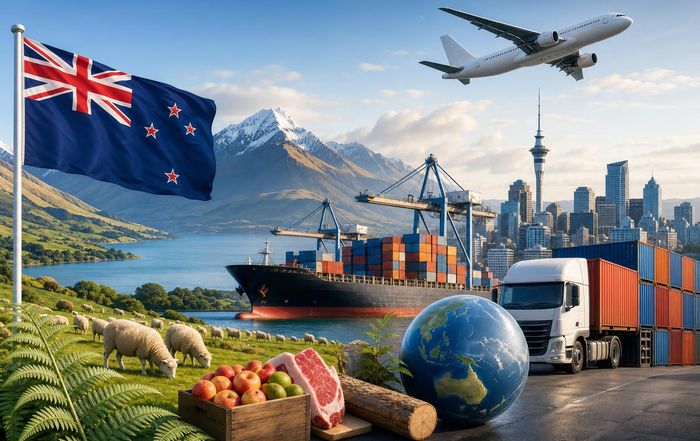
New Zealand Business Trends in Trade and Tourism: A Major Outlook for USA Update Readers
Introduction: Why New Zealand Matters to American Business and Policy!
New Zealand, a nation of just over five million people in the South Pacific, has long punched above its weight in global trade, tourism, and innovation. For readers of USA update, the country offers a compelling case study in how a small, open economy navigates shifting geopolitical currents, climate pressures, and technological disruption while maintaining relatively strong institutions, social cohesion, and a reputation for trustworthiness in international commerce.
In the wake of the pandemic and amid evolving global supply chains, New Zealand's business environment has been reshaped by new trade frameworks, a recalibration of its relationship with China, expanding ties with the United States and Europe, and a deliberate shift toward higher-value tourism and sustainable economic models. These changes are directly relevant to American companies assessing Asia-Pacific strategies, investors seeking stable and transparent markets, and policymakers tracking how allies adapt to a more fragmented global order.
This article examines the latest developments in New Zealand's trade and tourism sectors, with a focus on economic fundamentals, business opportunities, regulatory trends, technology adoption, and the broader implications for North American partners. It is written for the usa-update audience with an emphasis on practical insight, credible data, and a forward-looking perspective.
The Economic Backdrop: A Small, Open, and Resilient Economy
New Zealand's economy is highly open, with trade in goods and services representing a significant share of GDP according to the World Bank. The country's export profile has traditionally been anchored in agriculture and food products such as dairy, meat, and horticulture, complemented by services exports led by tourism and international education. Over recent years, digital services, film production, and technology startups have also become increasingly important.
The Reserve Bank of New Zealand (RBNZ) describes the economy as operating in an environment of elevated but moderating inflation, with monetary policy focused on bringing price growth back toward its target band while avoiding a sharp contraction in employment. For American readers familiar with the U.S. Federal Reserve's balancing act, the dynamics are similar but play out in a smaller and more trade-sensitive setting. New Zealand's floating exchange rate, relatively low public debt compared with many advanced economies, and strong institutional framework, as highlighted by OECD assessments, have historically provided buffers against external shocks, though the country remains vulnerable to commodity price swings and global demand cycles.
For those following macroeconomic trends through our economy reporting at usa-update.com/economy.html, New Zealand offers an instructive example of how a country can combine fiscal prudence, open markets, and robust social policy while still grappling with housing affordability, productivity challenges, and an aging population. The tension between maintaining competitiveness and addressing domestic inequality is shaping policy debates that mirror discussions in the United States and Europe.
Trade Architecture: From Regional Integration to Strategic Diversification
New Zealand's trade policy over the past two decades has been characterized by an aggressive pursuit of free trade agreements (FTAs) and regional frameworks, positioning the country as one of the most liberalized economies in the Asia-Pacific region. The New Zealand Ministry of Foreign Affairs and Trade (MFAT) maintains an overview of these agreements, which collectively cover a large majority of New Zealand's export markets.
One of the most significant developments has been New Zealand's role in the Comprehensive and Progressive Agreement for Trans-Pacific Partnership (CPTPP), a major Asia-Pacific trade pact that includes countries such as Japan, Canada, Mexico, and several others. This agreement, detailed on the Government of New Zealand and Government of Canada trade portals, has enhanced market access for New Zealand exporters in sectors ranging from dairy to digital services, while also setting higher standards in areas such as intellectual property, labor, and environmental protections.
In parallel, New Zealand has pursued closer economic ties with Europe. The EU-New Zealand Free Trade Agreement, whose key provisions are summarized on the European Commission's trade website, aims to eliminate most tariffs on goods, improve access for services and investment, and promote sustainable development. For U.S. businesses watching how allies deepen cross-continental trade links, this agreement underscores the growing importance of diversified supply chains and shared regulatory frameworks among like-minded economies.
For readers tracking international trade shifts via the fresh international section at usa-update.com/international.html, New Zealand's approach illustrates how smaller economies seek to hedge geopolitical risk by broadening their network of partners. The country's long-standing Closer Economic Relations (CER) agreement with Australia, detailed on the Australian Department of Foreign Affairs and Trade website, remains a cornerstone of trans-Tasman integration, with highly integrated labor markets and regulatory cooperation that many analysts view as a model of deep economic partnership.
The China Factor and Strategic Realignment
China has been New Zealand's largest trading partner for over a decade, particularly in dairy, meat, forestry, and tourism. Data from Stats NZ, the national statistics agency, show that exports to China have accounted for a substantial share of New Zealand's total merchandise exports. However, geopolitical tensions and concerns about over-reliance on a single market have prompted a gradual but noticeable shift in policy discourse and business strategy.
Reports from organizations such as The Lowy Institute and coverage in outlets like BBC News describe how New Zealand has sought to maintain a constructive relationship with Beijing while aligning more closely with other Western partners on security and technology issues, including participation in initiatives related to the Indo-Pacific region. This balancing act has implications for trade, as businesses weigh the benefits of Chinese demand against the risks of political friction and potential trade disruptions.
The government's trade diversification strategy, emphasized in MFAT publications, encourages exporters to explore opportunities in North America, Europe, and emerging markets in Southeast Asia. For American companies, this realignment opens the door to deeper collaboration in sectors such as agritech, renewable energy, and digital services, where New Zealand seeks partners who share similar regulatory and governance standards. Readers can explore related shifts in global economic alliances through USA update's recent business analysis at usa-update.com/business.html, where themes of resilience and diversification are increasingly prominent.
Tourism's Transformation: From Volume to Value
Tourism has historically been one of New Zealand's largest export earners, with international visitors drawn by its landscapes, adventure activities, and cultural experiences. Before the pandemic, data from Tourism New Zealand and Stats NZ showed that visitor arrivals reached record highs, with strong growth from China, Australia, the United States, and Europe. The sudden closure of borders during the pandemic severely impacted the sector, but it also catalyzed a strategic rethinking of tourism's role in the economy and its environmental footprint.
In recent years, policymakers and industry leaders have emphasized a shift from high-volume mass tourism toward a model that prioritizes higher-value, longer-stay visitors who contribute more per trip while placing less strain on infrastructure and ecosystems. Tourism New Zealand's strategy documents emphasize regenerative tourism, where the sector aims to give back more than it takes, aligning with broader sustainability goals and the country's global brand as a clean, green destination.
For travelers and investors following tourism trends through the new travel coverage at usa-update.com/travel.html, New Zealand's evolution offers insight into how destinations can reposition themselves for quality over quantity. This involves investment in premium experiences, such as luxury lodges, curated cultural experiences, and high-end adventure tourism, often in partnership with indigenous Māori communities, whose role in tourism is increasingly recognized and supported.
NZ Trade & Tourism Outlook Dashboard
Interact with the sliders to see how scenario choices affect New Zealand's trade and tourism mix from a USA perspective.
Strong potential for NZ-US SaaS and services exports.
- * Balanced China vs. US/EU exposure.
- * Tourism strategy favors high-spend visitors.
- * Digital trade is a rising bridge market.
The Rise of Māori Enterprise and Indigenous Tourism
Māori, the indigenous people of New Zealand, play a growing role in the country's business landscape, particularly in tourism, agribusiness, fisheries, and forestry. The New Zealand Māori Tourism organization and entities such as Te Puni Kōkiri (the Ministry of Māori Development) highlight the expansion of Māori-owned enterprises and the integration of cultural values such as kaitiakitanga (guardianship of the environment) into business models.
In tourism, Māori-led experiences range from guided cultural tours and performance-based attractions to eco-tourism ventures that emphasize connection to land and sea. These businesses often prioritize community development, environmental stewardship, and authentic storytelling, aligning with global trends toward experiential and responsible travel. International visitors increasingly seek deeper engagement with local cultures, and Māori operators are well positioned to meet this demand.
This growth intersects with broader conversations about inclusive growth and indigenous rights that American readers may recognize from discussions around Native American economic development. For those interested in how cultural heritage and commerce can reinforce each other, our exciting lifestyle section at usa-update.com/lifestyle.html provides context on similar movements in other regions, highlighting the importance of authenticity and community benefit in tourism narratives.
Digital Transformation and Technology-Driven Business Models
Technology is reshaping trade and tourism worldwide, and New Zealand is no exception. The country's tech ecosystem, centered in cities such as Auckland, Wellington, and Christchurch, has produced globally recognized firms in sectors like software-as-a-service, gaming, and film technology. Organizations such as NZTech and reports from New Zealand Trade and Enterprise (NZTE) profile a growing number of export-oriented tech companies that leverage New Zealand's talent pool, stable regulatory environment, and time-zone advantages to serve global markets.
In tourism, digital booking platforms, virtual reality previews, and data-driven marketing campaigns are now standard tools. Tourism New Zealand and regional tourism organizations use advanced analytics to understand visitor behavior, tailor promotions, and manage capacity at popular sites. The integration of digital tools helps operators diversify their markets, reach high-value segments, and improve resilience against shocks.
For trade, digitalization facilitates e-commerce, remote service delivery, and cross-border collaboration. New Zealand's involvement in initiatives such as the Digital Economy Partnership Agreement (DEPA), as described on the Singapore Ministry of Trade and Industry website, reflects a commitment to modern digital trade rules and interoperability. This has direct relevance for American technology firms and service exporters looking for partners in the Asia-Pacific region who support open, rules-based digital commerce.
Readers can follow the intersection of technology and business strategy in New Zealand and beyond through the unique technology content at usa-update.com/technology.html, where themes like cloud adoption, cybersecurity, and digital regulation are increasingly central to economic competitiveness.
Sustainability, Climate Policy, and the Green Economy
New Zealand's international brand is closely tied to its natural environment, and this has significant implications for both trade and tourism. The country has set climate targets under the the Paris Agreement, with the New Zealand Ministry for the Environment outlining policies aimed at reducing greenhouse gas emissions, including in agriculture and transport. While debates continue over the pace and design of these policies, there is broad recognition that climate action is both an environmental necessity and a business opportunity.
In trade, sustainability credentials are becoming a key differentiator for New Zealand exporters. Producers of dairy, meat, wine, and horticultural products increasingly highlight low-emissions farming practices, animal welfare standards, and traceability, responding to consumer demand in markets such as the United States, Europe, and East Asia. Certification schemes and environmental standards, often aligned with frameworks from organizations like the Global Reporting Initiative (GRI), help build trust with international buyers.
In tourism, climate considerations are more complex, given the long-haul flights required for most visitors. New Zealand's strategy focuses on encouraging longer stays, supporting lower-impact travel within the country, and investing in conservation projects that can be linked to tourism revenue. Initiatives such as predator-free programs and marine reserves, supported by agencies like the Department of Conservation, are often integrated into visitor experiences, reinforcing the narrative that tourism can be a force for good when managed responsibly.
For visitors exploring the intersection of energy, environment, and economic growth, our often cited energy media at usa-update.com/energy.html provides additional context on how countries are navigating the transition to low-carbon economies while maintaining competitiveness and social license.
Labor Markets, Skills, and the Future of Work
New Zealand's labor market dynamics are central to both trade and tourism performance. The country has historically relied on a mix of domestic workers and international migrants to staff key sectors such as hospitality, agriculture, and construction. Border closures during the pandemic exposed vulnerabilities in this model, leading to labor shortages that constrained business operations and highlighted the need for more resilient workforce strategies.
The New Zealand Ministry of Business, Innovation and Employment (MBIE) provides analysis of labor market trends, noting the importance of skills development, vocational training, and pathways for migrant workers. In tourism, there is a growing emphasis on professionalizing the workforce, improving career progression, and ensuring that jobs are attractive and sustainable. In trade-related sectors, particularly advanced manufacturing and technology, competition for talent is intense, and companies often recruit internationally.
For American readers tracking global talent flows and employment trends, the New Zealand experience underscores the importance of flexible immigration settings, investment in education, and alignment between training programs and industry needs. Those interested in employment and jobs across different economies can find comparative perspectives in the employment features at usa-update.com/employment.html, where workforce resilience and skills adaptation are recurring themes.
Regulatory Environment, Consumer Protection, and Business Confidence
New Zealand consistently ranks highly in international assessments of ease of doing business, regulatory quality, and corruption control. Organizations such as Transparency International and the World Bank have highlighted the country's relatively straightforward regulatory processes, independent judiciary, and strong rule of law. These attributes contribute to business confidence and make New Zealand an attractive destination for foreign investment, particularly from partners who value predictability and transparency.
In trade, regulatory alignment with key partners is crucial. New Zealand has worked to harmonize standards in areas such as food safety, biosecurity, and digital trade, often through bilateral and regional agreements. The New Zealand Food Safety authority, for example, maintains stringent standards that are recognized by trading partners, supporting market access for agricultural exports.
Consumer protection is also a focus, with agencies such as the New Zealand Commerce Commission overseeing competition and fair trading laws. For tourism, regulations around safety, environmental impact, and consumer rights help maintain trust in the sector, an essential component of long-term success. The balance between promoting innovation and ensuring consumer and environmental protection is a key policy challenge that mirrors debates in the United States and Europe.
People interested in regulatory changes that affect business operations can find additional analysis in USA update's regulation coverage at usa-update.com/regulation.html, where cross-country comparisons of policy approaches shed light on best practices and emerging risks.
Financial System, Investment Climate, and Capital Flows
New Zealand's financial system is dominated by a small number of large banks, many of which are subsidiaries of Australian institutions. The Reserve Bank of New Zealand and the Financial Markets Authority oversee banking stability and capital markets, respectively. While the domestic capital market is relatively small compared with the United States, it has matured over time, with the New Zealand Stock Exchange (NZX) hosting a range of listed companies, including in sectors such as utilities, real estate, and technology.
Foreign direct investment (FDI) plays a significant role in New Zealand's economy, particularly in infrastructure, energy, and agribusiness. The Overseas Investment Office regulates significant foreign investments, with rules designed to balance openness with protection of sensitive assets such as land and strategic infrastructure. For American investors, the combination of a stable legal environment, strong property rights, and transparent regulatory processes makes New Zealand an appealing but carefully managed destination.
For active folks focused on financial trends, capital flows, and investment opportunities, our independent finance section at usa-update.com/finance.html offers complementary insights into how global financial conditions, interest rate cycles, and exchange rate movements influence investment decisions in smaller open economies like New Zealand.
Events, Conferences, and the Return of Business Travel
As international travel normalizes, New Zealand is reasserting itself as a destination for conferences, trade fairs, and major events. Cities such as Auckland and Wellington have invested in modern convention centers, aiming to attract business travelers and industry gatherings that complement leisure tourism. Organizations like Business Events Industry Aotearoa (BEIA) highlight the strategic importance of conferences and exhibitions in showcasing New Zealand's capabilities in sectors such as agritech, renewable energy, and digital innovation.
The return of business events supports knowledge exchange, networking, and investment promotion, while also diversifying the tourism base beyond seasonal leisure travel. For American companies considering participation in Asia-Pacific conferences, New Zealand offers a venue with high-quality infrastructure, political stability, and a strong reputation for hospitality and safety.
Online readers and email subscribers tracking global event trends and opportunities can look to our unaffiliated events section at usa-update.com/events.html, where coverage of international trade shows, summits, and cultural festivals highlights how in-person gatherings continue to play a vital role in economic and diplomatic engagement.
Consumer Trends and Changing Visitor Expectations
Consumer behavior in both trade and tourism continues to evolve, influenced by digitalization, demographic shifts, and heightened awareness of social and environmental issues. In export markets, New Zealand brands emphasize authenticity, provenance, and quality, themes that resonate with consumers seeking premium food, wine, and natural products. Companies often leverage certifications and storytelling that connect products to specific regions, producers, and sustainable practices.
In tourism, visitors increasingly expect seamless digital experiences, from planning and booking to in-country navigation and feedback. Platforms such as Tripadvisor and global online travel agencies shape perceptions and choices, making reputation management and customer experience critical for operators. At the same time, there is growing interest in slow travel, wellness retreats, and nature-based experiences that offer respite from urban life and digital overload.
For American travelers and consumers, New Zealand's positioning as a destination and source of premium products aligns with broader lifestyle trends. Those exploring shifts in consumer preferences can find more context in the new consumer coverage at usa-update.com/consumer.html, where themes such as health consciousness, sustainability, and digital convenience are central to market analysis.
Opportunities and Challenges for U.S.-New Zealand Collaboration
The relationship between the United States and New Zealand has deepened across defense, diplomacy, and commerce. While there is no bilateral free trade agreement, the two countries cooperate in multilateral forums and share interests in maintaining open sea lanes, upholding international law, and supporting a rules-based trading system. For U.S. businesses, New Zealand offers a gateway to the wider Asia-Pacific region and a testbed for products and services aimed at English-speaking, high-income consumers.
Key areas of collaboration include agritech, where American and New Zealand companies work together on precision agriculture, genetics, and sustainable farming practices; renewable energy, particularly in geothermal and wind power; and creative industries, where New Zealand's film and gaming sectors have established global reputations. The U.S. Department of Commerce and NZTE provide guidance for companies seeking to enter each other's markets, emphasizing shared values around transparency, innovation, and environmental responsibility.
Challenges remain, including distance, scale, and occasional differences in regulatory approaches. However, the overall trajectory is one of increasing engagement, with scope for deeper partnerships in areas such as digital trade, climate technology, and education. For readers of USA update interested in practical business and policy implications, New Zealand exemplifies how mid-sized democracies can be important strategic partners in a complex global environment.
Looking Ahead: Strategic Themes for Trade and Tourism
Several overarching themes are likely to shape New Zealand's trade and tourism sectors in the coming years, with implications for partners across North America, Europe, and Asia.
First, diversification will remain a priority. Reducing over-reliance on any single market, particularly China, while building stronger ties with the United States, Europe, and emerging economies will be central to trade policy. This will involve not only traditional goods exports but also services, digital products, and intellectual property.
Second, sustainability will continue to move from a branding exercise to a core operational requirement. Climate policy, environmental regulation, and consumer expectations will drive businesses in agriculture, tourism, and manufacturing to adopt more sustainable practices, supported by innovation in technology and finance. Those who adapt early are likely to gain competitive advantage in premium markets.
Third, digitalization will reshape how trade and tourism are conducted. From e-commerce and digital trade agreements to virtual tourism experiences and data-driven marketing, technology will enable new business models and efficiencies, while also raising questions about privacy, cybersecurity, and digital inclusion.
Fourth, talent and skills will be a critical constraint and opportunity. Ensuring that New Zealand has a workforce equipped for a more knowledge-intensive, service-oriented economy will require investment in education, training, and immigration pathways, as well as workplace practices that attract and retain diverse talent.
Finally, geopolitical uncertainty will remain a backdrop to all of these developments. New Zealand's ability to navigate great-power competition, uphold its values, and maintain constructive relationships with a wide range of partners will be crucial for its long-term prosperity. For American policymakers and business leaders, understanding these dynamics can inform more nuanced and mutually beneficial engagement.
Active individuals can continue to watch these evolving themes through the broader news and analysis available on USA update at usa-update.com, where events in the global economy, business, technology, and regulation are tracked with an eye to their implications for U.S. interests and international collaboration.
Conclusion: Lessons from a Connected, Forward-Looking Island Economy
New Zealand's experience in trade and tourism offers valuable lessons for countries and companies navigating a world of shifting power balances, accelerating technological change, and intensifying climate pressures. Its commitment to open markets, strong institutions, and environmental stewardship, combined with a willingness to adapt and innovate, has enabled it to remain competitive despite its small size and geographic remoteness.
For the loyal community here, the country serves not only as an attractive partner and destination but also as a living laboratory for policies and business strategies that prioritize resilience, sustainability, and inclusiveness. As the United States and other major economies reassess their global engagement, New Zealand's approach underscores the importance of building diversified, values-based economic relationships that can withstand shocks and support shared prosperity.
By monitoring developments in New Zealand's trade and tourism sectors through reputable sources such as MFAT, Stats NZ, Tourism New Zealand, and international organizations like the OECD and World Bank, and by connecting these insights with the key analysis available across USA update's economy, business, finance, jobs, technology, and international sections, readers can gain a richer understanding of how one of the world's most globally connected small economies is charting its course in an era of profound change.
