
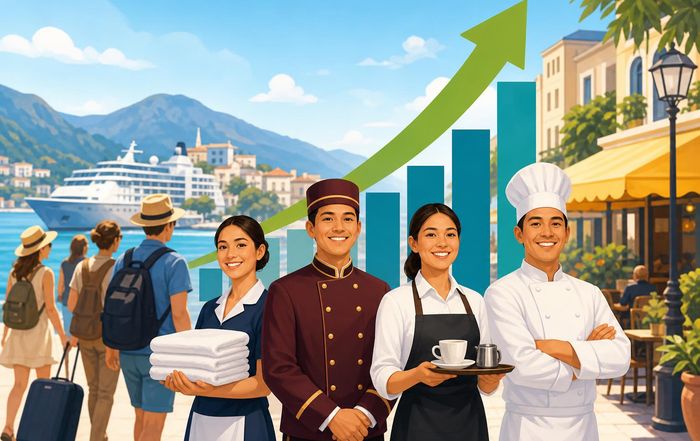
How Tourism Demand Is Supporting Local Service Jobs
Tourism at a Turning Point: Why It Matters for Local Labor Markets
Tourism has re-emerged as one of the most powerful engines of local job creation, reshaping service economies from small U.S. towns to major global hubs. For our followers, whose many interests span the economy, jobs, business, travel, regulation, energy, consumer trends and beyond, the evolution of tourism demand is not only a story about leisure and mobility, but also a critical lens through which to understand wage growth, labor shortages, urban development, and the resilience of local communities. The interplay between visitor spending and service employment has become more complex, more data-driven, and more exposed to geopolitical, environmental, and technological shocks than at any time in recent history.
The revival and transformation of tourism since the COVID-19 crisis has been documented in depth by organizations such as the World Travel & Tourism Council, which provides detailed insights into how travel and tourism contribute to global GDP and employment, and by UN Tourism, which tracks international arrival trends, regional performance, and structural shifts in traveler behavior. These global reference points matter directly to local realities in destinations across the United States and North America, where tourism has become a stabilizing force for sectors such as hospitality, food services, transportation, retail, cultural institutions, and entertainment venues. For readers monitoring broader economic trends on the usa-update.com economy page at https://www.usa-update.com/economy.html, tourism is now a leading indicator of regional growth, labor demand, and investment flows.
The Economic Mechanics of Tourism-Driven Service Employment
Tourism supports local service jobs through a combination of direct, indirect, and induced effects that, while widely recognized in theory, are now being measured and modeled with unprecedented sophistication. Direct employment encompasses roles that interact immediately with visitors, including hotel staff, restaurant workers, tour guides, ride-share drivers, cultural venue employees, and frontline retail personnel. Indirect employment arises from the supply chains that support these businesses, such as food and beverage distributors, laundry and maintenance services, local logistics, and professional services. Induced employment reflects the additional jobs generated when workers in tourism-linked sectors spend their earnings within the local economy, supporting everything from healthcare providers to childcare services.
Analyses from institutions like the U.S. Bureau of Economic Analysis and the U.S. Bureau of Labor Statistics show how tourism's share of service employment has grown across many states, particularly in regions with strong natural or cultural assets. Those seeking to understand the broader macroeconomic implications can explore how tourism contributes to regional GDP and employment multipliers, and how it interacts with other sectors such as manufacturing, technology, and energy. Learn more about how tourism integrates into national accounts and labor statistics through the latest data and methodological notes from these federal agencies, which are increasingly used by policymakers and business leaders to guide investment and workforce planning.
For usa-update.com, which covers both business and finance trends at https://www.usa-update.com/business.html and https://www.usa-update.com/finance.html, the critical insight is that tourism demand does not simply translate into seasonal service jobs; it shapes the structure of local labor markets, influences wage dynamics, and affects the viability of small and medium-sized enterprises that rely heavily on visitor flows. The durability of these jobs depends on how well communities align tourism strategies with housing policy, infrastructure investment, workforce training, and environmental stewardship.
Tourism Employment Distribution 2026
Regional Dynamics: United States, North America, and Beyond
Within the United States, tourism-dependent regions such as Florida, Nevada, California, Hawaii, and parts of the Northeast have seen visitor spending recover and, in many cases, exceed pre-pandemic levels by 2025, according to research from organizations like U.S. Travel Association and data-driven platforms such as STR and AirDNA, which specialize in hotel and short-term rental analytics. This rebound has supported strong hiring in hotels, restaurants, entertainment venues, and attractions, but it has also exposed structural challenges in labor supply, housing affordability, and transportation capacity, particularly in metropolitan areas and gateway cities.
Across North America, Canadian destinations such as Vancouver, Toronto, and Montreal, as well as major Mexican resort regions, have experienced similar dynamics, with tourism driving demand for multilingual service staff, digital marketing specialists, and experience designers who can tailor offerings to diverse international visitors. For people tracking daily international developments at https://www.usa-update.com/international.html, it is increasingly clear that tourism's contribution to local service employment is shaped by exchange rates, visa regimes, airline capacity, and geopolitical stability. Shifts in outbound travel from countries like China, the United Kingdom, Germany, and Brazil, for example, have immediate implications for hiring plans in U.S. cities that rely heavily on international tourism, as documented by industry reports from IATA and OECD Tourism.
Globally, tourism remains a key employer across Europe, Asia, and Africa, supporting millions of jobs in countries such as Spain, Italy, Thailand, South Africa, and Brazil, many of which have built sophisticated tourism ecosystems that integrate hospitality, cultural heritage, gastronomy, and event-based travel. International organizations such as the International Labour Organization have emphasized tourism's role in job creation, particularly for youth and women in developing economies, while also cautioning about the prevalence of informal work and the need for better labor protections. Learn more about sustainable tourism and inclusive employment models through the ILO's sectoral reports, which provide guidance for policymakers and businesses seeking to balance growth with social protections.
The Changing Nature of Service Jobs in a Tourism-Driven Economy
The composition of service jobs supported by tourism has evolved significantly by 2026, reflecting technological innovation, changing consumer preferences, and new business models. Traditional roles in hospitality and food services remain central, but they are increasingly complemented by positions in digital customer engagement, revenue management, data analytics, and experience design. Hotels and resorts managed by major groups such as Marriott International, Hilton, and Hyatt are investing in specialized teams to optimize pricing, personalize offers, and manage loyalty programs, creating higher-skilled service roles that blend hospitality expertise with data literacy and digital marketing capabilities.
At the same time, the rise of short-term rental platforms and alternative accommodations has created new categories of local service work, from property management and cleaning services to local concierge offerings and curated experience providers. Platforms like Airbnb and Booking Holdings have expanded their focus beyond accommodation to include tours, activities, and local experiences, thereby generating demand for local guides, instructors, artisans, and small business owners who can deliver authentic, place-based services. Learn more about how digital platforms are reshaping tourism value chains by examining their investor reports and policy statements, which often highlight local economic impact and small business participation.
For usa-update.com, which tracks jobs and employment trends at https://www.usa-update.com/jobs.html and https://www.usa-update.com/employment.html, an important dimension is the bifurcation of tourism-linked service work into low-wage, high-churn positions and higher-skilled, better-compensated roles that require digital and managerial expertise. Forward-looking communities and employers are recognizing that tourism can be a gateway to career progression if supported by targeted training, apprenticeship programs, and partnerships with community colleges and universities that focus on hospitality management, data analytics, and sustainable tourism practices.
Technology, Automation, and the Future of Tourist-Facing Services
Technology has become a defining force in how tourism demand translates into local service jobs, both augmenting human roles and, in some cases, automating routine tasks. Hotels, airports, and attractions across the United States, Europe, and Asia are deploying self-service kiosks, mobile check-in, digital room keys, and AI-powered chatbots to streamline operations and meet traveler expectations for frictionless experiences. Major technology companies such as Google, Microsoft, and Amazon Web Services are deeply embedded in this transformation, providing cloud infrastructure, AI tools, and data analytics platforms that enable personalization and operational efficiency.
While some observers initially feared that automation would displace large numbers of frontline workers, the reality in 2026 is more nuanced. Evidence from research institutions like McKinsey & Company and Brookings Institution suggests that automation in tourism-related services tends to reconfigure rather than eliminate jobs, shifting human labor toward tasks that require empathy, problem-solving, cultural interpretation, and complex coordination. Learn more about the future of work in service industries by examining their analyses of task automation, skills demand, and occupational transitions, which help business leaders and policymakers anticipate where training and support are most needed.
For destinations and businesses featured in technology coverage at https://www.usa-update.com/technology.html, this technological evolution presents both opportunities and responsibilities. On one hand, technology allows smaller destinations and independent operators to reach global audiences, manage bookings efficiently, and collect data that can inform better decision-making. On the other hand, it requires investments in digital infrastructure, cybersecurity, and workforce upskilling, as well as careful consideration of data privacy and consumer protection regulations that are rapidly evolving across jurisdictions.
Regulatory and Policy Frameworks Shaping Tourism Employment
The regulatory environment in which tourism operates has become significantly more complex by 2026, with implications for both businesses and workers in local service sectors. Governments at federal, state, and municipal levels are grappling with issues such as short-term rental regulations, zoning, labor standards, environmental protections, and transportation policy, all of which influence how tourism demand translates into sustainable, high-quality employment. For readers following regulatory developments on regulation at https://www.usa-update.com/regulation.html, tourism serves as a case study in how policy choices can either amplify or undermine local economic benefits.
In the United States, debates over short-term rentals have led to varied regulatory approaches in cities such as New York, San Francisco, and New Orleans, with some jurisdictions imposing strict caps, registration requirements, and taxation schemes, while others pursue more flexible frameworks that seek to protect housing affordability without stifling entrepreneurial activity. Legal analyses and policy briefs from organizations like the Urban Institute and National League of Cities provide valuable context on how these regulatory choices affect housing markets, neighborhood dynamics, and local job creation in hospitality and associated services. Learn more about housing-tourism trade-offs and regulatory innovations through their research, which can inform balanced policy design.
Internationally, regulatory trends are also influenced by global standards and guidelines related to sustainable tourism, labor rights, and consumer protection. Entities such as the European Commission have advanced directives on digital services, short-term rentals, and travel package protections, while bodies like UNEP and UNDP promote frameworks for sustainable tourism that minimize environmental impact and maximize local socio-economic benefits. These evolving norms shape how destinations design tourism strategies, set employment standards, and attract responsible investment, particularly in environmentally sensitive regions and heritage sites.
Sustainable Tourism, Energy, and the Quality of Local Jobs
Sustainability has moved from the margins to the mainstream of tourism strategy, with direct implications for local service employment, energy use, and community well-being. Climate change, extreme weather events, and rising environmental awareness among travelers have prompted destinations and businesses to adopt more rigorous sustainability practices, ranging from energy-efficient building design and renewable energy integration to waste reduction, water conservation, and biodiversity protection. For readers of energy at https://www.usa-update.com/energy.html, the intersection of tourism and energy is becoming a strategic concern, as resorts, airports, and attractions are significant energy consumers that can either strain local grids or catalyze investments in clean energy.
Leading hotel groups and destination management organizations are aligning their strategies with frameworks such as the Science Based Targets initiative and the Paris Agreement, committing to reduce greenhouse gas emissions and invest in sustainable infrastructure. Learn more about sustainable business practices and climate-aligned tourism by exploring analyses from CDP and World Resources Institute, which provide case studies and tools for measuring environmental impact and integrating sustainability into core business models. These shifts are changing the nature of local service jobs, creating new roles in energy management, sustainability reporting, eco-certification, and environmental education, while also requiring existing staff to adopt new operating procedures and customer engagement approaches.
Sustainable tourism also intersects with social sustainability, including fair wages, decent working conditions, and community participation in tourism planning. Research from organizations such as World Bank and International Finance Corporation underscores that tourism can contribute to poverty reduction and inclusive growth when local communities have ownership stakes, access to training, and a voice in decision-making. For destinations featured on usa-update.com lifestyle at https://www.usa-update.com/lifestyle.html, sustainable tourism is not merely a branding exercise; it is a pathway to creating resilient local economies where service jobs offer dignity, progression, and alignment with community values.
Events, Entertainment, and the Experience Economy
Events and entertainment have become central pillars of tourism strategies, playing a decisive role in supporting local service jobs across cities and regions. Major events such as music festivals, sports tournaments, conventions, and cultural celebrations generate concentrated surges in visitor demand, which in turn create temporary and, in some cases, long-term employment opportunities in hospitality, security, logistics, food services, media production, and creative industries. For readers following events and entertainment coverage here at https://www.usa-update.com/events.html and https://www.usa-update.com/entertainment.html, the linkage between event tourism and local labor markets is increasingly evident in the way cities compete to host global gatherings.
Organizations such as Event Industry Council and research centers like IESE Business School's tourism and events initiatives have documented how events contribute to city branding, infrastructure investment, and innovation ecosystems, while also highlighting the need for careful crowd management, security planning, and community engagement. Learn more about the economic impact of major events through their reports, which often provide detailed breakdowns of visitor spending, job creation, and legacy benefits. These analyses are particularly relevant for U.S. cities that host large-scale conventions, tech conferences, and sporting events, where coordinated planning among public authorities, private operators, and local communities is essential to maximize benefits and minimize disruptions.
Entertainment districts, from Broadway in New York to the Las Vegas Strip and emerging cultural corridors in cities across North America, Europe, and Asia, illustrate how tourism-driven demand for live performances, nightlife, museums, and interactive attractions sustains a wide range of creative and technical roles. The rise of immersive experiences, themed environments, and hybrid physical-digital attractions has created new categories of work in experience design, interactive storytelling, and technology integration, requiring collaboration between artists, engineers, and hospitality professionals. For usa-update.com readers, these developments demonstrate how tourism is intertwined with the broader experience economy, where value is created not only through accommodation and transport, but through memorable, emotionally resonant encounters that depend heavily on skilled local talent.
Workforce Challenges: Labor Shortages, Skills Gaps, and Quality of Work
Despite the robust support tourism provides to local service jobs, the sector faces persistent workforce challenges that have become more acute by 2026. Many destinations report ongoing labor shortages in hospitality, food services, and transportation, driven by demographic trends, shifting worker preferences, housing affordability issues, and competition from other sectors. Analyses from Harvard Business Review and World Economic Forum indicate that workers, particularly younger cohorts, are increasingly prioritizing job quality, flexibility, and purpose, leading some to avoid or exit roles perceived as low-wage, high-stress, or lacking in career progression.
Learn more about evolving worker expectations and labor market dynamics through these institutions' research, which explores how employers can redesign jobs, invest in training, and adopt more inclusive management practices to attract and retain talent. For tourism-dependent communities, addressing these challenges is not optional; it is essential for maintaining service quality, visitor satisfaction, and long-term competitiveness. Initiatives such as living wage campaigns, enhanced benefits, flexible scheduling, and clear career pathways are gaining traction, supported in some cases by public-private partnerships and tourism workforce development programs.
The skills gap in tourism-linked services extends beyond frontline roles to encompass digital literacy, language skills, cross-cultural communication, and sustainability competencies. Educational institutions and vocational training centers are responding by updating curricula, creating specialized programs in hospitality technology, sustainable tourism management, and event production, often in collaboration with industry partners. For destinations and businesses highlighted on the news at https://www.usa-update.com/news.html, these workforce initiatives are critical stories in their own right, reflecting how local stakeholders are investing in human capital to ensure that tourism demand translates into durable, high-quality employment.
Tourism, Consumer Behavior, and Local Service Innovation
Consumer expectations in tourism have shifted significantly in the years leading up to 2026, with travelers increasingly seeking personalized, authentic, and responsible experiences that reflect local culture and values. This evolution in demand has spurred innovation in local service offerings, from farm-to-table dining and community-based tours to wellness retreats, educational travel, and regenerative tourism experiences that contribute positively to local ecosystems and communities. For readers of usa-update.com consumer coverage at https://www.usa-update.com/consumer.html, these trends highlight how tourism is reshaping local consumer markets and driving experimentation in product and service design.
Market research firms such as Euromonitor International and Deloitte have analyzed how consumer preferences for authenticity, health and wellness, digital convenience, and environmental responsibility are influencing spending patterns in travel and hospitality. Learn more about these trends through their reports, which often detail how different demographic segments, including millennials, Gen Z, and older travelers, prioritize experiences, sustainability, and community engagement when choosing destinations and services. Local businesses that align their offerings with these expectations are better positioned to capture visitor spending and create service jobs that are both economically viable and personally meaningful for employees.
Innovation in local services is also being driven by cross-sector collaborations, where tourism intersects with food systems, creative industries, technology startups, and social enterprises. For instance, partnerships between hotels and local farms, between tour operators and cultural institutions, or between transportation providers and tech firms can create integrated experiences that support multiple layers of local employment. For usa-update.com readers, these collaborations illustrate how tourism demand can act as a catalyst for broader ecosystem development, stimulating entrepreneurship and fostering networks that extend beyond traditional hospitality structures.
Strategic Implications for Policymakers, Businesses, and Communities
The way tourism demand supports local service jobs in 2026 carries strategic implications for policymakers, business leaders, and community stakeholders who must navigate an increasingly interconnected landscape of economic, social, technological, and environmental factors. For policymakers, the challenge lies in crafting tourism strategies and regulatory frameworks that encourage investment, protect residents' quality of life, safeguard the environment, and ensure that tourism-related employment is both accessible and of high quality. This requires integrated planning that aligns tourism with housing policy, transportation infrastructure, education and training systems, and climate resilience measures, informed by data and best practices from global and regional peers.
Businesses operating in tourism and related service sectors must balance short-term profitability with long-term resilience, recognizing that their success depends on stable, skilled, and motivated workforces, as well as on the health and attractiveness of the communities in which they operate. This entails investing in workforce development, embracing sustainability, engaging with local stakeholders, and leveraging technology in ways that enhance rather than erode human-centered service. Learn more about corporate strategies for sustainable and inclusive growth in tourism through thought leadership from organizations such as World Business Council for Sustainable Development and Business for Social Responsibility, which provide frameworks and case studies for aligning business models with societal expectations.
Communities, including residents, local associations, and civil society organizations, have a critical voice in shaping how tourism evolves and how its benefits are distributed. Participatory planning processes, community benefit agreements, and transparent reporting on tourism's economic and social impacts can help build trust and ensure that tourism remains a welcomed and constructive presence rather than a source of tension. As a site connecting readers to developments across travel, business, employment, and lifestyle at https://www.usa-update.com/travel.html and the main site https://www.usa-update.com/, highlighting examples of successful community engagement and shared value creation can provide valuable guidance for other destinations grappling with similar questions.
Tourism Demand as a Pillar of Local Resilience
As the global economy adapts to ongoing technological disruption, demographic change, and climate-related risks, tourism will remain a volatile yet vital component of local service economies. The experience of the past decade has underscored tourism's vulnerability to shocks, from pandemics and geopolitical tensions to extreme weather events, but it has also revealed its capacity for rapid recovery and reinvention when supported by strategic planning and collaborative leadership. In 2026, tourism demand is not merely a source of visitor spending; it is a test of how well communities can harness mobility, culture, and experience to create dignified, future-ready jobs in service sectors that are often undervalued yet essential.
For the audience here the story of tourism and local service employment is deeply personal and highly relevant, touching on core concerns about economic opportunity, community identity, and the future of work. By tracking developments in tourism policy, business innovation, workforce strategies, and consumer behavior across the United States, North America, and key global regions, the platform can continue to provide readers with nuanced, actionable insights into how tourism demand is shaping local economies and labor markets.
The path forward will require sustained attention to Experience, Expertise, Authoritativeness, and Trustworthiness in how information is shared and decisions are made. Policymakers will need expert analysis to design balanced regulations, businesses will require authoritative data to guide investments, workers will seek trustworthy pathways to skills and career advancement, and communities will depend on transparent reporting to understand tourism's true impacts. In this context, tourism's role in supporting local service jobs becomes not only an economic question but a broader reflection of how societies value service work, steward their environments, and welcome the world to their doorsteps.
As 2026 progresses and tourism continues to evolve, destinations that align visitor demand with sustainable development, inclusive employment, and high-quality local services will be best positioned to thrive. For those following along through the in-depth coverage and analysis on usa-update.com, the unfolding relationship between tourism and local service jobs will remain a critical barometer of economic health, social cohesion, and the capacity of communities to adapt and prosper in a rapidly changing world.
