
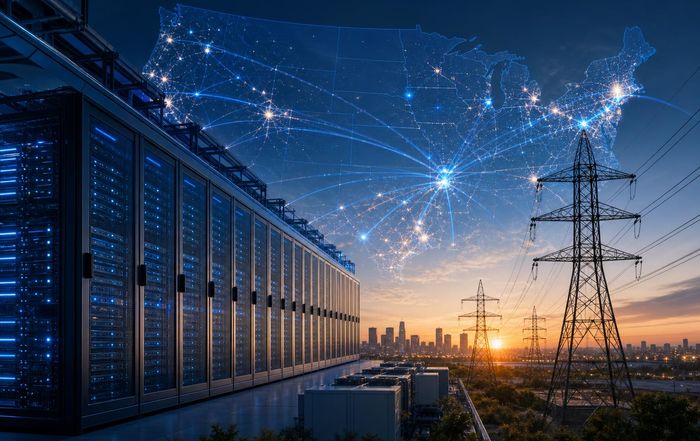
How Data Centers Are Reshaping U.S. Energy Demand
A New Backbone of the American Economy
Across the United States, data centers have quietly become as essential to daily life as highways, power plants, and airports. Every video stream, mobile payment, cloud-based business application, and generative AI query passes through vast server farms that rarely appear in public view yet now sit at the heart of the digital economy. As the news update team here follows the evolution of the national economy and infrastructure, it has become clear that data centers are no longer a niche element of the technology sector; they are a structural force reshaping U.S. energy demand, investment decisions, and regional development.
What began as a supporting function for corporate IT has evolved into a strategic industry that is drawing billions of dollars in capital, transforming local tax bases, and exerting growing influence over electricity markets. According to analysis from the International Energy Agency (IEA), global electricity consumption from data centers, cryptocurrencies, and AI could roughly double by 2026, with the United States accounting for a significant share of that growth. The country's leadership in cloud computing, hyperscale platforms, and AI development means that American energy planners, regulators, and utilities are now treating data center demand as a fundamental driver of future grid requirements rather than a marginal load.
This shift is unfolding at the same time as the energy system is undergoing its own historic transformation, with rising renewable penetration, retirement of aging fossil fuel plants, and heightened focus on grid reliability and decarbonization. The intersection of these two transitions is where data centers are now exerting their greatest influence, and where businesses, policymakers, and communities are increasingly turning for guidance, including through resources such as the articles of the evolving U.S. energy landscape and economic trends.
The Scale and Geography of U.S. Data Center Growth
The United States hosts many of the world's largest and most advanced data center clusters, anchored by cloud and hyperscale operators such as Amazon Web Services, Microsoft, Google, and Meta, as well as major colocation providers including Equinix and Digital Realty. Market research from firms like CBRE and JLL indicates that primary data center hubs such as Northern Virginia, Dallas, Phoenix, Silicon Valley, Chicago, and Atlanta have seen record levels of leasing and construction over the past several years, with secondary markets in the Midwest and Southeast accelerating as developers seek more land, power availability, and favorable regulation.
Northern Virginia, often referred to as "Data Center Alley," is widely reported to be the largest single concentration of data centers in the world. Studies by the Northern Virginia Technology Council and state agencies have highlighted that this region alone handles a substantial share of global internet traffic, supported by high-capacity fiber networks and robust grid infrastructure. As new AI-focused facilities with higher power densities come online, local utilities such as Dominion Energy have had to revise long-term load forecasts sharply upward, prompting new transmission projects and capacity planning exercises.
Similar dynamics can be observed in other states. In Texas, large-scale data center investments are intersecting with the state's abundant wind and solar resources, while in Arizona and Nevada, developers are balancing access to relatively affordable land and energy with concerns about water availability and extreme heat. In the Midwest, states such as Ohio, Iowa, and Nebraska have attracted major hyperscale campuses by offering renewable energy options, tax incentives, and central geographic positioning for low-latency services across North America. These developments are closely watched by smart readers following U.S. business expansion and jobs and employment trends online.
From an energy perspective, what distinguishes the current phase of growth is not only the number of facilities but the power intensity of each site. Traditional enterprise data centers often operated at a few megawatts of capacity, whereas modern hyperscale campuses can draw hundreds of megawatts, sometimes approaching the load of a mid-sized industrial plant or even a small city. This concentration of demand in specific nodes of the grid is forcing utilities and regional transmission organizations to reconsider how they plan for capacity, resilience, and interconnection queues.
Data Center Energy & Emissions Snapshot
Adjust capacity and efficiency to see how a hypothetical U.S. data center shapes annual electricity use, emissions, and cost.
1. Configure a Hyperscale Site
This tool is a simplified model to visualize scale, not a site-specific forecast.
2. See How It Compares
AI, Cloud, and the New Energy Intensity of Computing
The rise of generative AI and large language models has added a new dimension to the energy profile of data centers. Training advanced AI models requires massive computational resources, and subsequent inference workloads, especially for popular consumer and enterprise applications, can sustain high ongoing power demand. Research from organizations such as Lawrence Berkeley National Laboratory and academic groups has underscored that AI workloads can significantly increase server utilization and energy consumption compared with many traditional cloud applications.
Major cloud providers have acknowledged this trend in public disclosures and sustainability reports. Microsoft, for example, has noted in its environmental reporting that the rapid growth of AI services is contributing to higher energy use, while simultaneously emphasizing investments in renewable energy procurement and efficiency improvements to mitigate the impact. Google has similarly reported increasing electricity consumption as its data centers expand, while pursuing a long-term goal of operating on 24/7 carbon-free energy, an ambition that requires matching demand with clean generation on an hourly basis across multiple regions. Folks can explore more on evolving clean energy strategies through resources such as U.S. energy policy coverage from the U.S. Energy Information Administration and analysis from the Rocky Mountain Institute on grid decarbonization pathways.
At the hardware level, the shift toward AI accelerators and high-performance GPUs has raised the average power density per rack, often requiring more sophisticated cooling technologies and power delivery systems. Traditional air-cooled systems are being supplemented or replaced by liquid cooling, direct-to-chip cooling, and immersion solutions, all of which have implications for both energy efficiency and facility design. Organizations such as ASHRAE and the Uptime Institute have been updating guidance and best practices to help operators manage these new requirements while maintaining reliability and safety.
The net effect is that data centers are no longer just a growing category of load; they are becoming one of the most dynamic and technically demanding components of the power system, with distinct temporal patterns, resilience expectations, and opportunities for flexibility. As we track new technology sector developments, it is increasingly apparent that the trajectory of AI innovation is coupled with the evolution of U.S. and global energy infrastructure.
Data Centers and the U.S. Grid: From Passive Load to Active Partner
Historically, large electricity consumers behaved as relatively passive loads, contracting with utilities for power and occasionally deploying backup generators for emergency use. Today, leading data center operators are taking a more active role in grid planning and resource development, driven by a combination of reliability needs, sustainability commitments, and cost considerations.
Many hyperscale companies are now among the largest corporate purchasers of renewable energy in the world. Amazon, Meta, Google, and Microsoft have collectively signed gigawatts of power purchase agreements (PPAs) for wind and solar projects across the United States, often catalyzing new generation in regions where data centers are concentrated. Reports from organizations such as the Renewable Energy Buyers Alliance and BloombergNEF have documented how corporate procurement has become a major driver of U.S. renewable capacity additions, with data center operators at the forefront.
These PPAs typically involve long-term contracts that provide price stability for developers while enabling data center companies to claim renewable energy credits, thereby advancing their climate goals. However, as regulators and experts at institutions like Princeton University's ZERO Lab and the National Renewable Energy Laboratory have pointed out, matching annual energy consumption with renewable generation does not always ensure that data centers are powered by clean electricity at every hour. This recognition has led to growing interest in "24/7 carbon-free energy" strategies, which focus on aligning consumption with local, time-specific clean generation, including wind, solar, hydro, nuclear, and emerging technologies such as advanced geothermal.
Another important trend is the exploration of demand flexibility. Because many data center workloads can be shifted or modulated within certain bounds without affecting user experience, operators are experimenting with ways to adjust power consumption in response to grid conditions. Pilot programs in regions like Texas and California have demonstrated that data centers can temporarily reduce or reschedule non-critical tasks during peak demand periods or grid stress events, helping to support reliability and integrate higher shares of variable renewable energy. Research from the Electric Power Research Institute and grid operators such as PJM and ERCOT has begun to quantify the potential of this flexibility, though the practical implementation at scale remains at an early stage.
These developments suggest that data centers are evolving from being simply large electricity customers into sophisticated grid participants, capable of both driving and supporting the energy transition. For policymakers and business leaders following regulatory developments and consumer impacts on usa-update, understanding this shift is essential to anticipating how power markets and technology investment will unfold.
Regional Impacts: Economic Opportunity and Infrastructure Strain
The rapid expansion of data centers has brought significant economic benefits to many U.S. communities, but it has also introduced complex challenges related to land use, energy infrastructure, and local planning. On the positive side, large campuses often generate substantial property tax revenue, support construction and engineering jobs, and attract ancillary businesses such as network providers, equipment suppliers, and professional services. Studies commissioned by state economic development agencies and independent researchers have estimated that data center investments can contribute billions of dollars in economic activity over their life cycle, even if ongoing employment at fully built facilities is relatively modest compared with traditional manufacturing plants.
States such as Virginia, Texas, Ohio, and Iowa have actively courted data center projects through tax incentives, streamlined permitting, and infrastructure commitments. These policies are often framed as part of broader strategies to position regions as digital economy hubs, complementing investments in broadband, education, and innovation ecosystems. Readers interested in the intersection of infrastructure, jobs, and growth can find related analysis in the reporting of employment trends and national news.
At the same time, the concentration of high-load facilities in specific zones has put pressure on local transmission and distribution networks. Utilities and regulators in several states have reported that connecting new data centers can require major upgrades to substations, lines, and transformers, sometimes leading to delays or constraints on additional development. In Northern Virginia, for instance, public hearings and planning processes have highlighted concerns about visual impacts of new transmission corridors, noise from equipment, and the cumulative effect of dozens of large-scale facilities on community character and infrastructure.
Water use is another area of scrutiny, particularly in arid regions. Many data centers use evaporative cooling systems that can consume significant volumes of water, prompting operators to explore alternative technologies such as closed-loop cooling, air-cooled designs, and water reuse. Organizations like the U.S. Environmental Protection Agency and the Green Grid have published guidance on water-efficient data center design, while some leading companies have set targets for water stewardship and replenishment in stressed basins. In regions where agriculture and municipalities already face tight water budgets, transparent planning and stakeholder engagement have become essential components of responsible data center development.
Balancing these economic opportunities and infrastructure strains requires careful coordination among local governments, utilities, developers, and residents. Many communities are now seeking clearer frameworks for evaluating proposed projects, including assessments of long-term tax benefits, grid impacts, land use compatibility, and environmental performance. Resources from policy think tanks such as the Brookings Institution and the Urban Institute can help inform these discussions, alongside local reporting and analysis from outlets like this that track regional events and public dialogues.
Efficiency, Innovation, and the Quest for Sustainable Growth
One of the most notable aspects of data center evolution over the past decade has been the sector's progress in energy efficiency. Metrics such as Power Usage Effectiveness (PUE), popularized by groups like The Green Grid, have helped operators benchmark and improve the ratio of total facility power to IT equipment power. Leading hyperscale data centers now routinely report PUE values approaching 1.1 or lower, meaning that a relatively small fraction of total energy is consumed by cooling, power conversion, and other overhead functions.
This efficiency has been achieved through a combination of optimized facility layouts, advanced cooling strategies, improved airflow management, higher operating temperatures, and more efficient power distribution. Organizations such as ENERGY STAR and ASHRAE have supported these efforts with standards, design guides, and certification programs that encourage best practices and continuous improvement. Case studies documented by the U.S. Department of Energy illustrate how even modest design changes, such as hot-aisle containment or variable-speed drives, can yield significant energy savings at scale.
However, the absolute growth in computing demand has outpaced many of these efficiency gains, leading to a situation where total electricity consumption from data centers continues to rise even as each unit of computation becomes more efficient. This phenomenon, sometimes compared to the "rebound effect" or Jevons paradox, underscores the importance of coupling efficiency with broader strategies for clean energy sourcing and workload optimization.
Innovation is now extending beyond facility-level improvements to encompass system-level and architectural changes. Chip designers are exploring more energy-efficient processors and accelerators optimized for AI and cloud workloads, while software engineers are developing algorithms and scheduling systems that minimize energy use without sacrificing performance. Initiatives like the Open Compute Project and collaborations among cloud providers, hardware manufacturers, and research institutions are accelerating the diffusion of these innovations across the industry.
For the national and international news community here who follow technology and business innovation, these developments highlight a crucial point: the future of data centers is not merely a story of more power consumption, but of smarter, more integrated design that aims to deliver greater value per kilowatt-hour while aligning with broader societal goals for sustainability and resilience.
Regulatory and Policy Responses in the United States
As data centers have grown in importance, U.S. policymakers at the federal, state, and local levels have begun to grapple more directly with their energy and environmental implications. At the federal level, agencies such as the U.S. Department of Energy, the Federal Energy Regulatory Commission, and the Environmental Protection Agency are studying the impact of large data loads on grid reliability, emissions trajectories, and resource planning. While there is not yet a single unified federal framework specifically governing data center energy use, existing regulations on emissions, air quality, and energy efficiency standards intersect with facility operations in multiple ways.
States have taken diverse approaches depending on their economic priorities, grid conditions, and climate goals. Some, like Virginia and Texas, have focused on enabling rapid development through tax incentives and streamlined permitting, while also engaging utilities in long-term planning to accommodate new loads. Others, such as Oregon and Washington, have linked incentives to environmental performance, encouraging projects that demonstrate strong commitments to renewable energy sourcing and efficient design. In regions with aggressive decarbonization targets, regulators are increasingly asking how new data center demand will be met without undermining emissions reduction pathways.
Internationally, developments in Europe and other regions are influencing expectations and best practices. The European Commission's initiatives related to data center energy performance, transparency, and waste heat reuse, along with national policies in countries like Denmark and the Netherlands, are shaping global conversations about what constitutes responsible digital infrastructure. U.S.-based operators with global footprints often adopt harmonized sustainability strategies that reflect these evolving standards, and observers in North America are watching closely to see which elements might eventually inform U.S. policy.
For businesses and investors tracking regulatory trends and financial implications through this website, understanding this mosaic of policies is essential. The regulatory environment can affect siting decisions, cost structures, and risk assessments for new projects, while also creating opportunities for innovative solutions such as grid-interactive data centers, advanced energy storage integration, and collaborative planning between utilities and technology companies.
Energy Markets, Consumers, and the Broader Economy
The way data centers reshape U.S. energy demand has implications that extend beyond the technology sector, influencing electricity prices, investment patterns, and consumer experiences. Large, long-term power contracts signed by data center operators can provide revenue certainty for new generation projects, accelerating the deployment of renewables and, in some cases, supporting the business case for transmission upgrades or storage installations. This can benefit other consumers by expanding overall system capacity and diversifying the resource mix.
At the same time, in regions where grid capacity is constrained, rapid growth in data center demand can contribute to tighter supply-demand balances, potentially affecting wholesale prices and reliability margins. Grid operators and analysts, including those at the North American Electric Reliability Corporation (NERC), have highlighted the importance of proactive planning to ensure that new loads are integrated without compromising service quality for residential and industrial customers. Transparent communication between utilities, regulators, and major customers is critical to avoiding bottlenecks and unintended consequences.
From a macroeconomic perspective, the expansion of data centers reinforces the United States' position as a global hub for digital services, cloud computing, and AI development. This, in turn, supports high-value employment in software, cybersecurity, semiconductor design, and advanced manufacturing, as well as in related fields such as finance, logistics, and entertainment. The digital infrastructure that data centers provide underpins everything from online retail and streaming media to telemedicine and remote work, all of which have become deeply embedded in daily life and business models.
Active people interested in how these trends intersect with consumer behavior, entertainment and media, and international competitiveness can find complementary coverage on usa-update, which increasingly treats data infrastructure as a core component of national economic strategy rather than a background technology.
Emerging Solutions: From On-Site Generation to Advanced Grid Integration
To manage their growing energy needs while supporting grid stability and climate goals, data center operators are exploring a range of emerging solutions that go beyond traditional PPAs and efficiency measures. One area of interest is on-site or near-site generation, including solar arrays, fuel cells, and, in some cases, small gas turbines designed to provide both primary and backup power. While these systems can enhance resilience and reduce dependence on grid infrastructure, they also raise questions about emissions, permitting, and the optimal allocation of capital between on-site assets and broader grid improvements.
Another frontier is the integration of energy storage, both within data center campuses and at the grid level. Large-scale battery systems can help smooth demand peaks, provide backup power, and offer ancillary services such as frequency regulation. As battery costs continue to decline and performance improves, industry experts and organizations like the Energy Storage Association and National Renewable Energy Laboratory anticipate that storage will play a growing role in enabling data centers to act as flexible, grid-supportive loads.
Heat recovery and district energy systems offer additional opportunities, particularly in colder climates or urban areas where waste heat from servers can be repurposed for building heating or industrial processes. European projects in countries like Sweden and Denmark have demonstrated the feasibility of this approach, and some North American cities are beginning to explore similar models. While not applicable in every context, these systems exemplify how data centers can be integrated into broader urban and industrial ecosystems in ways that enhance overall energy efficiency.
On the software side, advances in workload management, virtualization, and AI-driven optimization are enabling more precise control over when and where computing tasks are executed. By routing workloads to regions with available renewable energy or lower grid stress, cloud providers can reduce the carbon intensity of operations and support system reliability. These strategies require sophisticated coordination across data center fleets, real-time data on grid conditions, and robust cybersecurity, but they point toward a future in which digital and energy networks are more tightly synchronized.
For clever fans of USA update who follow technology, business, and energy innovation, these solutions illustrate how the challenges posed by rising data center demand are also spurring creativity and collaboration across industries that historically operated in separate domains.
Jobs, Skills, and the Human Side of the Data Center Boom
Behind the rows of servers and complex energy systems are people whose skills and careers are being shaped by the rise of data centers. The sector supports a wide range of occupations, from construction workers and electricians to network engineers, facilities managers, and cybersecurity specialists. While the number of permanent on-site staff at a given data center may be modest relative to its economic footprint, the ecosystem of suppliers, contractors, and service providers is extensive and often involves highly skilled, well-compensated roles.
Educational institutions, workforce development programs, and employers are responding by creating targeted training pathways in areas such as data center operations, critical infrastructure maintenance, and energy management. Community colleges and technical schools in states with strong data center clusters have launched specialized programs, sometimes in partnership with major operators, to prepare students for careers in this field. National organizations like CompTIA and Uptime Institute offer certifications that help workers demonstrate competence in relevant domains.
For communities seeking to benefit from data center investments, aligning local education and training efforts with industry needs can enhance the likelihood that residents will access new job opportunities. Coverage on USA update of jobs and employment and lifestyle and regional development increasingly reflects this human dimension, emphasizing not only capital investment and energy implications but also the prospects for long-term, inclusive growth.
Moving Forward: Data Centers as Catalysts for a Smarter Energy Future
As the United States navigates the coming decade, data centers will remain at the center of debates about energy demand, climate policy, and economic competitiveness. Their growth is driven by powerful secular trends-the digitization of business, the expansion of cloud services, the rise of AI and machine learning, and the proliferation of connected devices-that are unlikely to reverse. At the same time, the imperative to decarbonize the power sector, maintain grid reliability, and ensure affordable energy for households and industry is intensifying.
This dual challenge creates both risk and opportunity. If data center expansion proceeds without careful coordination and innovation, it could strain grids, increase emissions in certain regions, and fuel public concern about the local impacts of large, power-hungry facilities. Conversely, if operators, utilities, policymakers, and communities collaborate effectively, data centers can become anchors for new clean energy projects, laboratories for advanced grid integration, and catalysts for modernizing infrastructure that benefits a wide range of consumers and businesses.
Evidence from multiple sources, including the IEA, NREL, and corporate sustainability reports, suggests that many of the leading players in this space are acutely aware of their responsibilities and are investing heavily in solutions that align digital growth with environmental stewardship. Initiatives around 24/7 carbon-free energy, demand flexibility, and efficiency innovation demonstrate that the sector is not content to be a passive recipient of electricity but is instead actively shaping the contours of the future grid.
For loyal readers, this story is not only about technology and energy; it is about how the foundations of the modern economy are being rebuilt in real time. The servers that power online banking, telehealth, streaming entertainment, remote work, and AI-driven tools are housed in facilities whose design, location, and operation are now matters of national strategic importance. As daily curated coverage on economy, business, energy, and international trends continues to evolve, data centers will feature not as background infrastructure but as central actors in the unfolding narrative of American innovation and resilience.
The way the United States responds to this moment-through smart regulation, forward-looking investments, and collaborative problem-solving-will help determine whether the digital revolution strengthens the nation's energy system and climate goals or complicates them. The evidence to date offers reasons for cautious optimism: a growing recognition of the stakes, a track record of efficiency improvements, and a wave of creative solutions emerging at the intersection of computing and power. For businesses, policymakers, and citizens alike, understanding how data centers are reshaping U.S. energy demand is an essential step toward harnessing their potential for broad-based, sustainable prosperity.
