
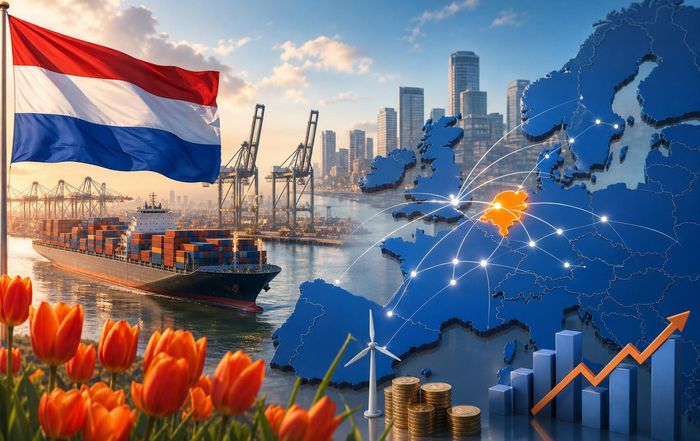
Netherlands Trade Strength and European Business Growth
The Netherlands at the Crossroads of Global Commerce
From our vantage point, the Netherlands stands out as one of the most strategically important and dynamic trading nations in the world, punching far above its geographic size in global commerce and European economic integration. Situated at the mouth of the Rhine-Meuse-Scheldt delta and connected deeply to Germany, Belgium, France, and the wider European hinterland, the country has built an economic model that combines world-class logistics, a strong digital infrastructure, a highly skilled workforce, and a stable institutional framework. These factors position the Netherlands not only as a gateway to Europe for American and Asian firms, but also as a testing ground for innovation in sustainable logistics, digital trade, and advanced manufacturing.
For interested online visitors, understanding the Dutch model is increasingly relevant. The Netherlands is a top trading partner of the United States in Europe, a hub for multinational headquarters, and a bellwether for how open economies can adapt to shifting global supply chains, geopolitical tensions, and the green transition. As global trade patterns evolve, the country's performance offers insights into the resilience and transformation of European business more broadly.
A Compact Powerhouse: Trade and Economic Fundamentals
The Dutch economy is consistently ranked among the most open and competitive in the world. According to data from the World Bank and OECD, exports and imports of goods and services together account for well over 150 percent of Dutch GDP, reflecting the country's deep integration into global value chains. The Netherlands is regularly listed among the top five exporters globally when measured by export value, and it is also one of the world's leading destinations for foreign direct investment.
This openness is underpinned by an advanced logistics ecosystem. The Port of Rotterdam, Europe's largest seaport, handles hundreds of millions of tonnes of cargo annually and functions as a major transshipment hub for energy products, containers, and bulk goods destined for Germany, Central Europe, and beyond. Rotterdam's capacity, automation, and deepwater facilities have made it a critical node in transatlantic and Asia-Europe trade, and its ongoing investments in digital port operations and green fuels are closely watched by analysts following global energy and trade developments.
Just as important is Amsterdam Airport Schiphol, one of Europe's busiest airports for passenger and cargo traffic, which links North America, Asia, and Europe through an extensive network of direct flights and air freight connections. Combined with an excellent rail and inland waterway system, this multimodal infrastructure enables rapid distribution of goods across the continent. Businesses evaluating European entry strategies, including many well travelled readers tracking international economic trends on USA update, often see the Netherlands as a natural first foothold.
Europe's Gateway: Structural Advantages in Trade
Several structural advantages explain why the Netherlands has become a gateway to European markets rather than merely a transshipment corridor. First, the country's geographic position at the heart of the North Sea basin, close to major consumer markets in Germany, France, and the United Kingdom, gives it a unique logistical edge. Goods arriving in Rotterdam or Amsterdam can reach a large share of the European Union's population within a day by truck, train, or barge, a factor that is especially valuable for time-sensitive and high-value shipments such as pharmaceuticals, electronics, and fresh food.
Second, the Dutch legal and regulatory environment has been designed to facilitate trade while maintaining high standards. The Netherlands consistently ranks near the top in the World Economic Forum's competitiveness and infrastructure indicators, and its customs procedures are widely regarded as efficient and predictable. Businesses benefit from a stable rule of law, a sophisticated financial sector centered in Amsterdam, and a pragmatic regulatory culture that encourages public-private cooperation. Readers interested in how regulatory frameworks affect market access can explore parallel discussions at the regulation section, where similar themes of predictability and innovation play a central role.
Third, the Netherlands has become a digital gateway. The Amsterdam Internet Exchange (AMS-IX) is one of the world's largest internet exchange points, making the country a crucial hub for data traffic in Europe. This digital infrastructure supports e-commerce logistics, fintech services, and cloud computing operations, allowing multinational companies to manage European operations from Dutch data centers and offices with low latency and high reliability. Organizations such as the European Commission and OECD have highlighted the Netherlands as a frontrunner in digital connectivity and broadband penetration, which further reinforces its appeal as a base for technology-driven trade.
Dutch Trade Snapshot - Interactive Dashboard
- ASML and Brainport ecosystem anchor global semiconductor value chains.
- Strong links to U.S., Asian, and EU tech firms via R&D and design.
Move the scenario slider to see how an external shock or a green surge changes the relative weight of sectors. Then select a sector to view an indicative resilience score and the types of Dutch advantages emphasized in that environment.
Sectoral Engines: From High Tech to Agri-Food
The Netherlands' trade strength is not merely a function of moving goods; it is deeply rooted in sectoral expertise that has developed over decades. Several key industries illustrate how the country leverages innovation and specialization to remain competitive while contributing to broader European business growth.
One of the most visible examples is the high-tech manufacturing cluster around Eindhoven, often referred to as the "Brainport" region. This ecosystem, anchored by companies such as ASML and supported by Eindhoven University of Technology, has turned the Netherlands into a critical player in the global semiconductor value chain. ASML's lithography machines, used to produce advanced chips, are essential to chipmakers worldwide, and the company's performance has significant implications for digital industries in the United States, Asia, and Europe. More information about the semiconductor sector and its strategic importance can be found via sources such as ASML's own publications and analysis from the Center for Strategic and International Studies.
Another pillar of Dutch trade is the agri-food sector. Despite its small size, the Netherlands is one of the world's largest exporters of agricultural products by value, thanks to high-yield greenhouses, advanced horticulture, and cutting-edge food processing. The region around Westland, near The Hague and Rotterdam, showcases dense greenhouse complexes that use precision agriculture, water recycling, and energy-efficient climate control. Institutions such as Wageningen University & Research are globally recognized for agricultural innovation, and international media including National Geographic and The New York Times have profiled the Dutch approach to feeding growing populations with fewer resources. For American and global investors who follow food and consumer trends here, the Dutch agri-food model demonstrates how technology and sustainability can coexist with export competitiveness.
The Netherlands is also a major player in chemicals, life sciences, and logistics services. Multinationals such as Royal DSM, Shell, Unilever, and Philips have historically anchored large parts of their European or global operations in the country, benefiting from its talent pool and transport links. While some corporate structures have evolved over time, the Netherlands remains a preferred location for European headquarters and distribution centers, a trend that continues to influence commercial real estate, employment, and job opportunities in Europe that are of interest to transatlantic audiences.
European Business Growth: The Dutch Contribution
Within the broader European context, the Netherlands acts as both a facilitator and a driver of business growth. As a founding member of the European Union and the euro area, the country has been instrumental in shaping the single market for goods, services, capital, and labor. Its commitment to open trade, combined with a strong fiscal and monetary framework, has helped anchor investor confidence in the region.
The single market allows Dutch companies to export seamlessly across the EU without facing tariffs or internal customs barriers, while firms from other member states use Dutch ports, logistics providers, and financial services to reach global markets. This two-way integration amplifies the Netherlands' importance: it is not only exporting its own products but also enabling others to trade more efficiently. Reports from the European Commission and Eurostat regularly underscore the Netherlands' role as a major re-exporter, particularly for goods such as electronics, machinery, and energy products that pass through Dutch territory on their way to final destinations.
For European business growth, the Dutch emphasis on innovation and public-private partnerships has also served as a model. Initiatives like the Top Sectors policy, which encourages collaboration between government, academia, and industry in areas such as high-tech systems, life sciences, and creative industries, have been closely monitored by policymakers around Europe. Organizations such as the OECD and World Intellectual Property Organization have pointed to the Netherlands' high R&D intensity in specific sectors and its robust intellectual property framework as factors that attract international companies and high-skilled workers.
Fans following European economic developments on USA update will recognize that the Netherlands' growth is closely tied to that of its neighbors, particularly Germany and Belgium. Dutch ports and logistics firms serve as vital arteries for German industrial exports and imports, while cross-border clusters in chemicals, automotive, and logistics create shared value across the Benelux and Rhine-Ruhr regions. This interdependence means that Dutch trade strength can amplify or cushion broader European economic cycles, a dynamic that investors and policymakers on both sides of the Atlantic continue to monitor.
Transatlantic Ties: The Netherlands and the United States
For a U.S.-focused platform like usa-update, the transatlantic dimension of Dutch trade is especially relevant. The United States is one of the Netherlands' largest trading partners and a leading source and destination of foreign direct investment. According to data from the U.S. Bureau of Economic Analysis and the U.S. Department of Commerce, the Netherlands has often ranked among the top destinations for U.S. outward FDI, reflecting the country's role as a hub for European operations and financial structuring.
American companies in sectors such as technology, pharmaceuticals, logistics, and consumer goods frequently choose the Netherlands for their European headquarters or distribution centers. Factors such as English proficiency, a favorable business climate, a skilled workforce, and strong protection of intellectual property make the country particularly attractive. The Dutch-U.S. tax and investment frameworks, while subject to evolving international rules under the OECD/G20 Inclusive Framework on BEPS, have historically supported cross-border corporate strategies that integrate European and North American markets.
On the trade side, U.S. exports of machinery, aircraft, medical instruments, and agricultural products flow through Dutch ports and airports toward continental Europe, while American consumers and firms import Dutch chemicals, high-tech equipment, food products, and professional services. For readers tracking U.S.-Europe business news, developments in Dutch trade policy, customs procedures, and digital regulation can have direct implications for American supply chains and market access.
Navigating Global Uncertainty: Supply Chains and Geopolitics
The resilience of the Dutch trade model has been tested by recent global shocks. The COVID-19 pandemic disrupted supply chains worldwide, while geopolitical tensions, including trade disputes and sanctions, have altered patterns of energy and technology flows. The Netherlands, as a major transit and logistics hub, has been at the center of these disruptions and adjustments.
Supply chain bottlenecks at ports, container shortages, and shifts in consumer demand have challenged logistics operators in Rotterdam and other Dutch gateways. However, the country's advanced digital systems, capacity for port expansion, and close coordination between port authorities, customs, and private firms have allowed it to adapt relatively quickly. Reports from Port of Rotterdam Authority and international organizations such as UNCTAD highlight how digital port community systems and data sharing have helped optimize cargo flows, reduce waiting times, and improve resilience.
Geopolitically, the Netherlands has had to balance its role as an open trading nation with its obligations under European and transatlantic alliances. Export controls on advanced semiconductor equipment, for instance, have placed Dutch authorities and companies such as ASML at the center of discussions about technology security and competition, particularly in relation to China and other emerging markets. Policy analyses from institutions like the Bruegel think tank and the European Council on Foreign Relations describe the Netherlands as a key actor in the evolving European approach to "de-risking" supply chains while preserving economic openness.
For businesses and investors following regulatory shifts and risk management online today, the Dutch experience offers lessons in balancing commercial interests with strategic considerations. The country's government has increasingly emphasized the need for diversified supply chains, stronger screening of sensitive investments, and closer coordination with EU partners on sanctions and export controls, all while maintaining a reputation as a reliable and efficient trading hub.
The Green Transition: Energy, Logistics, and Climate Goals
The Netherlands' trade strength is now intertwined with the global push toward decarbonization and sustainable business practices. As a major energy transit hub and industrial base, the country faces the dual challenge of reducing its own emissions while facilitating the energy transition of its neighbors. Port and industrial areas around Rotterdam, Amsterdam, and the North Sea coast have historically been centers for oil refining, petrochemicals, and fossil fuel imports. Under European climate policies and national targets, these zones are being reimagined as hubs for renewable energy, hydrogen, and circular economy initiatives.
The Port of Rotterdam has launched ambitious programs to develop green hydrogen production, carbon capture and storage (CCS), and bio-based fuels, in cooperation with companies such as Shell, BP, and Air Liquide. Information from the port authority and the International Energy Agency outlines plans for hydrogen import terminals, pipelines connecting industrial clusters, and offshore wind integration, all intended to position the Netherlands as a leading energy transition hub for Northwest Europe. For email newsletter subscribers or online visiting readers exploring energy and sustainability on USA update, these developments demonstrate how trade infrastructure can be repurposed for low-carbon growth.
The Dutch government's climate agenda, aligned with the European Green Deal, includes targets for reducing greenhouse gas emissions, phasing out coal, and accelerating renewable energy deployment. Offshore wind in the North Sea plays a central role, with large wind farms supplying electricity to Dutch grids and cross-border interconnectors. Organizations such as TenneT (the transmission system operator) and research institutes like ECN part of TNO provide technical and policy insights into how this energy transition affects industrial competitiveness and trade flows, particularly for energy-intensive sectors.
Logistics and transport are also undergoing transformation. Dutch logistics firms and port authorities are investing in electrified trucking, inland shipping on alternative fuels, and digital optimization to reduce emissions from freight. The European Environment Agency and International Transport Forum have highlighted the Netherlands as an active participant in pilot projects that test new propulsion technologies and smart logistics solutions. These initiatives not only support national climate goals but also help maintain the attractiveness of Dutch corridors for global shippers who increasingly face environmental reporting and decarbonization requirements.
Innovation, Digital Trade, and the Future of Work
As trade becomes more digital and services-oriented, the Netherlands is positioning itself at the forefront of e-commerce logistics, fintech, and digital trade facilitation. The country's strong broadband infrastructure, high rates of online shopping, and advanced payment systems have created fertile ground for digital platforms, startups, and multinational tech firms. Amsterdam and other cities host a growing ecosystem of fintech, cybersecurity, and cloud computing companies, supported by universities and research centers.
The Amsterdam Internet Exchange (AMS-IX) and data centers across the country enable low-latency connections for cloud services and online platforms, while regulatory frameworks overseen by institutions such as the Dutch Authority for the Financial Markets (AFM) and the Dutch Central Bank (DNB) aim to balance innovation with consumer protection and financial stability. For people following technology and digital business, the Dutch experience illustrates how digital infrastructure and clear rules can attract investment and support cross-border digital services trade.
This digital transformation also affects employment and skills. The Netherlands has invested heavily in education and vocational training, with universities and applied sciences institutions working closely with industry to align curricula with labor market needs. Organizations such as Nuffic (the Dutch organization for internationalization in education) and the OECD document high levels of English proficiency and digital literacy among the Dutch workforce, which make it easier for multinational companies to recruit and operate. At the same time, structural changes in logistics, manufacturing, and services create challenges for workers who need reskilling or upskilling.
For people tracking employment and job trends, the Dutch approach offers examples of how social partners-employers, unions, and government-collaborate within the "polder model" to manage transitions. Collective bargaining, social dialogue, and active labor market policies help mitigate the impact of technological change, while flexible work arrangements and part-time employment are more common than in many other countries. This combination of flexibility and security has contributed to relatively high labor force participation and resilience during economic shocks, though debates about job quality and inequality remain active in Dutch public discourse.
Tourism, Culture, and Soft Power in Trade Relations
Beyond hard infrastructure and industrial clusters, the Netherlands wields significant soft power that supports its trade and business relationships. Cities such as Amsterdam, Rotterdam, The Hague, and Utrecht attract millions of tourists each year, drawn by cultural heritage, museums, canals, and modern architecture. Institutions like the Rijksmuseum, Van Gogh Museum, and Anne Frank House in Amsterdam, as well as the Kunsthal and Boijmans Van Beuningen in Rotterdam, not only entice visitors but also project an image of creativity and openness that benefits the country's international brand.
Cultural and educational exchanges, including programs facilitated by Dutch universities and international organizations, reinforce people-to-people ties that underpin trade and investment. The Hague's role as a center for international law and institutions, including the International Court of Justice and the International Criminal Court, enhances the Netherlands' reputation as a country committed to rules-based international order, which is vital for a trading nation dependent on stable global norms. For jet setting people exploring international affairs and events, Dutch cultural diplomacy and hosting of global conferences demonstrate how soft power can complement economic strength.
Tourism and hospitality themselves are important sectors in the Dutch economy, contributing to employment and regional development. However, there has been growing debate about balancing visitor numbers with quality of life in major cities, particularly Amsterdam. Local authorities have sought to manage tourism flows, encourage more sustainable and higher-value forms of travel, and spread visitors across less crowded regions. Organizations such as NBTC Holland Marketing and analyses from UNWTO describe how the Netherlands is experimenting with destination management strategies that align tourism with broader sustainability and liveability goals, which can have long-term implications for travel and lifestyle trends.
Challenges and Reforms: Housing, Infrastructure, and Regulation
Despite its successes, the Netherlands faces structural challenges that could influence its long-term trade strength and role in European business growth. One of the most pressing issues is housing affordability and availability, particularly in major economic centers such as Amsterdam, Utrecht, and Eindhoven. Rapid population growth, urbanization, and demand from both domestic and international workers have put pressure on housing markets, leading to rising prices and concerns about accessibility for middle- and lower-income households.
Dutch authorities at national and municipal levels are pursuing policies to increase housing supply, improve spatial planning, and encourage more balanced regional development. However, balancing environmental considerations, nitrogen emissions regulations, and agricultural land use with construction needs has proven complex. Reports from the Netherlands Environmental Assessment Agency (PBL) and coverage by outlets such as NOS and NRC Handelsblad highlight the intricate interplay between environmental policy, housing, and infrastructure, all of which can affect the business climate.
Infrastructure investment is another area of focus. While Dutch roads, railways, and waterways are among the best in Europe, capacity constraints and maintenance needs require ongoing attention. Debates about expanding airports, deepening shipping channels, and upgrading rail connections are influenced by environmental concerns, local opposition, and fiscal priorities. At the same time, digital infrastructure must keep pace with growing data demands and cybersecurity risks. Organizations such as the Netherlands Court of Audit and independent think tanks provide assessments of how infrastructure investment decisions will shape the country's competitiveness, which is of interest to smart financial readers following long-term economic planning.
Regulatory complexity, particularly in areas such as spatial planning, energy permitting, and environmental compliance, can also pose challenges for investors and project developers. The Dutch government has been working on reforms to streamline procedures, including the implementation of a new Environment and Planning Act, although this process has experienced delays and revisions. Stakeholders across industry, environmental groups, and local communities are engaged in an ongoing dialogue about how to reconcile speed, transparency, and sustainability in regulatory processes, an issue that resonates with broader debates in North America and other advanced economies.
Opportunities for U.S. and Global Businesses
From the perspective of USA update readers in the United States and other countries, the Netherlands offers a range of opportunities that align with current global trends. Companies seeking to expand into Europe can leverage Dutch logistics, digital infrastructure, and talent pools to establish regional distribution centers, customer service hubs, and R&D facilities. Sectors such as clean energy, agri-tech, life sciences, fintech, and advanced manufacturing are especially promising, given the presence of strong local ecosystems and supportive public policies.
Partnerships with Dutch universities, research institutes, and innovation clusters can facilitate technology transfer and joint ventures. Organizations like Wageningen University, TU Delft, and Eindhoven University of Technology are open to international collaboration, and government programs often encourage cross-border research projects. For entrepreneurs and investors monitoring innovation and startup ecosystems, Dutch cities such as Amsterdam, Rotterdam, and Eindhoven provide a combination of quality of life, connectivity, and access to capital that is increasingly attractive on a global scale.
Financial and professional services headquartered in the Netherlands, including international law firms, logistics consultants, and tax advisors, can support foreign firms in navigating EU regulations, customs procedures, and compliance requirements. Given the complexity of European rules in areas such as data protection (GDPR), product standards, and sustainability reporting, having a base in the Netherlands with access to specialist expertise can significantly reduce entry barriers for non-European companies.
Outlook: Sustaining Trade Strength in a Changing World
Thinking ahead, the Netherlands faces the task of sustaining its trade strength and contributing to European business growth amid significant global changes. The energy transition, digitalization, demographic shifts, and geopolitical realignments will all shape the environment in which Dutch companies and policymakers operate. The country's ability to adapt its infrastructure, regulatory frameworks, and education systems will determine whether it can maintain its role as a gateway to Europe and a laboratory for innovative economic models.
European integration will remain a central reference point. As the European Union continues to refine its single market, industrial policies, and external trade agreements, the Netherlands will likely advocate for openness, rules-based trade, and a strong transatlantic partnership, reflecting its long-standing orientation as a maritime trading nation. At the same time, debates about strategic autonomy, de-risking, and security will require careful calibration to protect critical technologies and infrastructure without undermining the benefits of global interdependence.
For readers of USA update, the Dutch experience offers both practical opportunities and broader lessons. A small country with limited natural resources has built a globally significant economy through investment in people, infrastructure, and institutions, and by embracing openness while managing its risks. As businesses and policymakers in the United States and elsewhere grapple with similar questions about competitiveness, sustainability, and resilience, the Netherlands provides a compelling case study of how trade strength can be harnessed to support innovation, prosperity, and positive engagement in an interconnected world.
Those professional business owners following economic and business developments through us will find that Dutch trade and European business growth are likely to remain closely linked in the years ahead. The Netherlands' success in adapting to new realities-whether in digital trade, green logistics, or inclusive labor markets-will continue to influence not only its own prosperity but also the trajectory of Europe's role in the global economy.
