
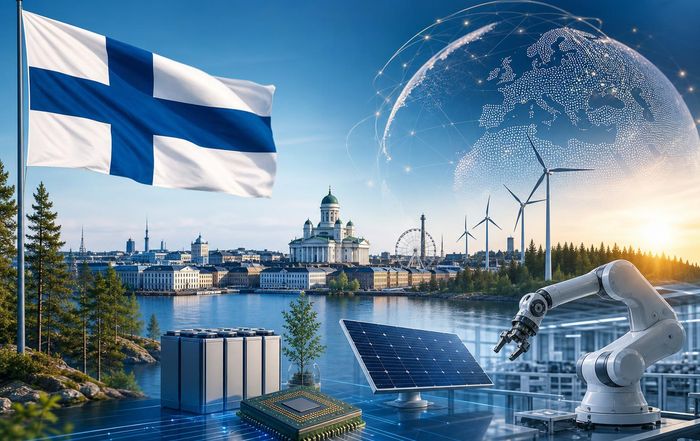
Finland's Technology and Industry Trends With Global Relevance
Finland has quietly become one of the world's most consequential technology and innovation hubs, combining a highly educated population, advanced digital infrastructure, and a culture of trust and cooperation that allows new ideas to move rapidly from research labs into global markets. The Finnish story is particularly relevant, because many of the forces reshaping the American and global economy-digitalization, clean energy transitions, cybersecurity, and the search for resilient supply chains-are areas where Finnish companies and institutions are already operating at the frontier.
Today we consider how Finland's technology and industrial landscape is evolving, why it matters for the United States and other major economies, and how these developments intersect with themes that are central are globally minded community, including the economy, business, finance, jobs, regulation, energy, and international collaboration.
A Small, Open Economy with Global Technological Reach
Finland is a relatively small country in population terms, but it consistently ranks among the global leaders in innovation and competitiveness. According to the Global Innovation Index, Finland is regularly placed in the top tier worldwide, reflecting strong performance in research and development, human capital, and knowledge-intensive industries. The country's economic model is based on high value-added manufacturing and services, advanced digital technologies, and a long-term commitment to education and social stability, a combination that has allowed it to remain resilient through multiple global economic cycles.
For smart readers following broader economic trends on USA update's economy coverage at usa-update.com/economy.html, Finland offers a case study in how a knowledge-based economy can adapt to technological disruption while maintaining social cohesion. The country's export-oriented industries are deeply integrated into North American, European, and Asian supply chains, and Finnish companies play significant roles in sectors such as telecommunications, clean energy, mining technology, industrial automation, and digital services.
The Bank of Finland and other institutions have emphasized the importance of productivity growth driven by digitalization and innovation as key to long-term prosperity, a theme that resonates with ongoing debates in the United States about how to sustain growth in an era of demographic aging and global competition. Reports from the Organisation for Economic Co-operation and Development highlight Finland's strengths in R&D investment and digital skills, while also noting the need to continuously update policies to support entrepreneurship and the scaling of startups into global players.
From Mobile Phones to 5G and Beyond: Finland's Telecom Legacy
Finland's global technology reputation was shaped decisively by Nokia, which became a world leader in mobile phones and network equipment and helped build a strong domestic ecosystem of engineers, software developers, and component suppliers. While Nokia no longer dominates the consumer handset market, it has successfully repositioned itself as a major global supplier of telecommunications infrastructure, including 4G, 5G, and emerging 6G technologies.
Today, Nokia is one of the key vendors of 5G network equipment alongside other global players, and it has substantial business in the United States, Europe, and Asia. The company collaborates with major American carriers on 5G deployment and is active in research initiatives exploring the next generation of wireless technologies, including ultra-reliable low-latency communications and industrial applications. Readers interested in how these networks underpin broader daily technology trends can explore related reporting on usa-update.com/technology.html, where the convergence of telecom, cloud, and artificial intelligence is an ongoing theme.
Finland's role in the development of 6G is particularly notable. The 6G Flagship program coordinated by the University of Oulu has been recognized by experts as one of the earliest and most comprehensive research initiatives focused on post-5G technologies. The program collaborates with international partners, including American universities and companies, to explore new radio technologies, integrated sensing and communication, and advanced network architectures. Information from the 6G Flagship initiative underscores how Finland is aiming not only to participate in, but also to shape, the standards and capabilities of future global networks.
This telecom legacy has broader economic implications. The expertise built around Nokia and related companies has seeded a dense cluster of startups and research groups working on wireless technologies, cybersecurity, edge computing, and industrial IoT, many of which operate globally and partner with firms in North America and Asia. In this way, Finland's telecom sector illustrates how a mature industry can reinvent itself and continue to create high-skilled jobs and export revenues in a rapidly changing global environment.
A Thriving Startup and Innovation Ecosystem
Finland's technology story is no longer defined by a single large corporation. Over the past decade, the country has cultivated a vibrant startup ecosystem, supported by public and private investment, a strong university network, and a culture that encourages experimentation and collaboration. The annual Slush conference in Helsinki has become one of Europe's most prominent startup and technology gatherings, attracting entrepreneurs and investors from the United States, Europe, and Asia. More information about this event and its international reach can be found on the Slush website.
Public agencies such as Business Finland play a central role in funding innovation and helping companies expand internationally. According to information from Business Finland, the agency supports R&D, export promotion, and ecosystem development across key sectors including digitalization, health technologies, circular economy, and smart energy. This coordinated approach helps Finnish startups access global markets more quickly and encourages foreign companies to invest in Finnish research and development.
The Finnish startup scene is particularly strong in software, gaming, health technology, and deep tech. The success of gaming companies such as Supercell and Rovio Entertainment has demonstrated that Finnish creative and technical talent can compete globally in digital entertainment, and this has encouraged a new generation of founders to pursue ambitious international projects. Visitors interested in the intersection of entertainment, technology, and business can find related perspectives at usa-update.com/entertainment.html, where global gaming and media trends are increasingly relevant to both investors and consumers.
The broader innovation ecosystem also benefits from Finland's strong education system and research institutions. Universities such as Aalto University, the University of Helsinki, and the University of Oulu maintain close ties with industry, and they participate in European research frameworks that bring together partners from across the continent and beyond. The European Commission's research and innovation portal provides detailed information about collaborative projects in which Finnish institutions are involved, including initiatives focused on artificial intelligence, quantum technologies, and sustainable manufacturing.
For international investors and companies considering where to locate R&D activities or technology partnerships, Finland's stable regulatory environment, robust intellectual property protection, and high levels of digitalization make it an attractive destination. These themes align closely with the interests of professionals and entrepreneurs who follow business and investment developments at usa-update.com/business.html and usa-update.com/finance.html, where cross-border innovation and capital flows are increasingly central topics.
Finland Tech Focus Explorer
Slide to compare Finland's strengths with global averages across key themes.
Digitalization, AI, and Cybersecurity: Building a Trusted Digital Society
Finland consistently ranks among the top countries in digital public services, e-government, and broadband coverage. According to data from the European Commission's Digital Economy and Society Index, Finland has been one of the leading EU member states in terms of connectivity, digital skills, and the integration of digital technologies into businesses and public services. This digital maturity provides a strong foundation for the adoption and development of artificial intelligence, data-driven applications, and advanced cybersecurity solutions.
The Finnish Center for Artificial Intelligence (FCAI), a collaboration between major Finnish universities and research institutes, is one of the country's key AI research hubs. It focuses on human-centric and trustworthy AI, with applications in areas such as healthcare, smart cities, and industrial optimization. More details about FCAI's research agenda and partnerships can be found on the FCAI website. This focus on reliability and transparency aligns with broader European efforts to regulate AI in a way that protects fundamental rights while enabling innovation, and it has implications for American companies and policymakers who are evaluating different regulatory models.
Cybersecurity is another area where Finland has developed significant expertise. The country hosts the European Union Agency for the Space Programme (EUSPA)'s security accreditation functions for certain space-related activities and participates actively in European cybersecurity initiatives. The National Cyber Security Centre Finland, part of the Finnish Transport and Communications Agency (Traficom), works closely with businesses and international partners to protect critical infrastructure and digital services. Interested readers can explore Traficom's cybersecurity resources to understand how Finland approaches threat intelligence, incident response, and resilience.
For a global audience concerned about the security of supply chains, cloud services, and digital infrastructure, Finland's emphasis on trust, transparency, and cooperation offers a model worth watching. This is particularly relevant for American and European firms that are diversifying their technology partnerships and seeking reliable, secure environments for data centers, software development, and research collaborations. Here, key discussions of digital regulation and consumer protection at usa-update.com/regulation.html and usa-update.com/consumer.html can be enriched by examining how countries like Finland balance innovation with strong data protection and cybersecurity frameworks.
Clean Energy, Green Industry, and the Circular Economy
Finland has set ambitious climate and energy targets, aiming to reach carbon neutrality well before mid-century, and it has already made significant progress in decarbonizing its power sector. The country relies heavily on a combination of nuclear power, hydroelectricity, biomass, and an increasing share of wind energy, with relatively low dependence on fossil fuels compared with many other industrialized nations. The International Energy Agency (IEA) provides detailed statistics and analysis on Finland's energy mix and policies on its country profile pages.
One of the most closely watched developments has been the commissioning of the Olkiluoto 3 nuclear reactor, which significantly increased Finland's domestic electricity production and reduced the need for imports. Nuclear power remains an important component of Finland's strategy to ensure energy security while reducing emissions, and it is complemented by rapid growth in onshore and offshore wind projects. The World Nuclear Association and the Finnish Energy industry association offer further insights into how nuclear, renewables, and grid modernization are being integrated into a coherent national strategy.
Finland is also a pioneer in the circular economy, seeking to minimize waste and keep materials in use for as long as possible. The Finnish Innovation Fund Sitra has been a leading global voice on circular economy concepts, publishing roadmaps and case studies that are used by policymakers and businesses worldwide. Their resources, available on the Sitra website, highlight Finnish examples in sectors such as textiles, construction, and food systems, and they demonstrate how circular business models can create new jobs and revenue streams while reducing environmental impacts.
In heavy industry, Finland's forest sector has undergone a significant transformation. Traditional paper production has declined in relative importance, while new products such as bio-based materials, advanced packaging, and wood-based textiles have gained prominence. Companies like UPM, Stora Enso, and Metsä Group are investing in biorefineries and innovative biomaterials that can serve as alternatives to fossil-based plastics and chemicals. The European Forest Institute and company reports provide verifiable information about these initiatives and their global market implications.
For an audience focused on energy and industrial policy, the Finnish experience illustrates how a resource-based industry can reinvent itself through technology and sustainability. You know our active fans following energy transitions and industrial innovation at usa-update.com/energy.html and usa-update.com/business.html can draw parallels between Finnish strategies and emerging trends in North America, Europe, and Asia, particularly in regions seeking to leverage natural resources in more sustainable and technologically advanced ways.
Critical Minerals, Battery Technologies, and Secure Supply Chains
As the global economy accelerates its shift toward electric vehicles, renewable energy, and digital infrastructure, demand for critical minerals such as nickel, cobalt, lithium, and rare earth elements has grown rapidly. Finland holds significant reserves of several key minerals and has positioned itself as an important player in the European strategy to build more resilient and sustainable battery and raw material supply chains.
The Geological Survey of Finland (GTK) provides detailed data on the country's mineral resources and exploration activities, available on the GTK website. Finland's mining sector includes operations that produce nickel, cobalt, zinc, and other metals used in battery production and high-tech manufacturing. At the same time, there is active public debate about the environmental and social impacts of mining, and regulatory frameworks are being updated to balance economic opportunities with ecological protection.
Finland is also involved in the development of battery manufacturing and recycling capabilities. The European Battery Alliance, supported by the European Commission, includes Finnish companies and research institutions working on battery materials, cell manufacturing, and recycling technologies. These initiatives aim to reduce dependence on imported battery components and to ensure higher environmental and social standards throughout the value chain.
For American policymakers and businesses concerned about supply chain security and the strategic importance of critical minerals, Finland's role in the European context is highly relevant. Cooperation between the United States and European partners on mineral sourcing, processing, and recycling is expanding, and Finland is well positioned to contribute expertise and capacity in this area. In the context of our 100% original international coverage at usa-update.com/international.html, Finland's activities illustrate how smaller countries can play outsized roles in strategic industries when they combine natural resources with technological know-how and strong governance.
Advanced Manufacturing, Robotics, and Industrial Digitalization
Finland's industrial base is characterized by advanced manufacturing, machinery, and engineering companies that serve global markets. Firms such as Kone, Wärtsilä, Valmet, and Metso are recognized worldwide in sectors ranging from elevators and marine engines to process automation and mining equipment. These companies invest heavily in research and development and are at the forefront of integrating digital technologies, robotics, and data analytics into industrial operations.
The concept of "Industry 4.0," which involves the convergence of automation, data exchange, and advanced manufacturing technologies, has been widely adopted in Finland. The VTT Technical Research Centre of Finland plays a central role in applied research and innovation, collaborating with industry on projects related to industrial IoT, autonomous systems, and smart materials. More information about VTT's research programs can be found on the VTT website.
Robotics and automation are increasingly used in Finnish factories, logistics centers, and ports, helping to offset labor shortages and improve productivity. At the same time, there is a strong emphasis on upskilling workers and ensuring that the benefits of digitalization are broadly shared. Government agencies, educational institutions, and companies collaborate on vocational training and lifelong learning programs that prepare workers for new roles in a more automated economy. This approach aligns with broader European strategies for digital skills and employment, as outlined on the European Commission's digital skills portal.
For online visitors or email newsletter member subscribers coming here who are focused on jobs and employment trends at usa-update.com/jobs.html and usa-update.com/employment.html, Finland offers an example of how advanced manufacturing can coexist with strong labor protections and social safety nets. The Finnish model shows that industrial modernization does not necessarily lead to widespread job losses if there is a concerted effort to retrain workers, support innovation, and maintain constructive dialogue between employers, employees, and policymakers.
Health Technology, Digital Health, and Life Sciences
Finland is also emerging as a notable player in health technology and life sciences, leveraging its high-quality healthcare system, extensive health data, and strong research institutions. The country has a long tradition of collecting comprehensive health records, and in recent years it has developed legal and technical frameworks that allow anonymized data to be used for research and innovation while protecting individual privacy.
The Finnish National Genome Strategy and related initiatives aim to integrate genomic information into healthcare and research, enabling more personalized medicine and better understanding of disease risks. The Finnish Institute for Health and Welfare (THL) provides detailed information on public health data and research, and it collaborates with international partners on epidemiology, health technology assessment, and digital health solutions.
The Health Capital Helsinki ecosystem and similar initiatives bring together hospitals, universities, startups, and established companies to develop and commercialize health technologies, including digital therapeutics, remote monitoring, and medical devices. Finland's strengths in software and telecommunications complement these efforts, as secure and reliable connectivity is essential for many digital health applications. The Health Capital Helsinki website offers case studies and information about companies and projects that illustrate the sector's dynamism.
For global healthcare and technology companies, Finland represents a testbed for new digital health solutions, given its advanced infrastructure, high levels of digital literacy, and supportive regulatory environment. In the context of USA update's lifestyle and consumer pages at usa-update.com/lifestyle.html and usa-update.com/consumer.html, Finnish developments in digital health also highlight how technology can improve quality of life, support aging populations, and create new markets for health-related products and services.
Education, Talent, and the Future of Work
Finland's education system has attracted global attention for its emphasis on equity, teacher professionalism, and student well-being, and it plays a crucial role in sustaining the country's technology and innovation capacity. The Finnish National Agency for Education provides extensive resources and data on the structure and performance of the system, accessible through its official website. International assessments such as the OECD's PISA studies have historically ranked Finnish students highly in reading, mathematics, and science, although recent results show that performance is evolving and that continuous adaptation is necessary.
Higher education and vocational training are closely aligned with the needs of the technology and industrial sectors. Universities of applied sciences, in particular, focus on practical skills and industry collaboration, helping to ensure that graduates are ready to contribute to innovation and production from the outset of their careers. This system supports lifelong learning and retraining, which are essential in a world where technological change can rapidly alter job requirements.
For countries such as the United States, where debates about skills gaps, student debt, and the future of work are prominent, Finland's experience offers insights into alternative models of funding, governance, and curriculum design. On USA update, folks who follow education and workforce issues through economic and jobs reporting at usa-update.com/economy.html and usa-update.com/jobs.html can consider how elements of the Finnish approach might inform policy discussions in North America and beyond.
International Collaboration, Security, and Geopolitical Context
Finland's technology and industrial strategies are deeply embedded in a broader international and geopolitical context. As a member of the European Union and a participant in numerous multilateral organizations, Finland works closely with partners in North America, Europe, and Asia on issues such as cybersecurity, digital standards, energy security, and climate policy. The country's foreign and security policy is documented by the Ministry for Foreign Affairs of Finland, available on its official website, which provides information about international cooperation, development policy, and trade relations.
Finland's geographic location and historical experience have shaped a strong emphasis on resilience and preparedness, which extends to critical infrastructure, digital networks, and supply chains. This perspective is increasingly relevant in a world where geopolitical tensions, cyber threats, and climate-related risks can disrupt economies and societies. For American and European policymakers, Finland's approach to comprehensive security, which integrates military, economic, and societal dimensions, offers a nuanced framework for thinking about national and international resilience.
In trade and investment, Finland maintains active relationships with the United States, Canada, and other major economies. The U.S. Department of State notes on its country information page for Finland that the two countries cooperate on a wide range of issues, including defense, technology, and environmental protection. Finnish companies operate in North American markets in sectors such as telecommunications, clean energy, forestry, and machinery, while American firms invest in Finnish R&D and technology ventures.
For people who watch international business and policy changes at usa-update.com/international.html and usa-update.com/news.html, Finland's role illustrates how mid-sized economies can contribute meaningfully to global stability and innovation by focusing on niches where they have comparative advantages and by building strong alliances.
Tourism, Quality of Life, and Soft Power
Although the main focus of this article is on technology and industry, it is important to recognize that Finland's global profile is also shaped by its quality of life, natural environment, and cultural assets. The country is frequently ranked among the world's happiest nations in reports such as the World Happiness Report, which takes into account factors like social support, income, health, and freedom. While such rankings are based on complex and sometimes debated methodologies, they reflect a broader perception of Finland as a society that combines economic development with social cohesion and environmental stewardship.
Tourism has grown steadily, with visitors attracted by Finland's lakes, forests, and northern lights, as well as its design culture, culinary scene, and events. The official travel portal Visit Finland highlights experiences ranging from urban life in Helsinki to outdoor adventures in Lapland. For technology and business travelers, Finland's conferences, research centers, and innovation districts offer additional reasons to visit, creating opportunities for networking and collaboration.
This dimension of soft power reinforces Finland's attractiveness as a place to live, work, and invest. Talent mobility is a critical factor in the global technology race, and countries that can offer both professional opportunities and a high quality of life have an advantage in attracting researchers, entrepreneurs, and skilled workers. For well travelled individuals interested in travel and lifestyle at usa-update.com/travel.html and usa-update.com/lifestyle.html, Finland represents a destination where natural beauty, cultural richness, and technological sophistication intersect.
Implications for the United States and Global Stakeholders
For policymakers, investors, and business leaders in the United States and other major economies, Finland's technology and industry trends offer several important lessons and opportunities. First, the Finnish experience demonstrates that sustained investment in education, research, and digital infrastructure can enable a small country to exert significant influence in high-tech sectors such as telecommunications, clean energy, and critical minerals. This underscores the value of long-term policy consistency and public-private collaboration, themes that often appear in USA update's economic and policy analysis at usa-update.com/economy.html and usa-update.com/regulation.html.
Second, Finland's approach to balancing innovation with strong social protections and environmental standards provides a counterpoint to narratives that present economic competitiveness and social responsibility as mutually exclusive. Whether in the circular economy, digital health, or industrial automation, Finnish institutions strive to align technological progress with broader societal goals, an approach that may resonate with stakeholders in North America and Europe who are seeking more inclusive and sustainable growth models.
Third, Finland's active role in international collaboration, from 6G research to battery supply chains and cybersecurity, highlights the importance of trusted partnerships in a world where no single country can address complex technological and security challenges alone. For American companies and researchers, cooperation with Finnish counterparts can provide access to cutting-edge expertise, testbeds, and markets, while also contributing to shared standards and norms that support open and secure digital ecosystems.
Finally, the Finnish case illustrates how technology and industry are intertwined with culture, governance, and everyday life. The same values that underpin Finland's education system, social trust, and environmental policies also shape its approach to AI ethics, data protection, and industrial strategy. For active readers here, this integrated perspective can inform broader discussions about how societies can harness technology not only for economic gain, but also to enhance well-being, resilience, and democratic participation.
Thinking Onwards = Finland's Evolving Role in the Global Technology Landscape
As the world navigates rapid technological change, energy transitions, and shifting geopolitical dynamics, Finland is likely to remain a significant, if sometimes understated, player in multiple strategic domains. Its contributions to telecommunications, clean energy, critical minerals, advanced manufacturing, digital health, and AI research will continue to influence global markets and policy debates, including those in the United States and other leading economies.
Following Finland's shifts offers a way to anticipate emerging trends, identify potential partners and investment opportunities, and understand how different policy choices shape the trajectory of technology and industry. Whether examining the future of 6G networks, the sustainability of battery supply chains, or the integration of AI into public services, Finland provides concrete examples of how a technologically advanced, open, and democratic society can navigate the challenges and opportunities of the digital age.
By paying close attention to this northern innovation hub, stakeholders across North America, Europe, and the wider world can gain insights that are directly relevant to their own economic strategies, regulatory frameworks, and visions for a more sustainable and inclusive future.
