
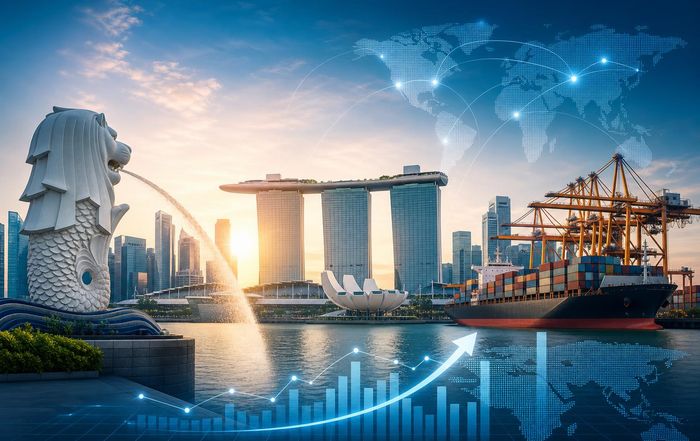
Singapore Business Trends Shaping Asian Trade and Finance
Singapore's position at the crossroads of global trade, finance and technology has made it one of the most closely watched business hubs in Asia. In an era defined by economic uncertainty, supply-chain realignment and rapid digital transformation, the city-state has become a bellwether for how open, trade-dependent economies can adapt while preserving competitiveness and social stability. For well travelled individuals here, understanding the business trends emerging from Singapore is increasingly relevant, not only because of the country's influence on Asian trade and capital flows, but also due to its growing role as a partner, competitor and financial gateway for the United States and other advanced economies.
This featured article explores the key changes reshaping Singapore's business landscape and their implications for Asian trade and finance, with a focus on the economy, business, finance, jobs, technology, regulation, consumer behavior, energy and international connectivity. It draws on verifiable information from reputable sources and highlights how these shifts intersect with daily themes covered regularly on USA update's economy coverage, business analysis and finance reporting.
Singapore's Evolving Role in Asian Trade and Finance
Singapore has long been recognized as a leading global financial center, consistently ranking near the top of indices compiled by organizations such as the Global Financial Centres Index (GFCI). According to the latest GFCI reports, Singapore competes closely with New York, London and Hong Kong for leadership in areas such as asset management, foreign exchange and corporate treasury services. The Monetary Authority of Singapore (MAS), the country's central bank and integrated financial regulator, has emphasized a strategy that combines open markets with strict prudential oversight, which has helped maintain confidence during periods of regional and global volatility. Readers can explore MAS policy directions directly through the Monetary Authority of Singapore website.
Trade remains the backbone of Singapore's economy. Data from the World Bank and World Trade Organization (WTO) show that the country's trade in goods and services is several times larger than its gross domestic product, reflecting its function as a re-export hub and services platform for Southeast Asia and beyond. The Port of Singapore, operated by PSA International, is one of the world's busiest container ports, while Changi Airport serves as a major air cargo and passenger hub. Information from PSA International and Changi Airport Group illustrates how investments in automation, digital logistics and capacity expansion underpin Singapore's strategy to remain competitive amid shifting trade routes and rising regional ports.
For our readers focused on global trade dynamics, Singapore's role as a conduit between Asia, North America and Europe provides an important lens for understanding how supply chains are being reorganized, how financial centers compete and collaborate, and how regulatory frameworks influence cross-border capital and data flows. These themes connect closely to coverage on international developments and regulatory trends that shape business decisions in the United States and worldwide.
Digital Finance, Fintech and the Future of Money
One of the most significant business trends in Singapore is the rapid growth of digital finance and fintech. MAS has actively cultivated a fintech ecosystem through regulatory sandboxes, digital banking licenses and public-private innovation initiatives. The authority's annual Singapore FinTech Festival, organized with industry partners, has become one of the world's largest gatherings of fintech firms, investors and policymakers, with information available on the Singapore FinTech Festival site.
Several digital-only banks, including Grab's joint venture GXS Bank and Sea Group's MariBank, have received licenses to operate in Singapore, targeting under-served segments such as gig-economy workers and small businesses with low-fee, mobile-first services. MAS has also encouraged traditional banks such as DBS, OCBC and UOB to accelerate their digital transformation, resulting in expanded online banking capabilities, integrated payment platforms and AI-driven risk management tools. Readers who wish to understand how these developments fit into broader financial innovation trends can consult analysis from organizations like the Bank for International Settlements and International Monetary Fund.
Singapore has also positioned itself at the forefront of central bank digital currency (CBDC) experimentation and cross-border payments modernization. MAS has participated in multi-country projects, such as Project Dunbar and Project mBridge, which explore how wholesale CBDCs could streamline cross-border settlements and reduce transaction costs between financial institutions. These initiatives are documented in joint reports by MAS and partner central banks, which can be accessed through the Bank for International Settlements' innovation hub resources. The focus is on improving efficiency and transparency while maintaining financial stability and robust anti-money-laundering controls.
For businesses across Asia and in the United States, Singapore's fintech ecosystem offers a preview of how digital identity, instant payment rails and tokenized assets may change the way trade finance, remittances and corporate treasury operations are conducted. Companies exploring cross-border opportunities can follow developments through USA update's technology section and finance coverage, which regularly track shifts in digital banking, blockchain applications and regulatory responses.
- Port and airport throughput across major Asian routes
- New regional HQ announcements by multinational firms
- Updates to ASEAN and bilateral trade agreements
- How exposed are current supply routes to regional shocks?
- Can Singapore serve as a consolidation hub for Asian customers?
- Which trade corridors are most relevant to your sector?
Supply Chain Realignment and Trade Connectivity
The reconfiguration of global supply chains, driven by geopolitical tensions, pandemic-related disruptions and evolving industrial policies, has had a profound impact on Singapore. Multinational corporations are increasingly adopting "China-plus-one" or "Asia-plus" strategies, diversifying production and sourcing across Southeast Asia, India and other regions. Singapore has leveraged this trend by positioning itself as a neutral, rules-based hub for regional headquarters, logistics coordination and high-value manufacturing.
According to data from Enterprise Singapore, the government agency responsible for supporting enterprise growth, the country has seen continued inflows of foreign direct investment in advanced manufacturing, pharmaceuticals, logistics and digital services. Companies use Singapore as a base to manage operations in neighboring markets including Malaysia, Indonesia, Vietnam and Thailand, which together form a rapidly growing economic bloc under the Association of Southeast Asian Nations (ASEAN). Additional context on ASEAN's role in global trade can be found through the ASEAN Secretariat and World Bank East Asia and Pacific reports.
At the same time, Singapore has been actively expanding its network of free trade agreements (FTAs) and digital economy partnerships. It is a member of the Regional Comprehensive Economic Partnership (RCEP) and has signed bilateral and plurilateral agreements with major partners such as the United States, European Union, China, Japan, Australia and United Kingdom. These agreements typically cover tariff reduction, services liberalization, investment protection and increasingly, digital trade provisions. Readers can explore the details of these frameworks through the World Trade Organization's FTA database and official announcements by the Ministry of Trade and Industry (Singapore).
For North American and European companies seeking resilient supply chains, Singapore offers legal certainty, transparent regulation and strong intellectual property protection, making it an attractive base for regional procurement, distribution and risk management. This is particularly relevant to our entrepreneurial readers interested in business expansion and international strategy, as firms weigh the costs and benefits of locating operations in different parts of Asia while navigating export controls, sanctions and technology transfer rules.
Technology, Innovation and the Rise of "Deep Tech"
Singapore's economic strategy places heavy emphasis on innovation and technology-driven growth. The government's Research, Innovation and Enterprise (RIE) plans, updated periodically, allocate substantial funding to priority domains such as advanced manufacturing, biomedical sciences, urban solutions, sustainability and digital technologies. The Agency for Science, Technology and Research (A*STAR) plays a central role in this ecosystem, partnering with universities and industry to commercialize research. Further details about these initiatives are available through the A*STAR website.
In recent years, the focus has shifted from consumer-oriented apps toward "deep tech" ventures that integrate artificial intelligence, robotics, materials science and biotechnology. Singapore hosts a growing number of innovation districts and research parks, such as one-north, which bring together startups, multinational R&D centers and academic institutions including the National University of Singapore (NUS) and Nanyang Technological University (NTU). These universities rank highly in global league tables and maintain strong industry linkages, as documented by organizations like QS and Times Higher Education, whose rankings can be explored at Top Universities and Times Higher Education.
The country has also become a testbed for urban solutions, including autonomous vehicles, smart grids and digital identity systems. Government agencies collaborate with technology firms to pilot innovations in designated districts, with the intention of scaling successful models domestically and exporting them to other cities worldwide. For readers tracking technology and policy intersections, USA update's technology section and regulation coverage provide useful perspectives on how such experiments influence regulatory frameworks and consumer expectations in other advanced economies.
These innovation trends have implications for employment and skills. While high-tech sectors create new job opportunities in engineering, data science and product design, they also require reskilling of mid-career workers whose roles are affected by automation. Singapore's workforce development policies, discussed later in this article, are closely watched by policymakers and businesses across the globe seeking to balance technological progress with inclusive growth.
Green Finance, Sustainability and the Energy Transition
Sustainability has become a central pillar of Singapore's business and financial strategy. As a low-lying island nation vulnerable to climate change, the country has strong incentives to reduce emissions, improve energy efficiency and support regional decarbonization efforts. At the same time, it aims to capture economic opportunities associated with green technologies, carbon services and sustainable finance.
MAS has issued a comprehensive Green Finance Action Plan, which includes guidelines on environmental risk management for banks, insurers and asset managers, as well as taxonomies for classifying sustainable activities. The authority collaborates with international bodies such as the Network for Greening the Financial System (NGFS) and the International Sustainability Standards Board (ISSB) to harmonize disclosure standards and avoid fragmentation. Readers can learn more about these frameworks through the NGFS and IFRS Sustainability Standards resources.
Singapore is positioning itself as a regional hub for carbon trading and environmental services. The launch of Climate Impact X (CIX), a carbon exchange and marketplace backed by DBS, SGX Group, Standard Chartered and Temasek, reflects this ambition. CIX aims to provide transparent, high-quality carbon credits for corporate buyers, with information available at Climate Impact X. While the voluntary carbon market has faced scrutiny over the integrity of some offsets, initiatives like CIX seek to raise standards through rigorous verification and governance.
On the energy front, Singapore's domestic options are constrained by limited land and natural resources, leading to a continued reliance on imported natural gas. However, the government has set targets for deploying solar energy, importing low-carbon electricity from the region and exploring hydrogen and carbon capture technologies. The Energy Market Authority (EMA) provides updates on these efforts at the EMA website. These developments align with global trends in the energy transition, a topic regularly covered in USA update's energy section and economy analysis.
For investors and companies, Singapore's emphasis on green finance and sustainability reporting means that environmental, social and governance (ESG) considerations are increasingly embedded in capital allocation decisions. Asset managers operating in Singapore are expected to integrate climate risk into their investment processes, and listed companies face heightened disclosure expectations. This creates both opportunities and challenges for firms seeking to access regional capital markets while aligning with evolving global norms.
Regulatory Clarity, Governance and Business Confidence
Singapore's reputation for strong governance, low corruption and predictable regulation remains one of its most important competitive advantages. International indices such as Transparency International's Corruption Perceptions Index consistently rank Singapore among the least corrupt countries in the world, while the World Bank's Worldwide Governance Indicators highlight its effectiveness and rule of law. These rankings can be examined at Transparency International and the World Bank governance portal.
The legal system, based on English common law, offers robust protection for contracts and intellectual property. The Singapore International Arbitration Centre (SIAC) has become a preferred venue for resolving commercial disputes, particularly for cross-border cases involving Asian parties. Information on arbitration rules and caseload statistics is available at the SIAC website. This institutional framework underpins business confidence and encourages multinational corporations to base their regional or global headquarters in Singapore.
Regulators have sought to strike a balance between facilitating innovation and managing risk, especially in fast-moving sectors such as digital assets, online platforms and artificial intelligence. MAS has taken a cautious but open stance towards cryptocurrencies and tokenized assets, allowing licensed players to operate under strict anti-money-laundering and consumer protection rules while warning retail investors about volatility and fraud risks. Detailed regulatory updates can be found through MAS's regulations and guidelines.
For smart readers following regulatory events that affect cross-border business, Singapore's approach offers a case study in how small, open economies can remain attractive to capital and talent while maintaining high standards of oversight. Coverage on USA update's regulation page and consumer protection analysis can help contextualize how similar debates unfold in the United States and other jurisdictions.
Labor Market, Talent Strategy and the Future of Work
Singapore's business trends cannot be understood without examining its labor market and talent strategy. With a small domestic population and aging demographics, the country relies on a mix of local workforce development and carefully managed immigration to meet the needs of a knowledge-based economy. Policies are designed to ensure that citizens have access to good jobs while remaining open to global talent that can drive innovation and transfer skills.
The government's SkillsFuture initiative provides subsidies and incentives for lifelong learning, encouraging workers to acquire new competencies in areas such as digital literacy, advanced manufacturing and healthcare. The Ministry of Manpower (MOM) and related agencies regularly update guidelines on employment passes, work permits and fair hiring practices, which can be reviewed through the MOM website. This framework is of particular interest to multinational companies managing regional teams, as well as to professionals considering relocation to Asia.
Remote work and hybrid arrangements, accelerated by the pandemic, have also influenced how companies structure their presence in Singapore. While many firms maintain physical offices to support collaboration and client engagement, there is greater flexibility in where certain functions are located. This has implications for commercial real estate, urban planning and cross-border taxation, topics that intersect with our top coverage of jobs and employment and business strategy.
Singapore's emphasis on talent extends to the education system and research institutions, which attract students and academics from across Asia, Europe and North America. The presence of international campuses and partnerships with leading universities worldwide reinforces the country's role as a knowledge hub. However, debates continue about the balance between foreign and local workers, wage pressures and the pace of technological change, highlighting the complex trade-offs involved in sustaining a globally competitive yet socially cohesive economy.
Consumer Trends, Digital Lifestyles and Entertainment
Beyond finance and trade, Singapore's consumer landscape offers insights into broader Asian trends in digital lifestyles, e-commerce and entertainment. High internet penetration, widespread smartphone usage and well-developed payment infrastructure have made it easy for residents and businesses to adopt online services. Companies such as Grab, Sea Group (Shopee) and Lazada operate extensive platforms that integrate ride-hailing, food delivery, online shopping and digital wallets, reflecting the "super app" model that has gained traction across Southeast Asia.
Government initiatives like PayNow, a real-time payment system that enables instant peer-to-peer transfers using mobile numbers or national IDs, have further accelerated the shift away from cash. The Association of Banks in Singapore and MAS provide details on these payment innovations through their respective websites, including the ABS site. For businesses, this environment facilitates experimentation with subscription models, digital loyalty programs and data-driven marketing strategies.
The entertainment and lifestyle sectors have also evolved, with Singapore hosting regional events in music, sports, arts and technology. Major venues and organizers collaborate with global partners to attract international audiences, while film, gaming and content creation industries tap into regional demand. Loyal readers interested in the intersection of business and culture can explore related stories in USA update's entertainment section and lifestyle coverage.
These consumer trends are relevant for brands targeting Asia's growing middle class, as Singapore often serves as a launchpad or test market for new products and services. The country's cosmopolitan population, high purchasing power and multilingual environment allow companies to refine offerings before rolling them out across diverse markets such as Malaysia, Indonesia, Thailand, Vietnam and beyond.
Regional and Global Partnerships: Singapore as a Bridge
Singapore's influence extends far beyond its borders through a dense network of regional and global partnerships. The country is an active member of organizations such as ASEAN, Asia-Pacific Economic Cooperation (APEC) and the G20 (as a regular invited guest), and it maintains close ties with major economies including the United States, China, Japan, India and the European Union. Official foreign policy statements and economic cooperation agreements can be accessed through the Ministry of Foreign Affairs (Singapore).
For the United States, Singapore is a critical strategic and economic partner in Southeast Asia. The two countries share a Free Trade Agreement (USSFTA) and cooperate on defense, cybersecurity, supply chain resilience and digital trade. U.S. companies use Singapore as a base for regional operations in sectors such as technology, pharmaceuticals, financial services and logistics. Detailed analysis of U.S.-Singapore relations can be found through the Office of the United States Trade Representative and think tanks such as the Brookings Institution and Center for Strategic and International Studies.
Singapore also plays a convening role in regional dialogues on trade facilitation, infrastructure connectivity and digital governance. Initiatives like the Digital Economy Partnership Agreement (DEPA), originally signed with New Zealand and Chile, aim to establish interoperable rules for data flows, electronic invoicing, digital identities and other aspects of the digital economy. Information on DEPA and similar frameworks can be found through the New Zealand Ministry of Foreign Affairs and Trade and partner government websites. These agreements are increasingly important for companies engaged in cross-border e-commerce, cloud services and data-driven business models.
For readers of USA update, Singapore's bridging role underscores the interconnectedness of economic decisions made in Washington, Brussels, Beijing and other capitals. Policies on export controls, digital privacy, cybersecurity and climate finance reverberate through hubs like Singapore, shaping the environment in which American and global firms operate. Original coverage on USA update's international page and news section helps track these developments and their implications for trade, investment and regulatory alignment.
Opportunities and Risks for Businesses and Investors
The business trends shaping Singapore's role in Asian trade and finance present a mix of opportunities and risks for companies, investors and policymakers. On the opportunity side, the country offers a stable, well-regulated platform for accessing fast-growing markets across Asia, supported by world-class infrastructure, a sophisticated financial system and a vibrant innovation ecosystem. Firms can leverage Singapore's network of FTAs, digital economy agreements and capital markets to structure efficient supply chains, financing arrangements and regional headquarters.
Investors benefit from a deep pool of financial instruments, including equities, bonds, real estate investment trusts (REITs) and alternative assets. The Singapore Exchange (SGX Group) provides access to both local and international listings, as well as derivatives and commodities products. Detailed market information is available at the SGX website. The presence of global banks, asset managers, private equity and venture capital firms further enhances liquidity and deal-making opportunities.
However, there are also risks and challenges. As a highly open economy, Singapore is exposed to external shocks, including global recessions, trade disputes and shifts in monetary policy by major central banks such as the Federal Reserve and European Central Bank. Rising geopolitical tensions, particularly in the Indo-Pacific region, could disrupt trade routes, investment flows and technology collaboration. Additionally, Singapore faces domestic constraints such as land scarcity, high living costs and demographic pressures, which require careful policy management to maintain competitiveness and social cohesion.
Regulatory developments in areas such as data protection, digital assets, climate disclosure and competition policy may also affect business models and compliance costs. Companies operating in or through Singapore must stay abreast of evolving rules and engage proactively with regulators and industry associations. For ongoing analysis of these dynamics, folks can turn to USA update's business, economy and finance sections, which regularly examine how global trends intersect with regional hubs like Singapore.
Outlook: Singapore's Next Chapter in Asian Trade and Finance
Thinking ahead, Singapore is expected to remain a pivotal node in Asian trade and finance, even as the global environment becomes more complex and competitive. Its ability to adapt to technological shifts, navigate geopolitical tensions and pursue sustainable growth will determine how successfully it can continue to serve as a trusted partner for businesses and investors worldwide.
The city-state's strategy appears to rest on several pillars: deepening its role as a financial and fintech hub; positioning itself as a center for green finance and decarbonization solutions; enhancing connectivity through trade and digital economy agreements; fostering innovation and human capital; and maintaining high standards of governance and regulatory clarity. These priorities align with broader global concerns about resilience, inclusiveness and sustainability, making Singapore an important reference point for policymakers and business leaders in the United States, Europe and Asia.
For successful in individuals visiting online, the shifts in Singapore offer both lessons and opportunities. Lessons in how a small, open economy can leverage institutions, infrastructure and human capital to punch above its weight in global affairs. Opportunities in the form of partnerships, investments, market access and knowledge exchange that can support growth and innovation across borders. As companies reassess their global footprints, supply chains and digital strategies, Singapore's experience will continue to provide valuable insights into the future of trade and finance in Asia and beyond.
By following ongoing independent reporting on USA update's news hub, readers can stay informed about how Singapore's business trends evolve and how they intersect with developments in North America, Europe and the rest of the world. In an interconnected global economy, understanding the dynamics of key hubs like Singapore is essential for informed decision-making in business, finance, policy and everyday life.
