
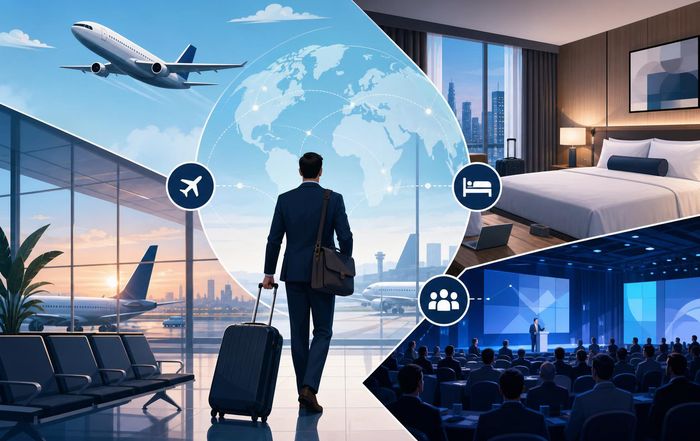
Business Travel Trends Affecting Hotels, Airlines, and Events
The New Shape of Global Business Travel
Corporate travel has emerged from the disruptions of the early 2020s as a leaner, more strategic, and more digitally enabled function, reshaping how organizations in the United States and across North America plan meetings, manage mobility, and invest in face-to-face engagement. For a readership that relies on usa-update.com for timely insight into the evolving intersections of economy, business, and lifestyle, understanding these shifts is essential, because the way executives, sales teams, and specialists move around the world now exerts a direct influence on hotel performance, airline route planning, conference design, and even regulatory and sustainability strategies.
Industry data from organizations such as the Global Business Travel Association and macroeconomic analysis from platforms like the World Bank and International Monetary Fund show that overall global business travel spending has largely recovered to pre-2020 levels in nominal terms, but with a markedly different composition, as companies blend in-person engagement with virtual tools, prioritize sustainability, and apply much more rigorous return-on-investment criteria to every trip. In this transformed environment, the United States remains the pivotal market, not only because of its scale and economic weight, but also because American corporations and investors shape practices that reverberate throughout Europe, Asia, and other key regions, influencing how hotels, airlines, and event organizers recalibrate their strategies.
On this premium website which covers interconnected daily updated themes from economy and business to travel and events, the story of business travel in 2026 is not a niche topic; it is a lens on how organizations allocate capital, how cities compete for investment, and how professionals across sectors experience their working lives.
From Recovery to Reinvention: Economic Context and Demand Patterns
In the immediate post-pandemic years, business travel was often discussed in the language of "recovery," with analysts tracking the percentage of pre-2020 volumes as a benchmark. By 2026, that framing has given way to a more nuanced understanding, recognizing that structural changes in corporate behavior, digital adoption, and cost management have permanently altered demand. Data from McKinsey & Company and Deloitte indicates that traditional road-warrior patterns-frequent short trips for internal meetings or routine client check-ins-have declined, while high-value, multi-purpose travel combining sales, strategic planning, and team-building has gained prominence.
In the United States, where the corporate sector has led in adopting hybrid work models and advanced collaboration tools, this evolution is especially pronounced. Many organizations, including large multinationals and mid-market firms, now treat travel budgets as strategic investment pools rather than fixed cost centers. Senior leaders ask more pointed questions about whether a given trip will meaningfully advance revenue, innovation, or relationship-building, and procurement teams increasingly rely on data from travel management platforms and analytics tools to understand spending patterns, negotiate with suppliers, and align travel with broader finance and risk strategies.
Globally, the regional picture is uneven. North America and parts of Europe have largely normalized business travel volumes, though with different trip mixes, while Asia, the Middle East, and selected African markets are experiencing stronger growth in international corporate travel linked to supply-chain shifts, infrastructure investment, and energy transition projects. Organizations such as the World Travel & Tourism Council and OECD continue to emphasize that business travel is a critical enabler of trade, foreign direct investment, and knowledge transfer, a message that resonates with policy makers designing visa regimes, airport infrastructure, and urban development plans around key hubs like New York, London, Singapore, and Dubai.
For 100% original content readers of USA Update, this macro context matters because it frames the opportunities and constraints facing American companies deciding whether to expand sales teams in Europe, pursue manufacturing partnerships in Asia, or invest in cross-border M&A that will require intensive on-the-ground engagement. It also shapes the prospects of U.S. cities competing to host major conventions and corporate headquarters, influencing local jobs, tax revenues, and hospitality-sector performance.
Hybrid Work, Virtual Meetings, and the Recalibration of Travel
Perhaps the single most powerful structural force reshaping business travel in 2026 is the entrenchment of hybrid work and digital collaboration tools. Research from Microsoft and Slack on workplace trends shows that distributed teams, flexible schedules, and a blend of in-office and remote work have become standard for large segments of the knowledge economy in the United States, Canada, the United Kingdom, Germany, and other advanced economies. This shift has redefined when and why organizations choose to bring people together physically.
Routine internal meetings that can be handled via platforms such as Zoom, Microsoft Teams, or Google Meet rarely justify flights or hotel stays anymore, particularly when cost-conscious CFOs and sustainability officers are scrutinizing travel-related emissions. At the same time, executives have become more aware of the limitations of purely virtual interaction, especially for complex negotiations, relationship-building in new markets, and creative collaboration that benefits from informal, in-person exchanges. As a result, many companies now concentrate travel around key "moments that matter," such as annual or quarterly leadership off-sites, major client pitches, product launches, and strategic project milestones.
This rebalancing has significant implications for hotels, airlines, and event organizers. Hotels in major U.S. cities such as New York, Chicago, and San Francisco, as well as European and Asian hubs, report fewer one-night midweek stays tied to brief internal meetings, but stronger demand for multi-day gatherings that combine structured business sessions with social and experiential components. Airlines see lower frequency of last-minute bookings for short-haul routes, but higher demand for well-planned itineraries tied to global project teams and cross-regional leadership gatherings. Event planners, meanwhile, are designing programs that integrate digital components for remote participants while maximizing the value of in-person time through curated networking, workshops, and immersive brand experiences.
For American businesses, this environment requires more sophisticated travel policies and tools, often supported by corporate travel management firms and digital platforms that help align travel decisions with broader regulation, compliance, and well-being objectives. It also underscores the importance of staying informed through reliable news and analysis on how technology, labor markets, and global mobility are evolving, areas where usa-update.com continues to build its editorial focus.
Business Travel ROI Calculator
Estimate the value of your corporate trip
Hotels: From Room Nights to Experience Platforms
The hotel sector, particularly in the United States and Europe, has undergone a profound transformation as it adapts to changing patterns of business demand. Major global brands such as Marriott International, Hilton, Hyatt, and Accor, as well as independent and boutique operators, have shifted their emphasis from a pure focus on occupancy and average daily rate toward a more holistic concept of value that encompasses meeting spaces, wellness facilities, technology infrastructure, and curated local experiences.
Corporate clients now expect hotels to function not only as places to sleep, but as integrated platforms for collaboration, learning, and networking. In practice, this means that conference rooms and ballrooms are being redesigned with flexible layouts, advanced audiovisual capabilities, and hybrid event infrastructure that enables seamless participation by remote attendees. Many properties have invested in upgraded broadband, soundproofing, and modular furniture to accommodate everything from executive board meetings to hackathons and hybrid training sessions. Industry resources such as Hospitality Net and Hotel News Now highlight how these investments have become central to winning lucrative corporate contracts and preferred-supplier status.
Another major trend is the integration of wellness and lifestyle offerings into business travel experiences. Hotels are expanding fitness facilities, adding spa and mindfulness programs, and partnering with local providers to offer outdoor activities, cultural tours, and culinary experiences that appeal to professionals who increasingly blend work and leisure, a phenomenon often described as "bleisure" travel. This is particularly relevant for U.S. and European guests traveling to destinations in Asia, South America, and Africa, where the desire to explore local culture and nature is strong, and where hotels that can orchestrate safe, authentic experiences gain a competitive edge.
At the same time, hotel operators are under pressure to demonstrate credible sustainability performance. Investors, corporate clients, and regulators are paying closer attention to energy efficiency, water usage, waste management, and carbon emissions. Many hotel groups now publish sustainability reports aligned with frameworks promoted by organizations such as the UN Environment Programme and CDP, and they seek certifications like LEED or BREEAM to signal environmental responsibility. For American corporates committed to climate targets, choosing hotels with robust sustainability practices is increasingly a requirement rather than a nice-to-have, and procurement teams rely on this information when crafting preferred hotel programs.
For growing subscriber members and visiting online readers of usa-update.com, particularly those involved in corporate real estate, procurement, or travel management, these hotel trends intersect with broader questions about energy policy, consumer expectations, and the evolving nature of white-collar work. As companies reassess office footprints and flexible work arrangements, hotels and serviced apartments in cities like Austin, Miami, Toronto, London, Berlin, and Singapore are positioning themselves as extensions of the corporate workplace, offering long-stay packages, co-working spaces, and membership models that blur the line between business travel and everyday professional life.
Airlines: Network Redesign, Premiumization, and Sustainability Pressure
Airlines operating in and out of the United States, Europe, and Asia have also had to rethink their strategies in response to changing corporate travel demand. Major carriers such as American Airlines, Delta Air Lines, United Airlines, Lufthansa Group, Air France-KLM, British Airways, Singapore Airlines, and Emirates have reconfigured route networks, fleet plans, and cabin products to align with the new realities of business travel in 2026.
One notable development is the continued premiumization of long-haul travel, as airlines invest heavily in business-class and premium-economy cabins that cater to corporate travelers who are flying less frequently but are more likely to insist on comfort, privacy, and productivity. New-generation aircraft such as the Airbus A350 and Boeing 787 allow airlines to operate more point-to-point routes with better fuel efficiency, enabling direct connections between secondary cities in the United States, Europe, and Asia that previously required connections through major hubs. This supports the needs of companies that have distributed workforces and supply chains spanning regions like the American Midwest, Northern Europe, and emerging Asian tech hubs.
At the same time, airlines are under intense scrutiny regarding their environmental impact. Aviation's contribution to global greenhouse gas emissions, while relatively small in percentage terms, is highly visible and politically sensitive, especially in Europe and increasingly in North America. Organizations such as the International Air Transport Association (IATA) and the International Civil Aviation Organization (ICAO) have set net-zero goals and developed frameworks for sustainable aviation fuel, operational efficiency, and carbon offsetting. However, progress is uneven, and corporate customers are demanding more transparency and credible decarbonization pathways.
Many large companies now track the carbon footprint of their travel programs using tools offered by travel management companies and sustainability platforms, and some have begun to introduce internal carbon pricing mechanisms that make high-emission travel more costly in budgeting terms. This dynamic is driving greater interest in sustainable aviation fuel, with airlines forming partnerships with energy companies and biofuel producers, and it is also encouraging the use of rail alternatives in regions such as Europe where high-speed networks can substitute for short-haul flights. For U.S.-based multinationals with significant European operations, this shift influences how travel policies are written and how employees move between cities like Paris, Amsterdam, Frankfurt, and Zurich.
For the positive minded community here which follows trends in international business, economy, and consumer expectations, these airline developments are part of a broader conversation about the future of mobility, energy transition, and regulatory risk. Policy debates in Washington, Brussels, and other capitals about emissions standards, airport expansion, and cross-border travel rules will continue to shape the cost and availability of business air travel, influencing everything from export strategies to talent mobility.
Events and Conferences: Hybrid, Experiential, and Data-Driven
The business events sector-encompassing conferences, trade shows, corporate meetings, and incentive programs-has arguably experienced some of the most visible change, as organizers, venues, and sponsors have reinvented their formats and value propositions for a world where in-person attendance is a choice rather than a default. Leading organizers such as Informa, Reed Exhibitions, and Emerald have invested heavily in digital platforms that enable hybrid participation, on-demand content, and year-round communities that extend beyond the physical event dates.
In 2026, successful business events are characterized by a blend of high-quality content, curated networking, and immersive experiences that cannot be replicated on a screen. Conferences in sectors such as technology, finance, healthcare, and energy increasingly feature interactive labs, innovation showcases, and small-group sessions where participants can work through real-world challenges with peers and experts. Major venues in cities like Las Vegas, Orlando, Chicago, Barcelona, and Singapore have upgraded their infrastructure to support sophisticated audiovisual production, reliable connectivity for thousands of devices, and flexible room configurations that accommodate both plenary sessions and intimate workshops.
Hybrid formats remain important, particularly for international participants facing visa constraints, budget limitations, or sustainability commitments that discourage long-haul travel. However, organizers have learned that simply streaming sessions is not enough; they must design digital experiences that are engaging, interactive, and tailored to remote participants' needs. This often involves separate programming, virtual networking tools, and content libraries that allow asynchronous consumption. Platforms like Hopin and Cvent illustrate how technology companies are enabling this evolution, while research from organizations such as PCMA and UFI provides benchmarks and best practices for event professionals.
For American corporations, the decision to send employees to large conferences or to host proprietary customer events now hinges on clear business outcomes: pipeline generation, partnership development, brand positioning, and internal alignment. Event teams are under pressure to demonstrate return on investment using data on attendee engagement, lead quality, and post-event behavior. This has elevated the importance of data analytics, CRM integration, and marketing automation in event strategy, linking what happens on-site in a convention center to broader sales and customer-success efforts.
Many inspired readers who follow events, entertainment, and lifestyle trends will recognize that business events are increasingly adopting elements from consumer festivals, entertainment experiences, and sports. Live music, art installations, wellness activities, and local food experiences are now common features of major conferences, reflecting the reality that attendees want more than a series of presentations; they want meaningful, memorable experiences that justify time away from home and office.
Technology, Data, and the Rise of Intelligent Travel Management
Underlying many of the changes in business travel is the rapid advancement of digital technology and data analytics. Corporate travel programs in 2026 are far more sophisticated than their predecessors, drawing on real-time data from booking platforms, expense systems, mobile apps, and external sources such as airline and hotel performance metrics, safety advisories, and regulatory updates. Companies use this data not only to control costs, but also to enhance traveler safety, support employee well-being, and meet environmental and social governance objectives.
Travel management companies and platforms, including American Express Global Business Travel, BCD Travel, CWT, and digital players like TripActions, have evolved into strategic partners that offer integrated solutions spanning booking, policy enforcement, risk management, and analytics. Artificial intelligence and machine learning are increasingly used to recommend optimal itineraries, flag policy exceptions, and predict the impact of external events-such as weather disruptions, strikes, or geopolitical tensions-on travel plans. Industry observers can learn more about these trends through resources such as Skift and Phocuswright, which track innovation across travel technology.
From a user-experience standpoint, business travelers now expect consumer-grade interfaces, mobile-first functionality, and seamless integration between corporate tools and personal preferences. They want the ability to manage trips, receive alerts, and adjust plans on the go, while still operating within corporate policy. This has led to greater emphasis on traveler-centric program design, where policies are tailored to different traveler segments, and where feedback loops help companies refine rules and supplier choices. It also raises questions about data privacy, cybersecurity, and compliance with regulations such as the EU's General Data Protection Regulation (GDPR) and evolving U.S. state-level privacy laws.
For organizations that rely on usa-update to stay informed about recent technology, employment, and business trends, the digitization of travel management is part of a broader shift toward data-driven decision-making across corporate functions. Travel, once managed primarily through manual processes and relationships, is now a rich source of insight into how and where a company does business, which markets are most active, and how employees experience their work. This information can inform strategy in areas ranging from sales coverage and office location decisions to talent development and diversity, equity, and inclusion initiatives.
Sustainability, Regulation, and the Ethics of Corporate Mobility
Sustainability has moved from the periphery to the center of corporate travel strategy in 2026, driven by investor expectations, regulatory developments, and growing societal concern about climate change. Many large U.S. and European companies have committed to net-zero or science-based emissions targets, often under frameworks promoted by organizations such as the Science Based Targets initiative (SBTi) and the Task Force on Climate-related Financial Disclosures (TCFD). Business travel, while not always the largest source of emissions, is highly visible and symbolically important, making it a priority for reduction and mitigation efforts.
Practical measures include setting internal targets to reduce travel-related emissions per employee, encouraging rail over air for short distances where infrastructure allows, consolidating trips to reduce frequency, and investing in virtual collaboration tools to replace some travel. Companies are also increasingly scrutinizing the sustainability performance of airlines, hotels, and event venues, using third-party ratings and certifications to inform supplier selection. The growth of sustainable aviation fuel is a key area of focus, with airlines and energy companies collaborating to scale production and reduce costs, though challenges remain in terms of feedstock availability, regulatory support, and price competitiveness.
Regulation is also evolving. In Europe, policy frameworks such as the European Green Deal and national climate laws are shaping expectations around corporate disclosure of travel emissions and encouraging modal shifts. In the United States, while federal policy has been more fragmented, state-level initiatives and investor pressure are pushing companies toward greater transparency and action. International organizations such as the UN World Tourism Organization (UNWTO) and the International Energy Agency (IEA) provide guidance and data on sustainable tourism and transport, helping governments and companies evaluate trade-offs and design strategies.
Beyond environmental concerns, there is a broader ethical dimension to corporate mobility that encompasses traveler well-being, safety, and equity. Companies are increasingly aware of the health and psychological impacts of frequent travel, including fatigue, stress, and disruption to family life. Progressive travel policies now incorporate limits on back-to-back trips, guidelines for rest periods, and support for mental health, recognizing that employee well-being is a core component of long-term performance. There is also greater attention to ensuring that opportunities to travel and represent the company are distributed fairly, rather than concentrated among a narrow group of senior executives.
For environmental and ethically caring people who monitor regulation, energy, and consumer expectations, these developments underscore that business travel is no longer a purely operational matter. It sits at the intersection of corporate responsibility, public policy, and individual experience, and it will remain a focal point in debates about how to reconcile economic growth with environmental limits and social well-being.
Regional Perspectives: United States, Europe, and Asia-Pacific
While global trends provide a useful framework, the reality of business travel in 2026 varies significantly by region, reflecting differences in infrastructure, regulation, culture, and economic structure. For a U.S.-centric audience, understanding these regional nuances is essential for effective international strategy.
In the United States and Canada, business travel is shaped by vast geography, relatively limited high-speed rail infrastructure, and a strong car culture. Domestic air travel remains the backbone of corporate mobility, with major hubs such as Atlanta, Dallas-Fort Worth, Chicago, Denver, and Los Angeles playing central roles. Hotel demand is robust in key metropolitan areas and emerging tech and energy hubs, while secondary cities compete aggressively for conferences and corporate meetings through incentives and infrastructure investments. The regulatory environment is less prescriptive than in Europe regarding emissions, but investor and consumer pressure is driving voluntary action.
Europe presents a different picture, with dense networks of high-speed rail connecting cities in countries such as France, Germany, Spain, Italy, the Netherlands, and the United Kingdom. Corporate travel policies in Europe more frequently encourage or mandate train travel for certain routes, and there is a stronger cultural and political emphasis on reducing short-haul flights. Business travelers in Europe often experience a more multimodal journey, combining rail, air, and urban public transport. Hotels and venues in cities like London, Paris, Berlin, Amsterdam, and Barcelona compete on sustainability credentials and innovative event formats, while regulators push for greater transparency and accountability in aviation and tourism.
Asia-Pacific is heterogeneous but dynamic. Markets such as China, Japan, South Korea, Singapore, and Australia have sophisticated aviation and hospitality sectors, and they play host to major regional and global conferences. High-speed rail is well developed in China and Japan, offering alternatives to air on some routes, while Southeast Asian countries such as Thailand, Malaysia, and Singapore continue to invest in infrastructure to support tourism and business travel. Corporate travel demand in Asia is closely linked to manufacturing, technology, and infrastructure projects, and it is influenced by geopolitical developments, trade policies, and public-health considerations.
For global companies headquartered in the United States, these regional differences require tailored travel policies, supplier strategies, and risk-management approaches. They also create opportunities for innovation, as practices developed in one region-such as Europe's emphasis on rail or Asia's integration of super-apps for travel and payments-are adapted for use elsewhere. Staying informed through independent and impartial international coverage, such as that provided in the international and travel sections here, helps decision-makers anticipate shifts and benchmark their own practices against global peers.
Talent, Culture, and the Human Side of Business Travel
Beyond economics and technology, business travel in 2026 is deeply intertwined with talent strategy and corporate culture. For many professionals, especially in sectors such as consulting, finance, technology, and media, travel remains a rite of passage and a source of career development, offering exposure to different markets, clients, and colleagues. At the same time, generational shifts are influencing expectations, as younger employees place greater value on work-life balance, flexibility, and purposeful travel.
Human-resources leaders and line managers must navigate these expectations carefully. For some roles, travel is essential and can be framed as an opportunity for growth, learning, and networking. For others, it may be more discretionary, and forcing travel can lead to disengagement or attrition. Organizations are experimenting with new models, such as rotating travel responsibilities, offering opt-in opportunities for international assignments, and providing additional support for employees with caregiving responsibilities. They are also rethinking how they build culture and cohesion in distributed teams, using a mix of local gatherings, regional off-sites, and occasional global summits.
The design of these in-person moments is critical. Professionals are less willing to travel for events that feel perfunctory or poorly planned; they want clear objectives, meaningful interaction, and respect for their time. This places a premium on thoughtful agenda design, skilled facilitation, and feedback mechanisms that ensure each gathering learns from the last. It also encourages closer collaboration between HR, corporate communications, and travel teams, aligning travel decisions with broader organizational priorities and values.
Actively engaged fans of usa-update who like employment, jobs, and lifestyle issues will recognize that business travel is both an opportunity and a pressure point in the modern workplace. Companies that manage it well can strengthen culture, accelerate innovation, and attract talent that values global exposure. Those that mismanage it risk burnout, inequity, and reputational damage, especially in an era when employees share experiences publicly and candidates scrutinize employer practices closely.
Some Top Needs for Hotels, Airlines, and Event Organizers
For hotels, airlines, and event organizers, the trends shaping business travel in 2026 present both challenges and opportunities. Success depends on recognizing that corporate clients are more discerning, data-driven, and sustainability-focused than ever, and that they are seeking partners who can help them achieve strategic objectives rather than simply provide commoditized services.
Hotels that position themselves as holistic experience platforms-offering flexible meeting spaces, robust technology, wellness and lifestyle amenities, and credible sustainability practices-are well placed to win corporate business, especially in key markets across the United States, Canada, Europe, and Asia-Pacific. They must also invest in staff training, digital tools, and partnership networks to deliver consistently high-quality experiences and to respond quickly to changing client needs.
Airlines must continue to balance network optimization, fleet renewal, and cabin investment with credible decarbonization strategies and customer-centric service. Business travelers expect reliability, comfort, and flexibility, but they also increasingly expect transparency about environmental impact and a clear plan for improvement. Airlines that can align their offerings with corporate sustainability goals, while leveraging technology to improve the end-to-end journey, will have an advantage in negotiations with travel managers and procurement teams.
Event organizers face the task of designing experiences that justify the time, cost, and environmental impact of travel, while also serving global audiences with hybrid formats. They need to be fluent in content strategy, community-building, technology integration, and data analytics, and they must collaborate closely with sponsors, venues, and local authorities to deliver safe, engaging, and sustainable events. In doing so, they can position business events not only as transactional gatherings, but as critical nodes in the innovation and partnership ecosystems that drive economic growth.
For the successful business audience, these strategic implications are not abstract. They influence how companies negotiate contracts, allocate budgets, and choose partners across the travel value chain. They also shape the experiences of employees and customers, affecting brand perception, loyalty, and competitiveness in markets from the United States and Canada to Europe, Asia, and beyond.
Business Travel as a Strategic Lever - Planning Ahead!
So as the narrative around business travel has shifted from simple questions of "when will it return?" to more complex considerations of "what should it look like?" and "how can it create value?" The disruptions of the early 2020s forced organizations to question long-standing assumptions about the necessity and frequency of travel, and they accelerated the adoption of digital tools that provide viable alternatives in many situations. However, they also highlighted the enduring importance of in-person connection for trust-building, complex problem-solving, and cultural cohesion.
The path forward will involve continuous experimentation and adjustment. Economic cycles, geopolitical tensions, public-health developments, and technological breakthroughs will all influence how much and where people travel for work. Regulatory changes and societal expectations around climate and well-being will add further complexity. In this environment, companies that treat business travel as a strategic lever-integrated with broader decisions about market expansion, talent, technology, and sustainability-will be better positioned than those that view it merely as a cost to be minimized.
For USA update and its great small but growing community, the evolving landscape of business travel offers a rich field of inquiry, connecting the site's core new and exciting coverage areas of economy, business, travel, events, and international affairs. By tracking how hotels, airlines, and event organizers adapt, and how corporations recalibrate their strategies, the publication can continue to provide the insight and context that decision-makers across the United States, North America, and the wider world need to navigate a future in which mobility remains both a powerful enabler and a complex responsibility.
