
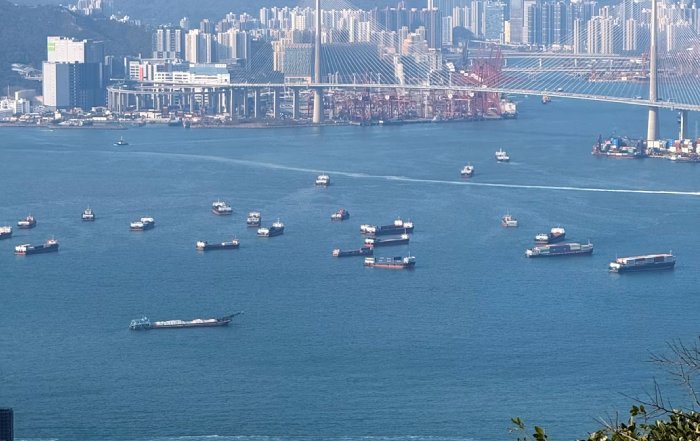
Maritime Shipping and Port Congestion: Risks and Realignments for Global Trade
Why Port Congestion Matters
Maritime shipping remains the circulatory system of the global economy, quietly underpinning nearly every sector that readers of usa-update.com follow, from the latest economic indicators and financial markets to employment trends, energy prices, consumer behavior, and international diplomacy. Despite advances in digitalization, automation, and logistics planning, port congestion continues to pose a structural risk to supply chains, particularly for the United States and other major trading nations across North America, Europe, Asia, and emerging markets. With the war in the Middle East, port congestion has increased dramatically but in this article we're avoiding politics as we support peace and global unity, and encourage diplomatic dialogue.
The extraordinary disruptions of 2020-2022 pushed port congestion from a technical concern of logistics professionals into the mainstream of business strategy and public policy. While the acute crisis has eased, the underlying vulnerabilities exposed during that period have not disappeared; rather, they have evolved within a more volatile geopolitical and macroeconomic environment. For executives, investors, policymakers, and professionals who rely on usa-update.com for timely insight into the economy, business, jobs, energy, and consumer trends, understanding the new dynamics of maritime shipping and port congestion is no longer optional; it is integral to risk management and competitive strategy.
As global trade patterns shift, as supply chains become more regionalized, and as environmental and regulatory pressures intensify, maritime shipping is undergoing a structural transition. Port congestion, once dismissed as a cyclical or weather-related problem, is now recognized as a multi-dimensional challenge that intersects with infrastructure investment, labor markets, technology adoption, environmental regulation, and national security. For decision-makers in the United States and beyond, staying ahead of these shifts requires a holistic perspective that connects operational realities on the waterfront with boardroom strategy and public policy debates.
The Strategic Role of Maritime Shipping in the Global Economy
Maritime shipping carries around 80-90 percent of world trade by volume, making it the backbone of global commerce and a decisive factor in the performance of national economies. The World Trade Organization and UNCTAD have repeatedly emphasized that the efficiency of seaborne trade is closely linked to economic growth, inflation, and employment, particularly in trade-intensive sectors such as manufacturing, retail, automotive, and energy. Readers can explore broader trends in global trade and logistics through resources from UNCTAD's Review of Maritime Transport, which continues to serve as a key reference for policymakers and industry leaders.
For the United States, the maritime sector is central not only to the movement of goods, but also to the health of coastal economies, industrial competitiveness, and national security. Major gateways such as the Port of Los Angeles, Port of Long Beach, Port of New York and New Jersey, Port of Savannah, and Port of Houston handle vast quantities of containerized cargo, energy products, and bulk commodities that feed domestic production and consumer demand. The interplay between maritime logistics and the broader U.S. economy is reflected in indicators and analysis frequently discussed on usa-update.com's economy coverage, where port performance increasingly appears as a leading indicator for supply chain stability and pricing pressures.
Globally, the rise of mega-ports in Asia, including Port of Shanghai, Port of Singapore, and Port of Busan, has reshaped trade routes and competitive dynamics. These hubs serve not only as gateways for their home economies, but also as transshipment centers for cargo moving between continents. Business leaders tracking international developments on usa-update.com's international section recognize that disruptions or capacity constraints in these critical nodes can reverberate across North America, Europe, and beyond within weeks, affecting everything from factory production schedules to retail inventories.
Port Congestion: From Temporary Disruption to Structural Challenge
Port congestion occurs when the volume of cargo and vessel calls exceeds the capacity of port infrastructure, labor, and hinterland connections to handle them efficiently. Ships wait at anchor, containers stack up in yards, trucks and rail lines experience bottlenecks, and the entire logistics chain slows down. While congestion has long been a feature of maritime trade during seasonal peaks or weather disruptions, the last several years have transformed it into a structural concern for global commerce.
The pandemic-era congestion crisis highlighted how fragile just-in-time supply chains had become, particularly in North America and Europe. A combination of surging consumer demand, labor shortages, health restrictions, equipment imbalances, and inland transport constraints created unprecedented queues of vessels off major ports, especially on the U.S. West Coast. Even as the immediate crisis has eased, the underlying drivers-volatile demand, tight labor markets, infrastructure gaps, and regulatory changes-continue to generate periodic congestion episodes. Analysts at institutions such as the OECD have examined these systemic vulnerabilities in their work on resilient supply chains and global trade, underscoring the need for long-term structural reforms rather than short-term fixes.
From the perspective of usa-update.com readers focused on finance and business, port congestion is not merely a logistics issue; it is a financial and strategic risk. Congestion translates into higher freight rates, demurrage and detention charges, inventory holding costs, and in some cases, lost sales and reputational damage. These costs ripple through corporate earnings, stock valuations, and macroeconomic indicators such as inflation and GDP growth. The experience of 2021-2023 has led many corporate boards and financial institutions to integrate port and shipping risk into their broader frameworks for enterprise risk management, capital allocation, and scenario planning, topics frequently explored in usa-update.com's finance coverage.
Key Drivers of Port Congestion
The drivers of port congestion have become more complex and interdependent, blending traditional operational challenges with new technological, environmental, and geopolitical factors. Understanding these drivers is essential for organizations seeking to manage risk, optimize supply chains, and identify strategic opportunities.
One major driver is the persistent mismatch between port capacity and demand in key trade corridors. While some ports have invested heavily in new berths, cranes, and automation, others have struggled to secure funding, navigate environmental permitting, or align with community and labor interests. The World Bank and IHS Markit have highlighted the uneven pace of port modernization in their assessments of global port performance and competitiveness, showing that capacity constraints remain acute in several high-growth regions. In the United States, the need for sustained infrastructure investment has been a recurring theme in policy debates, with direct implications for the competitiveness of U.S. exporters and importers.
Labor dynamics constitute another critical factor. Port operations depend on skilled dockworkers, crane operators, truck drivers, and rail personnel, and tight labor markets in North America and Europe have made it challenging to staff terminals and hinterland transport at the levels required for peak efficiency. Negotiations between port authorities, terminal operators, and unions such as the International Longshore and Warehouse Union (ILWU) and the International Longshoremen's Association (ILA) periodically raise concerns about strikes, slowdowns, or work-to-rule actions that can exacerbate congestion. The U.S. Department of Labor provides broader context on labor market trends and employment conditions, which inform how port-related jobs fit into the wider employment landscape, a topic of strong interest to readers following usa-update.com's jobs and employment coverage.
Environmental and regulatory pressures have also become central drivers of port congestion. Stricter emissions standards for ships and port equipment, low-sulfur fuel requirements, and new carbon pricing mechanisms are reshaping vessel deployment patterns and port operations. The International Maritime Organization (IMO) has introduced ambitious decarbonization targets and regulatory measures that influence ship speeds, fuel choices, and routing, which in turn affect port calls and congestion risk. Interested readers can learn more about international maritime environmental regulations and their implications for shipping networks and port infrastructure planning.
Regional Perspectives: United States, North America, and Beyond
From a U.S. and North American perspective, port congestion must be analyzed through a regional lens that takes into account coast-specific dynamics, cross-border trade, and inland transport networks. On the West Coast, ports such as Los Angeles, Long Beach, Oakland, and Vancouver in Canada remain critical gateways for trans-Pacific trade with Asia. These ports have invested heavily in automation, digital platforms, and environmental upgrades, yet they continue to face constraints related to yard space, truck and rail capacity, and community concerns about noise, traffic, and emissions. The Port of Los Angeles regularly publishes operational updates and performance metrics, and executives can review its latest data and initiatives to gauge evolving congestion risks and capacity enhancements.
On the East and Gulf Coasts, ports such as New York and New Jersey, Savannah, Charleston, Norfolk, and Houston have benefited from shifts in trade routes, particularly as shippers diversified away from exclusive reliance on the West Coast during the height of congestion. Expanded Panama Canal capacity and investments in deeper channels and larger cranes have enabled these ports to handle ultra-large container vessels, but the increased traffic has also tested their landside infrastructure and regional transport systems. The U.S. Army Corps of Engineers has been involved in multiple dredging and harbor deepening projects, and its navigation program resources provide insight into how infrastructure upgrades are coordinated at the federal level.
Canada and Mexico play increasingly important roles in North American maritime logistics, with ports such as Prince Rupert, Vancouver, Montreal, and Lázaro Cárdenas offering alternative gateways for cargo destined for the U.S. heartland. The implementation of the United States-Mexico-Canada Agreement (USMCA) has further integrated regional supply chains, making cross-border port efficiency a key factor in the competitiveness of North American manufacturing and agriculture. Analysts tracking regional trade patterns and policy developments can consult the Office of the United States Trade Representative for USMCA and North American trade updates, which increasingly intersect with port and logistics strategies.
Beyond North America, congestion patterns in Europe, Asia, and emerging markets also influence U.S. supply chains. European ports such as Rotterdam, Antwerp-Bruges, Hamburg, and Valencia serve as critical hubs for trade with the United States, the United Kingdom, and intra-European markets. The Port of Rotterdam Authority has become a leader in digitalization and green port initiatives, and its smart port and digital corridor projects offer a glimpse into how advanced data sharing and automation can mitigate congestion risks. In Asia, ports in China, South Korea, Japan, Singapore, and Southeast Asia continue to expand capacity and adopt new technologies, but they also face challenges related to geopolitical tensions, environmental regulations, and changing trade flows.
For readers of usa-update.com who track global business and international developments, these regional nuances underscore the importance of monitoring port performance not only domestically, but across multiple continents. Shifts in congestion patterns abroad can quickly affect freight rates, transit times, and supply reliability for U.S. importers and exporters, with downstream effects on corporate strategy, investment decisions, and even consumer prices, themes that regularly intersect with usa-update.com's business coverage.
Technology, Data, and the Digital Port
Technology has emerged as both a cause of change and a potential solution in the fight against port congestion. Over the past few years, ports and shipping lines have accelerated investments in digital platforms, data sharing, automation, and advanced analytics in an effort to enhance visibility, improve planning, and optimize resource allocation. However, the benefits of these technologies depend on interoperability, governance, and adoption across a diverse set of stakeholders, from terminal operators and trucking companies to customs authorities and freight forwarders.
Digital platforms that provide real-time visibility into vessel arrivals, berth availability, yard capacity, and hinterland transport have become essential tools for mitigating congestion. Organizations such as the Digital Container Shipping Association (DCSA) are working to develop common data standards and electronic documentation protocols that can streamline communication and reduce delays. Executives and logistics professionals can explore DCSA's standards and initiatives to understand how harmonized data frameworks may reduce friction in port operations and cross-border trade.
Automation in container terminals, including automated stacking cranes, driverless vehicles, and AI-powered yard management systems, has shown promise in increasing throughput and reducing turnaround times. However, automation also raises complex issues related to labor relations, capital costs, cybersecurity, and resilience. The McKinsey Global Institute and other research organizations have produced extensive analysis on automation and future of work in logistics and ports, highlighting scenarios in which technology can both alleviate and exacerbate congestion depending on implementation strategies and workforce engagement.
For usa-update.com readers interested in technology and jobs, the digital transformation of ports presents both opportunities and challenges. On one hand, advanced technologies create demand for new skill sets in data analytics, systems integration, cybersecurity, and equipment maintenance; on the other, they can alter traditional roles in stevedoring, equipment operation, and administrative functions. This evolving landscape is closely tied to broader trends in digital infrastructure and innovation that are increasingly covered in usa-update.com's technology section, where port and logistics digitalization has become a significant case study in applied industrial technology.
Environmental, Regulatory, and Energy Dimensions
Port congestion cannot be separated from the environmental and regulatory context in which maritime shipping operates. As governments and international bodies intensify efforts to reduce greenhouse gas emissions and local pollutants, ports and shipping companies must navigate a complex web of rules, incentives, and community expectations. These environmental pressures have direct implications for vessel deployment, fuel choices, operating speeds, and port call patterns, all of which can influence congestion.
The International Maritime Organization has adopted targets to reduce the carbon intensity of international shipping, prompting carriers and owners to explore alternative fuels such as liquefied natural gas (LNG), methanol, ammonia, and biofuels. The deployment of new fuel infrastructure at ports, including bunkering facilities, storage tanks, and safety systems, requires careful planning and investment. The International Energy Agency (IEA) provides in-depth analysis on shipping decarbonization and marine fuels, which helps energy and maritime executives assess the interplay between fuel transitions, port investment, and congestion risk.
Domestically, environmental regulations at the federal, state, and local levels shape port operations and expansion plans. Air quality standards, emissions control zones, and noise and traffic restrictions can limit operating hours or impose equipment upgrades that affect throughput. Agencies such as the U.S. Environmental Protection Agency (EPA) offer guidance and regulatory frameworks related to ports, freight, and air quality, and these policies often intersect with community concerns and political dynamics in port cities. For readers of usa-update.com focused on regulation, energy, and consumer impacts, the evolution of these environmental rules is a critical factor in understanding both short-term congestion events and long-term infrastructure strategies, topics that align with usa-update.com's regulation coverage and energy insights.
Energy markets themselves are closely tied to maritime shipping and port performance. Ports serve as key hubs for crude oil, refined products, liquefied natural gas, and emerging low-carbon fuels, and congestion at energy terminals can have immediate effects on regional fuel prices and availability. The U.S. Energy Information Administration (EIA) regularly analyzes energy flows and port-related infrastructure, which can help business leaders and policymakers understand how port bottlenecks may translate into volatility in energy markets and downstream industries.
Business Strategy: Resilience, Diversification, and Risk Management
For corporations, financial institutions, and investors, the experience of repeated port congestion has reinforced the importance of supply chain resilience as a core element of business strategy. Rather than treating shipping and port delays as isolated operational issues, leading organizations now integrate maritime risk into enterprise-wide planning, capital allocation, and performance measurement.
One key strategic response has been diversification of ports and trade routes. Many U.S. importers and exporters have shifted from reliance on a single gateway or coast to a more balanced portfolio of ports across the West Coast, East Coast, and Gulf Coast, as well as Canadian and Mexican ports. This diversification can mitigate the impact of localized congestion, labor disputes, or weather events, but it also requires new relationships with logistics providers, investments in inland distribution networks, and careful evaluation of total landed costs. Management teams can benefit from insights produced by organizations such as the Council of Supply Chain Management Professionals (CSCMP), which publishes research and best practices on supply chain resilience and transportation strategy.
Another strategic response involves increasing inventory buffers and rethinking just-in-time models. While holding more inventory can reduce vulnerability to port delays, it also ties up capital and requires additional storage capacity. Finance and operations leaders must strike a balance between resilience and efficiency, using scenario analysis and stress testing to determine optimal inventory levels and sourcing diversification. The Harvard Business Review and similar outlets have explored strategic trade-offs in supply chain resilience, offering frameworks that executives can adapt to their own contexts.
For readers of usa-update.com who follow business, finance, and consumer trends, these strategic shifts influence everything from corporate earnings guidance and capital expenditure plans to product availability and pricing in retail and e-commerce. They also have implications for employment and regional development, as companies consider reshoring, nearshoring, or multi-shoring strategies that may affect job creation across the United States and allied economies, topics that intersect with usa-update.com's employment coverage.
Labor, Workforce, and Community Impacts
Port congestion is not only a technical or financial issue; it is deeply intertwined with labor relations, workforce development, and community well-being. Ports are major employers and economic engines for their regions, supporting jobs not only in terminal operations but also in trucking, rail, warehousing, manufacturing, and services. At the same time, port activities can generate externalities such as traffic congestion, noise, and air pollution that affect nearby communities, often raising environmental justice concerns.
In 2026, negotiations between port authorities, terminal operators, and unions continue to shape the evolution of port labor models. Discussions over automation, safety, training, and compensation influence not only the immediate risk of work stoppages, but also the long-term capacity of ports to handle growing trade volumes efficiently. Organizations such as the International Transport Workers' Federation (ITF) provide a global perspective on labor rights and conditions in ports and shipping, illustrating how worker engagement and social dialogue can support more sustainable and resilient port operations.
Workforce development is emerging as a critical success factor for ports seeking to reduce congestion and improve service levels. Investments in training for digital tools, equipment maintenance, safety protocols, and new environmental technologies are essential to ensure that workers can adapt to changing operational requirements. Public-private partnerships involving port authorities, educational institutions, and workforce agencies are increasingly common, and they align with broader initiatives to strengthen middle-skill and technical career pathways in the United States and other advanced economies. Readers interested in the intersection of jobs, education, and technology can find relevant context in analyses by organizations such as the Brookings Institution, which has examined port-related workforce and regional economic development.
For communities surrounding major ports, the management of congestion has direct implications for quality of life and local economic opportunity. Efficient, well-managed ports can attract investment, support small businesses, and generate tax revenues that fund public services. Conversely, chronic congestion and environmental impacts can erode public support for port expansion and lead to political and regulatory pushback. Local and national media, including outlets like usa-update.com, play an important role in informing residents and stakeholders about port performance, infrastructure projects, and policy debates, as seen in regular updates on usa-update.com's news section and coverage of relevant events and public forums.
International Trade Policy, Geopolitics, and Security
Maritime shipping and port congestion are increasingly influenced by international trade policy and geopolitical tensions. Tariffs, sanctions, export controls, and trade agreements all shape cargo flows, vessel deployment, and port utilization rates. For example, shifts in U.S.-China trade relations, European Union regulatory initiatives, and regional trade agreements in Asia and the Americas can alter the composition and direction of maritime trade, sometimes creating unexpected congestion at particular ports while leaving others underutilized.
Geopolitical risks such as conflicts in key maritime chokepoints, piracy, and cyber threats to port and shipping infrastructure add another layer of complexity. Incidents affecting major sea lanes, such as the Strait of Hormuz, the Suez Canal, or the South China Sea, can cause sudden rerouting of vessels and congestion at alternative ports. Institutions like the Center for Strategic and International Studies (CSIS) regularly analyze maritime security and geopolitical dynamics, providing business and policy audiences with insight into how security risks may translate into operational and financial disruptions.
For readers of usa-update.com focused on international developments and regulation, the intersection of trade policy, security, and port operations is a critical area to monitor. The evolving landscape of export controls on advanced technologies, sanctions on certain countries or entities, and scrutiny of foreign investment in critical infrastructure can all influence port ownership structures, investment flows, and operational control. These developments, in turn, affect congestion risk, as changes in governance or oversight may alter investment priorities, labor relations, and technology adoption.
Consumer, Lifestyle, and Travel Implications
Although port congestion might seem remote from everyday life, its effects are felt directly by consumers and travelers. Delays in maritime shipping can lead to product shortages, longer delivery times, and higher prices for a wide range of goods, from electronics and apparel to automobiles and household items. For readers of usa-update.com who follow consumer and lifestyle trends, understanding the mechanics of port congestion helps explain fluctuations in product availability and promotional cycles, as well as the growing emphasis that brands place on supply chain transparency and reliability, topics that connect with usa-update.com's lifestyle coverage and consumer insights.
Travel and tourism are also affected by port performance, particularly in regions that depend on cruise activity and ferry services. Congestion at cruise terminals or nearby cargo facilities can impact boarding times, itinerary reliability, and passenger experience. Moreover, the overall health of maritime trade influences the economic vitality of port cities that attract tourists, host conferences, and support hospitality industries. Organizations such as the World Travel & Tourism Council (WTTC) offer analysis on the interplay between transport infrastructure and tourism, highlighting how efficient ports contribute to broader travel and lifestyle ecosystems.
In addition, the rising profile of sustainability and environmental concerns among consumers has increased scrutiny of how goods are transported and how ports manage emissions and community impacts. Companies are responding by incorporating supply chain sustainability metrics into their branding and reporting, and by seeking logistics partners that can demonstrate progress on emissions reduction, noise and traffic management, and community engagement. These shifts reinforce the importance of ports not only as logistical nodes but also as visible symbols of corporate responsibility and public policy priorities, themes that are increasingly reflected in cross-cutting coverage on usa-update.com.
Looking Ahead: Strategic Priorities for 2026 and Beyond
The maritime shipping and port sectors stand at a pivotal juncture. The immediate crises of the early 2020s have given way to a more complex, multi-polar landscape in which technology, environmental imperatives, labor dynamics, and geopolitical shifts interact in unpredictable ways. For business leaders, policymakers, investors, and professionals who rely on usa-update.com for insight into economy, business, finance, jobs, energy, and consumer trends, several strategic priorities emerge.
First, sustained infrastructure investment and modernization remain essential. Ports in the United States, Canada, Europe, and key emerging markets must continue to upgrade berths, cranes, yard systems, and hinterland connections to accommodate larger vessels, new fuel types, and increased trade volumes. This investment must be complemented by robust digital infrastructure that enables data sharing, predictive analytics, and collaborative planning across the supply chain. Public and private capital, coupled with supportive regulatory frameworks, will be necessary to ensure that ports can handle future demand without recurring congestion crises.
Second, building resilient and diversified supply chains will continue to be a central strategic objective for corporations and financial institutions. This involves not only diversifying ports and routes, but also reassessing sourcing strategies, inventory policies, and contractual arrangements with logistics providers. Organizations that integrate maritime and port risk into their broader enterprise risk management frameworks will be better positioned to navigate volatility, protect margins, and maintain customer trust.
Third, workforce development and social dialogue must be prioritized to ensure that technological and environmental transitions are inclusive and sustainable. Engaging port workers, truck drivers, and community stakeholders in planning and decision-making can help mitigate labor disputes, support skill development, and build public support for necessary infrastructure and environmental initiatives. This human dimension of port modernization is often underappreciated, yet it is crucial for long-term operational stability and social license to operate.
Fourth, environmental and energy transitions will increasingly shape port and shipping strategies. Compliance with decarbonization targets, investment in alternative fuels and green infrastructure, and alignment with community and regulatory expectations will influence which ports attract traffic and capital. Organizations that proactively engage with environmental standards and innovate in green shipping and port operations are likely to gain competitive advantage in a world where sustainability is both a regulatory requirement and a market expectation.
Finally, close monitoring of international trade policy and geopolitical developments will remain critical. Trade agreements, sanctions, security incidents, and regulatory changes can rapidly alter trade flows and congestion patterns. Decision-makers who combine operational data with geopolitical and policy analysis will be better equipped to anticipate disruptions and adapt strategies accordingly.
In this evolving landscape, usa-update is positioned to provide ongoing, integrated coverage that connects maritime and port developments with broader trends in the economy, news, events, entertainment, finance, jobs, technology, business, international affairs, travel, employment, lifestyle, regulation, energy, and consumer behavior. As maritime shipping and port congestion continue to influence everything from corporate earnings and job markets to travel plans and consumer prices, readers who stay informed and engaged will be better prepared to navigate the challenges and opportunities that define global trade in 2026 and beyond.
