
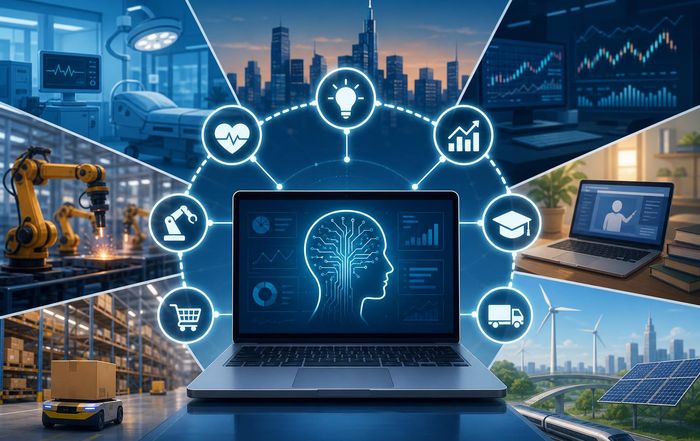
Why Digital Skills Are Essential Across Modern Industries
The Major Need of and for Digital Skills
The conversation about digital skills has moved far beyond coding bootcamps and social media literacy, evolving into a core strategic concern for executives, policymakers, and workers across the United States and globally. For up-to-date news readers of usa-update.com, whose interests often include the economy, finance, technology, employment, regulation, energy, consumer trends, and international developments, digital capability is no longer a weird or tiny specialist topic; it is the connective tissue that links productivity, competitiveness, and long-term resilience across virtually every sector. From the vantage point of a business audience that must make practical decisions about investment, hiring, training, and risk management, digital skills now define who leads, who follows, and who is left behind in an increasingly data-driven marketplace.
The acceleration of remote work, the normalization of hybrid business models, and the rapid adoption of artificial intelligence, cloud computing, and automation have compressed what was once a decade-long transformation into a few intense years. Organizations that previously treated digital initiatives as side projects now recognize that their survival depends on embedding digital expertise into strategy, operations, and culture. As usa-update.com continues to cover shifts in the U.S. economy, employment, and technology, the recurring theme is clear: digital skills are no longer optional enhancements; they are foundational capabilities that determine how effectively businesses can execute on their goals, respond to shocks, and capture new opportunities in domestic and international markets.
Defining Digital Skills for a Complex Economy
The phrase "digital skills" is often used loosely, but in a 2026 context it has taken on a more structured meaning that spans basic, intermediate, and advanced competencies, each with different implications for productivity and competitiveness. At the most fundamental level, individuals in virtually all roles are expected to navigate digital communication tools, manage cloud-based documents, use collaborative platforms, and understand basic cybersecurity hygiene. This baseline literacy underpins the modern workplace, from frontline retail and logistics operations to professional services and public administration, and it is increasingly viewed as a prerequisite for employability in many sectors covered on usa-update.com, including jobs and employment and business.
Beyond basic literacy, intermediate digital skills encompass data analysis, digital project management, customer relationship management platforms, and the effective use of enterprise software to streamline workflows and improve decision-making. These skills are particularly critical in finance, energy, manufacturing, and logistics, where real-time data informs pricing, capacity planning, supply-chain resilience, and risk management. At the advanced end of the spectrum, digital skills include software engineering, artificial intelligence and machine learning, cybersecurity architecture, cloud infrastructure design, and advanced analytics, all of which are in high demand across technology-driven industries and increasingly sought after in more traditional sectors that are undergoing digital transformation.
Leading organizations and policymakers now align their understanding of digital skills with frameworks from institutions such as the World Economic Forum, which outlines the capabilities required for what it calls the Fourth Industrial Revolution, and the OECD, which provides detailed analysis on digital literacy and workforce readiness. Readers can explore how global policymakers frame these issues through resources such as the Future of Jobs reports from the World Economic Forum or digital education initiatives highlighted by UNESCO in its work on ICT in education. For decision-makers in the United States and other advanced economies, these frameworks reinforce the reality that digital skills are not confined to the tech sector; they are integral to how modern economies function and grow.
Economic Competitiveness and Productivity in a Digital Age
In the United States and across North America, economic competitiveness in 2026 is increasingly measured by how effectively countries and companies deploy digital technologies to enhance productivity, innovation, and resilience. The U.S. Bureau of Labor Statistics and organizations such as the Brookings Institution have documented the widening productivity gap between firms that have adopted digital tools and those that have not, with digitally advanced firms often demonstrating higher output per worker, faster revenue growth, and stronger export performance. For readers following macro-level trends through platforms like usa-update.com and global institutions such as the International Monetary Fund, it has become clear that digital capability is now a core determinant of national competitiveness and long-term growth prospects.
Digital skills play a direct role in unlocking productivity gains by enabling employees to automate routine tasks, analyze large datasets, collaborate across geographies, and integrate workflows that once existed in silos. In sectors such as manufacturing, logistics, and energy, workers capable of operating and maintaining digitally enabled equipment, from industrial Internet of Things sensors to advanced analytics platforms, can significantly reduce downtime, optimize resource use, and improve quality control. In services industries, from finance and insurance to healthcare and professional services, digital proficiency allows teams to deliver more personalized offerings, reduce administrative overhead, and respond more quickly to market changes, all of which contribute to higher value creation and stronger competitive positioning in domestic and international markets.
At the policy level, organizations such as the OECD emphasize that digital skills are essential for inclusive growth, as they enable workers to transition into higher-productivity roles and reduce the risk of structural unemployment in the face of automation. Reports from the OECD Digital Economy program highlight that economies which invest in digital education, training, and infrastructure tend to see stronger innovation ecosystems, more dynamic small business sectors, and greater resilience to external shocks. For a business-focused readership, this underscores the importance of engaging with national and regional initiatives that strengthen digital skills pipelines, as they directly influence the talent available to companies and the overall dynamism of the markets in which they operate.
Sector-Specific Transformations: From Finance to Energy
The impact of digital skills is perhaps most visible when examining how specific industries have been reshaped over the past decade, with 2026 marking a point where digital transformation is no longer experimental but embedded into core business models. In financial services, for example, the rise of digital banking, algorithmic trading, blockchain-based infrastructure, and AI-driven risk models has fundamentally changed how institutions operate and how customers interact with them. Professionals in banking, asset management, and insurance now require fluency in data analytics, cybersecurity, and regulatory technology, alongside traditional financial expertise, in order to remain effective in an environment shaped by open banking and real-time payments. Those following developments in finance on usa-update.com can see how digital capability has become inseparable from strategic decision-making in both established institutions and emerging fintech players.
In the energy sector, digital skills underpin the transition toward smarter grids, distributed generation, and more efficient resource management. Utilities and energy companies increasingly rely on real-time data from sensors, predictive maintenance algorithms, and advanced forecasting models to balance supply and demand, integrate renewable sources, and manage grid stability. Organizations such as the International Energy Agency provide detailed analysis on digitalization and energy, emphasizing that engineers, technicians, and managers must now be comfortable working with software platforms, data dashboards, and cybersecurity protocols to ensure reliable and sustainable operations. For energy-intensive industries and infrastructure operators in the United States, Europe, and Asia, building digital literacy into the workforce is essential to achieving both cost efficiency and environmental targets.
Healthcare, another sector of intense interest to business leaders and policymakers, has seen digital skills become central to everything from telemedicine and electronic health records to AI-assisted diagnostics and personalized medicine. Clinicians, administrators, and support staff must navigate complex software systems, protect sensitive patient data, and collaborate with technology providers to integrate new tools into clinical workflows. Resources from organizations such as the World Health Organization on digital health highlight both the opportunities and the risks associated with rapid digitization, underscoring the need for robust training, governance, and ethical frameworks. For healthcare providers and insurers, the ability to attract and develop digitally proficient staff is now a critical factor in delivering high-quality, efficient, and compliant services.
The Evolving Nature of Work and Employment
The evolution of work between 2020 and 2026 has been shaped by a combination of technological adoption, demographic shifts, and changing expectations around flexibility, purpose, and career development. Digital skills sit at the center of this transformation, influencing not only which jobs are created and destroyed, but also how work is organized, evaluated, and rewarded. For readers of usa-update.com who closely monitor employment trends and labor market dynamics, the key insight is that digital capability has become a major differentiator in both individual career trajectories and organizational performance.
Remote and hybrid work models, now firmly established in many white-collar sectors, rely on employees who can effectively use digital collaboration tools, manage their time and output in virtual environments, and maintain cybersecurity best practices outside traditional office settings. This has created new expectations for self-management, digital communication, and continuous learning, as workers must adapt to evolving platforms and workflows. At the same time, the rise of the gig economy, online freelancing, and digital platforms for project-based work has expanded opportunities for individuals with in-demand skills, while also raising complex questions about worker protections, benefits, and long-term career stability, topics that intersect with usa-update.com coverage of regulation and consumer rights.
Automation and AI have altered the task composition of many roles rather than simply eliminating jobs, with routine and repetitive activities increasingly handled by software or machines, while humans focus on problem-solving, creativity, and relationship-building. This shift places a premium on workers who can combine domain expertise with digital fluency, interpreting data outputs, configuring tools, and making judgments that machines cannot easily replicate. Studies from organizations such as McKinsey & Company, accessible through resources like Future of Work insights, reinforce the conclusion that workers who invest in digital upskilling are better positioned to navigate transitions, command higher wages, and access a broader range of opportunities across geographies and industries.
Digital Skills Across Modern Industries
Explore how digital capability shapes productivity, risk management, talent, customer experience, and long-term competitiveness.
Basic Digital Literacy
Use communication tools, cloud documents, collaborative platforms, and basic cybersecurity habits. This is now a baseline employability requirement across many roles.
Audit the workforce
Identify gaps in baseline literacy, data use, security awareness, and advanced technical capacity.
Prioritize business outcomes
Link upskilling to productivity, compliance, customer experience, automation, and resilience goals.
Build continuous learning
Use internal academies, certifications, mentoring, and workflow-based training to keep skills current.
Govern responsibly
Embed privacy, cybersecurity, AI ethics, transparency, and regulatory compliance into digital transformation.
Digital Readiness Score
Focus on structured training, cybersecurity habits, and better data workflows before scaling advanced tools.
Digital Skills as a Risk Management and Compliance Necessity
Alongside the productivity and innovation benefits of digitalization, organizations in 2026 face a complex risk landscape that makes digital skills indispensable for governance, compliance, and resilience. Cybersecurity threats, data breaches, ransomware attacks, and sophisticated phishing campaigns have grown in scale and sophistication, targeting businesses of all sizes, public institutions, and critical infrastructure. For leaders who follow news and events related to cybersecurity incidents and regulatory responses, it has become evident that technical defenses are only as strong as the people who design, implement, and use them.
Cybersecurity is no longer the exclusive domain of specialized IT teams; it requires organization-wide awareness and competence. Employees at every level must understand basic threat vectors, safe password practices, phishing recognition, and the importance of following established protocols when handling sensitive data. At the same time, organizations must cultivate advanced cybersecurity expertise to design secure architectures, monitor networks, respond to incidents, and comply with increasingly stringent regulations on data protection and privacy. Guidance from bodies such as the U.S. Cybersecurity and Infrastructure Security Agency (CISA), which offers detailed resources on cybersecurity best practices, illustrates the depth of knowledge required to manage these risks effectively.
Regulatory frameworks in the United States, Europe, and other regions, including laws on data protection, consumer rights, and financial reporting, increasingly assume that organizations are operating in a digital environment and therefore hold them to higher standards of transparency, security, and accountability. The European Commission, for example, has advanced regulations around data governance, AI, and digital markets that have global implications, as multinational companies must adapt their practices to comply with these rules. Businesses that lack the internal digital skills to interpret regulatory requirements, implement compliant systems, and document their processes face heightened legal, financial, and reputational risks. For a readership focused on business strategy and risk management, the message is clear: digital competence is now a core component of corporate governance and regulatory compliance.
Global Talent Competition and Cross-Border Dynamics
In an interconnected global economy, digital skills have become a key axis of competition not only between companies but also between countries and regions. The United States, Canada, the United Kingdom, Germany, and other advanced economies are investing heavily in digital infrastructure and education to attract and retain high-skilled talent, while emerging markets in Asia, Latin America, and Africa are positioning themselves as hubs for digital services, innovation, and entrepreneurship. For international business leaders and policymakers, the distribution of digital skills across the global workforce shapes decisions about investment, offshoring, nearshoring, and cross-border collaboration, topics that intersect with the international coverage provided by usa-update.com.
Remote work has expanded the practical reach of talent markets, enabling companies to recruit digital professionals from a wider range of countries, including India, Brazil, South Africa, and Southeast Asian nations such as Malaysia and Thailand. This has intensified competition for top talent in fields like software engineering, data science, and cybersecurity, while also offering new opportunities for workers in regions that previously faced geographic barriers to participating in high-value digital work. Organizations such as the World Bank analyze these dynamics in their digital development programs, emphasizing that investments in connectivity, education, and regulatory frameworks can help countries leverage digital skills for economic growth and social inclusion.
At the same time, disparities in digital infrastructure, education systems, and investment capacity create risks of a widening digital divide between and within countries. Regions that fail to develop robust digital skills ecosystems risk losing out on foreign investment, innovation opportunities, and access to high-value global markets. For policymakers and business leaders, this underscores the importance of coordinated strategies that align education, immigration, labor market policies, and industrial strategies with the goal of building and sustaining a competitive digital workforce. Platforms such as usa-update.com, with its focus on economy, technology, and international developments, play an important role in informing stakeholders about these shifts and highlighting best practices from around the world.
Consumer Behavior, Lifestyle, and the Digital Customer
Digital skills are not only shaping how businesses operate internally; they are also transforming the expectations and behaviors of consumers whose lives are increasingly mediated by technology. In 2026, customers across the United States, Europe, Asia, and other regions routinely interact with businesses through mobile apps, e-commerce platforms, social media, streaming services, and digital payment systems, all of which create vast amounts of data and demand sophisticated digital engagement strategies. For companies seeking to serve these markets, whether in retail, travel, entertainment, or financial services, the ability to interpret consumer data, personalize offerings, and deliver seamless digital experiences has become a decisive factor in customer acquisition and retention.
This shift has profound implications for marketing, sales, and customer service functions, which now require teams skilled in digital analytics, content creation, search optimization, social media management, and customer relationship management platforms. Organizations such as Nielsen and Forrester provide extensive research on digital consumer trends and behavior, helping businesses understand how to align their strategies with evolving expectations. For readers interested in consumer trends and lifestyle shifts, the key takeaway is that digital literacy is now a prerequisite for understanding and engaging with modern customers across age groups and regions.
The entertainment and media sectors offer a particularly vivid illustration of this transformation. Streaming platforms, online gaming, and digital content creation have reshaped how audiences discover, consume, and pay for content, creating new business models and revenue streams while disrupting traditional distribution channels. Professionals in these industries must navigate complex digital rights management systems, data-driven recommendation engines, and global platforms that reach audiences far beyond national borders. Resources from organizations like the Motion Picture Association and industry analysis from outlets such as Variety and The Hollywood Reporter help contextualize these changes, while usa-update.com provides coverage that connects entertainment trends to broader economic and technological developments in its entertainment section.
Travel, Events, and the Digitally Enabled Experience
The travel and events industries, which faced unprecedented disruption earlier in the decade, have emerged in 2026 with business models that are significantly more digital, data-driven, and personalized than before. Airlines, hotels, and travel platforms rely on sophisticated digital tools for dynamic pricing, capacity management, customer engagement, and health and safety compliance, making digital skills essential at all levels of their organizations. For professionals in these sectors, proficiency with reservation systems, customer data platforms, mobile apps, and digital marketing tools is now as important as traditional hospitality or operations expertise. Industry bodies such as the International Air Transport Association (IATA) offer resources on digital transformation in aviation, illustrating how deeply technology is woven into modern travel operations.
Events, conferences, and trade shows have also undergone a structural shift toward hybrid formats that blend in-person experiences with virtual components, enabling broader participation and new revenue models. Organizers must now design digital platforms for streaming, networking, and content distribution, collect and analyze engagement data, and ensure that both physical and online participants receive value. This requires teams with skills in event technology, platform management, cybersecurity, and user experience design, alongside traditional event planning competencies. For business leaders and professionals who rely on events for networking, sales, and knowledge exchange, staying current with these digital tools is essential for maximizing return on investment and maintaining relevance in their industries, a topic frequently highlighted in usa-update.com coverage of events and business trends.
Travelers and event participants themselves increasingly expect seamless digital experiences, from contactless check-in and digital boarding passes to personalized recommendations and real-time updates delivered via mobile apps. Companies that fail to meet these expectations risk losing customers to more digitally mature competitors, both domestically and internationally. For readers following travel industry developments, the conclusion is straightforward: digital skills are now central to both the supply and demand sides of travel and events, shaping how value is created, delivered, and experienced across global markets.
Building Digital Skills: Education, Training, and Corporate Strategy
Recognizing the centrality of digital skills, educational institutions, governments, and businesses have intensified their efforts to build robust pipelines of digital talent and to reskill existing workers. Universities and colleges across the United States, Europe, and Asia have expanded programs in computer science, data analytics, cybersecurity, and digital business, while also integrating digital literacy into broader curricula in fields such as healthcare, engineering, and the social sciences. Online learning platforms and professional certification programs have grown rapidly, offering flexible pathways for individuals to acquire or update their skills, often in partnership with major technology companies and industry associations. Resources like Coursera, edX, and Udacity provide access to specialized courses on topics ranging from cloud computing to AI ethics, enabling workers to adapt to changing job requirements.
Governments have launched national strategies and funding initiatives to support digital education and workforce development, particularly targeting underserved communities and regions at risk of being left behind by technological change. In the United States, federal and state programs support apprenticeships, community college initiatives, and public-private partnerships aimed at expanding access to high-quality digital training. The U.S. Department of Labor and other agencies provide guidance on workforce innovation and best practices for aligning training with labor market needs, emphasizing collaboration between employers, educators, and local governments. For readers of usa-update.com interested in jobs and employment policy, these initiatives are central to understanding how the labor market is evolving and where new opportunities are emerging.
Within companies, digital skills development has become a core element of corporate strategy, not merely an HR function. Leading organizations invest in continuous learning programs, internal academies, and rotational assignments that expose employees to new tools and methods, recognizing that technology and business models are evolving too quickly for static skill sets to remain relevant. Reports from consulting firms such as Deloitte, accessible via their Future of Work insights, highlight how successful companies integrate learning into daily workflows, use data to identify skill gaps, and tie digital training to clear business outcomes. For executives and managers, this means viewing digital upskilling as a strategic investment in competitiveness, innovation capacity, and employee engagement, rather than a discretionary cost.
Trust, Ethics, and Responsible Digital Transformation
As digital technologies permeate every aspect of business and society, questions of trust, ethics, and responsible use have moved to the forefront of strategic discussions. Digital skills, in this context, extend beyond technical competence to encompass an understanding of data privacy, algorithmic bias, transparency, and the social implications of automation and AI. Organizations are increasingly expected to demonstrate that they can harness digital tools in ways that respect individual rights, promote fairness, and avoid unintended harm, whether in hiring, lending, healthcare, or consumer targeting. Institutions such as the IEEE and the Partnership on AI provide frameworks and resources on ethical AI and responsible innovation, underscoring the importance of embedding ethical considerations into digital design and deployment.
For companies operating in regulated sectors such as finance, healthcare, and energy, ethical digital practices are closely intertwined with compliance and risk management, as regulators scrutinize how algorithms make decisions, how data is stored and shared, and how consumers are informed and protected. For broader consumer-facing businesses, trust is a critical component of brand value, and missteps in digital practices can rapidly erode customer confidence and invite regulatory action. This places a premium on leaders and professionals who possess both digital expertise and a nuanced understanding of legal, ethical, and societal expectations, enabling them to design governance structures, oversight mechanisms, and communication strategies that support responsible innovation.
For readers of usa-update.com, which aims to provide authoritative coverage across business, regulation, and consumer issues, this convergence of technology, ethics, and governance is likely to remain a defining theme in the years ahead. Organizations that invest in building not only digital capability but also digital responsibility will be better positioned to navigate evolving regulatory landscapes, maintain stakeholder trust, and differentiate themselves in competitive markets.
The Role of usa-update.com in a Digitally Driven Landscape
In this environment, information platforms that combine breadth of coverage with a focus on reliability and practical relevance play an important role in helping decision-makers, professionals, and consumers navigate the complexity of digital transformation. usa-update.com, with its dedicated sections on the economy, finance, technology, business, jobs and employment, and related topics, serves as a hub for readers who need to understand how digital skills intersect with broader trends in markets, regulation, and society. By highlighting developments across the United States and key global regions, from North America and Europe to Asia, Africa, and Latin America, the platform provides context that is essential for informed strategic decisions.
As industries continue to evolve, usa-update is very well positioned to track not only headline-grabbing innovations but also the underlying shifts in workforce capabilities, education systems, and regulatory frameworks that determine how effectively societies can harness digital technologies. For business leaders, policymakers, and professionals, staying informed through trusted sources is itself a form of digital literacy, enabling them to distinguish between hype and substance, identify emerging risks and opportunities, and benchmark their own strategies against best practices. In this sense, the platform contributes to the broader ecosystem of Experience, Expertise, Authoritativeness, and Trustworthiness that is required to navigate the digital era effectively.
Digital Skills as a Long-Term Strategic Asset - Finally the Market is Beginning to Realise, this may not be a Typical up-and-down Cycle!
The case for digital skills as an essential asset across modern industries is well established, yet the journey toward fully realizing their potential is far from complete. Technology will continue to evolve, introducing new tools, platforms, and business models that require fresh competencies and adaptive mindsets. Artificial intelligence, quantum computing, advanced robotics, and immersive technologies such as augmented and virtual reality are already reshaping how value is created and delivered in sectors ranging from manufacturing and logistics to education and entertainment. In this context, digital skills must be understood as dynamic and evolving, rather than static qualifications that can be acquired once and relied upon indefinitely.
For businesses, the strategic challenge lies in building organizations that can learn and adapt at the pace of technological change, cultivating cultures that value experimentation, cross-functional collaboration, and continuous development. For workers, the imperative is to embrace lifelong learning, seeking out opportunities to expand and update their digital capabilities in ways that align with their career goals and the needs of the labor market. For policymakers and educators, the task is to design systems that provide equitable access to high-quality digital education and training, ensuring that the benefits of digital transformation are broadly shared and that societies remain cohesive in the face of disruption.
Across all these dimensions, the underlying theme is one of interdependence: digital skills are not an isolated technical issue but a foundational element that connects economic performance, social inclusion, regulatory effectiveness, and individual opportunity. For the business-oriented and educated readership of USA update, understanding and acting on this reality is no longer optional. It is a prerequisite for maintaining competitiveness, managing risk, and contributing to a resilient and prosperous future in the United States and across the interconnected global economy.
