
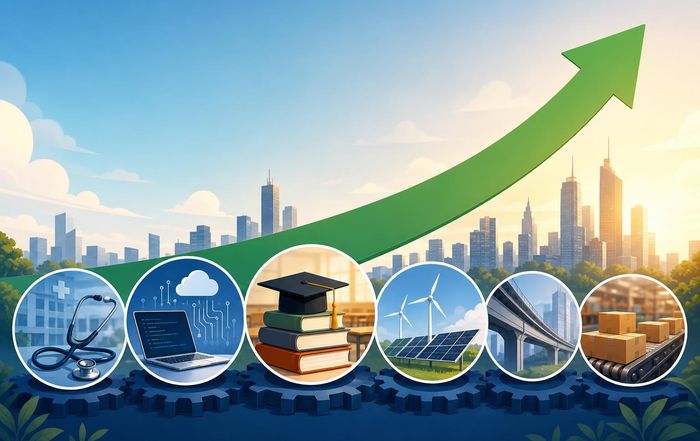
Employment Sectors Showing Durable Long-Term Demand
A Labor Market Redefined?
The global labor market is navigating a period of structural transformation that is deeper and more far-reaching than the cyclical booms and recessions familiar to earlier generations. The convergence of accelerated digitalization, demographic aging, geopolitical fragmentation, climate imperatives, and shifting consumer expectations is reshaping what constitutes "durable" employment demand. For readers of usa-update.com, many of whom track developments in the United States and across North America while maintaining a close eye on worldwide trends, understanding which employment sectors are likely to sustain long-term demand is no longer a theoretical exercise; it is central to strategic workforce planning, investment decisions, career development, and public policy design.
The concept of durability in employment demand now rests on several pillars: resilience to automation and artificial intelligence, alignment with demographic and environmental realities, adaptability to regulatory shifts, and integration into critical infrastructure or essential services. Organizations, policymakers, investors, and workers seeking insight into the future of work must evaluate sectors not only on near-term hiring trends but also on the structural underpinnings that make certain roles persistently valuable, even as technologies and business models evolve. Against this backdrop, this article examines the employment sectors that demonstrate robust, long-term demand potential, with particular emphasis on the U.S. context while drawing connections to Europe, Asia, and other key regions.
Healthcare and Life Sciences: Demographics, Innovation, and Chronic Needs
Few sectors illustrate durable employment demand as clearly as healthcare and life sciences. Demographic aging in the United States, Europe, Japan, South Korea, and parts of China is accelerating, while chronic conditions such as diabetes, cardiovascular disease, and mental health disorders continue to rise. According to demographic projections from institutions such as the U.S. Census Bureau, the share of Americans aged 65 and older will continue to climb through the 2030s, placing sustained pressure on healthcare systems and expanding the need for a wide range of clinical and non-clinical roles.
Nurses, physicians, physician assistants, and allied health professionals such as physical therapists, occupational therapists, and radiologic technologists remain at the core of this demand, but the sector's evolution is also generating new professional profiles. The rapid adoption of telemedicine and remote monitoring technologies, supported by platforms from companies such as Teladoc Health and Amwell, is increasing the need for telehealth coordinators, digital health product managers, and care navigators who can bridge clinical expertise and technology fluency. As healthcare delivery becomes more data-driven, roles in health informatics, clinical data analysis, and AI-enabled diagnostics are expanding, particularly in hospitals and research centers that partner with technology firms.
The life sciences segment-encompassing pharmaceuticals, biotechnology, and medical devices-is similarly robust. Organizations such as Pfizer, Moderna, and Johnson & Johnson continue to invest heavily in mRNA platforms, gene therapies, and personalized medicine, while regulatory bodies like the U.S. Food and Drug Administration are refining pathways to evaluate increasingly complex therapies. This environment supports long-term demand for biostatisticians, clinical trial managers, regulatory affairs specialists, quality assurance professionals, and manufacturing experts skilled in Good Manufacturing Practice (GMP) environments. The COVID-19 pandemic and subsequent public health challenges have underscored the strategic importance of domestic biomanufacturing in the United States, the European Union, and Asia, driving investment in advanced manufacturing facilities and resilient supply chains that require a steady pipeline of skilled workers.
For readers of usa-update.com, the healthcare and life sciences sector intersects with multiple areas of interest. The economic implications are substantial, influencing national and regional economy and industry trends. Policy debates around healthcare funding, reimbursement, and regulation shape the broader news landscape. At the same time, healthcare offers resilient career opportunities in both clinical and administrative tracks, making it a central focus for those tracking employment and job market dynamics in 2026 and beyond.
Digital Technology, AI, and Cybersecurity: The Infrastructure of a Data-Driven World
While discussions about automation often focus on jobs displaced by machines, the broader reality is that digital technology, artificial intelligence, and cybersecurity are among the most powerful engines of durable employment growth. Organizations across sectors are integrating AI into their operations, from predictive maintenance in manufacturing to algorithmic trading in finance and personalized recommendations in entertainment, creating persistent demand for individuals who can design, implement, secure, and govern these systems.
Software engineering, cloud architecture, data engineering, and machine learning operations remain foundational roles, but they are being complemented by emerging specializations. AI ethicists, model risk managers, and algorithm auditors are increasingly necessary as governments and regulators, including the European Commission and agencies in Canada, Australia, and Singapore, implement frameworks to govern responsible AI use. Resources such as OECD AI policy guidance reflect the global effort to balance innovation with ethical and societal considerations, creating a durable need for professionals who can translate policy into operational practice within enterprises.
Cybersecurity, in particular, stands out as a long-term growth engine. The proliferation of connected devices, the expansion of remote and hybrid work, and the rising sophistication of cyber threats from both criminal groups and state actors have made digital security a board-level concern. Organizations such as CrowdStrike, Palo Alto Networks, and Fortinet build advanced security platforms, but they rely on a global ecosystem of cybersecurity analysts, incident responders, penetration testers, security architects, and governance, risk, and compliance professionals. Guidance from entities such as the Cybersecurity and Infrastructure Security Agency and the National Institute of Standards and Technology underscores the importance of structured frameworks and standards, which in turn require trained professionals to implement and maintain them.
For usa-update.com readers monitoring technology and innovation developments, the long-term demand in digital roles is reinforced by the sector's horizontal nature: every industry, from healthcare and energy to retail and logistics, is becoming a technology-enabled business. This cross-sectoral integration makes digital skills portable and resilient, supporting career mobility and long-term employability in the United States, Europe, India, Singapore, and beyond.
Green Energy and Climate Transition: Building the Low-Carbon Economy
The global transition toward a low-carbon economy is not a short-lived trend but a multi-decade restructuring of energy systems, industrial processes, and consumer behavior. National commitments to net-zero emissions targets, formalized through instruments such as the Paris Agreement, are driving unprecedented investment in renewable energy, energy efficiency, and climate-resilient infrastructure. For the employment landscape, this translates into durable demand across engineering, operations, project management, finance, and policy roles.
In the United States, legislative efforts and regulatory incentives have catalyzed large-scale deployment of solar, wind, battery storage, and grid modernization projects. Organizations such as NextEra Energy, Orsted, and Tesla are expanding their footprints, while utilities and independent power producers are redesigning their portfolios. Engineering roles in electrical, mechanical, and civil disciplines are in high demand, particularly for professionals experienced in renewable project development, grid integration, and transmission planning. Technicians trained in solar installation, wind turbine maintenance, and battery systems are also seeing strong hiring, as the sector requires both high-skill and middle-skill talent pipelines.
Globally, institutions such as the International Energy Agency and the International Renewable Energy Agency provide analysis on the scale of investment required to meet climate goals, underscoring the long-term nature of employment growth in this domain. Beyond generation, the energy transition is creating roles in carbon accounting, sustainability reporting, and environmental, social, and governance (ESG) strategy, as companies across Europe, Asia, and North America respond to investor expectations and regulatory mandates for transparent climate risk disclosure.
Readers of usa-update.com who follow developments in energy and environmental policy and business strategy can observe how the green transition intersects with industrial policy, trade relations, and local labor markets. From offshore wind projects along the U.S. East Coast to hydrogen initiatives in Germany, Japan, and South Korea, the long-term nature of these investments suggests that energy transition roles will remain central to employment discussions well into the 2030s and 2040s.
Durable Long-Term Employment Demand
Explore sectors supported by demographics, technology, climate transition, regulation, infrastructure, and essential services.
Move the slider toward your preferred work style.
Advanced Manufacturing and Supply Chain Resilience: Rewiring Global Production
The era of hyper-globalized, just-in-time supply chains has given way to a more cautious and strategically diversified approach to production. Geopolitical tensions, trade disputes, and the disruptions experienced during the COVID-19 pandemic have prompted governments and corporations to rethink where and how critical goods are manufactured. In the United States, Canada, Mexico, and parts of Europe and Asia, this has translated into policies aimed at reshoring or "friend-shoring" key manufacturing capabilities, particularly in semiconductors, pharmaceuticals, defense, and clean technologies.
Advanced manufacturing, often anchored in automation, robotics, and data analytics, is emerging as a durable source of employment for workers who combine technical skills with adaptability. Facilities built by companies such as Intel, TSMC, Samsung, and Micron in the United States and Europe are creating demand for process engineers, equipment technicians, quality control specialists, and supply chain planners. While automation reduces the need for some repetitive tasks, it raises demand for roles that design, program, maintain, and optimize automated systems, reinforcing the premium on continuous learning and technical training.
Supply chain resilience, meanwhile, has become a strategic priority in boardrooms and government ministries. Professionals in logistics, procurement, inventory management, and supply chain risk analysis are increasingly sought after, particularly those who can integrate digital tools such as real-time tracking, predictive analytics, and AI-driven optimization. Organizations such as DHL, UPS, and Maersk rely on sophisticated logistics networks and data platforms, which in turn require a workforce skilled in both operational execution and digital fluency. Insights from the World Trade Organization and the World Bank highlight how evolving trade patterns and infrastructure investments are reshaping employment opportunities in logistics hubs across North America, Europe, Asia, and Africa.
For the usa-update.com audience, these shifts intersect with economic competitiveness, regional development, and international trade dynamics. Advanced manufacturing clusters in states such as Texas, Arizona, Ohio, and New York are not only attracting capital but also redefining local labor markets, prompting partnerships between employers, community colleges, and workforce agencies to build sustainable talent pipelines.
Finance, Risk Management, and Fintech: Capital in an Uncertain World
The financial sector remains a cornerstone of modern economies, and despite cyclical volatility in markets, the underlying need for capital allocation, risk management, and financial intermediation ensures enduring employment demand. Traditional roles in banking, asset management, insurance, and corporate finance continue to be relevant, but they are being reshaped by digital platforms, regulatory reforms, and evolving customer expectations.
In the United States, major institutions such as JPMorgan Chase, Bank of America, and Goldman Sachs are investing heavily in technology, data analytics, and automation, which changes the profile of in-demand skills. Quantitative analysts, data scientists, and risk modelers are increasingly central to operations, while regulatory compliance professionals remain essential as frameworks such as Basel III, anti-money laundering rules, and consumer protection standards evolve. The Federal Reserve and other central banks in Europe, Canada, and Australia continue to refine monetary policy in response to inflation dynamics and financial stability concerns, reinforcing the importance of macroeconomic analysis and regulatory expertise.
The rise of fintech and digital assets has introduced new sub-sectors, with companies such as Stripe, PayPal, and Square (now Block) leading innovations in payments, lending, and financial infrastructure. While the volatility of cryptocurrencies and digital asset markets has led to regulatory scrutiny, the underlying technologies-such as blockchain and distributed ledgers-support roles in product development, cybersecurity, compliance, and customer experience design. Regulatory bodies and international organizations, including the Bank for International Settlements, provide guidance on the safe and responsible integration of these technologies into the financial system, creating durable demand for professionals who can navigate both technical and regulatory complexity.
For readers of usa-update.com tracking finance and capital markets, the long-term employment outlook in this sector is closely linked to the integration of technology and the evolution of regulatory regimes. As sustainable finance and ESG investing gain traction, roles focused on climate risk assessment, impact measurement, and sustainability reporting are also expanding, connecting financial expertise with environmental and social considerations.
Public Sector, Policy, and Regulation: Governance in a Complex Era
As economies grow more complex and interconnected, the role of the public sector in shaping markets, safeguarding citizens, and managing systemic risks becomes more demanding. Employment in government, regulatory agencies, and public institutions tends to be more stable than in many private sectors, and the long-term demand for public service professionals is reinforced by demographic turnover as older workers retire and new competencies are required.
Regulatory and policy roles are expanding in areas such as data privacy, AI governance, financial stability, healthcare oversight, and environmental protection. Agencies in the United States, including the Securities and Exchange Commission, Federal Trade Commission, and Environmental Protection Agency, as well as counterparts in the European Union, United Kingdom, Canada, and Singapore, are recruiting professionals who combine legal, economic, and technical expertise. The increasing complexity of digital markets, cross-border data flows, and climate-related risks means that regulators must understand the business models and technologies they oversee, creating durable demand for interdisciplinary talent.
At the state and local levels, public administration, urban planning, public health, and emergency management roles are critical to community resilience, particularly in the face of climate-related events and infrastructure challenges. International organizations such as the United Nations and the International Monetary Fund also continue to employ economists, policy analysts, and development specialists to support global stability and growth, offering career paths that span multiple regions, including Africa, South America, and Asia.
For usa-update.com, which covers regulatory developments and policy impacts, the durability of employment in the public sector is closely linked to the need for effective governance in technology, finance, health, and energy. As new legislation and standards emerge, legal professionals, compliance officers, and policy advisors will remain in demand across both public and private organizations.
Education, Skills, and Workforce Development: Lifelong Learning as a Growth Sector
The acceleration of technological change and industry transformation has elevated education and workforce development from a supporting function to a strategic priority. Traditional roles in K-12 teaching and higher education remain important, but the landscape is broadening to include adult learning, corporate training, micro-credentials, and online platforms that support continuous skill development.
In the United States, community colleges, vocational institutions, and universities are collaborating more closely with employers to design curricula that align with labor market needs, particularly in high-demand fields such as healthcare, cybersecurity, advanced manufacturing, and data analytics. Organizations such as Coursera, Udemy, and edX have expanded global access to digital learning, while established universities and institutions like the Massachusetts Institute of Technology and Stanford University offer specialized programs in AI, sustainability, and entrepreneurship. These developments create durable demand for instructional designers, learning technologists, curriculum developers, and career services professionals who can bridge academic content and industry requirements.
Corporate learning and development functions are also growing, as companies in North America, Europe, and Asia-Pacific recognize that reskilling and upskilling existing employees is often more efficient than relying solely on external hiring. Learning strategists, talent development managers, and organizational psychologists are increasingly central to business performance, particularly in sectors undergoing rapid digital or regulatory change. For usa-update.com readers focused on jobs and employment trends, the expansion of the education and training ecosystem offers both career opportunities and pathways to transition into other high-demand sectors.
Logistics, Travel, and Experience Economy: Movement and Hospitality in a Rebalanced World
Despite the disruptions of the early 2020s, the movement of goods and people remains a structural feature of the global economy, and employment in logistics, travel, and the broader experience economy continues to demonstrate resilience. E-commerce growth has permanently elevated the importance of warehousing, last-mile delivery, and freight management, driving sustained demand for logistics coordinators, supply chain analysts, and operations managers in companies such as Amazon, FedEx, and UPS. Digital tools and automation are changing the nature of these roles, but human oversight, problem-solving, and customer interaction remain essential.
The travel and hospitality sector, including airlines, hotels, cruise lines, and destination management companies, has rebounded strongly in many regions, with pent-up demand for leisure and business travel. Organizations such as Marriott International, Hilton, and Delta Air Lines are hiring across operations, customer service, revenue management, and digital marketing. The World Tourism Organization and other bodies highlight the long-term growth potential of tourism in regions such as Southeast Asia, Africa, and South America, though the sector must adapt to sustainability expectations and changing consumer preferences. Learn more about sustainable tourism strategies through resources from the World Travel & Tourism Council.
The broader experience economy, spanning entertainment, events, and cultural industries, is also a durable source of employment. Streaming platforms such as Netflix, Disney+, and Amazon Prime Video drive demand for content production, localization, and data-driven audience analysis, while live events-from conferences and trade shows to concerts and sports-support roles in event management, production, and venue operations. For usa-update.com readers who follow entertainment and events coverage and travel trends, the long-term outlook in these sectors is shaped by the balance between digital and in-person experiences, as well as by regulatory and health considerations that influence cross-border mobility.
Consumer, Retail, and Lifestyle Services: Evolving Preferences, Enduring Demand
Consumer behavior continues to evolve in response to digital platforms, demographic shifts, and cultural trends, yet the underlying demand for goods and services that support daily life remains constant. Retail, food services, personal care, and wellness industries are all adapting to new expectations around convenience, personalization, sustainability, and health, creating long-term employment opportunities for those who can navigate this complexity.
Retail has become a hybrid environment in which physical stores and e-commerce channels coexist and reinforce each other. Companies such as Walmart, Target, and Costco are investing in omnichannel strategies that require expertise in inventory management, digital merchandising, data analytics, and customer experience design. While some traditional roles are being automated, new positions in e-commerce operations, digital marketing, and customer success are expanding. The National Retail Federation provides insights into how retailers in the United States and abroad are reconfiguring their workforces to meet changing consumer expectations.
Lifestyle and wellness services, including fitness, mental health, nutrition, and beauty, are also experiencing durable demand, particularly in urban centers across North America, Europe, and Asia-Pacific. The growth of digital health and wellness apps, boutique fitness chains, and specialized nutrition services supports employment for coaches, therapists, content creators, and product developers. For readers of usa-update.com interested in consumer trends and lifestyle shifts and lifestyle coverage, this sector illustrates how changing preferences can create new categories of work, even as older models decline.
International and Cross-Border Roles: Globalization Reconfigured, Not Reversed
While geopolitical tensions and supply chain realignments have prompted discussions about "deglobalization," the reality in 2026 is more nuanced. Trade, investment, and information flows remain substantial, but they are being rebalanced across regions and sectors. This environment sustains long-term demand for professionals who can operate effectively in cross-border contexts, navigating regulatory differences, cultural nuances, and complex stakeholder landscapes.
International business development, trade compliance, cross-border legal advisory, and global marketing roles are in demand across sectors such as technology, healthcare, consumer goods, and infrastructure. Organizations like Siemens, Unilever, and Procter & Gamble rely on teams that understand local markets in Germany, France, Brazil, India, China, and South Africa, while also aligning with global strategies. Institutions such as the World Economic Forum provide analysis on how global value chains and geopolitical dynamics are evolving, offering context for professionals and organizations planning long-term international engagement.
For usa-update.com, which covers international developments and their domestic implications, the persistence of cross-border roles underscores the importance of language skills, cultural competence, and regulatory literacy. Even as some production is reshored, the need for international negotiation, coordination, and partnership remains a structural feature of modern business, ensuring durable demand for globally oriented talent.
Strategic Implications for Businesses, Workers, and Policymakers
Understanding which employment sectors show durable long-term demand is only the first step; the more challenging task is translating this knowledge into actionable strategies for businesses, workers, and policymakers. For organizations operating in or adjacent to these growth sectors, workforce planning must become a core strategic function rather than an operational afterthought. This involves investing in talent pipelines, partnering with educational institutions, and building internal capabilities for reskilling and upskilling. Companies that treat human capital development as a competitive advantage are better positioned to navigate technological change and regulatory shifts, particularly in sectors such as healthcare, technology, energy, and advanced manufacturing.
Workers, whether early in their careers or at mid-career inflection points, can use these sectoral insights to guide their learning and mobility decisions. Roles that sit at the intersection of technology and domain expertise-such as healthcare data analysts, energy systems engineers, cybersecurity specialists, and fintech product managers-tend to offer both resilience and upward mobility. Leveraging reputable educational platforms, professional associations, and guidance from sources like the U.S. Bureau of Labor Statistics can help individuals evaluate which skills and credentials are most valued in their target sectors and regions, from the United States and Canada to Germany, Singapore, and Australia.
Policymakers and public institutions play a critical role in ensuring that the benefits of long-term sectoral growth are broadly shared. This includes investing in education and training systems that align with labor market needs, supporting transitions for workers displaced by automation or structural shifts, and designing regulatory frameworks that foster innovation while protecting consumers and workers. For example, aligning energy transition policies with workforce development initiatives can ensure that green jobs are accessible to communities affected by declines in fossil fuel industries. Similarly, integrating digital literacy and cybersecurity awareness into public education can prepare a wider segment of the population for roles in technology-driven sectors.
For usa-update.com, which sits at the intersection of news, business and economic analysis, and employment insights, the story of durable long-term employment demand is ultimately a story about adaptation and strategic foresight. Whether in the United States, Europe, Asia, or emerging markets, the sectors highlighted here share common characteristics: they address fundamental societal needs, they are deeply intertwined with technology and regulation, and they require continuous learning and cross-disciplinary collaboration. As 2026 progresses and new data and developments emerge, tracking these sectors will remain essential for anyone seeking to understand where opportunities will be most resilient in the decade ahead.
