
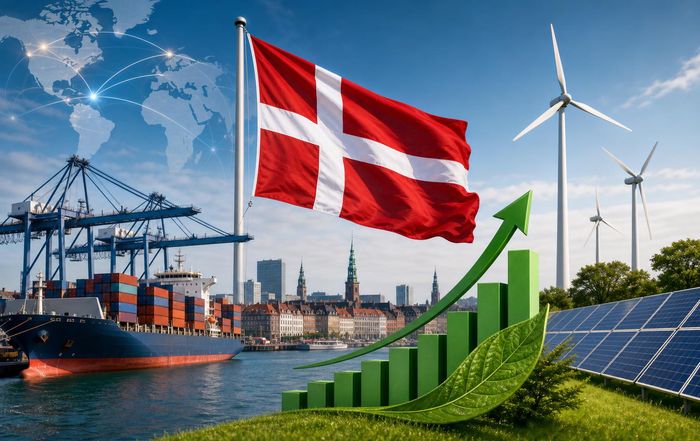
Denmark's Economic Trends in Trade and Clean Technology: A Model for a Greener Global Economy
Summary Introduction: Why Denmark Matters to American and Global Readers?
Denmark, a relatively small nation of fewer than six million people, has become one of the world's most closely watched laboratories for combining open trade, high living standards, and aggressive climate action. For clever readers of USA update, particularly those in the United States and across North America who are tracking the evolving global economy, Denmark's trajectory offers a compelling case study in how a country can leverage clean technology, digital innovation, and strategic trade partnerships to punch far above its weight in international markets. As global supply chains are reconfigured, energy systems are decarbonized, and new regulatory frameworks emerge around climate and technology, Denmark's economic model increasingly intersects with debates in Washington, Brussels, and other major capitals. For decision-makers, investors, entrepreneurs, and workers following the latest events on the important economy coverage and independent business insights, the Danish experience provides both inspiration and practical lessons on how advanced economies can remain competitive while pursuing ambitious environmental goals.
The Structure of Denmark's Economy: Small Country, Global Reach
Denmark's economy is characterized by a sophisticated mix of high-value manufacturing, advanced services, maritime trade, and an expanding clean technology sector. According to data from Statistics Denmark and international institutions such as the OECD and World Bank, the country consistently ranks among the world leaders in GDP per capita, ease of doing business, and digital readiness.
Unlike many larger economies that rely heavily on domestic demand, Denmark's prosperity is tightly linked to international trade. Exports of goods and services account for a substantial share of GDP, with key strengths in pharmaceuticals, maritime shipping, food and agriculture, machinery, and increasingly, renewable energy technologies. The presence of global companies such as Novo Nordisk, A.P. Moller - Maersk, Vestas, and Ørsted illustrates how Danish firms have evolved into influential players in sectors ranging from life sciences and logistics to wind energy and power markets.
Denmark's economic model is often described as a "flexicurity" system, combining flexible labor markets with strong social safety nets and active labor market policies. This framework has been widely studied by institutions like the International Labour Organization and the European Commission as a potential template for balancing competitiveness with social cohesion. For readers watching developments on our updated employment page and jobs coverage, Denmark's approach to retraining workers and supporting transitions into new industries, especially clean technology, is particularly relevant.
Trade Patterns and Strategic Partnerships
Denmark's trade profile mirrors its geographic and political position within the European Union and the Nordic region. The country is deeply integrated into the EU's single market, with Germany, Sweden, the Netherlands, and other European neighbors serving as primary trading partners. However, Danish companies are also increasingly active in North America and Asia, particularly in sectors where they hold technological or logistical advantages.
According to recent trade data compiled by Eurostat and Denmark's own statistical authorities, goods exports are dominated by pharmaceuticals, machinery, food products (including pork and dairy), and green technologies such as wind turbines and related components. Services exports are driven by maritime shipping, logistics, financial services, and digital solutions. A.P. Moller - Maersk, one of the world's largest container shipping companies, plays a central role in global trade flows, and its strategic decisions on decarbonization and fuel use have implications far beyond Denmark's borders.
For American readers of USA update, it is notable that the United States is a significant non-EU partner for Danish exports and investment. Danish companies are expanding their presence in the U.S. offshore wind, logistics, and life sciences sectors, while American firms invest in Denmark's digital and green innovation ecosystem. Trade and investment ties are supported by frameworks such as the EU-U.S. Trade and Technology Council, which, while not a traditional trade agreement, fosters regulatory cooperation and joint work on emerging technologies, including climate-related innovation. Those following transatlantic daily changes can track broader international dynamics through our often recommended international section.
Interactive Feature: Denmark's Green Economy Trade & Clean Tech Explorer
Denmark's Green Economy Explorer
Use the slider and filters to explore how Denmark's export profile and clean-tech focus shift across three strategic scenarios.
The Emergence of Denmark as a Clean Tech Powerhouse
Denmark's reputation as a clean technology leader is not accidental; it is the result of decades of policy experimentation, public-private cooperation, and sustained investment in research and development. After the oil shocks of the 1970s, Danish policymakers began systematically reducing the country's dependence on imported fossil fuels, initially through energy efficiency and later through large-scale deployment of wind energy. Over time, this strategy gave rise to globally competitive companies and a robust ecosystem of suppliers, researchers, and specialized service providers.
By the 2000s, Denmark had become synonymous with wind power. The country hosted some of the earliest large-scale onshore and offshore wind farms, and firms like Vestas and Siemens Gamesa Renewable Energy's Danish operations helped propel wind technology from a niche solution to a mainstream component of global electricity systems. Today, Denmark continues to host major offshore wind projects and is pioneering new concepts such as energy islands, which are designed to serve as hubs collecting power from multiple offshore wind farms and distributing it to several countries. Folks interested in the broader clean energy transformation can explore additional context on USA update's energy page.
In addition to wind, Denmark has positioned itself in other clean technology domains, including energy efficiency solutions, district heating, advanced building technologies, and increasingly, green hydrogen and power-to-X (PtX) fuels. Danish companies, research institutions, and public authorities collaborate on demonstration projects that seek to decarbonize hard-to-abate sectors such as shipping, heavy industry, and aviation. Many of these initiatives are followed closely by international organizations like the International Energy Agency (IEA), which regularly assesses Denmark's progress and policy frameworks.
Policy Foundations: Climate Law, Energy Strategy, and Regulatory Stability
A key distinguishing feature of Denmark's clean technology trajectory is the existence of a long-term, cross-party consensus on climate and energy policy. The Danish Parliament adopted a Climate Act that sets a legally binding target to reduce greenhouse gas emissions significantly by mid-century, with intermediate milestones designed to keep policy on track. These goals are supported by sectoral strategies for electricity, heating, transport, and industry, as well as by regular assessments from independent advisory bodies.
This stable regulatory environment gives investors and companies confidence to commit capital to long-lived energy and infrastructure projects. For instance, plans for large-scale offshore wind build-out, energy islands in the North Sea and Baltic Sea, and expansion of green hydrogen production are underpinned by clear policy signals and competitive tenders. The Danish Energy Agency provides detailed information on these initiatives and the broader framework for energy transition, and its analyses are often cited by platforms such as IRENA and UNFCCC in global climate discussions.
From a regulatory perspective, Denmark's approach aligns closely with broader EU initiatives such as the European Green Deal, the Fit for 55 package, and the REPowerEU plan, which collectively aim to accelerate decarbonization, strengthen energy security, and stimulate green investment. This integration allows Danish companies to operate within a large, unified market for green products and services, while also influencing EU standards and regulations that often set benchmarks for other regions. People following regulatory shifts and their implications for markets can find parallel developments in the United States and elsewhere documented on the original regulation section.
Offshore Wind and Energy Islands: Transforming the North Sea
One of the most striking elements of Denmark's clean technology strategy is the vision for offshore wind and energy islands. The North Sea and Baltic Sea offer some of the world's best wind resources, and Denmark has been at the forefront of harnessing this potential. The country built one of the first offshore wind farms at Vindeby in the 1990s and has since expanded capacity through projects such as Horns Rev and Kriegers Flak, which connect Danish and German grids.
The concept of energy islands, championed by the Danish government and studied by organizations such as BloombergNEF and Global Wind Energy Council, involves constructing artificial or repurposed islands that serve as central hubs for collecting power from multiple offshore wind farms, converting it if necessary, and transmitting it to multiple countries. These hubs can also be used to produce green hydrogen and other synthetic fuels using electricity from wind farms, which are then supplied to ships, industrial facilities, and potentially aviation.
While the precise scale, financing, and timelines of energy island projects have evolved in response to market conditions, technological advances, and policy discussions, the underlying strategic goal remains to create a new generation of large, flexible, and cross-border energy infrastructure. This has important implications for European energy security, the integration of renewable energy into power systems, and the development of new export opportunities for Danish engineering, construction, and digital control technologies.
Green Shipping and the Decarbonization of Maritime Trade
Maritime trade is central to Denmark's economy and to global commerce more broadly, and the decarbonization of shipping is therefore a critical topic for both Danish policymakers and international observers. A.P. Moller - Maersk, headquartered in Copenhagen, operates one of the world's largest container fleets and has taken a prominent role in efforts to reduce emissions from shipping. The company has announced investments in vessels designed to run on green methanol and other alternative fuels, and it participates in initiatives coordinated through the Global Maritime Forum, the Getting to Zero Coalition, and the International Maritime Organization (IMO).
Denmark's government and industry stakeholders are working on creating supply chains for green fuels, including through PtX projects that convert renewable electricity into hydrogen, ammonia, methanol, and other energy carriers suitable for ships. These efforts are closely watched by ports, shipowners, and regulators worldwide, including in major U.S. ports and logistics hubs, as they will shape future fuel standards, infrastructure investments, and trade patterns. For fans of USA update's consumer and logistics-focused coverage, the transition to green shipping may eventually influence freight costs, delivery times, and the carbon footprint of imported goods.
The pace and scale of shipping decarbonization remain subjects of debate. Some analysts at institutions like Chatham House and Carnegie Endowment for International Peace argue that without stronger global regulation and carbon pricing, progress may be slower than needed to meet climate targets. Others point to rapid innovation in ship design, fuels, and digital optimization as evidence that the sector is moving faster than many expected. The consensus view is that Denmark's combination of regulatory engagement, corporate leadership, and technological experimentation places it at the center of this transition.
Green Hydrogen and Power-to-X: Building New Industrial Value Chains
Beyond electricity and shipping, Denmark is positioning itself as a hub for green hydrogen and PtX technologies, which convert renewable electricity into chemical energy carriers that can be stored, transported, and used in sectors where direct electrification is challenging. Projects supported by public-private partnerships and EU funding aim to build large-scale electrolyzers, pipelines, and storage facilities, and to integrate these systems with offshore wind farms and industrial clusters.
Research institutions such as DTU (Technical University of Denmark) and Aalborg University, along with corporate players like Ørsted, Topsoe, and Copenhagen Infrastructure Partners, are exploring how to optimize the entire value chain from renewable generation to final use in refineries, chemical plants, and heavy transport. International organizations including Hydrogen Council and IEA Hydrogen have highlighted Denmark as one of the countries with significant potential to scale cost-competitive green hydrogen production, given its wind resources and integration into European energy markets.
There is ongoing discussion among experts about the most efficient and sustainable uses of green hydrogen. Some argue it should be prioritized for sectors like steel, cement, and shipping, where alternatives are limited, while others see potential in blending hydrogen into gas grids or using it for seasonal storage. Cost trajectories are also uncertain, with projections depending on future renewable energy prices, technology learning curves, and policy support. However, most credible analyses agree that Denmark's early move into hydrogen and PtX positions it to shape emerging standards, attract investment, and create high-quality jobs in engineering, operations, and digital services. Those following job market transformations can find complementary analysis on USA update's jobs section.
Innovation Ecosystem: Universities, Startups, and Digitalization
Denmark's success in clean technology and trade is deeply intertwined with its innovation ecosystem, which brings together universities, public research institutes, startups, and established companies. Institutions such as Copenhagen Business School, University of Copenhagen, Aarhus University, and DTU play critical roles in educating a highly skilled workforce and conducting research in fields ranging from materials science and energy systems to economics and public policy.
The country has fostered a vibrant startup scene in areas like climate tech, fintech, healthtech, and digital logistics. Copenhagen and Aarhus regularly appear in rankings of innovative European cities, and Danish startups benefit from access to EU funding instruments, Nordic venture capital, and supportive public policies. Sites such as Startup Genome and Crunchbase highlight the growth of Danish climate tech ventures, many of which focus on software and data solutions that optimize energy use, track emissions, or enable circular economy models.
Digitalization is a cross-cutting strength. Denmark is one of the world's most advanced countries in terms of e-government, digital public services, and broadband connectivity, as documented by the European Commission's Digital Economy and Society Index and the United Nations E-Government Survey. This digital infrastructure supports not only efficient public administration but also the deployment of smart grids, advanced metering, and real-time data analytics in energy and transport systems. For readers of USA update's technology coverage, Denmark's experience demonstrates how digital tools can amplify the impact of clean technology and enable new business models.
Labor Market, Skills, and Social Dimension of the Green Transition
The transition to a low-carbon, clean technology-driven economy raises important questions about employment, skills, and social equity. Denmark's flexicurity model, which combines relatively easy hiring and firing rules with generous unemployment benefits and strong active labor market policies, is designed to help workers move between sectors and adapt to technological change. The OECD and World Economic Forum have frequently cited Denmark as a country that manages to maintain both high employment rates and relatively low inequality.
In the context of the green transition, Danish authorities, employers, and unions collaborate on programs that reskill workers for jobs in wind turbine manufacturing, offshore operations, energy efficiency retrofits, and digital services. Vocational education and training (VET) institutions are adapting curricula to include renewable energy systems, automation, and data analysis, supported by government funding and industry input. This coordinated approach aims to ensure that the benefits of clean technology growth are widely shared and that communities affected by changes in traditional sectors, such as oil and gas or certain manufacturing segments, are not left behind.
Nonetheless, there are challenges. Some regions and demographic groups may find it harder to access new opportunities, and there is ongoing debate about how to attract and retain skilled workers from abroad, particularly in engineering, IT, and specialized trades. Policymakers are also grappling with how to ensure that the costs of the transition, such as higher energy prices during certain periods or the need for infrastructure upgrades, do not disproportionately burden low-income households. These debates mirror discussions taking place in the United States and other advanced economies and are part of the broader narrative that people can follow through USA update's finance and economy pages.
Denmark in the Global Climate and Trade Governance Arena
Denmark's domestic policies are complemented by an active role in international climate and trade diplomacy. The country is a vocal participant in United Nations climate negotiations and has been involved in initiatives such as the High Ambition Coalition, which brings together countries pushing for stronger global climate action. Danish experts and diplomats frequently contribute to discussions on carbon pricing, climate finance, and sectoral decarbonization strategies.
In trade policy, Denmark operates within the framework of the European Union's common commercial policy, which means that the European Commission negotiates trade agreements on behalf of Denmark and other member states. However, Danish stakeholders influence EU positions on issues such as sustainable trade, environmental standards, and digital trade rules. For instance, debates around the EU's Carbon Border Adjustment Mechanism (CBAM), which aims to prevent carbon leakage by imposing a carbon-related adjustment on certain imports, are closely watched in Denmark because of their implications for exporters and international partners.
There is an ongoing global discussion about how to align trade rules with climate objectives, including questions about subsidies for green technologies, standards for sustainable products, and the treatment of environmental measures under World Trade Organization rules. Denmark's experience in designing climate policies that are compatible with open trade, and in building export-oriented clean tech sectors, makes it a relevant case study in these debates. Analytical work by organizations such as the World Trade Organization, UNCTAD, and think tanks including Bruegel and Peterson Institute for International Economics helps to contextualize Denmark's role in this evolving landscape.
Opportunities and Risks: What Lies Ahead
Looking forward, Denmark faces a mix of opportunities and risks as it continues to deepen its specialization in trade and clean technology. On the opportunity side, the global push for decarbonization, energy security, and resilience creates strong demand for the types of solutions in which Danish firms excel: offshore wind, grid integration, energy efficiency, green fuels, and digital optimization. As countries in North America, Europe, and Asia accelerate their climate policies and infrastructure investments, Danish companies and research institutions are well positioned to provide expertise, equipment, and services.
At the same time, the competitive landscape is intensifying. Major economies such as the United States, through legislation like the Inflation Reduction Act, and the European Union, via the Green Deal Industrial Plan, are deploying substantial subsidies and incentives to attract clean tech manufacturing and innovation. China and other Asian countries continue to expand their presence in solar, batteries, and other key technologies. This raises questions about how smaller economies like Denmark can maintain their edge, avoid excessive dependence on a narrow set of export markets or technologies, and ensure that domestic benefits in terms of jobs and value creation are preserved.
Another risk relates to the pace of infrastructure deployment and regulatory coordination. Large-scale projects such as energy islands, hydrogen corridors, and cross-border interconnectors are complex and require alignment among multiple stakeholders, including governments, regulators, private investors, and local communities. Delays or cost overruns could affect investor confidence and slow down the realization of expected economic and environmental benefits. Analysts at organizations like the IEA and McKinsey & Company have highlighted the importance of streamlined permitting, clear long-term signals, and robust stakeholder engagement in ensuring that ambitious energy transition projects deliver on their promises.
Finally, Denmark must navigate broader geopolitical and macroeconomic uncertainties, including potential trade tensions, shifts in global interest rates, and evolving security concerns in the Baltic and North Sea regions. However, many observers note that Denmark's strong institutions, diversified economy, and deep integration into European and transatlantic alliances provide a solid foundation for managing these challenges.
Lessons for Our Readers: Connecting Denmark's Experience to Global Debates
For the loyal audience online here, which closely follows developments in the economy, business, finance, jobs, technology, regulation, and energy, Denmark's trajectory offers several practical insights that extend beyond its borders.
First, Denmark demonstrates that long-term policy consistency, combined with openness to trade and innovation, can create competitive advantages in emerging industries such as clean technology. This is particularly relevant for policymakers and business leaders in the United States and other advanced economies who are designing industrial strategies and climate policies. Learning more about sustainable business practices through international examples, including Denmark's, can help inform debates on how best to balance market forces with targeted public support.
Second, the Danish case underscores the importance of investing in human capital and social safety nets to support workers through technological and environmental transitions. The country's flexicurity model and emphasis on continuous learning provide a reference point for those examining how to make the green transition both economically efficient and socially inclusive. Readers tracking labor market dynamics and retraining efforts can find related themes in the employment coverage.
Third, Denmark's leadership in offshore wind, green shipping, and hydrogen illustrates how sector-specific strategies can drive innovation and export growth. As North America and other regions expand their own offshore wind and clean fuel industries, there are opportunities for collaboration, knowledge exchange, and joint ventures with Danish firms and research institutions. These developments intersect with global business and trade trends regularly covered on the often cited USA update's news and events pages, where readers can stay informed about key conferences, policy announcements, and corporate initiatives.
Finally, Denmark's experience highlights the interconnectedness of climate policy, energy security, and international trade. Decisions made in Copenhagen, Brussels, and other European capitals about carbon pricing, green industrial support, and border measures will influence markets and regulatory frameworks that matter deeply to American companies, investors, and consumers. Keeping an eye on these developments through trusted sources such as IEA, OECD, and World Bank, alongside regionally focused websites like USA update, is essential for understanding the shifting global economic landscape.
Conclusion: Denmark as a Beacon of Green Competitiveness
Denmark's economic trends in trade and clean technology reflect a broader transformation in the global economy, where sustainability, digitalization, and resilience are becoming central drivers of competitiveness. Through a combination of forward-looking policies, strong institutions, and dynamic private sector leadership, Denmark has carved out a distinctive role as both a laboratory and a leader in the green transition.
For our active email subscribing members or online visiting readers especially those concerned with how advanced economies can grow while reducing emissions, Denmark's story is both instructive and encouraging. It shows that ambitious climate goals, when embedded in a stable regulatory framework and supported by investment in innovation and skills, can create new industries, high-quality jobs, and export opportunities. It also illustrates the value of international cooperation, whether in trade, research, or climate diplomacy, in tackling challenges that no single country can solve alone.
As the world continues to navigate complex economic and environmental shifts, Denmark will remain an important reference point for policymakers, businesses, workers, and citizens seeking to understand what a prosperous, low-carbon future might look like in practice. For those following this evolving narrative, USA update will continue to provide timely daily reporting, analysis, and context on how countries like Denmark are shaping the next chapter of the global economy.
